Hungaroring demands patience and tyre discipline as summer heat tests strategy walls
The Hungarian GP rewards precision over outright pace, with track temperature and degradation dictating whether one-stop gambles survive Sunday.
The Hungarian Grand Prix occupies a peculiar slot on the Formula 1 calendar: a mid-July furnace where the track surface bakes and the layout refuses to cooperate. The Hungaroring is a permanent circuit that behaves like a street track, its 14 corners threading through a bowl of dusty, low-grip asphalt that rarely rubbers in enough to satisfy the engineers in the garage.
This is a place where thermal management writes the result, not raw horsepower. The layout compresses the field, erases straight-line advantages, and forces teams to chase mechanical grip through suspension geometry rather than aero efficiency. Getting a car dialed in here takes practice sessions, patience, and guesswork, even with three sessions of data collection.
Corners stack back-to-back with brief spacers between complexes, denying drivers the breathing room to manage tyre temperatures naturally. The traction zones out of the slow exits at Turns 4, 6, and 11 generate the highest wear on the rear-left, and the overhead sun compounds the problem by keeping surface temperatures elevated throughout the afternoon.
The main straight produces a DRS detection point, and the activation zone gives trailing cars a meaningful tow. But the braking zone into Turn 1 is short, and the corner itself opens into a multi-apex complex that discourages side-by-side racing. Pit lane loss is high enough to make overcut scenarios viable on fresh rubber. Track position remains king, as it has been for years, and the teams that win here are the ones that solve tyre preservation without surrendering strategic flexibility.
Pirelli typically brings its middle three dry compounds to Budapest: C3, C2, and C1 in current parlance, translating to soft, medium, and hard. The soft provides grip for qualifying laps but sheds performance inside 15-20 racing laps when surface temperatures spike beyond 45 degrees Celsius. The medium is the working compound for stints aimed at track position defence. The hard is the anchor for one-stop plans, though its warm-up penalty in cold early conditions has ended more strategies than it has saved.
Lateral load is the silent killer here. The sustained cornering phase superheats the surface layer, and once the tyre core exceeds its thermal window, degradation accelerates non-linearly. A driver can manage front-left graining for laps, then lose two seconds per lap inside five tours once the cliff arrives.
Tyre blankets are a concern only in the sense that teams must prepare them to exact specifications. Get that phase wrong across a safety car period and a full race strategy unravels.
The strategic debate in every Hungarian GP briefing room is binary: one-stop or two. The two-stop distributes the stint lengths optimally, keeping cars within the 8-15 lap window where degradation stays linear and predictable. It costs time in the pit lane and hands up to 18 seconds of raw duration deficit to the car during pit sequences.
The one-stop bets on clean air and a long middle stint on hards or mediums. Safety car timing can gift the stop for free, but Budapest has not always been generous with neutralisations. A full-course yellow during the first third of the race resets every team's strategy, and the reactive pit wall wins.
Pit loss sits around 20-22 seconds at the Hungaroring, and that number drives every decision the strategy wall makes. The DRS zones offer limited but real overtaking potential. The first detection point sits before the final corner, with activation on the main straight. A second zone has been used on the approach to Turn 1 in past editions, extending the window for qualified pass attempts.
The compound choice during early pit stops determines whether a trailing car can use clean air and fresh rubber to undercut the car ahead. Clean air matters more here than at most circuits, because following through the stadium section degrades the front tyres faster, and the dirty air plume in the middle sector compounds the problem.
The pole sitter has a strong statistical conversion rate at the Hungaroring, but the last decade has produced enough anomalies to justify backing cars starting further back, particularly those on a two-stop with the pace advantage to recover lost track position. The layout keeps potentially competitive cars in contention longer than high-speed tracks do, and the structure of the race makes a top-six finish a viable target for upper-midfield teams with strong race pace and disciplined tyre management. A car that starts eleventh, runs a clean two-stop, and benefits from one well-timed safety car can climb into the lower points positions.
The Hungarian Grand Prix is the final race before the mandatory summer shutdown, and it carries weight disproportionate to its place on the calendar. Teams that leave Budapest with positive momentum carry it into the factory break, and the four-week pause gives engineering groups uninterrupted time to develop upgrades for the late-season push.
A poor result in Hungary lingers. The staff head home with data representing a missed opportunity, and the debrief sessions carry tension that the summer break, while restorative, does not fully erase. For the constructors' fight, every position in Hungary matters because the points swing between finishing in the top four and emerging with a single-digit haul can shift the financial calculations for the second half of the season. Teams in the midfield bunch are fighting for prize fund positions that translate directly to budget cap headroom for the following campaign.
Track temperature at the Hungaroring on Sunday afternoon will be the single most consequential variable. If the asphalt stays below 45 degrees surface temperature, the medium tyre becomes a race-winning compound and one-stop strategies stay viable. If it spikes past 55 degrees, every car moves to a mandatory two-stop and the race becomes a pit wall exercise with drivers executing to numbers rather than instincts.
Editorial Integrity
This is an original SportPulse article written by our editorial team. All content is independently researched, written, and reviewed by our writers and editors before publication. We do not publish copied, aggregated, or syndicated content.
SportPulse is committed to original sports journalism. Read our editorial policy or contact us with any questions.
More Like This
All f1
Russell Conquers Spielberg Heat to End Victory Drought in Austria
George Russell delivered a masterclass in tyre management and composure to claim his first win since March at the Austrian Grand Prix.
Rivera Breaks Through: First F3 Victory Dazzles at Spielberg
Ernesto Rivera converts raw pace into a maiden FIA Formula 3 Sprint Race victory at the Red Bull Ring.
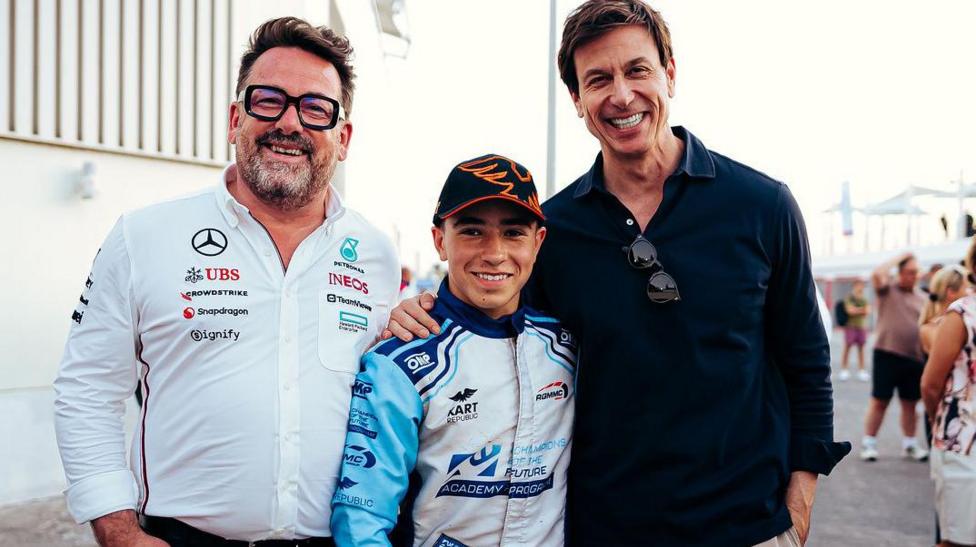
Mercedes Losves Star Scout to Red Bull: What It Means for Both Teams
Red Bull poaches Mercedes' driver discovery architect behind Kimi Antonelli, reshaping the talent pipeline battle.