Budapest's Breakthrough Victories: The Hungaroring and First-Time Winners
The tight Hungaroring has a strange habit of handing drivers their first Formula 1 victory.
Round 11 of the 2025 Formula 1 season brings the grid to the Hungaroring, a circuit nestled in the hills outside Budapest that has hosted the Hungarian Grand Prix every year since 1986. The track's reputation is well established: narrow, sinuous, and punishing in the summer heat, a place where overtaking is scarce and strategy departments earn their salaries. But there is another thread running through its history that deserves more attention than it gets. The Hungaroring has an unusual habit of producing maiden race winners.
A Circuit Built for Upsets
The statistics are difficult to ignore. Damon Hill took his first Formula 1 victory at the 1993 Hungarian Grand Prix, a result that signalled the British driver's arrival as a genuine force at Williams. Thirteen years later, Jenson Button broke through at the same venue in 2006, dragging his Honda to the front in mixed conditions to claim a long-awaited debut win. More recently, Esteban Ocon stunned the paddock in 2021, inheriting the lead after a chaotic opening lap and holding off Sebastian Vettel's Aston Martin across the remaining distance in his Alpine.
The common thread is not luck. The Hungaroring's physical characteristics reward patience, tyre management, and strategic flexibility over raw qualifying pace. Its 4.381 km layout features only two genuine braking zones for DRS-assisted overtakes: the approach to Turn 1 and the run into Turn 2. Everywhere else, the track funnels through a sequence of medium-speed corners where following another car closely is punishing on front tyres and cooling systems. Drivers who qualify on the front row at circuits with longer straights can afford to disappear. At Budapest, they often cannot.
Why the Hungaroring Favours the Patient
Budapest sits in a basin, and the ambient temperatures regularly exceed 35°C during July race weekends. Track surface temperatures climb higher still, pushing Pirelli's softest compounds into aggressive thermal degradation windows. The asphalt itself is older than many venues on the calendar, rough and abrasive, which compounds the tyre challenge. Teams that arrive expecting a straightforward one-stop strategy frequently find themselves scrambling to cover an undercut or extend a middle stint as the race unfolds.
The result is a race where the best car on Saturday does not always win on Sunday. The 2021 edition was a textbook case: Max Verstappen's Red Bull, compromised by first-lap contact, never recovered, while Ocon ran a clean, disciplined race from the second row. Button's 2006 victory came in conditions that oscillated between dry and damp, a scenario where driver judgement and pit wall timing outweighed raw pace. Hill's breakthrough in 1993 was similarly a matter of capitalising on the machinery beneath him without the pressure of a title fight distorting the strategy.
The circuit rewards teams that stay calm when the race plan shifts. Strategy walls that second-guess themselves, or that commit too early to a particular compound sequence, tend to pay for it. In Budapest, the gap between a podium and the lower points positions is often a single pit call.
The Pit Wall Calculus
The narrow window for overtaking places an enormous premium on track position. Undercutting at the Hungaroring works because the out-lap on fresh tyres can clear a rival who stays out, especially if the car ahead is managing degradation. But the undercut only works if the pit crew delivers a sub-three-second stop and the driver nails the exit. A slow stop, or traffic in the pit lane, can turn a potential gain into a net loss.
Safety car probability is another variable. The tight layout and proximity of barriers mean that incidents frequently trigger full-course yellows or safety car periods, which can wipe out a carefully built tyre advantage in a single lap. Teams running a long first stint on the harder compound sometimes find themselves shuffled back after a safety car bunches the field, while those on the softer rubber benefit from a cheap pit stop.
The 2025 regulations, with their narrower operating windows for ground-effect aerodynamics, add another layer. Cars that struggle in dirty air at other circuits may find the Hungaroring's slower corners slightly more forgiving, since peak downforce is less critical when corner speeds are lower. That could open the door for midfield teams with strong mechanical grip and compliant ride characteristics to punch above their usual weight.
What This Means for the 2025 Grid
As the championship fight tightens through the European leg, the Hungarian Grand Prix offers a venue where qualifying order is not destiny. The current standings, with the top four drivers separated by a narrow margin heading into Budapest, suggest that a strategic gamble could yield outsized rewards. A driver starting outside the top five who nails the tyre strategy and avoids first-corner chaos has a legitimate shot at the podium.
For the grid's newer names, the track's history of crowning first-time winners carries a psychological weight. The Hungaroring does not care about pedigree. It cares about execution over 70 laps in furnace-like heat, about keeping the tyres alive through the final stint, and about a pit wall that reads the race in real time rather than sticking to a pre-programmed script.
Budapest has always been where the paddock goes to sweat. For some drivers, it is also where careers are made.
Editorial Integrity
This is an original SportPulse article written by our editorial team. All content is independently researched, written, and reviewed by our writers and editors before publication. We do not publish copied, aggregated, or syndicated content.
SportPulse is committed to original sports journalism. Read our editorial policy or contact us with any questions.
More Like This
All f1
Red Bull's Home Gambit: 2026 Austrian GP Practice Unpacked
Red Bull rolls the dice on low-drag setup for Spielberg, banking on DRS Alpine coasting to offset straight-line vulnerability.
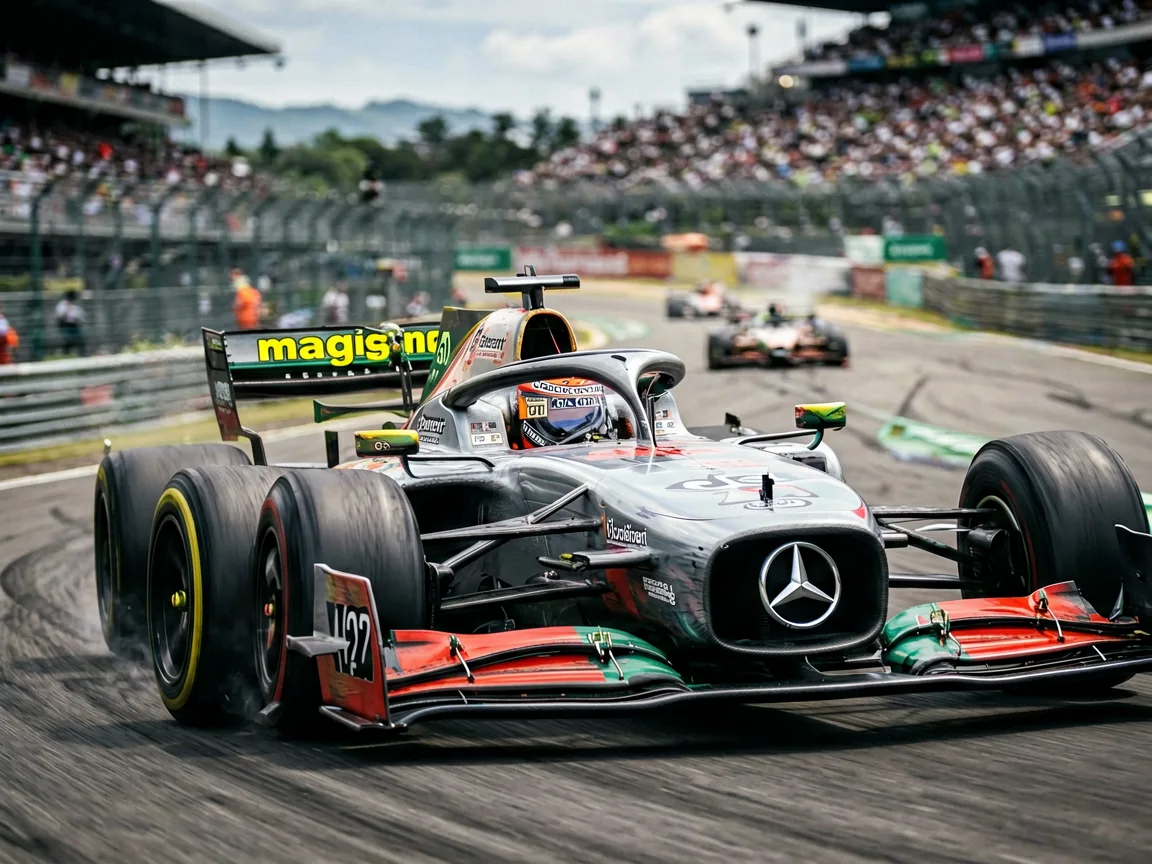
Russell's Mercedes Setup Quest: The Golfer Analogy Explained
George Russell likens adapting to Mercedes' temperamental W15 to a golfer overhauling his swing chasing elusive peak performance.
Silverstone Under Siege: New Regulations Threaten to Gut Britain's Crown Jewel
Norris, Hamilton, and Verstappen unite in rare agreement: new rules will fundamentally reshape Silverstone's high-speed DNA.