Infantino Insists Hydration Breaks Are About Sport, Not Revenue. Sure.
FIFA's president denies commercial motives behind World Cup hydration breaks, but the optics tell a different story.
The Defense Nobody Asked For
Gianni Infantino wants you to know something: hydration breaks at the World Cup generate zero additional revenue for FIFA. The organization's president took time out of his schedule to clarify that these mid-match pauses are "purely a sporting matter." When a governing body worth billions feels compelled to preemptively deny a revenue motive nobody formally accused it of, the instinct is not to take the denial at face value. It is to ask what prompted it.
The statement, brief and carefully worded, lands in a landscape where every structural decision FIFA makes is scrutinized through a commercial lens. And for good reason. FIFA reported revenues of approximately $7.5 billion across the 2019-2022 cycle, driven almost entirely by the Qatar World Cup. The organization does not make "purely sporting" decisions in a vacuum. Everything exists within an ecosystem of broadcast deals, sponsor activations, and global eyeball harvesting.
So when Infantino draws a hard line between hydration breaks and revenue, the natural response is skepticism. Not cynicism for its own sake, but the earned distrust of an institution that has repeatedly blurred the boundary between sporting integrity and commercial extraction.
What Hydration Breaks Actually Are
For the uninitiated, official hydration breaks (sometimes called cooling breaks) are mandated pauses in play, typically occurring around the 30th and 75th minutes of a match. They last approximately two to three minutes. Players gather near the touchline, drink water or electrolyte solutions, receive tactical instructions, and then resume.
The practice was formalized ahead of the 2014 World Cup in Brazil, where heat and humidity in venues like Manaus and Recife posed genuine player welfare concerns. FIFA's medical committee recommended the breaks as a safeguard against heat-related illness. On the surface, the rationale is unimpeachable. Professional athletes operating at maximum intensity in tropical or desert climates need protection. Full stop.
The 2022 Qatar World Cup made the case even starker. Even with the tournament shifted to November-December to avoid the worst of the Gulf summer, matchday temperatures in several venues still exceeded 30 degrees Celsius. Hydration breaks were mandatory, not optional. No serious medical professional would argue against them in those conditions.
But here is where the tension begins.
The Broadcast Elephant in the Room
Modern football broadcasting is a machine of extraordinary precision. Every second of airtime is allocated, priced, and sold. Broadcasters pay FIFA billions for World Cup rights, and they recoup those costs through advertising. The structure of a football match is already optimized for commercial delivery: pre-match buildup, halftime, post-match analysis. Hydration breaks add something new to this architecture. They add two additional windows per match where broadcasters can cut to studio analysis, run advertisements, or display sponsored content.
FIFA does not sell advertising during hydration breaks directly. That is technically accurate. But the breaks exist within a broadcast ecosystem where every pause in play has commercial value. To claim they bring "no additional revenue" is to draw an extraordinarily narrow boundary around what constitutes revenue generation.
Consider the math. The 2022 World Cup featured 64 matches. Each match with mandatory hydration breaks produced two additional broadcast windows. That is 128 micro-advertising opportunities across the tournament. FIFA may not directly monetize those windows, but its broadcast partners absolutely do. And those broadcast partners pay FIFA for the rights that make those windows valuable. The causal chain is not complicated.
The Player Welfare Argument Holds. Mostly.
To be fair, the sporting case for hydration breaks is legitimate. Heat illness is a real and documented risk in professional football. FIFA's own guidelines, developed in partnership with FIFA's Medical Assessment and Research Centre (F-MARC), have long recommended environmental monitoring and intervention protocols. The 2014 tournament in Brazil saw wet-bulb globe temperatures (WBGT) climb into dangerous zones during afternoon kickoffs. Without intervention, the risk of exertional heat stroke increases dramatically.
The science is not in dispute. Players performing at 85-90% of their maximum heart rate for sustained periods in high-heat environments lose fluid at rates of 1.5 to 2.5 liters per hour. Dehydration exceeding 2% of body mass impairs cognitive function, reaction time, and physical output. In a sport decided by millimeters and milliseconds, that matters.
What is in dispute is whether FIFA would have implemented the breaks with the same enthusiasm if they did not also serve a commercial function. This is the question Infantino's statement inadvertently raises. FIFA has historically been slow to adopt player welfare measures that do not align with commercial incentives. Goal-line technology took decades. Concussion protocols remain inadequate. Sin bins are still in trial phases. Yet hydration breaks, which conveniently slot into broadcast schedules with surgical precision, were adopted swiftly and universally.
The Bottom Line: The player welfare rationale is sound. The speed and certainty of adoption, however, suggests factors beyond pure medical concern at work.
Infantino's Credibility Problem
Gianni Infantino has been FIFA president since February 2016. His tenure has been defined by expansion: expanding the World Cup from 32 to 48 teams, expanding the Club World Cup into a 32-team summer tournament, expanding FIFA's commercial footprint into previously untapped markets. Revenue under his leadership has grown substantially. FIFA's reserve fund reportedly exceeded $4 billion as of recent financial disclosures.
This is a president who champions growth at every turn. When such a figure insists a particular feature of his flagship tournament is "purely" anything, the instinct to probe is not unreasonable.
Infantino's track record on framing commercial decisions as sporting necessities is well-documented. The expanded World Cup format was pitched as a development tool for smaller nations. The Club World Cup was presented as a competitive alternative to UEFA's Champions League. The biennial World Cup proposal was framed as an opportunity for more nations to participate. Each of these initiatives had legitimate sporting arguments attached. Each also happened to dramatically increase FIFA's revenue potential.
"When everything is framed as a gift to the game, the invoices become invisible.
This is the context in which Infantino's hydration break denial must be read. Not as a lie, exactly, but as a carefully constructed statement that is technically accurate while being functionally incomplete.
The Broader Commercialization Pattern
Hydration breaks do not exist in isolation. They are part of a broader pattern of structural changes to football that carry both sporting and commercial implications:
- Extended stoppage time: The 2022 World Cup saw unprecedented added minutes, with some matches exceeding 100 minutes of total play. More time means more broadcast content.
- Multi-ball systems: Faster ball retrieval keeps play moving, which keeps viewers engaged, which keeps advertisers happy.
- VAR stoppages: Review delays create additional broadcast windows, whether intentionally or not.
- Half-time entertainment proposals: FIFA has explored extending the halftime interval for commercial programming, similar to the Super Bowl model.
None of these changes are presented as revenue drivers. All of them are. The genius of FIFA's approach is that legitimate sporting improvements and commercial optimization are fused so thoroughly that separating them becomes almost impossible. Hydration breaks protect players and they create broadcast value. Both things are true simultaneously.
What Other Stakeholders Say
Broadcasters have been notably quiet on the hydration break revenue question, which itself is informative. If the breaks truly generated no commercial value, there would be no reason for networks to comment. Their silence suggests the windows are, at minimum, useful. Several industry analysts have noted that in-play advertising breaks during live sport represent one of the few growth areas in an increasingly fragmented media landscape.
Players and coaches have generally supported the breaks on welfare grounds. Managers use them for tactical adjustments. Players appreciate the physical recovery. The on-field reception has been overwhelmingly positive, which makes the commercial question uncomfortable because it implies something beneficial can also be exploitative.
Fan reception is more mixed. Traditionalists argue that uninterrupted play is a core principle of football's appeal. Modernists counter that two to three minutes of pause is a negligible trade-off for player safety. The commercial dimension rarely enters fan debate directly, but it simmers beneath the surface, fueling a general suspicion that FIFA's motivations are never purely altruistic.
Verdict: Stakeholder consensus supports the sporting rationale. The absence of commercial transparency, however, allows suspicion to fester unnecessarily.
The Real Question Infantino Should Answer
The issue is not whether hydration breaks generate direct revenue for FIFA's accounts. Infantino may well be telling the truth in the narrowest sense. The issue is whether FIFA would implement measures with identical sporting merit but zero commercial utility with the same speed and enthusiasm.
If FIFA mandated cooling breaks for domestic leagues in equatorial climates where player welfare data is equally compelling but broadcast value is negligible, that would answer the question definitively. If FIFA pushed for extended medical timeouts for head injuries with the same institutional energy it brought to hydration breaks, the "purely sporting" claim would carry more weight.
Until that consistency exists, Infantino's denial will remain exactly what it appears to be: a technically true statement designed to deflect from a question that the institution's own behavior has made inevitable.
What Comes Next
With the 2026 World Cup spread across the United States, Canada, and Mexico, hydration breaks will almost certainly remain a feature of the tournament. Summer temperatures in cities like Dallas, Houston, and Miami routinely exceed 35 degrees Celsius during June and July. Player welfare demands the breaks continue.
The commercial architecture around them will also continue to evolve. As FIFA negotiates its next cycle of broadcast rights, the value of in-play micro-breaks will be part of the calculus, whether the organization acknowledges it publicly or not.
The honest position is simple: hydration breaks serve both sporting and commercial purposes. That duality is not inherently corrupt. Football is a commercial sport, and reasonable people can accept that welfare measures and revenue generation can coexist. What corrodes trust is the insistence that one dimension does not exist.
Infantino would earn more credibility by saying, "Yes, these breaks have broadcast value, and yes, they also protect our players. Both reasons justify their inclusion." Instead, he chose the narrower claim. And in doing so, he invited exactly the scrutiny he was trying to avoid.
Editorial Integrity
This is an original SportPulse article written by our editorial team. All content is independently researched, written, and reviewed by our writers and editors before publication. We do not publish copied, aggregated, or syndicated content.
SportPulse is committed to original sports journalism. Read our editorial policy or contact us with any questions.
More Like This
All football
Mexico's Tactical Identity Restored: How Aguirre's Structure Brought Joy After a Year of Fear
Despite a last-16 exit, Mexico's World Cup restored tactical dignity and united a diaspora from Guadalajara to Southern California.
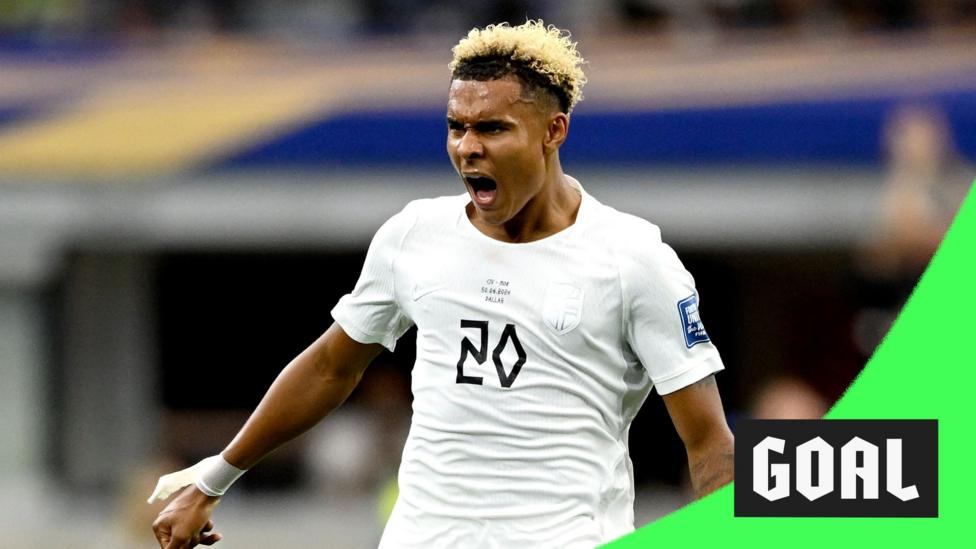
Nusa's Thunderbolt Announces Norway's Arrival on the World Stage
Antonio Nusa's stunning strike against Ivory Coast signals a generational talent ready to carry Norwegian football forward.
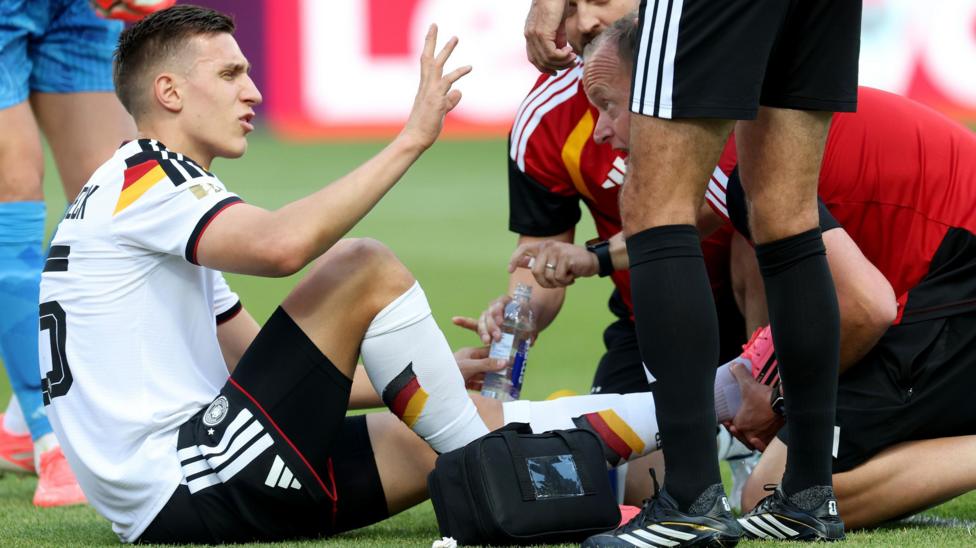
Schlotterbeck Knocked Out of World Cup
Germany's defensive depth faces a brutal test as Nico Schlotterbeck's ankle injury ends his World Cup campaign prematurely.