Irankunda's Cahill Tribute Sparks New Socceroos Dream
Nestory Irankunda channeled Tim Cahill, igniting hope that Australia's fearless youth can finally relive the 2006 World Cup magic.
The corner flag. For a generation of Australian football fans, it is sacred ground. When Nestory Irankunda sprinted toward that white post, pivoted, and unleashed a furious右-boxing swing at the air, the goosebumps rippled across the continent.
It was Tim Cahill’s signature move. A homage. A passing of the torch.
And suddenly, a youthful Socceroos squad burdened by the weight of recent stagnation looked entirely unshackled.
For months, this crop of young Australians carried a nagging sense of déjà vu. A familiar feeling that something was brewing, but nobody could quite place it. Then Irankunda hit the corner flag, and the connection snapped into focus. This is the dawn of something tantalising. A fearless new wave ready to drag Australian football back to the edge of adventure.
The Shadow of Kaiserslautern
To understand what Irankunda did, you have to understand what Cahill meant. The 2006 World Cup in Germany remains the high-water mark of Australian football. That squad, brimming with vintage trailblazers like Cahill, Mark Viduka, and Harry Kewell, didn't just participate. They fought. They clawed. They advanced from the group of death.
That tournament wasn't merely a sporting achievement. It was a cultural reset.
Every Socceroos generation since has been measured against the class of '06. The 2006 heroics cast a long, suffocating shadow. Subsequent campaigns felt like exercises in survival rather than statements of intent. The pragmatism of recent years, while yielding results, slowly drained the adrenaline from the Australian game.
But Irankunda’s celebration wasn't just a throwback. It was an aggressive, joyful reclamation of the audacity that made the '06 side immortal. The new face of Australian football looked backward to propel the team violently forward.
An Unearned Crown, A Brewing Storm
Let’s be blunt. Labeling this group a "golden generation" right now is a trap.
They haven't earned it. Not yet. The golden generation moniker requires silverware, deep tournament runs, and moments forged under the crushing pressure of knockout football. This youth movement possesses raw potential, but potential is merely the prelude to the exam.
Yet, what they undeniably offer is something the Australian sporting public has been starved of for nearly two decades. Hope.
"There always was a familiar feeling to this youthful squad of Socceroos. That sense of deja vu. That you had seen something like this before."
It's the hope of an adventure, not the guarantee of a triumph. And right now, that distinction is precisely what makes them so intoxicating. They are unburdened by the cynical pragmatism that crept into the national team set up. They play with their chests puffed out.
Transfer Intel: The Irankunda Economy
Nestory Irankunda is the vortex of this revolution, and his club trajectory tells you everything about his escalating value. The Bayern Munich acquisition isn't just a prodigious talent; he is a financial asset whose valuation is accelerating by the cap-swinging minute.
By The Numbers
- 19 years old, already a locked-in Socceroos starter
- 8 goals in 26 A-League appearances last season, a blistering return for a teenager
- Secured a high-profile move to Bayern Munich, the ultimate validation of his ceiling
- Possesses a left foot that routinely registers shot speeds above 120 km/h
This is not a project player. This is a difference-maker. Irankunda represents a new archetype for Australian footballers on the global market: no longer the gritty, overachieving midfielder, but the explosive, technically elite attacker fetching top-tier European fees.
His willingness to channel Cahill while wearing the national team colors reveals a psychological edge. He understands the stage. He demands the spotlight. And the European market is watching.
The Tactical Shift: From Grit to Glide
For too long, the Socceroos relied on structural rigidity. Low blocks. Transition football. Score fewer, concede fewer. It kept them competitive, but it never inspired a nation.
This youth injection changes the mathematical equation on the pitch.
Irankunda, alongside a fearless supporting cast, offers something tactically transformative: verticality. The threat of sheer pace and unplayable dribbling forces opponents to drop their defensive lines ten yards deeper. That single adjustment collapses the spaces that aging Socceroos legs previously failed to exploit.
These young players don't just run. They glide past defenders. They demand the ball in tight areas. They play with a terrifying arrogance that strips away the underdog mentality.
It's a psychological metamorphosis as much as a tactical one. Opponents can no longer simply bully Australia off the pitch. They have to account for game-breaking speed and elite technical execution.
The Player's Perspective
For Irankunda and his peers, the Cahill celebration was likely instinctive. But instincts reveal desires.
By reviving Tim Cahill’s famous goal celebration, the new face of Australian football instantly connected this fearless crop of young footballers finding their way on the world stage to the greats wearing yellow that have gone before.
You don't mimic a legend unless you intend to chase their legacy. The moment Irankunda squared up to that corner flag, he told every kid watching across the country that the halcyon days weren't buried in history books. They were available for the taking.
The silence of the skeptics is already deafening. This squad isn't asking for permission to be great. They are taking it.
What's Next: The Road to 2026
The 2026 World Cup in North America looms large. For the first time, the tournament expands to 48 teams, offering a marginally wider safety net for qualifying nations. But Australia shouldn't view the expanded format as a safety net. They should view it as a launchpad.
The upcoming qualifiers will serve as the crucible. This young core must prove their flashes of brilliance can sustain the grind of international windows across varying climates, hostile away crowds, and the intense pressure of sudden-death playoffs.
Can Irankunda deliver a Bayern-caliber performance in a monsoon in Dhaka? Can this fearless generation handle the dark arts of Asian football when the referee's whistle stays silent?
Those are the questions that separate aesthetic promise from genuine golden generations.
But watch the tape again. Watch a teenager sprint to the corner flag, punch the air with the fury of a man who refuses to live in the past, and feel the tide shifting. The golden generation tag doesn't fit yet. The adventure, however, is just getting started. And for the first time since 2006, Australia’s World Cup aspirations are actually worth dreaming about.
Editorial Integrity
This is an original SportPulse article written by our editorial team. All content is independently researched, written, and reviewed by our writers and editors before publication. We do not publish copied, aggregated, or syndicated content.
SportPulse is committed to original sports journalism. Read our editorial policy or contact us with any questions.
More Like This
All football
50 Years On: How Panenka's Audacious Chip Redefined the Penalty Kick Forever
Fifty years after Antonin Panenka chipped Sepp Maier in Belgrade, the penalty that changed football still defines the man who invented it.

England's Semi-Final Collapse: A Tactical Postmortem
England's semi-final defeat exposed deep structural flaws no individual talent could mask under tournament pressure.
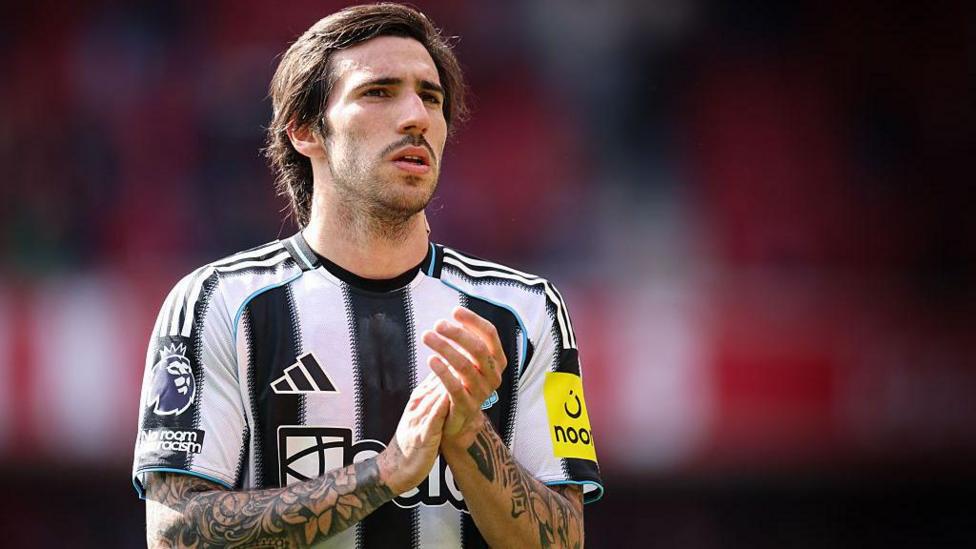
Tonali Pursuit Exposes Newcastle's Shrinking Market Power
Tottenham targeting Sandro Tonali proves Newcastle can no longer rely on premium allure to bridge the gap to the elite.