Ireland Must Conquer Eden Park Ghosts Against All Blacks
Dan Sheehan's call to make history frames Ireland's daunting Nations Championship clash at Eden Park against New Zealand.
The Fortress Nobody Storms
Eden Park is not a stadium. It is a historical anomaly wrapped in concrete and steeped in 30 years of unbroken misery for visiting teams. When Dan Sheehan says Ireland must "make our own history" there, he is not delivering a standard captain's platitude. He is acknowledging a three-decade statistical black hole where rugby teams travel with ambition and return with nothing.
New Zealand have not lost a Test at this venue since 1994. That is 30 consecutive wins across multiple eras of rugby evolution, spanning the amateur twilight through the professional revolution and into the current compact calendar. Read that figure again: 30 wins. It is a streak so preposterously long that a child born on the day of the last defeat is now well into their thirties and could feasibly have their own children watching this Saturday's encounter.
Sheehan's rhetoric strips away any psychological comfort Ireland might draw from their recent 2022 series win on New Zealand soil. That triumph happened in Wellington and Dunedin. Eden Park remained untouched, sacrosanct, and firmly in All Blacks ownership.
Sheehan's Burden: Leadership Meets Reality
The hooker's elevation to the captaincy under Andy Farrell represents a fascinating tactical and cultural shift. His words carry the weight of a forward who understands set-piece warfare intimately. When he speaks of "making history," it reflects a recognition that Ireland's recent successes, however substantial, have consistently bumped against the immovable ceiling of this particular venue.
Historically, Ireland at Eden Park resembles less a competitive fixture and more a ritual humiliation. The 2012 visit delivered a 60-0 thrashing that still features prominently in Kiwi rugby folklore. The 2020 encounter, played under the surreal atmosphere of pandemic restrictions, ended 27-7 in a match that felt far more comfortable for New Zealand than the scoreline suggested. Across those visits, Ireland managed tries you could count on one hand while the All Blacks accumulated points with industrial efficiency.
The Statistical Chasm At The Junction
Recent history provides an uncomfortable depth for Sheehan and his squad:
- 0 wins for Ireland at Eden Park across multiple attempts spanning different decades
- 87 points conceded across the last two visits alone, averaging nearly 44 points per game against top-tier opposition
- 3 tries scored by Ireland in their last two Eden Park Tests combined
These are not the numbers of a team knocking on the door. They are the numbers of a team repeatedly hitting a brick wall.
Farrell's Tactical Dilemma
Andy Farrell faces the most complex selection and tactical puzzle of his Ireland tenure. Conventional wisdom dictates that matching New Zealand's physicality offers the only viable path to an upset. Yet conventional wisdom has failed at Eden Park for 30 years across various iterations of supposedly smarter, fitter, and more prepared visiting squads.
The core issue is spatial compression. At Eden Park, the All Blacks historically attack with a width that stretches defensive systems to breaking point. When teams narrow up defensively to manage the threat out wide, New Zealand simply redirect through the middle using their forwards as roaming playmakers. When defensive lines spread wide to cover the flanks, the killer pass goes behind the line.
Ireland's defensive system under Farrell has evolved from a standard blanket press into something more nuanced and reactive. The chaotic symmetry between aggressive line speed and edge connection aims to create ruck turnovers through jackal threats. Against most teams, this chokes the life out of attacking shape. Against New Zealand at Eden Park, it has historically been picked apart with ruthless precision.
The Points That Matter
For Ireland to genuinely threaten, they need more than just defensive edge. Here is what the tape demands:
- Set-piece dominance to deny New Zealand the platform for their wide attacks
- Discipline of a surreal standard, conceding fewer than 8 penalties to avoid giving Richie Mo'unga or Damian McKenzie kickable territory
- Ruck speed variation, preventing the All Blacks' breakdown predators from slowing Irish ball and neutralising the Johnny Sexton successor's tempo game
"We don't wait for the perfect moment. We build the shape that creates the moment." — a philosophy Ireland must embody on Saturday.
The absence of a commanding fly-half presence with tangible Test experience in New Zealand conditions compounds the challenge. Ireland's playmakers must operate under pressure from a back row featuring the relentless Ardie Savea, who covers ground with an efficiency that breaks most tactical plans within the opening quarter.
The Historical Context
This match carries significance beyond the immediate result. The Nations Championship concept, long debated and finally materialising as a genuine pinnacle event, represents rugby's attempt to create a World Cup-stakes competition outside the quadrennial cycle. A strong showing by Ireland would validate the format. A thumping loss would reinforce the entrenched rugby hierarchy.
For New Zealand, the match is equally loaded with weight. The All Blacks' aura has flickered slightly in recent seasons, particularly during 2024 home losses that shattered the illusion of invincibility. Yet Eden Park remains the one venue where the black jersey still elevates performance to a level opponents cannot match. It is their psychological anchor, the place where muscle memory takes over and doubt evaporates.
Sheehan understands this implicitly. His plea to "make our own history" admits that history is the enemy and the record is the opponent. Ireland are not just playing 23 men in black jerseys sideline to sideline. They are playing the accumulated weight of 30 years of visiting failure at a venue where the All Blacks do not lose. They are playing a crowd that has never witnessed home defeat in living memory. They are playing against the instinctive dread that creeps in when a team walks out into that enclosed concrete bowl and feels the noise hit them like a physical force.
The Bottom Line
Saturday at Eden Park will reveal whether Ireland have genuinely closed the gap on New Zealand or whether the 2022 series win was an away anomaly built on favourable conditions. History, in its literal and sporting sense, is overwhelmingly against them. The All Blacks do not lose at Eden Park. That has been the longest-running truth in modern rugby, unbroken for three full decades.
But history does not score points. It does not win collisions. It does not execute lineout throws under pressure or make the crucial turnover at the breakdown. History is merely the aggregate of moments that have already happened, frozen in time and incapable of affecting what unfolds.
Sheehan's challenge, and by extension Farrell's entire project with this Irish squad, is to treat the record as a footnote rather than an omen. Make the moments matter. Win the collisions. Trust the shape. The 08:10 BST kick-off will not be just a Test match. It will be a reckoning with a ghost that has haunted every visiting team for a generation. Whether Ireland can finally exercise it will define the legacy of this era under Farrell.
Editorial Integrity
This is an original SportPulse article written by our editorial team. All content is independently researched, written, and reviewed by our writers and editors before publication. We do not publish copied, aggregated, or syndicated content.
SportPulse is committed to original sports journalism. Read our editorial policy or contact us with any questions.
More Like This
All football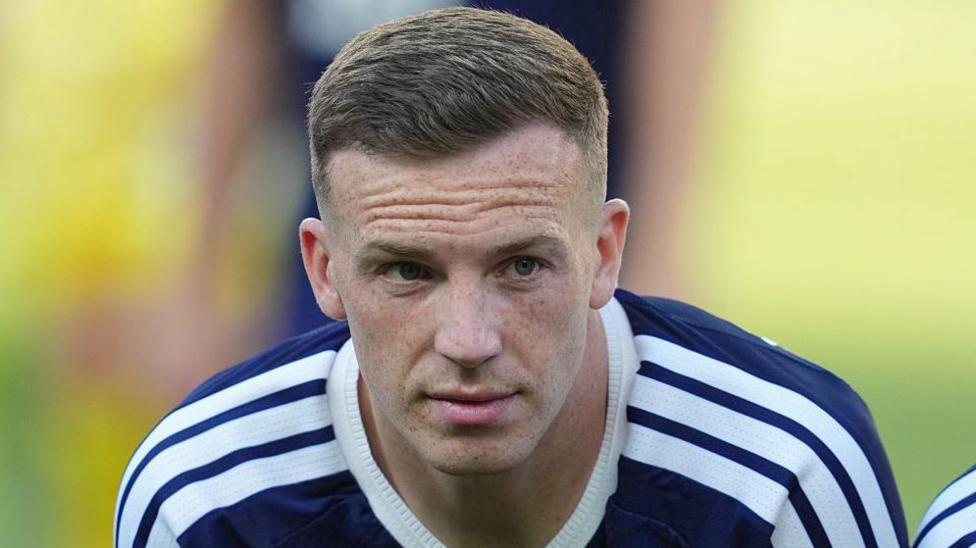
Ferguson: The Serie A Metronome Driving Scotland's World Cup Ambitions
Lewis Ferguson's Bologna pedigree is transforming Scotland's midfield ahead of their defining World Cup clash with Brazil.
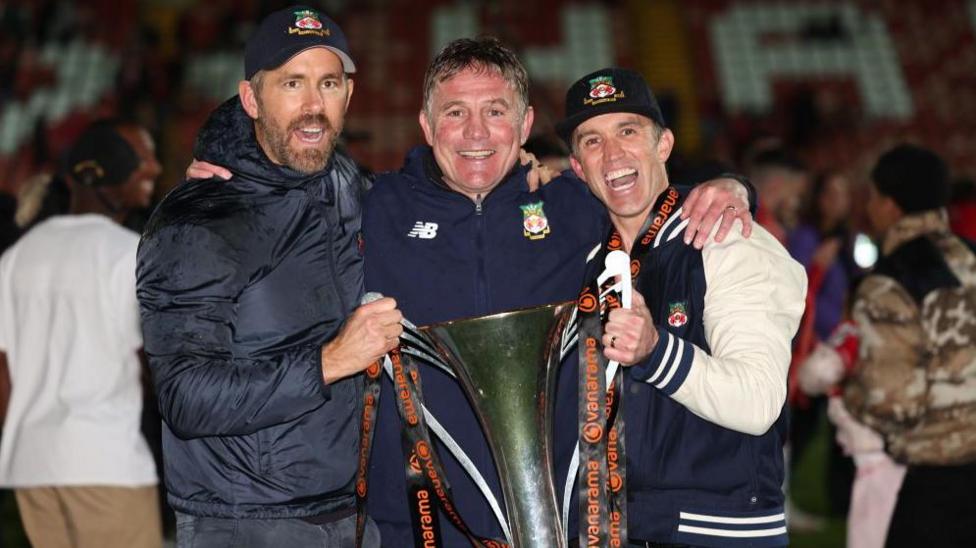
Parkinson Marks Five Years at Wrexham With unfinished Business
Phil Parkinson reflects on a transformative five-year reign at Wrexham, but warns the Hollywood-backed revolution is far from over.
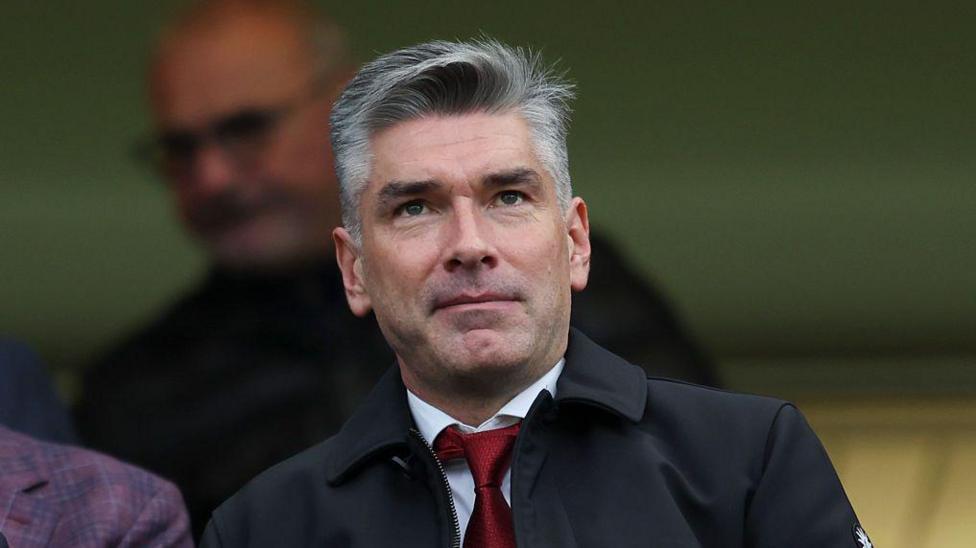
Hughes Eyes Liverpool Exit After Just One Summer at the Helm
Richard Hughes is steering Liverpool's transfer window now, but his Anfield tenure may end before it truly begins.