Ireland Stun World Champions India With Historic T20 Upset in Belfast
Ireland pulled off a seismic upset, beating T20 World Cup holders India for the first time in Belfast.
The Result Nobody Saw Coming
Ireland have done it. In front of a raucous Belfast crowd, the home side delivered the kind of result that reverberates far beyond a single T20 international, beating world champions India for the first time in T20I history in Friday's series opener.
Let that sink in. India, the reigning T20 World Cup holders, dismantled by a nation that only gained ICC Full Member status in 2017. This was not a dead rubber. This was not a weakened touring side going through the motions. This was a statement, delivered under grey Belfast skies, that Irish cricket belongs on the biggest stages.
The shock factor is enormous. India arrived on these shores as kings of the shortest format, having conquered the world in the Caribbean just weeks earlier. They left Stormont with a result that will dominate back-page headlines in Dublin and back-page fury in Mumbai.
How It Unfolded
Details of the match itself told the story of a clinical Irish performance that refused to wilt under the weight of expectation. From the opening exchanges, Ireland played with an intensity and tactical discipline that caught India cold.
The Belfast crowd, numbering in the thousands, sensed something special was brewing early. Ireland's bowling attack kept India's vaunted batting lineup under relentless pressure, denying them the freedom to accelerate that so many opponents have surrendered in recent years. Wickets fell at regular intervals, each one sending the Stormont faithful into a frenzy.
When Ireland's batters walked out to chase, they carried the belief of a squad that had been building toward a moment like this for years. The chase was not without tension, but Ireland held their nerve where previous Associate-turned-Full-Member nations might have crumbled.
The Locker Room
Inside the Ireland dressing room afterward, the scene was one of controlled euphoria. Players who had grown up watching India dominate world cricket on television stood together having beaten them in the flesh. Coaching staff embraced. Phones buzzed with messages from home. The magnitude of what they had accomplished was not lost on anyone, but there was also a steely awareness that this was the opening match of a series, not the final act.
For India's camp, the mood was starkly different. A team accustomed to winning, accustomed to dominance, sat with the unfamiliar sting of defeat against an opponent they were heavily favoured to beat. Post-match conversations behind closed doors will have centred on complacency, execution, and what went wrong on a surface that should have held no mysteries.
Why This Matters So Much
Context is everything in sport, and the context here amplifies the result tenfold. India won the 2024 T20 World Cup in Barbados, defeating South Africa in a final that cemented their status as the format's supreme power. That triumph, led by Rohit Sharma and Virat Kohli in their T20I swansongs, was supposed to usher in a new era of Indian dominance.
But the post-World Cup transition has not been seamless. With several senior players stepping away from T20 internationals, India have been recalibrating, blooding new talent, and searching for the right combinations. Belfast exposed the vulnerabilities of that process in the starkest possible terms.
For Ireland, this is a generational moment. The nation has produced famous giant-killings before. The 2007 Cricket World Cup win over Pakistan in Jamaica. The extraordinary chase against England in Bangalore at the 2011 World Cup. Those were ODIs. Beating India in T20 cricket, the format India have made their own, carries a different weight entirely.
Ireland's Rise Was No Accident
It would be lazy to frame this as a one-off shock. Ireland's cricket development over the past two decades has been methodical, driven by investment in domestic infrastructure, a growing professional player base, and an ICC Full Member status that has opened doors to regular fixtures against the sport's elite.
Players like Paul Stirling, who has spent years plying his trade in franchise T20 leagues around the world, have brought back invaluable experience. Younger talents have followed a pathway that did not exist a generation ago. The Ireland squad that took the field on Friday was not a collection of amateurs hoping for a miracle. It was a professional outfit with a plan.
Head coach Heinrich Malan has built a culture of competitiveness that refuses to accept moral victories. Ireland no longer want to simply compete with the big nations. They want to beat them. Belfast proved they can.
India's Post-World Cup Hangover
The result raises uncomfortable questions for Indian cricket. Since lifting the trophy in Barbados, India's T20I results have been inconsistent. The squad depth that makes India so formidable on paper has not translated into dominance on the field in the immediate aftermath of the World Cup.
New captain Suryakumar Yadav and a refreshed coaching setup are still finding their feet. The batting order lacks the settled authority of the Rohit-Kohli era. The bowling attack, while talented, has shown cracks against opponents willing to take the fight to them.
None of this is cause for panic. India's talent pool remains the deepest in world cricket. But Belfast was a reminder that transitions are never painless, and that the rest of the cricketing world does not pause to wait for India to find their rhythm.
What the Belfast Crowd Witnessed
Cricket in Ireland has always had a passionate but niche following. Friday's match at Stormont was something different. The atmosphere crackled with an energy that reflected a nation increasingly invested in its cricket identity.
Families arrived in green. Children wore face paint. The roar that greeted each Irish wicket and boundary was visceral, the kind of noise that belongs at Lansdowne Road on a Six Nations afternoon, not typically at a cricket ground on the island of Ireland.
For the ICC, scenes like these validate the decision to grant Ireland Full Member status and to schedule high-profile fixtures in Belfast and Malahide. Cricket needs new frontiers. Ireland is proving it can be one.
What It Means
Ireland's victory is a landmark for the global game. It proves that the gap between cricket's established powers and its emerging nations, while still significant, is closing in the shortest format. T20 is the great leveller, and Belfast was its latest manifesto.
For India, the loss is a speed bump, not a crisis. But it adds genuine urgency to the remainder of the series. Dropping a T20I to Ireland is one thing. Losing the series would be a different conversation entirely.
For Ireland, this is validation on the grandest scale. The next challenge is consistency. One historic win changes a narrative. Repeated competitiveness against elite opposition builds a legacy.
The remaining matches in this series just became must-watch cricket.
Editorial Integrity
This is an original SportPulse article written by our editorial team. All content is independently researched, written, and reviewed by our writers and editors before publication. We do not publish copied, aggregated, or syndicated content.
SportPulse is committed to original sports journalism. Read our editorial policy or contact us with any questions.
More Like This
All long-reads
Evonne Goolagong: The Glory, Abuse, and Legacy of a Broken Barrier
A new drama strips back the sentimental myth of Evonne Goolagong to reveal the exploitation beneath her historic tennis career.

Maddy Cusack Inquest Adjourned As New Evidence Emerges
The inquest into Maddy Cusack's death has been adjourned after a request for further evidence, delaying answers for a grieving family.
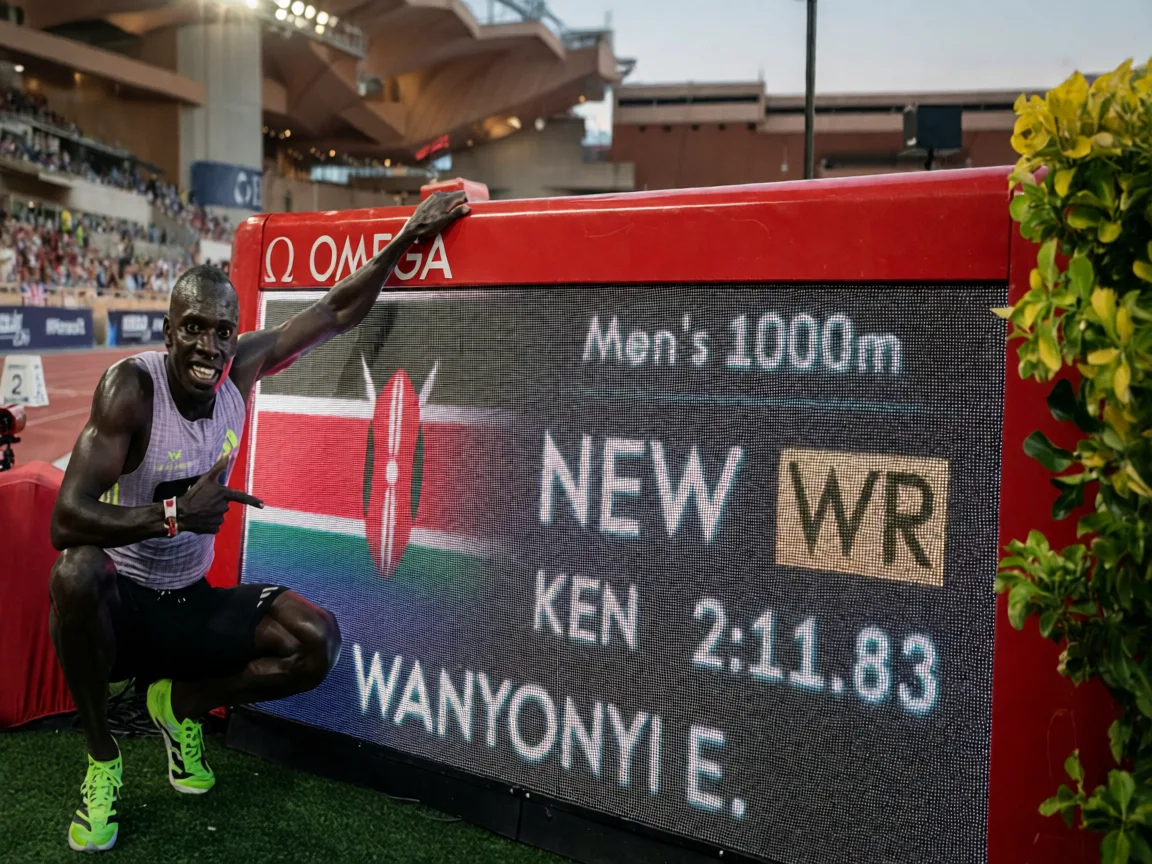
Wanyonyi Erases 27-Year 1,000m Record in Monaco
Kenya's Emmanuel Wanyonyi shattered a quarter-century-old world record on his 1,000m debut while Julien Alfred scorched the Monaco track.