The Quiet Architect: Jamie Murray and Wimbledon's Doubles Soul
Beyond Centre Court singles glory, Jamie Murray built a doubles legacy on Wimbledon grass that redefined British tennis ambition.
The Cathedral and the Side Chapels
Wimbledon is a cathedral built for a singular kind of worship. The tour arrives each summer and the world falls to its knees before the singles champions, those towering figures who monopolise the light streaming through Centre Court's retractable roof. But championships have side chapels, quieter rooms where different arts are practised, and in one of those rooms, over the course of a decade and a half, a Scot with a devastating volley and a chess player's imagination constructed a legacy every bit as meaningful as the one carved out by his younger brother on the main altar.
When Jamie Murray fielded questions from tennis fans in a recent open forum, the exercise was more than a nostalgic exercise in reminiscence. It was a window into a career spent in deliberate, deliberate defiance of the modern game's gravitational pull toward baseline isolation. Here is a man whose craft was forged in the frantic geometry of the doubles court, and whose reflections on the sport carry the weight of someone who spent years occupying the shadows before British tennis commanded the global spotlight.
A Champion Cast in Grass
The most decorated British doubles player of the modern era did not stumble into his specialty. Murray's trajectory was a conscious apostasy from the singles pathway, a choice that demanded as much courage as talent. He watched the game swell with baseline automatons capable of hitting through opponents from six feet behind the chalk. He chose a different grammar.
Doubles punishes hesitation and rewards anticipation with a ferocity that singles cannot replicate. Murray understood the geometry instinctively. The court compresses. Players arrive at the net with the inevitability of tide against cliff. There is no retreat, no safely constructed point from twenty feet behind the baseline.
Every volley is a gamble on certainty, every poach a declaration of intent.
What separated Murray from his contemporaries was this capacity for decisive violence at the net, married to the intellect necessary to direct it. He was a player who thought in angles unlikely and trajectories improbable. His mixed doubles titles, particularly those captured on Wimbledon's hallowed turf, stand as monuments to a vision of the sport that flirts with obsolescence.
The Anatomy of a Champion's Craft
To appreciate Murray's career is to appreciate the relentless demands of the doubles format itself, a discipline that exercises a parallel economy within professional tennis. The prize money is modest. The television windows are narrow. The recognition, outside the insular world of tour insiders and obsessives, is faint.
Yet the physical and mental taxation is absolute.
Murray accumulated 7 ATP Tour doubles titles across his distinguished career. He reached a career-high doubles ranking of world No. 8, confirming himself among the global elite. He captured two Grand Slam mixed doubles titles at Wimbledon alone. He represented Great Britain in Davis Cup campaigns with a ferocity that helped alter the trajectory of the national programme.
Numbers Etched in SW19
The specific achievement that Elevated Murray was his Wimbledon mixed doubles titles. The first arrived in 2007, partnered with Jelena Janković, a triumph that announced him as a force independent of his surname. The second confirmed the maiden victory was no beautiful accident.
These victories represented something profound for British tennis: proof that a domestic player could conquer the unique demands of grass through specialist mastery. Murray could not blow opponents off the court with a monstrous serve. He could not grind them down through attrition. Instead, he out-thought them. He anticipated the geometry of the rally before it unfolded.
The volley remains the most violent and nuanced shot in tennis. It happens in fractions of a second, requiring a player to read an opponent's racket face, project the ball's trajectory, and commit to a interception before the ball has even left the strings. Murray possessed this art in abundance.
The Open Forum and Fractured Echoes
When a figure of Murray's stature opens himself to the public, the questions arrive like echoes from different corners of a career. The球迷aisance of the questions posed to him, from tactical curiosities to personal reflections, underscores the public's enduring fascination with the interior life of an athlete.
The interrogation inevitably turns toward the present and the uncertain future of doubles itself. The format faces an existential squeeze. Tournament directors economise on draws. Broadcasters chase singles numbers. Davis Cup reform has eroded team competition's traditional primacy.
What emerges from Murray's perspective is not bitterness. It is a clear-eyed recognition of the sport's evolution, coupled with an abiding faith in the product itself. Doubles sells something singles cannot: the collision of four wills on a compressed canvas, the tactical conversation between partners, the high-speed geometry of players arriving at the net.
Carry the Weight
Murray's career is a reminder that when British tennis was searching for a foothold on the global stage, he provided one. Before the golden summer of 2012, before the Davis Cup triumph of 2015, there were lean years. In those years, Jamie Murray was a standard bearer — the player whose Wimbledon successes kept British tennis in the conversation.
His commitment to Davis Cup, often sidelining personal scheduling preferences for national duty, speaks to a rare and valuable character. He was the player who would fight for his nation's cause on red clay in South America or on hard courts in Glasgow. The loyalty was not transactional. It was deeply felt, and it was proved.
Reflections on Grass and Legacy
Grass is a surface that forgives nothing and demands everything. It rewards the brave, the forward-thinking, the players willing to take the court with intent and press their advantage. It exposes the hesitant and punishes those who hope to grind out victory from the baseline.
Murray was a product of grass and a master of its nuances. His groundstrokes, compact and precise, were calibrated to stay low and skid through the court. His movement at the net was lateral and aggressive. His serve, often underrated, was placed with a surgeon's care.
On grass, every step is a calculation of risk and reward, every bounce a negotiation with an unreliable surface.
In the forum, reflecting on his years at SW19, Murray offers a vision of Wimbledon from a perspective rarely seen on the morning talk shows. He knows the practice courts and the locker rooms. He knows the specific sound of a Wimbledon crowd when a British player takes the court — a sound distinct from any other, thick with decades of longing and hope.
What Remains Beyond the Baseline
The career of a doubles specialist rarely commands the attention of a singles champion. Murray understood this calculus from the beginning. He knew that his titles would not adorn the front pages. He understood that his ranking would never glimmer with the allure of a single-number next to his name.
Yet within the ecosystem of professional tennis, his career stands as essential architecture. He was a British player who conquered Wimbledon. He was a doubles specialist who ranked among the world's elite. He was a teammate who contributed to one of the great chapters of British tennis history.
The conversation he opened with fans serves as a reminder that tennis is a broad church. It encompasses the singles colossi who dominate the marquees and the doubles artisans who practice their craft in the side chapels. It rewards power and precision, certainly. But it also rewards mind.
The Vision Beyond Retirement
As Murray transitions from competitor to elder statesman, his perspective carries weight precisely because it was forged outside the primary spotlight. His reflections on the modern game, on the challenges facing doubles, and on the state of British tennis are informed by an intimate knowledge of the sport's operational realities.
The question that lingers, implicit in every answer he gives, is whether tennis will continue to find room for players like him. The game's economics favour singles. Its media structures amplify singles. But the sport would be immeasurably poorer without the doubles specialists who practice a craft that is, in its own way, as demanding and as beautiful as anything the singles court can offer.
Jamie Murray's Wimbledon memories are not merely nostalgia. They are a testament to a career built on conviction and a reminder that greatness is not always defined by the size of the stage. Sometimes it is defined by the artistry of the performance, no matter which court it unfolds upon.
The grass at SW19 will regenerate next summer as it always does. New champions will emerge and old ones will watch from the stands. The game will continue its inexorable evolution. But in the story of Wimbledon, carved into the side chapels of the tournament's history, the name of a doubles champion from Dunblane deserves its place.
Editorial Integrity
This is an original SportPulse article written by our editorial team. All content is independently researched, written, and reviewed by our writers and editors before publication. We do not publish copied, aggregated, or syndicated content.
SportPulse is committed to original sports journalism. Read our editorial policy or contact us with any questions.
More Like This
All tennis
Wimbledon's Final Weekend: Fery's Fairy Tale and a Guaranteed New Queen
As Wimbledon approaches its final weekend, Arthur Fery's stunning run and a guaranteed new ladies' champion define ten days of SW19 drama.
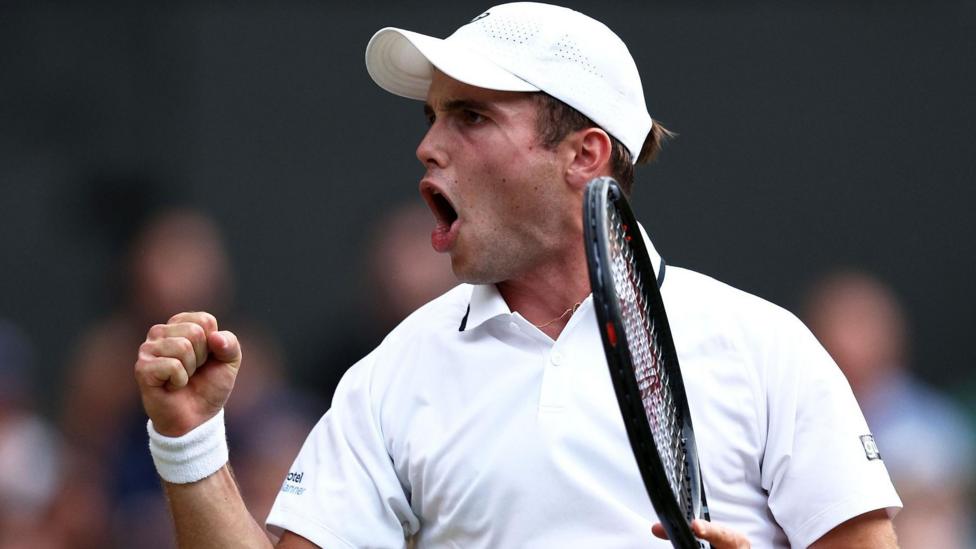
The Wildcard Who Ate the Grid: Fery's Wimbledon Fairy Tale
Arthur Fery outlasted Grigor Dimitrov in five sets to become the first British wildcard to reach a Grand Slam quarter-final, rewriting Wimbledon's grass-court lore.
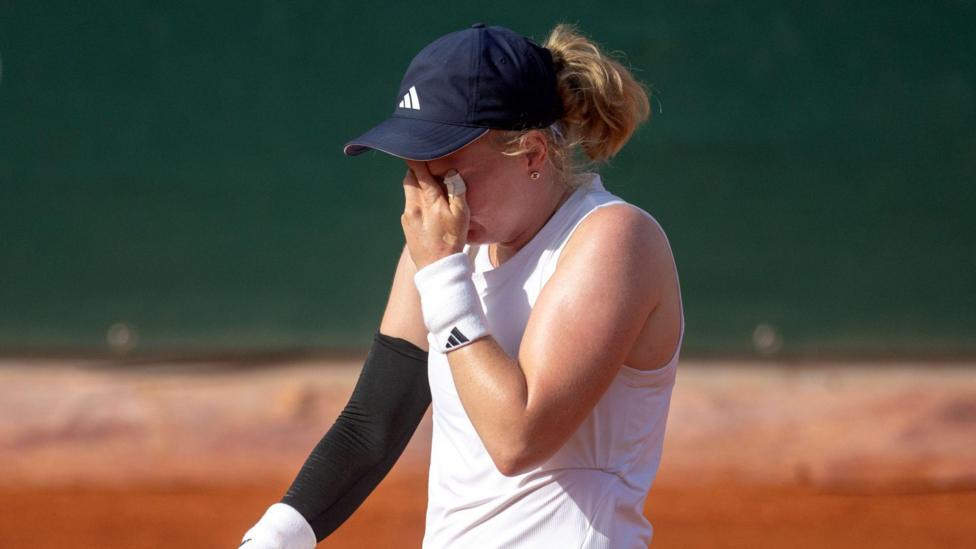
Transit Vans and Shared Rooms: Tennis' Hidden Gruel
Beyond Wimbledon's grass, lower-ranked tennis players sleep in transit vans and share rooms just to survive the circuit.