Johanna Walsh romps to Irish Oaks glory in Curragh masterclass
Johanna Walsh demolished the field at the Curragh, handing Dylan Browne McMonagle a defining career moment in the Irish Oaks.
A Snapshot That Will Define a Career
Dylan Browne McMonagle did not just win a race on Sunday. He announced himself on a stage that has humbled veterans twice his age.
Johanna Walsh stormed to a comprehensive win in the Irish Oaks at the Curragh under jockey Dylan Browne McMonagle, a result that arrives not as a gentle surprise but as a statement of intent from a combination firing on every cylinder imaginable.
There is a particular sound a grandstand makes when a horse pulls clear of a field at the Curragh. It is not a roar, exactly. It is a collective intake of breath followed by a wave of noise that rolls across the turf.
That was the soundtrack as Johanna Walsh put the Irish Oaks field to the sword.
The Winning Move
This was not a slowly unfolding drama decided in the final strides. It was a demolition job.
Johanna Walsh cruised to victory in the Irish Oaks, suggesting the pre-race expectations were met with devastating efficiency. The word "cruise" is important here, because it reveals as much about the winner's quality as the bare result. Horses who cruise do not merely beat fields; they break their spirits.
She hit the front well before the race was truly decided. The question was never whether she would win. It was how far.
To win an Irish Oaks by any margin is a career-defining achievement for most jockeys and trainers. To win comprehensively, with something still apparently in reserve, is to announce that the classics have a new ruler.
In the minutos before the gates opened, the atmosphere at the Curragh was charged with anticipation. The Irish Oaks is one of those races that captures a specific kind of racing soul — a race for fillies only, a test of stamina and class on one of the most demanding tracks in Europe.
Johanna Walsh answered the test.
The Curragh Cauldrons
The Curragh is a course that demands respect. It punishes the weak and exposes the pretenders.
With its long, demanding straight and sweeping, endless galloping expanse, the County Kildare track is a relentless examination. A horse needs tactical speed, iron stamina, and the courage to keep finding more when the ground has chewed up the rest of the field and the lungs are screaming.
Johanna Walsh had all three.
Long before the field turned for home, McMonagle wassettled midfield, out of trouble, with the beautiful calmness that only comes are talent and confidence combined. He did not panic at the pace judgments unfolding ahead of him. He did not get caught in traffic on the rail or forced wide around the sprawling bend.
The hallmarks of a perfect ride were growing visible before our eyes.
The Approach That Won It
The winning fractions began far from the winning line. For a horse to cruise to victory in a Group 1 contest, every decision leading up to and during the race must be executed with precision:
- Settling Position: A keen awareness of pace and the demands of the Curragh's long straight stretching ahead
- Timing the Move: Knowing exactly when to assert, gauging the mount's fuel without pushing extraction too early in the galloping stretch
- Front-Running Excellence: Building stamina into a relentless, unbreakable rhythm rather than countering moves one by one
- Cruising Gear: An engine capable of devastating acceleration and relentless sustained speed when asked to deliver
- Mental Toughness: The sheer will to dig deep, find more when rivals push, and refuse to fold when pressure mounts
Johanna Walsh answered all five criteria with a performance that will be replayed and dissected for years to come.
McMonagle's Trajectory
For Dylan Brown McMonagle, this is more than a line on the CV. It is concrete evidence that the ceiling everyone suspected he possesses is ready and waiting to be breached.
The jockey has long been regarded as one of the most naturally gifted riders in the weighing room. His tactical brain in tight finishes is well-documented. His balance in the saddle is intuitive, almost hypnotic. But Group 1 victories are the currency by which careers are ultimately judged.
This one puts real money in the bank.
Irish Racing's Global Stage
The Curragh, long called the headquarters of Irish flat racing, has spent the past decade modernizing its facilities and its ambitions. The redevelopment of the grandstand and the improvements to the course itself reflect an ambition to match the quality of the racing with the quality of the experience.
On days like this, that ambition is realized.
The Irish Oaks sits at the heart of the summer programme, offering a steep bridge between Epsom's early-season tests and the autumn's champion-stakes brilliance. Winning it connects you to a legacy of greats, linking the present to legends of the sport who have graced the Curragh turf.
Johanna Walsh etched her name into that legacy with blood, iron, and force.
The Winning Margin
Comprehensive. Incheon that word in the lexicon of horse racing and it carries a weight far heavier than its letters. It means a horse did not just win; she dominated.
In a race as competitive as the Irish Oaks, where fields are typically packed with Group-quality fillies bred for exactly this kind of test, a comprehensive win is a statistical rarity. There is no hiding place at the Curragh, no lucky gap in traffic excusing a narrow defeat, no soft draw on the rail masking a flaw. Every rival has the pedigree, the training, and the desire.
Johanna Walsh shattered that field with a performance of pure, undeniable class.
Looking at the Form Book
The wemonic significance of this victory extends beyond a single afternoon at the Curragh. For Johanna Walsh, this is a performance that stamps her as a serious player in the upper echelons of the staying fillies' division.
For McMonagle, the win opens doors that may otherwise have remained stubbornly closed. Big owners and powerful trainers reward winners. They reward Group 1 winners with even more intentional enthusiasm.
The conversations that follow a ride like this are not coast-to-coast casual chats. They are held in boardrooms, between men and women who understand that a jockey capable of delivering on the biggest stage is worth a premium.
What Comes Next
The trajectory for both horse and jockey takes a sharp upward turn with a result of this magnitude:
- For Johanna Walsh, the autumn's Group 1 contests now loom as realistic targets, not ambitious ventures. Stayers’ contests across Europe suddenly become within reach
- For McMonagle, this kind of ride ignites a spark that can carry a career through the most demanding periods of a season. Confidence breeds opportunities, and opportunities breed success.
- For connections, the breeding and sales implications of an Irish Oaks winner are suffused with value, and deep. A mare who has proven dominant in a Classic carries stature for generations.
- For racing fans, the Curragh served another reminder that its summer afternoons can throw up performances that linger long after the grandstand has emptied and the parasols come down.
A Signature Performance
Johanna Walsh and Dylan Browne McMonagle will not share many afternoons like this. Racing, for all its romance, is a sport built on the foundation of rarity and collaboration.
But this one will do.
A comprehensive win, at the Curragh, in the Irish Oaks, is a ticket punched to a destination where only the best are welcome. The race was won with dominance and patience and timing.
And the postscript was written in noise, and howling delight, and pure, unscripted Irish summer afternoon flair.
Editorial Integrity
This is an original SportPulse article written by our editorial team. All content is independently researched, written, and reviewed by our writers and editors before publication. We do not publish copied, aggregated, or syndicated content.
SportPulse is committed to original sports journalism. Read our editorial policy or contact us with any questions.
More Like This
All football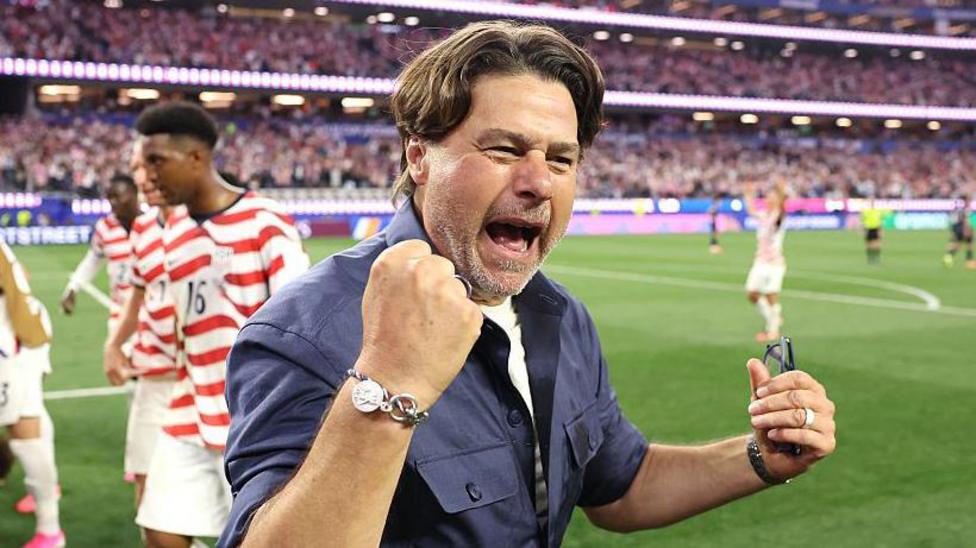
Pochettino Has US Believing World Cup Glory Is Possible
Mauricio Pochettino isn't just managing the USMNT—he's rewiring their psychology to genuinely believe they can lift the 2026 World Cup.

From War-Torn Liberia to the Socceroos: Mo Touré's Journey of Survival and Football
Mo Touré's path from Liberian refugee camp to Australia's national team is a story of survival before sport.

Wayne Rooney Backs Scotland to Shock the World on the Big Stage
The former England captain sees genuine upset potential in Scotland's tournament DNA and rising talent pool.