Kane: England Hit 'Best Level' After First-Half Chaos Against Croatia
Harry Kane hailed England's second-half dominance as their 'best level' after a wild 4-2 victory over Croatia.
When the Storm Passed, England Found Their Ceiling
There's a specific kind of match that tells you more about a team than any comfortable demolition ever could. Not the clinical 3-0 cruise. Not the backs-to-the-wall smash-and-grab. The chaotic, open-wound kind of fixture where you surrender control, claw it back, surrender it again, and then, in the crucible of a second half, produce something that makes everyone in the stadium sit up straighter.
That was England's 4-2 win over Croatia.
Harry Kane, ever the measured captain, didn't sugarcoat the first-half turbulence. England took the lead, watched Croatia drag themselves level, retook the advantage, and then let it slip again before the interval. Two leads gone. Two equalisers conceded. A half-time dressing room that, by Kane's own admission, needed to find a gear it hadn't yet engaged.
"We were at our best level in the second half," Kane said after the final whistle. "The first half was frustrating. We got in front twice and couldn't hold on. But the response after the break was everything we want to be about."
That word "response" is doing a lot of heavy lifting. And it should.
A Rivalry That Refuses to Be Comfortable
England and Croatia don't do dead rubbers. They don't do gentle. This is a fixture forged in heartbreak and redemption, from the devastation of Moscow in 2018 when Croatia shattered England's World Cup final dreams in extra time, to the cathartic group-stage victory at Wembley during Euro 2020 that helped set the tone for England's run to the final.
Every meeting carries weight beyond the scoreboard. Croatia have consistently been the opponent that exposes England's soft underbelly: the inability to control tempo, the vulnerability when pressed high, the tendency to retreat into passivity when ahead. These are not abstract criticisms. They are patterns, repeated across tournaments and friendlies alike, and they surfaced again in that turbulent opening 45 minutes.
Twice England led. Twice Croatia punished them for switching off. The details of how those equalisers arrived matter, because they are symptoms of a recurring illness in English football at the highest level: the assumption that scoring first means the job is done.
It isn't. Croatia have made a national sport of proving that.
The Half-Time Pivot
So what changed? Kane's reference to England's "best level" in the second half is a deliberate choice of words. Not "better." Not "improved." Best. That implies a standard the squad has discussed internally, a benchmark they measure themselves against, something that exists in the coaching staff's framework rather than just a vague post-match platitude.
England's second-half performance told a different story from the first. Where the opening period was defined by passive defending, loose transitions, and a willingness to sit deep after scoring, the second half was characterised by pressing intensity, vertical passing, and an aggressive forward posture that Croatia simply could not live with.
The two additional goals that sealed the 4-2 scoreline were not accidents. They were the product of a team that decided, collectively and emphatically, to stop reacting and start dictating.
The Pressing Shift
The tactical adjustment was stark. England's first-half shape allowed Croatia too much comfort on the ball in the middle third. Croatian midfielders were able to receive, turn, and pick passes without meaningful pressure, which created the platform for both equalisers.
After the break, England compressed the pitch. The pressing triggers became sharper. The distances between defensive and midfield lines tightened. Croatia, who had looked so composed in the first half, suddenly found themselves hurried, harried, and unable to build through the central areas that had been so productive before half-time.
This wasn't revolutionary football. It was basic principles executed with ruthless consistency. And that's what makes Kane's comment so revealing. The implication is that England know exactly what their best looks like. The frustration is that they don't always produce it from the first whistle.
Kane's Quiet Authority
Lost in the noise of a six-goal thriller is Kane's own performance and what it represents. At this stage of his international career, every appearance carries a dual purpose: win the match, and lay down a marker for whoever is watching from the next generation.
Kane's leadership in this fixture was not about a spectacular individual goal or a moment of theatrical genius. It was about the control he exerted on the game's emotional temperature after half-time. When a captain talks about hitting the team's "best level," he is not just describing what happened on the pitch. He is setting a non-negotiable standard for the dressing room.
That matters enormously in a squad that is navigating a transitional period. The old guard is thinning. The new wave is arriving. And the connective tissue between those two eras is the senior players who refuse to let standards slip, even in a match that some might have dismissed as a routine friendly or low-stakes group fixture.
For Kane, there are no low-stakes fixtures. Every cap is a chapter.
The Defensive Questions
Let's not pretend the first half didn't happen. Conceding two goals to Croatia in a single half, after taking the lead on both occasions, is a problem that needs examining regardless of the final scoreline.
England's defensive vulnerabilities were not abstract. They were specific and repeated:
- Lapses in concentration immediately after scoring, a pattern that has haunted this squad across multiple campaigns
- Midfield disconnect between the defensive and attacking lines during transitions
- Set-piece fragility, an area where Croatia have historically been dangerous and England have historically been generous
Winning 4-2 papers over those cracks. A knockout match at a major tournament does not afford the same luxury. The coaching staff will know this. The players, if Kane's words are any indication, know it too.
"We can't afford to give teams that kind of head start," Kane acknowledged. "The quality of the second half has to be our baseline, not our ceiling."
That last sentence is the headline within the headline. Baseline, not ceiling. If England genuinely internalise that distinction, this win becomes more than three points and a good highlight reel. It becomes a reference point.
What This Result Means Going Forward
The broader context matters. England are not playing in a vacuum. Every result is a data point in the longer arc of preparation for the next major tournament, and the pattern of this match reveals both the promise and the fragility of where this squad currently sits.
The promise: when England commit to their pressing structure and play with vertical intent, they are capable of dismantling even well-organised, technically gifted opponents. Croatia are not pushovers. They are a World Cup semi-finalist and a side that consistently punches above its population's weight class on the global stage. Scoring four against them in any context is a legitimate achievement.
The fragility: the first half. Always the first half. England's tendency to score and then retreat, to take the lead and then lose concentration, is not a one-off glitch. It is a behavioural pattern that has surfaced in too many matches against too many quality opponents to be dismissed.
The Road Ahead
Kane's post-match assessment was neither euphoric nor panicked. It was precise. And precision, at this level, is what separates squads that compete from squads that contend.
England showed in the second half that they can dominate a match against a genuinely dangerous opponent. The challenge now is to make that dominance the starting point, not the rescue mission. If they manage that transformation, results like this 4-2 win over Croatia will stop being dramatic comebacks and start being routine control.
That's the difference between a good team and a tournament team. And after the chaos of the first half and the brilliance of the second, Harry Kane has made it abundantly clear which one England intend to be.
Editorial Integrity
This is an original SportPulse article written by our editorial team. All content is independently researched, written, and reviewed by our writers and editors before publication. We do not publish copied, aggregated, or syndicated content.
SportPulse is committed to original sports journalism. Read our editorial policy or contact us with any questions.
More Like This
All football
Bellingham Bears England Past Norway; Argentina Awaits
England needed extra time and their talisman to survive Norway's tactical test. Now Argentina looms in a semi-final of titanic proportions.

Morocco Break Dutch Hearts in Marathon Shootout
Morocco advance to the last 16 after a grueling penalty shootout, as Netherlands pay the ultimate price for misses and negativity.
The Bigger, Louder, More Divisive World Cup Is Coming
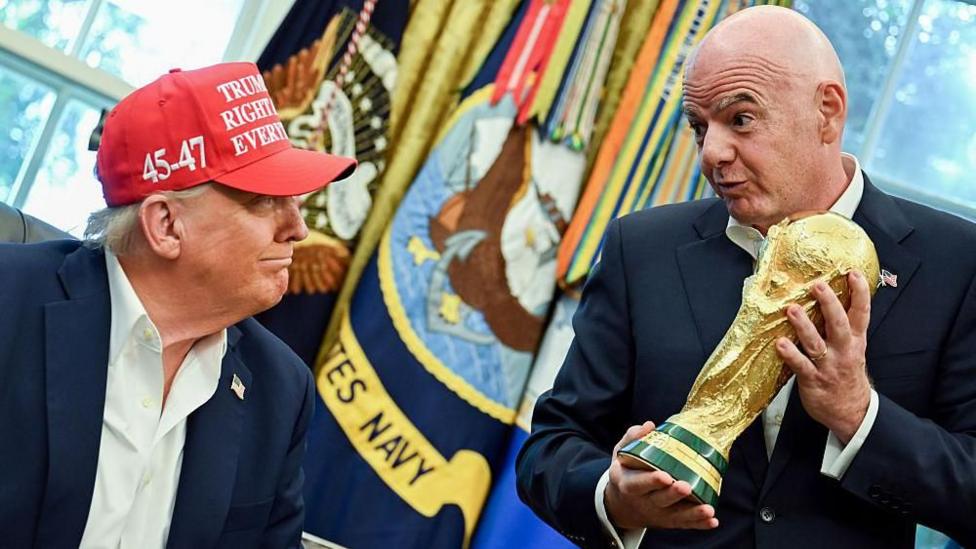
The expanded 2026 World Cup promises spectacle on the pitch but controversy off it at an unprecedented scale.