Kenny Miller's Maccabi Tel Aviv Gamble: Vision or Desperation?
Maccabi Tel Aviv bets big on rookie boss Kenny Miller, poaching Stuart Taylor from St Mirren to stabilize a chaotic campaign.
The Ultimate Leap of Faith
Maccabi Tel Aviv does not operate as a finishing school for novice managers. The Yellow-and-Blue demand immediate supremacy in the Israeli Premier League, accompanied by deep European runs and a relentlessly attacking brand of football. Handing the permanent head coaching reins to Kenny Miller, a man whose entire managerial CV consists of a brief caretaker spell, represents either a staggering show of faith or a glaring admission that the club's recruitment options dried up. Bringing in Stuart Taylor from St Mirren as his assistant only complicates the calculus. This is a high-wire act without a safety net.
From Caretaker to Commander
Miller took the helm in a caretaker capacity during a period of acute turbulence. Maccabi's season had been hemorrhaging momentum, forcing the board into yet another in-season pivot. The former Rangers and Scotland striker steadied the listing ship sufficiently to convince the hierarchy that a comprehensive managerial search was unnecessary. He removed the interim tag, transitioning from a temporary patch to the permanent solution.
Yet the underlying data remains deeply concerning for anyone assessing this appointment through an objective lens. Managing in the Israeli Premier League requires navigating a uniquely high-intensity environment. The fans at Bloomfield Stadium tolerate nothing less than total dominance, and the club's financial outlay demands a return on investment measured in silverware and European progression. Miller made 443 club appearances and earned 69 Scotland caps as a player, but dugout experience is a different currency entirely. He has precisely zero permanent managerial appointments on his resume prior to this.
The Caretaker Bounce Factor
History suggests clubs frequently confuse the caretaker bounce for long-term managerial competence. A new voice in the dressing room temporarily raises energy levels, players run harder to secure their spots, and results often spike. The challenge arrives in month three, when the initial adrenaline fades and the tactical deficits of a rookie coach are exposed by prepared opponents. Maccabi's decision-makers must hope they have identified a genuine coaching savant rather than a transient motivational spike.
"You are only one bad result away from a crisis at a club of this size." — A reality every Maccabi Tel Aviv coach understands implicitly.
The Bottom Line: Maccabi has committed its present and immediate future to a coach still learning the most demanding trade in football on the job. The margin for error is vanishingly thin.
Decoding the Taylor Appointment
The inclusion of Stuart Taylor as Miller's right-hand man is the most fascinating wrinkle of this entire reshuffle. Taylor departs his role as assistant to Stephen Robinson at St Mirren, a club currently punching above its financial weight in the Scottish Premiership. Taylor departs a stable, upwardly mobile environment for the chaotic stress cooker of Tel Aviv.
At St Mirren, Taylor helped engineer a defensive structure that conceded just 38 goals in 38 league games during their most recent Premiership campaign, a figure that underpinned their top-six finish. That organizational discipline is precisely what Maccabi have lacked. The Israeli side leaked 19 goals in the first quarter of the current season, a rate that terminates title challenges before winter arrives.
Taylor must now transplant a robust, low-block Scottish defensive philosophy into a squad built to play expansive, possession-dominant football. The cultural and tactical friction between a pragmatic Scottish defensive mindset and Maccabi's inherent attacking expectations will define Miller's early tenure. If Taylor can tighten the structural integrity without sacrificing the club's offensive identity, the partnership works. If he cannot, Maccabi will simply concede goals in more elaborate ways.
The Bottom Line: Taylor represents the tactical insurance policy for Miller's inexperience. But expecting a coach plucked from the Scottish Premiership's middle class to instantly command the respect of a Champions League-level dressing room is a substantial assumption.
The Unique Pressures of Maccabi Tel Aviv
Understanding the gravity of Miller's appointment requires grasping Maccabi's operational scale. This is not a middling club offering a struggling coach a rehabilitation project. Maccabi Tel Aviv is an institution that expects to win the domestic title and advance through two or three qualifying rounds in Europe every summer.
The fanbase is notoriously impatient. Social media and the local sports press generate an immediate, deafening backlash following dropped points. For a rookie manager still calibrating his Touchline demeanour and in-game management, the psychological toll is immense. Furthermore, managing a dual-nationality dressing room, blending Israeli talents with South American and European imports, requires sophisticated man-management that usually takes years to develop.
- Media Scrutiny: The Israeli sports media functions without a filter. Tactical mistakes are replayed and dissected endlessly across national broadcasts.
- European Stakes: Maccabi's financial viability is tied to European prize money. A managerial failure that costs them continental qualification has cascading financial consequences.
- Domestic Hegemony: Failing to finish above rivals like Maccabi Haifa or Hapoel Be'er Sheva is treated as an institutional catastrophe, not a transitional blip.
Verdict: The infrastructure supports success, but the pressure accelerates failure. Miller will not be afforded the traditional grace period granted to first-time managers in less demanding environments.
The Quantifiable Risks of Rookie Appointments
Clubs across global football have increasingly turned to recently retired players for dugout roles, but the success rate is decidedly mixed. Look at the data from major European leagues over the past five years. First-time managers under the age of 45 who take over clubs with immediate title expectations have a retention rate of barely 31% beyond 18 months.
When Wayne Rooney struggled at Derby County and Birmingham City, or when Frank Lampard's tactical naivety was exposed at Chelsea, it highlighted a fundamental truth. Elite playing intelligence does not automatically translate to elite coaching brains. The game slows down exponentially when you are no longer on the pitch, and the ability to process structural chaos from the technical area is a distinct skill that requires years of apprenticeship.
Miller bypassed that apprenticeship entirely. He played his final professional match in 2018 and has spent the intervening years taking his coaching badges and serving brief stints in subsidiary roles. Maccabi Tel Aviv is essentially asking a student to sit the final exam on day one.
The Bottom Line: The mathematical probability of this appointment succeeding long-term is stacked against Maccabi. They are gambling that Miller's playing intellect and Taylor's organisational skills can defy decades of industry evidence.
What Success Looks Like in Tel Aviv
The immediate benchmark is straightforward. Miller must halt the defensive hemorrhaging that derailed the first half of the season, close the gap at the top of the Israeli Premier League, and secure a European knockout-stage tie. Anything less constitutes a failure by the club's own internal metrics.
The schedule offers little respite. The Israeli top flight operates with a playoff format, meaning a poor first half of the season can be rectified if a club hits form in the split, but the psychological damage of trailing the leaders by double-digit points is often fatal. Maccabi need a sustained run of clean sheets, and they need it before the winter transfer window forces panicked, expensive squad surgery.
Taylor's impact on the training ground will be the earliest indicator of whether this project has legs. If Maccabi's pressing triggers become more coordinated and their defensive shape in transition improves, Taylor's Scottish pragmatism will be paying dividends. If the squad looks confused, caught between wanting to dominate the ball and being terrified of losing it, the ideological clash will be apparent.
Verdict: Survival is not the metric. Dominance is. Miller must prove he can orchestrate a tactical beatdown of inferior opposition while stealing points against the top four. There is no middle ground at Maccabi Tel Aviv.
The Inevitable Crossroads
Kenny Miller's appointment is a quintessential boom-or-bust scenario. If his sheer force of personality, combined with Taylor's organisational scaffolding, galvanises the squad, Maccabi will look like visionaries who spotted a coaching diamond before the market caught on. If the tactical limitations expected of a first-time boss surface under the Champions League spotlight, the season will collapse, and the board will be searching for another manager by spring.
For Taylor, the move represents a shrewd career acceleration. He escapes the glass ceiling of the Scottish Premiership to test his methods in a higher-stakes environment. For Miller, it is the ultimate validation or a sobering reality check. The football world watches with a mix of curiosity and skepticism, waiting to see if a legendary striker can outsmart the game from the touchline, or if Maccabi Tel Aviv have simply committed the oldest error in the book by falling for the caretaker bounce.
Editorial Integrity
This is an original SportPulse article written by our editorial team. All content is independently researched, written, and reviewed by our writers and editors before publication. We do not publish copied, aggregated, or syndicated content.
SportPulse is committed to original sports journalism. Read our editorial policy or contact us with any questions.
More Like This
All football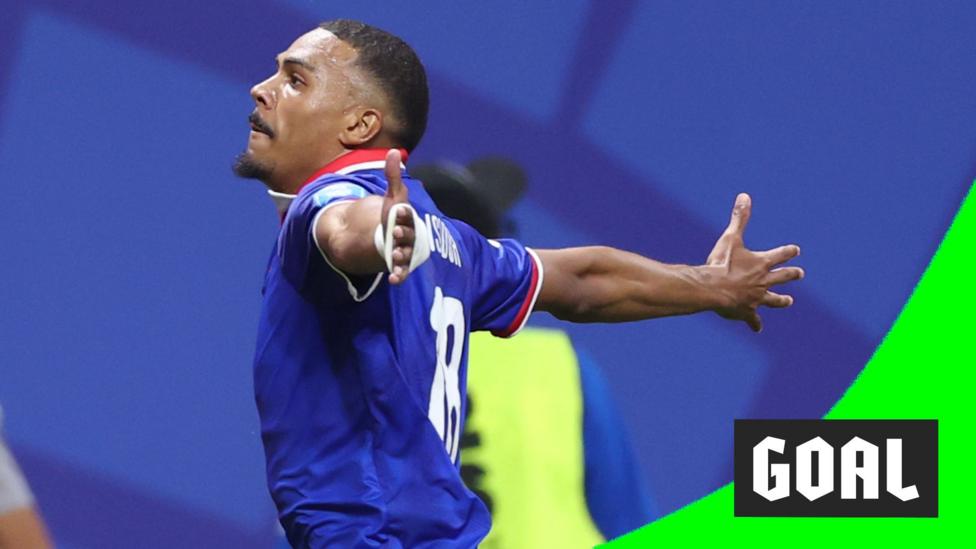
Isidor's Thunderbolt Stuns Morocco as Haiti Take Shock World Cup Lead
Wilson Isidor scored an extraordinary World Cup goal to give Haiti a stunning lead against Morocco in Atlanta.
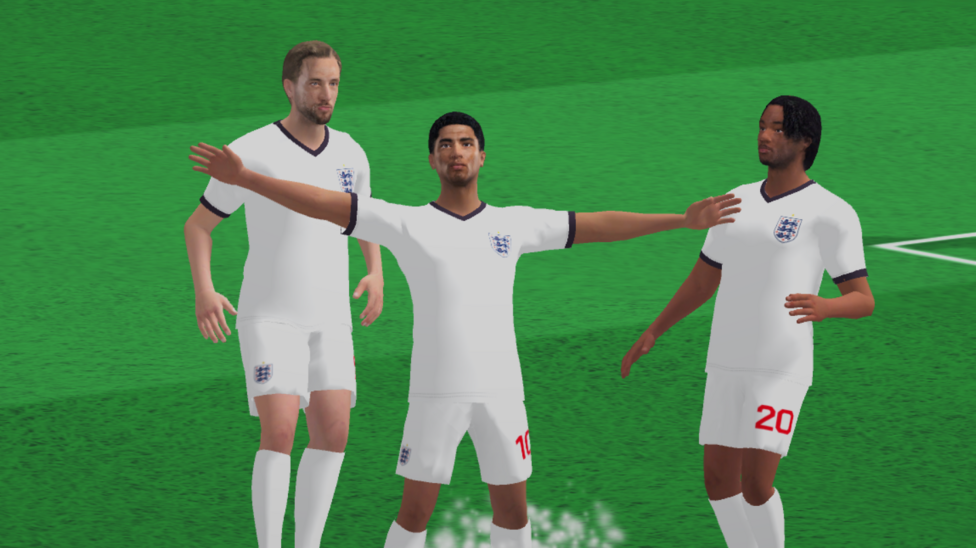
BBC's 3D World Cup Replays Change Tactical Analysis Forever
BBC Sport's 3D Experience grants fans full-pitch tactical views, permanently shifting how we consume and analyze football.
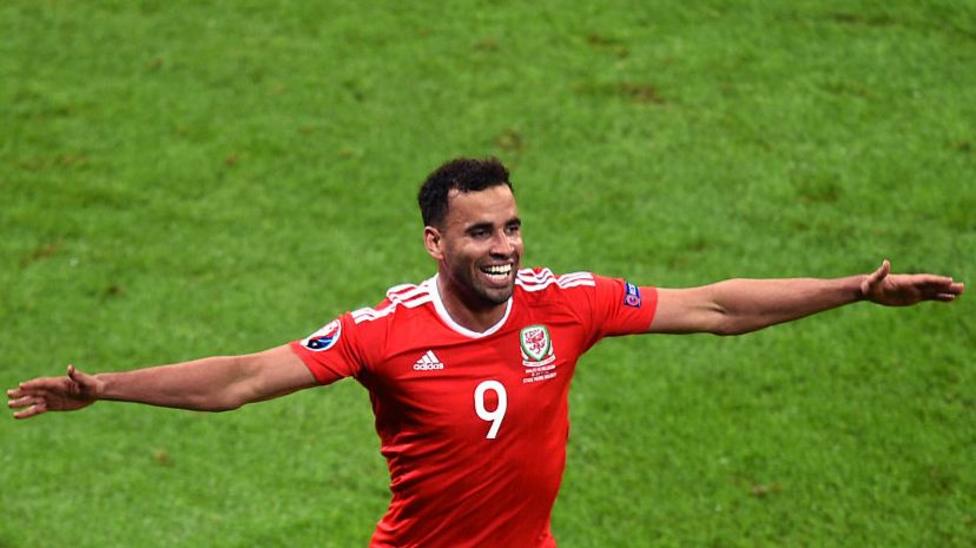
The Cruyff Turn That Rewrote Welsh Football Forever
A decade on, Hal Robson-Kanu's moment of audacious brilliance against Belgium remains Euro 2016's defining image.