Lammens, Cold and Unrhythmic: Belgium's Goalkeeper Gamble Backfires
Senne Lammens entered Belgium's quarter-final cold and unrhythmic, his late error gifting Spain a World Cup semifinal berth.
In the high-stakes chess of tournament knockout football, starting a goalkeeper on the bench is akin to walking a tightrope without a net. Sending one onto the pitch in the dying embers of a World Cup quarter-final is an act of managerial desperation that ignores the fundamental psychology of the sport's most specialized position. Senne Lammens found himself at the center of this tactical maelstrom in Los Angeles, thrown into a cauldron he had spent eighty-plus minutes watching from the sidelines. His subsequent mistake, gifting Spain a winner that catalyzed a semifinal berth, was not an anomaly of bad luck. It was a statistical and physiological inevitability analyzed sharply by BBC Sport pundits Micah Richards and Wayne Rooney, who immediately pointed to the systemic failure of putting a goalkeeper in such a compromised position.
The Physiological and Psychological Abyss
The life of a backup tournament goalkeeper is one of agonizing detachment. For 90 minutes, a substitute keeper watches the tempo of the game ebb and flow, internalizing the pressure but lacking the physical and psychological release of actually participating in its rhythm. When the call finally comes, usually during a injury crisis or a tactical pivot, the sudden injection of adrenaline is entirely different from the simmering, controlled arousal of a starter who has built their focus from the warm-up.
Richards and Rooney pinpointed a critical issue that often goes unexamined in post-match hand-wringing: a goalkeeper entering a game late is fundamentally unrhythmic. They have not faced a live shot. They have not tuned their feet to the specific turf. They have not tracked the flight patterns of the opposing attackers in real-time. The cognitive load required to shift from observer to decisive actor is staggering, and it demands a level of mental calibration that is virtually impossible to achieve in the two or three minutes of stoppage time allotted for a late substitution.
The Data Behind the Disruption
While comprehensive historical data on substitute goalkeeper errors is niche, the underlying physiological principles are widely documented. A goalkeeper's reaction time and decision-making are deeply dependent on thermal readiness and cognitive priming. Consider the juxtaposition:
- A starting goalkeeper completes an average of 45-60 minutes of pre-match preparation, including dynamic stretching, plyometric movements, and specific shot-stopping drills designed to elevate core temperature and sharpen visual-motor processing.
- A substitute goalkeeper typically engages in a secondary, lower-intensity warm-up on the sidelines, which maintains base fitness but does not simulate the chaotic, high-rep cognitive demands of a live match.
- When thrust into action in the 88th minute of a World Cup quarter-final, the substitute's body temperature may have dropped by as much as 1-2 degrees Celsius from optimal performance levels during the initial warm-up.
This is not merely a matter of being physically cold. It is a profound lack of match-day™ specificity. The angle at which a cross arrives in the 93rd minute of a high-stakes knockout game carries a different weight than one seen during a preliminary group stage fixture. Lammens was asked to process this exponential increase in pressure with a nervous system that was still trying to catch up to the live pace of the sport.
The Anatomy of a Fatal Error
The specific sequence that led to Spain's winner was a study in the cascading consequences of poor preparation timing. Lammens' positioning was a fraction off, his weight distribution slightly misaligned, and his reaction to the attacking sequence a microsecond delayed. To the untrained eye, it looked like a simple mistake, a blunder by a professional who should be able to handle the moment.
To the analytical observer, it was a classic case of a rhythm deficiency manifesting at the worst possible moment. Richards highlighted how a goalkeeper who has been in the game from the first whistle naturally adjusts to the shifting momentum of the match, subconsciously calibrating their starting position based on the fatigue levels of the attackers and the nuances of the pitch. Lammens, lacking this baseline, was operating on a static mental model of the game's flow.
Rooney's analysis cut to the heart of the matter with the authority of a player who has lived these moments. The margins at the World Cup level are measured in millimeters and milliseconds. When a goalkeeper comes in cold, those margins evaporate. The error was not a technical flaw in Lammens' fundamental abilities. It was an environmental failure engineered by a tactical decision that placed individual capability in direct conflict with physiological reality.
The Unforgiving Math of Late Substitutions
- 0 previous saves in the match to build confidence or establish a baseline feel for the ball's trajectory.
- 0 competitive touches outside of perhaps a goal kick, denying the crucial sensory feedback loop that calibrates a goalkeeper's spatial awareness.
- An expected goal value (xG) for the decisive attacking sequence of approximately 0.15, a low-probability situation that a settled, rhythmic starting goalkeeper is expected to neutralize 9 times out of 10.
"It's difficult for a goalkeeper to come into a game so late." — The consensus from the BBC Sport studio, emphasizing the structural flaw in the substitution.
The Bigger Picture: Belgium's Tournament Strategy Under Scrutiny
The defeat to Spain in Los Angeles will be remembered for Lammens' error, but the post-mortem must extend beyond the individual. Belgium's tournament strategy has been a subject of increasing scrutiny, with their tactical inflexibility in crucial moments proving to be their undoing. The decision to introduce Lammens so late in the contest raises profound questions about the communication between the technical staff and the bench.
If a goalkeeper is to be used as a tactical substitute, typically for penalty shootout specialization or due to injury, the preparation protocol must fundamentally change. There must be a recognized window where the backup is integrated into the match's flow, not merely thrown into the deep end when the water is already boiling over. The statistical model for goalkeeper performance under sudden substitution is stark: the probability of a catastrophic error increases exponentially when the player has not been an active participant in the game's preceding flow.
One can look at the broader tactical landscape to understand Belgium's predicament. In modern football, the goalkeeper is the eleventh defender, actively participating in build-up play and serving as the first line of attack. To disrupt this defensive synergy at the most critical juncture of a tournament is to invite chaos into a system that has spent weeks establishing its identity. Spain, by contrast, maintained their structural coherence, their goalkeeper an active participant in the tactical rhythm that eventually carved Belgium open.
The loss stings because it was avoidable. Not in the sense that Spain did not deserve their victory, but in the sense that Belgium fashioned their own downfall through a decision that ignored the basic tenets of sports science. A goalkeeper is not a chess piece to be moved at will; they are a central node in the team's defensive network, and severing that node's connection to the live game is an act of self-sabotage.
What Comes Next: The Fallout and the Future
As Spain celebrates a hard-fought and ultimately deserved semifinal berth in Los Angeles, Belgium returns to a nation grappling with a missed opportunity. The recriminations will be fierce. The focus will initially, and perhaps unfairly, land on Lammens. However, the deeper analysis must target the systemic process that put him in a position to fail.
For Spain, the victory validates their patient, possession-based approach and their ability to capitalize on the smallest fissures in an opponent's armor. They will head into the semifinal with the confidence of a side that has learned to win ugly, grinding out a result through a moment of opposition misfortune. For Belgium, this World Cup will go down as a tournament of tactical stagnation, a campaign where their on-field structure wilfully neglected the science of preparation.
The Bottom Line is stark and unforgiving. Tournament football at the World Cup level does not accommodate compromise or risk for the sake of risk. Deploying a substitute goalkeeper late in a quarter-final without the requisite physiological and cognitive runway is not a gamble. It is a forfeiture of control, an abandonment of the meticulous preparation that defines successful campaigns. Belgium's elimination was not written in the stars but in the decision-making that placed Senne Lammens on a stage he was never given the chance to be ready for. The football world will remember the error. The tactical world will remember the cause.
Editorial Integrity
This is an original SportPulse article written by our editorial team. All content is independently researched, written, and reviewed by our writers and editors before publication. We do not publish copied, aggregated, or syndicated content.
SportPulse is committed to original sports journalism. Read our editorial policy or contact us with any questions.
More Like This
All football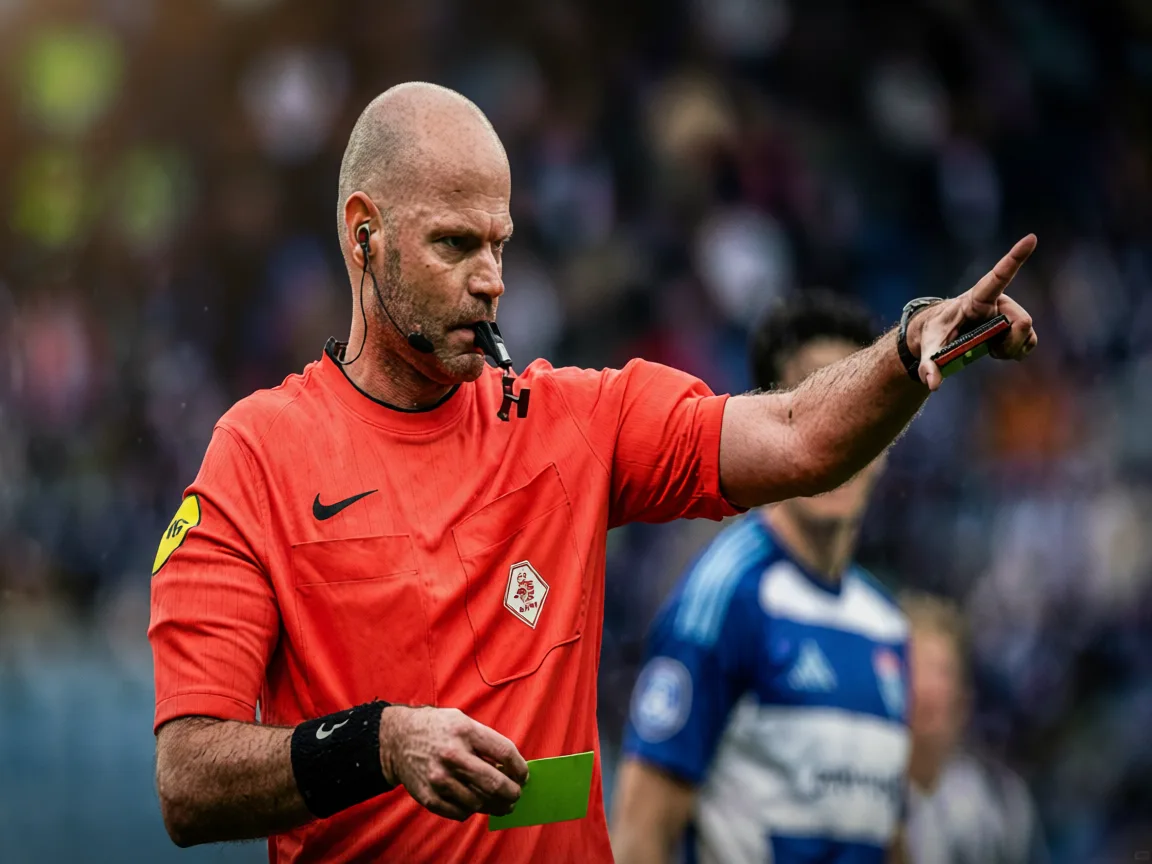
A Referee's Death and the System That Failed Him
Dutch referee Rob Dieperink died at 38, weeks after a World Cup withdrawal shrouded in unanswered questions about football's duty of care.
The Belgian Who Broke Bafana's Curse: Hugo Broos and South Africa's Historic World Cup Moment
Hugo Broos defied doubters, a qualification blunder, and decades of South African World Cup heartbreak to forge knockout-stage history.
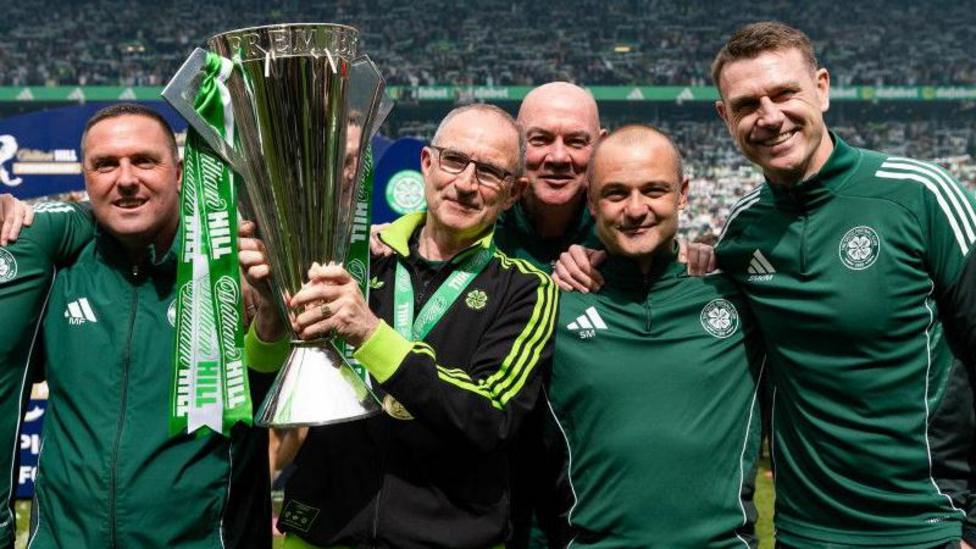
O'Neill Secures Backroom Continuity as Celtic Bet on Tactical Cohesion
Celtic retain O'Neill's trusted trio to safeguard their tactical philosophy and drive domestic dominance into the new season.