A Referee's Death and the System That Failed Him
Dutch referee Rob Dieperink died at 38, weeks after a World Cup withdrawal shrouded in unanswered questions about football's duty of care.
The football world measures its subjects in milliseconds and millimetres. And yet, it cannot quantify the distance between a custodial investigation and a coffin at the age of 38.
Dutch referee Rob Dieperink died on the 12th of November, 2024, mere weeks after being removed from the officiating roster for the expanded 2026 FIFA World Cup. The withdrawal was not the result of a standard fitness failure or a tactical re-evaluation by the refereeing committee. It was an administrative amputation, a direct consequence of an ongoing United Kingdom police investigation.
The Anatomy of a Sudden Removal
For an elite match official whose entire professional existence depends on positioning and timing, the withdrawal was both sudden and total. In modern refereeing, reputational injury requires minimal recovery time before institutional abandonment.
A referee falling under a UK police investigation does not simply lose合法权益 to a major tournament; they lose the entire professional ecosystem that sustains them.
The Administrative Vacuum
The KNVB acted with clinical detachment. Dieperink was removed from active officiating duties and publicly distanced from the upcoming tournament cycle.
- A sudden removal from all Eredivisie match assignments pending investigation outcomes.
- An undisclosed timeframe for any potential return or reinstatement.
- A conspicuous silence regarding any interim professional or personal support mechanisms.
The trajectory from active professional to administrative pariah was remarkably steep. Dieperink was abruptly forced into the professional wilderness by institutional process.
The Statistical Void of the Modern Official
To understand the magnitude of this loss, one must understand the attrition rate of elite officiating. The average age of a referee selected for the 2022 FIFA World Cup was nearly 39 years old. Dieperink was 38.
He was entering his theoretical prime for tournament selection.
- 30+ international matches officiated since 2018
- Over 100 Eredivisie matches in his top-flight career
- Placement in the 1st tier of UEFA Category One officials
These are not the statistics of a replaceable component. They represent the illuminated few who reach the apex of a brutally selective profession.
We demand perfection from officials who operate in arenas of pure subjectivity. When they falter or fall, we offer them the silence of the void.
The Duty of Care Deficit
This is where the modern game's architecture reveals its fundamental cynical cruelty. FIFA, UEFA, and the KNVB are adept at building protocols for integrity. They are significantly less proficient at building safety nets for their own personnel.
- In 2023, 43 international referees were temporarily removed from active lists for various integrity and fitness protocols.
- An estimated 60% of elite officials report experiencing severe mental health episodes during their careers.
- Institutional follow-up from governing bodies stands at a disproportionately low number.
Dieperink was not suspended for match manipulation. His removal was contractually tied to an external legal matter. Yet, the operational mechanics were identical. The institution moves to protect its public image, leaving the individual to navigate the wreckage alone.
Verdict
nFootball's governing bodies cannot continue to treat officials as disposable entities. A suspension pending investigation must mandate parallel institutional support. Zero officials should face total administrative darkness while navigating external legal or personal crises.
The Haunting Questions
The tragedy of Rob Dieperink is not just that he died at 38. It is that his final weeks in professional football were defined by institutional isolation.
We do not yet know the full circumstances of his death. We do not know the ultimate validity or outcome of the UK investigation. What we know is that a professional in his prime was removed from the game's highest stage, and was then left to process that removal without the backing of the institutions that recently employed him.
The tragedy extends past the loss of a career. The systemic failure lies in the absence of a human bridge between investigation and reinstatement. Dieperink was an elite referee who had likely logged over 10,000 hours of tactical preparation and match management.
Ultimately, it is not the absence of his whistle on the pitch that should haunt the administration. It is the absence of a system that recognizes his humanity beyond his infractions.
The Bottom Line
Football must reconcile with its treatment of the men and women who enforce its laws. The death of Rob Dieperink should serve as a harsh, necessitating inflection point. Integrity protocols without parallel human welfare protocols are not just insufficient—they are actively destructive. The governance of the sport must evolve from punishing ambiguity to protecting the subjects who operate within its shadows.
Editorial Integrity
This is an original SportPulse article written by our editorial team. All content is independently researched, written, and reviewed by our writers and editors before publication. We do not publish copied, aggregated, or syndicated content.
SportPulse is committed to original sports journalism. Read our editorial policy or contact us with any questions.
More Like This
All football
Messi, Ronaldo, and Football's Ageless Revolution Defying Time
Elite forwards are rewriting longevity rules so dramatically that Messi and Ronaldo could crash another World Cup in their 40s.
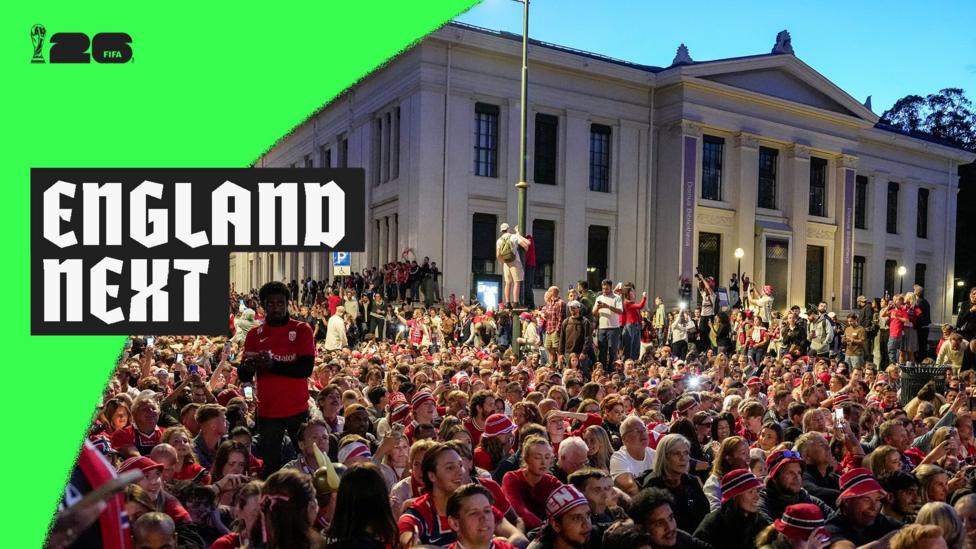
Norway vs England: The Biggest Event in Norwegian Football History
Norwegian pundits call their quarter-final against England the biggest event ever in Norwegian football history.
Argentina Mourns but Celebrates as World Cup Dream Ends Against Spain
Argentinian media rallies behind Scaloni's men after a 1-0 final loss to Spain, hailing the team as the nation's pride despite Messi's likely farewell.