The Lucky Loser: Tennis's Beautiful Accident That Forges Champions
The lucky loser rule is one of tennis's most misunderstood mechanisms — and one of its most consequential.
The Whim of the Draw Board
There is a peculiar cruelty embedded in the architecture of professional tennis. A player can spend months grinding through Challenger events, burning through savings and cartilage in equal measure, only to arrive at a Grand Slam qualifying draw and lose in the final round by a single break of serve. The margin between exclusion and opportunity narrows to a few millimetres of rubber on gut. And then, sometimes, fortune intervenes in the strangest way imaginable.
The phone rings. A main-draw opponent has withdrawn — an injury sustained in practice, a stomach bug picked up in the hotel, a personal emergency that no one outside the locker room will ever fully understand. The tournament needs a replacement. The loser from qualifying is still hanging around, bags half-packed, flights rescheduled. That player becomes a lucky loser: admitted to the main draw not through victory, but through the algebraic inevitability of someone else's misfortune.
It is one of the oldest and least glamorous mechanisms in professional sport, and it has quietly shaped more careers, more narratives, and more Grand Slam storylines than most fans ever realise.
How the Mechanism Works
The system is straightforward in principle, if labyrinthine in practice. When a tournament's main draw is set, the governing body typically reserves between two and four spots for lucky losers, depending on the event's size and the draw sheet's structure. At Grand Slams, the number has evolved over the decades, but the logic remains constant: every withdrawal creates a vacancy, and that vacancy must be filled.
The replacement comes from the qualifying tournament, specifically from the highest-ranked player who lost in the final round of qualifying. If multiple spots open up, the process cascades down the list. The International Tennis Federation and the ATP/WTA Tours maintain meticulous priority lists that account for a player's ranking, the round in which they lost, and — in cases of tied ranking points — a random draw.
Critically, the lucky loser retains their prize money from qualifying. They receive the main-draw appearance fee as well. For a player ranked outside the top 100, this double payout can represent a significant percentage of their annual earnings. The financial incentive is not incidental; it is transformative.
What casual observers often miss is that the lucky loser must be present at the tournament site when the withdrawal occurs. This is why you will frequently see lower-ranked players lingering at events long after their qualifying losses, practising on secondary courts, eating in the players' cafeteria with the haunted look of someone waiting for a phone call that may never come. The entire ecosystem has a waiting room, and the lucky loser lives in it.
A Brief History of the Rule
The concept dates back to the open era's earliest years, when the sport's transition from amateur exclusivity to professional reality demanded more flexible draw management. Before the formalised system, tournament directors simply hand-picked replacements, a practice that invited accusations of favouritism and corruption. The codification of the lucky loser rule in the late 1960s and early 1970s was, in essence, a transparency measure — a way to ensure that the replacement process was meritocratic rather than political.
Over time, the rule has been refined. In 2019, the ATP and WTA introduced a lucky loser seeding protocol for Masters 1000 and WTA 1000 events, ensuring that lucky losers are placed in the draw in a way that preserves competitive balance. Grand Slams followed suit with their own adjustments, though the specifics vary between the four majors. The Australian Open, Roland Garros, Wimbledon, and the US Open each interpret the rule slightly differently in terms of draw placement and timing windows.
The most significant structural change came with the expansion of qualifying draws at Grand Slams. As the sport's depth increased — more nations, more academies, more players capable of competing at the highest level — the qualifying field swelled to 128 players, producing a larger pool of potential lucky losers and, inevitably, more last-minute entrants.
The Careers It Built
The lucky loser pathway has produced moments that transcend the rule's bureaucratic origins. The most celebrated case remains Lori McNeil at the 2000 US Open, but the rule's fingerprints are scattered across decades of results.
Consider Goran Ivanisevic's improbable journey to the 2001 Wimbledon title. While Ivanisevic was not technically a lucky loser — he received a wildcard — the principle is analogous: an unexpected entry born of circumstances beyond the player's control, leading to a result no one predicted. The narrative arc of the undeserved chance, seized with both hands, resonates deeply in tennis culture precisely because the sport's structure makes it possible.
More directly, the 2020s have produced several lucky loser narratives that illustrate the rule's modern relevance. Marco Cecchinato, ranked outside the top 70, reached the Roland Garros semifinals in 2018 after entering the main draw through circumstances that kept him on the periphery of contention. The pattern recurs: a player with nothing to lose, playing with the liberated aggression that only a free swing can produce.
At the WTA level, lucky losers have consistently punched above their weight. The women's tour, with its greater competitive parity across rankings, has seen lucky losers reach quarterfinals and beyond at Premier Mandatory and Grand Slam events with surprising regularity. The data suggests that lucky losers win their first-round main-draw matches at a rate of approximately 30-35%, a figure that seems modest until you consider that these players just lost a match — often a tight one — and must immediately recalibrate mentally.
The Psychology of the Second Chance
This is where the lucky loser rule becomes something more than a tournament regulation. It becomes a test of psychological resilience.
The conventional wisdom in sports psychology holds that losing is corrosive, that defeat breeds doubt and hesitation. And yet the lucky loser must reverse that emotional trajectory within 24 to 48 hours, transforming a qualifying loss into the fuel for a main-draw run. The cognitive reframing required is extraordinary. One moment, you are packing your bags. The next, you are walking onto Court 14 with the knowledge that a top-30 opponent awaits.
The players who thrive in this position tend to share a specific mental profile: low rumination, high adaptability, and a capacity to treat each match as an independent event rather than a chapter in a longer narrative. Coaches who have worked with successful lucky losers describe a kind of "freedom effect" — the removal of expectation creates a psychological lightness that, paradoxically, produces better tennis.
"When you've already lost once, you stop protecting what you think you have. You just play." — a common sentiment among qualifying players who have experienced the lucky loser pathway.
The counterargument is equally compelling. Some sports psychologists warn that the lucky loser's sudden elevation can create a false sense of achievement, a premature satisfaction that dulls competitive edge. The player has already exceeded their expected outcome; why push further? This tension between liberation and complacency defines the lucky loser experience.
The Structural Critique
Not everyone in the tennis establishment views the lucky loser rule favourably. Critics, including several prominent coaches and former players, have raised legitimate concerns about the system's fairness.
The core objection is simple: a player who has lost a match should not be rewarded with a place in a tournament's main draw ahead of players who earned their spot through ranking or qualifying victories. This argument gained particular traction during the COVID-19 era, when tournament bubbles and restricted draw sizes made every main-draw spot more valuable.
There is also the question of competitive integrity. If a lucky loser is drawn against a top seed in the first round, the top seed faces an opponent who is match-sharp from qualifying, has nothing to lose psychologically, and may be ranked significantly lower than the player they replaced. For the seed, this can be a more dangerous proposition than facing the original opponent.
The ATP has responded to these critiques by tightening the criteria for lucky loser selection and introducing ranking floors at certain events. At Masters 1000 tournaments, for instance, lucky losers must typically be ranked within the top 200 to be eligible, a threshold that ensures a minimum standard of competitive quality.
Grand Slams have been slower to reform, partly because their independence from the ATP and WTA Tours gives them greater autonomy in setting their own rules. Each Slam negotiates its lucky loser provisions individually, leading to the inconsistencies that frustrate players and coaches who move between events.
What the Numbers Reveal
A deeper statistical examination of the lucky loser phenomenon yields surprising findings:
- Lucky losers who win their first main-draw match go on to reach the quarterfinals or beyond in approximately 12% of cases at Grand Slam level
- The average ranking of a Grand Slam lucky loser has dropped from roughly 180 in the early 2000s to around 130 today, reflecting the sport's increasing depth
- At ATP 250 events, lucky losers account for nearly 8% of all semifinalists over the past decade
- Players who have entered a Grand Slam main draw as a lucky loser three or more times in their careers tend to have higher peak rankings than their qualifying-round counterparts who never received the opportunity
These numbers suggest something important: the lucky loser rule is not merely a logistical convenience. It is a meritocratic accelerator, a mechanism that identifies players on the cusp of breakthrough and gives them a platform they might not otherwise reach.
The Road Ahead
The future of the lucky loser rule is likely to be shaped by two forces: the sport's continued globalisation and the ongoing tension between commercial expansion and competitive fairness.
As tennis expands into new markets — the Middle East, Southeast Asia, Africa — qualifying fields will grow larger, and the pool of potential lucky losers will deepen. This creates both opportunities and challenges. More lucky losers mean more Cinderella stories, more first-week drama, more narratives that capture casual fans. But they also mean more first-round mismatches, more scheduling disruptions, and more grumbling from established players who see the rule as an affront to the meritocratic principles the sport claims to uphold.
The Grand Slams, with their new unified governance structure emerging in recent years, may eventually harmonise the lucky loser provisions across all four events. This would eliminate the current patchwork of rules and create a cleaner, more transparent system that players, coaches, and fans can understand without consulting a rulebook.
What will not change is the fundamental human drama of the lucky loser moment. The phone call. The rescheduled flight. The second chance that arrives not through triumph but through the unpredictable geometry of a tournament draw. Tennis, more than most sports, is a game of margins — and the lucky loser rule is a reminder that the margin between obscurity and opportunity can be as thin as a withdrawal notification.
Somewhere right now, a player ranked 147th in the world is sitting in a tournament cafeteria, racquet bag at their feet, waiting. They lost yesterday. Today, they might play for a spot in the second round of a Grand Slam. That tension — between defeat and possibility, between packing your bags and unpacking them again — is the quiet heartbeat of professional tennis. The lucky loser does not merely fill a vacancy in the draw. They embody the sport's deepest belief: that the next match is always a new beginning.
Editorial Integrity
This is an original SportPulse article written by our editorial team. All content is independently researched, written, and reviewed by our writers and editors before publication. We do not publish copied, aggregated, or syndicated content.
SportPulse is committed to original sports journalism. Read our editorial policy or contact us with any questions.
More Like This
All tennis
Evert v Navratilova: The Rivalry That Built Modern Tennis
A new Netflix documentary revisits the defining rivalry of women's tennis, arriving just as Wimbledon reminds us what greatness looks like.
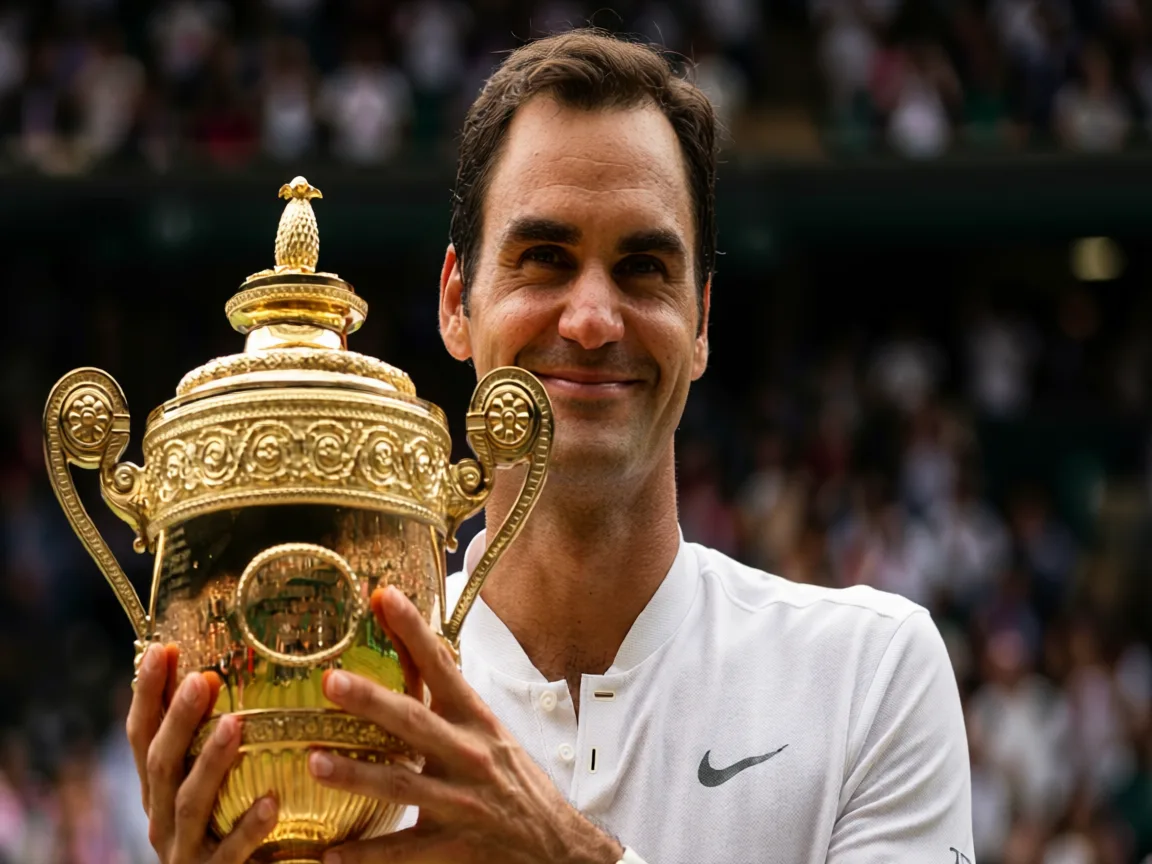
58 Years of Wimbledon: Can You Name Every Men's Champion?
From Rod Laver to Carlos Alcaraz, 58 years of Open era Wimbledon champions built tennis mythology. How many can you recall?

Spain's Next Rafa Targets Wimbledon Breakthrough
Teenage sensation Rafael Jodar prepares for his Wimbledon debut, carrying the weight of Spain's grass-court hopes in a breakthrough season.