Mahomes Breaks the $500m Barrier
Patrick Mahomes becomes American football's first $500m player, restructuring the financial and tactical architecture of the NFL.
When Clark Hunt stepped to the microphone to anoint Patrick Mahomes as a "generational talent and elite human being," the Kansas City Chiefs owner was not merely offering platitudes. He was formally acknowledging the unified theory of modern American football: that tactical evolution and financial gravity invariably consolidate around a single, transcendent figure. Mahomes becoming the first $500 million player in NFL history is a watershed that forces a recalibration of how the sport measures value, constructs rosters, and designs tactical systems around singular conductors.
The $500 million threshold is a psychological and economic border that no American football player has previously breached. While global football has long acclimatized to nine-figure transfers, the NFL's hard salary cap imposes a ruthlessly different paradigm. Every dollar allocated to the quarterback is a deficit elsewhere. For Mahomes, however, the conventional laws of roster construction have been suspended. His capacity to manipulate space from the pocket, and critically from outside it, has compelled the Chiefs' front office to build their fiscal and tactical architecture entirely around his arm talent.
Hunt's designation of Mahomes as an "elite human being" is telling. In the NFL, where quarterback contracts routinely become oppressive anchors hindering roster depth, the individual's willingness to restructure is paramount. But examining this from a purely sporting lens, the $500 million figure is a direct reflection of Mahomes' tactical indispensability. His mastery of 12 personnel formations and improvisational genius outside the structure of Andy Reid's play designs have made him irreplaceable. The Chiefs do not merely pay for production; they pay for the production that exists when the schematic ceiling collapses.
The Tactical Economy of the Quarterback
To understand the leap to $500 million, one must examine how the quarterback position has consumed the sport's tactical framework. Over the past decade, the NFL has aggressively adopted spread concepts from the collegiate level, diluting 3-4 base defenses and forcing defensive coordinators into increasingly complex sub-package deployments. Mahomes is the ultimate beneficiary and accelerant of this shift.
His unique throwing mechanics, notably the sidearm angles and platform-less arm slots, break the traditional geometric assumptions of defensive coverage. When a defense executes a Cover-3 match or a Cover-2 sink, their spatial distribution assumes a standard launch point. Mahomes moves that launch point at will, transforming off-schedule throws into on-schedule gains. This is not mere improvisation; it is a systematic dismantling of defensive geometry.
- 50 touchdown passes in his debut season as a starter reset the franchise record entirely.
- 2 NFL MVP awards before his 28th birthday validate consistent tactical dominance.
- 3 Super Bowl championships provide the ultimate systemic validation.
- 0 seasons with fewer than 26 touchdown passes since becoming the full-time starter.
What separates the Mahomes economic model from predecessors like Peyton Manning or Tom Brady is the mobility premium. Early-generation tactical quarterbacks dominated through pre-snap identification and rapid processing. Mahomes processes at an elite level, but his value is exponentially amplified by his capacity to extend and create outside the pocket's designated architecture.
Tactical Shift
The true turning point in Mahomes' ascension to the $500 million stratosphere occurred during the 2019 AFC Divisional Round against the Houston Texans. Down 24-0 in the second quarter, the Chiefs faced a defense playing aggressive man-coverage pressure packages designed to exploit traditional pocket timing. The Texans' single-high safety looks were designed to clamp the short intermediate windows and force Mahomes into check-downs.
Instead, Mahomes inverted the tactical pressure. Utilizing his spectral mobility to climb the pocket and reset the angle of attack, he manipulated the Texans' man-coverage defenders into catastrophic spatial conflicts. The Chiefs ran 4-verts and split-field concepts, but the schematic design was Secondary to Mahomes' ability to manipulate the launch point. As the pocket shifted, the Texans' defensive backs lost their leverage, and Mahomes exploited the softened perimeter and deep post windows.
This was the match that redefined Mahomes' market value. It proved that his tactical ceiling was not bound by the schematic constraints of the play-call. If the designed structure broke down, Mahomes operated as a self-contained offensive system. Defensive coordinators conceded that man-coverage pressure, historically the antidote to aggressive passing games, was fundamentally compromised against a quarterback who could dismantle spatial geometry.
The financial implication was immediate and absolute. If standard Cover-1 and Cover-0 pressures could not reliably produce negative plays against Mahomes, the defensive market was systematically devalued. Front offices facing the Chiefs were forced to invest heavier capital into zone-coverage cornerbacks and athletic interior pass rushers, inflating those markets while simultaneously realizing the futility. Mahomes didn't just break the quarterback market; he broke the entire defensive market, making his $500 million valuation an exercise in economic gravity.
Roster Architecture Under Financial Hegemony
A contract of this magnitude imposes a relentless tactical question on head coach Andy Reid and the Chiefs' schematic infrastructure. How does a team sustain offensive efficiency when the salary cap math deducts premium resources from the supporting cast? The answer lies in the constraint-based offensive system that Reid has engineered.
Modern NFL defenses have adapted to the Chiefs' early aerial dominance by deploying two-high safety shells exclusively. The intent is straightforward: remove the vertical threat and force the offense into methodical, check-down drives. The strategic assumption is that an offense deprived of explosive plays will eventually stall, requiring the defense to sustain discipline over long fields. But this two-high adjustment is precisely where Mahomes' $500 million value asserts its tactical dominance.
By conceding the underneath zones, two-high defenses voluntarily surrender spatial control of the short intermediate areas. Mahomes' processing speed and the Chiefs' systematic use of mesh concepts, screen-game integration, and run-pass options exploit these vacated spaces with mechanical precision. The Chiefs do not need elite separation wide receivers when the defensive structure is systematically gifting spatial advantage.
This explains the Chiefs' willingness to transition away from elite-tier wide receiver contracts. When Tyreek Hill departed for Miami, conventional wisdom dictated a collapse in vertical spacing. Instead, Reid and Mahomes pivoted to a spread-run and short-area passing attack, utilizing the constraint principle to punish defenses for their two-high commitment. Travis Kelce operates as the ultimate zone-beater, finding soft spots in coverages with diagnostic precision.
The $500 million investment is functionally an expenditure on the system's focal point. The system is designed to function with interchangeable peripheral parts, provided the central processing unit remains intact. Mahomes is that unit.
The Bigger Picture
Clark Hunt's proclamation underscores that the Chiefs view Mahomes not merely as a player but as the foundational infrastructure of their sporting and commercial enterprise. The $500 million figure reflects his ability to monetarily sustain an entire franchise's operational viability through television ratings, merchandise, and stadium revenue.
"He is a generational talent and elite human being. We are incredibly fortunate to have him."
Tactically, the next evolution of the Mahomes era will revolve around managing physical attrition. As the quarterback ages, the improvisational mobility that created the two-high defensive shift in the first place will naturally decline. The Chiefs' coaching staff will need to engineer greater structural efficiency from the pocket, reducing the reliance on off-schedule miracles and pivoting toward pre-snap dominance and synchronized timing.
The upcoming seasons will determine whether a $500 million quarterback can continue to transcend the financial constraints his own contract imposes on the roster. If Mahomes can continue to weaponize constraint principles against two-high defensive shells, the Chiefs will remain the strategic benchmark of the league. Should the surrounding talent erode past a critical threshold, the Chiefs face the ultimate tactical paradox: can the greatest spatial conductor in football history orchestrate a championship when the instruments are permanently budget-tier?
The answer to that question will define the final economic and tactical evaluation of the $500 million era.
Editorial Integrity
This is an original SportPulse article written by our editorial team. All content is independently researched, written, and reviewed by our writers and editors before publication. We do not publish copied, aggregated, or syndicated content.
SportPulse is committed to original sports journalism. Read our editorial policy or contact us with any questions.
More Like This
All long-reads
How Cornish Tin Miners Secretly Invented Mexican Football
Before Mexico could host three World Cups, it needed Cornish miners with muddy boots and a leather ball.
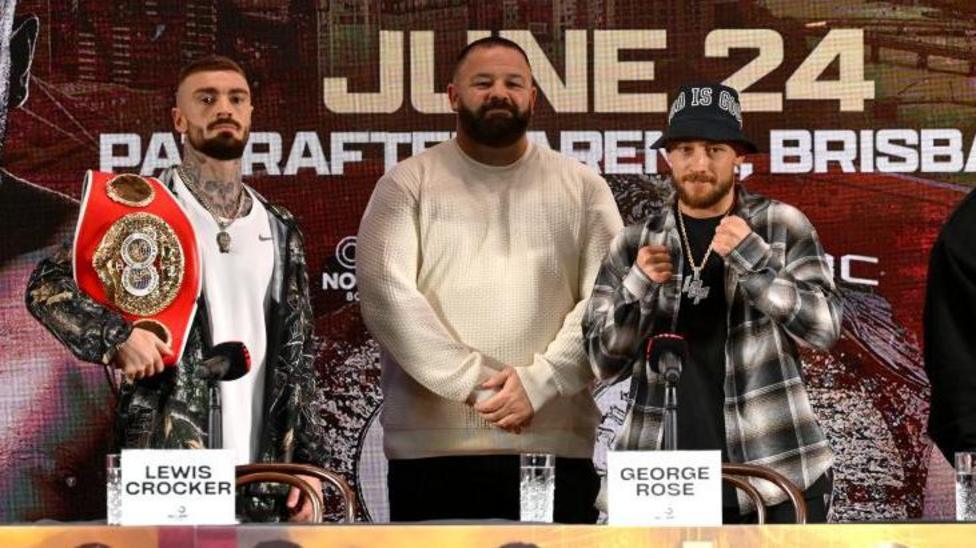
Crocker vs Paro: IBF Title Showdown Hits Brisbane
Lewis Crocker defends his IBF welterweight crown against Liam Paro in a high-stakes clash with historical weight.

Chaos, Cash, and Cooling Breaks: Has the 2026 World Cup Worked?
Expanded to 48 teams and stretched across a continent, the 2026 World Cup balances spectacle against soaring costs and logistical headaches.