Chaos, Cash, and Cooling Breaks: Has the 2026 World Cup Worked?
Expanded to 48 teams and stretched across a continent, the 2026 World Cup balances spectacle against soaring costs and logistical headaches.
The 2026 FIFA World Cup was always going to be an experiment in excess. Spanning three nations, 104 matches, and a bloated 48-team format, this tournament represents the most ambitious — and potentially disastrous — restructuring of football's showpiece event in modern history. From astronomical ticket prices that have priced out the working-class heartlands of the sport to the increasingly absurd spectacle of hydration breaks interrupting the flow of crucial knockout fixtures, the 2026 World Cup has generated as much off-pitch noise as on-pitch brilliance.
The Great Expansion Gamble
FIFA's decision to expand the tournament from 32 to 48 teams was framed as a democratisation of the global game. The governing body promised a festival that would bring emerging footballing nations into the fold, spreading the commercial gospel to untapped markets. In reality, the group stage has often resembled a series of mismatched exhibition friendlies.
The mathematical reality of expansion is stark. By adding 16 more teams to the fold, FIFA guaranteed itself an additional 32 group-stage matches. That is 40 extra hours of broadcast inventory, sold to networks and streaming platforms for record sums. The quality of the product, however, has frequently suffered.
The Data Tells a Story
- 104 total matches scheduled across the tournament, up from 64 in 2022
- 48 participating nations, an increase of 50% from the 32-team format
- 3 host nations managing logistics across multiple time zones
- $11.4 billion projected revenue, dwarfing previous iterations
The group stages have been characterised by lopsided scorelines and a conspicuous lack of competitive tension in the early phase. When a team can comfortably advance with a negative goal difference or earn a draw and still progress, the stakes are fundamentally lowered. But competitive equity was never the actual objective. This was about market expansion.
"We have given the World Cup to the world. More nations dream of participating than ever before, and that dream drives the global growth of football."
That dream comes at a substantial cost. The broadcast product has been diluted by tone-deaf scheduling designed to accommodate European prime-time slots rather than local fanbases.
Verdict: The expansion is a commercial masterstroke and a sporting compromise. FIFA will celebrate record engagement metrics while purists mourn the death of the tournament's intense, unforgiving early phase.
The Cost of Attendance
If the on-pitch product is debatable, the ticketing strategy has been outright scandalous. The 2026 World Cup has arguably implemented the most aggressive pricing structure in the history of international football.
Early rounds have seen category-three tickets — supposedly the most affordable — priced at levels that would cover a month's rent in major urban centres. Premium knockouts have demanded sums approaching $1,200 for standard seating, pushing the average fan out of the equation entirely.
The human cost of this commercial strategy is visible in the stands. Empty patches of seating during group-stage fixtures broadcast globally tell a story that no marketing campaign can spin. Traditional football cultures are being replaced by a clientele with disposable income but no intimate connection to the sport's rhythms. The atmosphere generated in these cavernous modern venues cannot replicate the intensity of previous tournaments.
The Corporate Problem
The $11.4 billion revenue projection underscores FIFA's priorities. When a governing body chases such extraordinary financial targets, the fans become secondary stakeholders. The 2026 tournament has crystallised a disturbing trend: football's premier event is becoming a luxury entertainment product rather than a cultural movement.
The Bottom Line: The 2026 World Cup is a financial triumph but may prove a cultural disaster. The disconnect between the celebration on the pitch and the price of admission is turning the tournament into a theme park visited by tourists rather than pilgrims.
Hydration Breaks: The Sport Defers to Climate
The另外一个 unavoidable storyline of this World Cup has been the pervasive presence of hydration breaks. In dozens of matches, referees have enforced mandatory stoppages to combat extreme heat.
These breaks are medically justified. The physical risk of competing in temperatures exceeding 90°F (32°C) with oppressive humidity is significant. Player welfare cannot be sacrificed at the altar of entertainment.
But the implementation has been jarring. Each stoppage fragments the rhythm of the match, breaks the momentum of pressing teams, and hands commercial partners bonus broadcasting windows. The break has swiftly become a feature, exploited for tactical resets and substitutes' briefings rather than a necessary medical precaution.
Tactical Implications
- Break duration: Typically 3 minutes per stoppage
- Frequency: Up to 2 mandatory breaks per half during peak conditions
- Momentum disruption: Teams employing high-pressing systems lose crucial intensity
High-pressing sides have frequently called for the ball to be put out of play, only for hydration breaks to disrupt their intensity. Possession-heavy teams, meanwhile, use the pause to reset their defensive shape. A medical necessity has become a tactical variable — and one that managers are learning to exploit.
Verdict: Player welfare is a legitimate concern, but the frequency of these stoppages is reshaping the rhythm of the tournament. If FIFA wants to play in extreme conditions, it must accept a fundamental compromise to the sport's flow.
New Laws, New Variables
The 2026 World Cup has also served as a testing ground for several experimental law changes. These modifications aim to increase the effective playing time and reduce time-wasting, outcomes that should theoretically benefit the spectator.
In practice, the adjustment period has exposed the limits of innovation.
Half-time intervals have been adjusted in an effort to compress broadcast windows. Referees have been instructed to clamp down on certain aspects of the game, resulting in a barrage of early yellow cards.
The most contentious change has been the attempt to manage injury stoppages. Revised protocols are designed to prevent the spurious delays that plagued previous tournaments. However, under those same protocols, medical interventions have increased, with players still receiving treatment for substantial periods.
The attempted fix to the penalty shootout drama — now involving a formula before sudden death — has added an element of unpredictability that has divided opinion.
Political Interventions and Diplomatic Tensions
No modern World Cup is complete without political subtext. The 2026 World Cup, spread across three politically distinct nations, has been a magnet for diplomatic friction.
The challenges of a tri-national hosting arrangement have been evident in the logistics. Fans of competing nations have reported inconsistent treatment at borders, with minimal issues in one nation and bureaucratic obstruction at the point of entry.
The geopolitical backdrop has also seeped into the stands. Diplomatic tensions between participating nations have made group-stage fixtures testing environments for crowd control and security services.
"We host the world, and the world brings its grievances with it. The role of sport is not to resolve those disputes but to provide a space where they can be expressed safely."
That noble ideal has been tested throughout the tournament. The line between passionate support and political provocation has been blurred.
Verdict: The tri-national hosting model is a logistical compromise that has delivered uneven experiences. FIFA's claim that sport and politics are separable has been exposed as the fiction it always was.
The Final Assessment
So has the 2026 World Cup been a success? The answer depends almost entirely on the metric applied.
Commercially, the tournament will be an unqualified triumph. Revenue records will fall, broadcast audiences will reach unprecedented peaks, and the expanded format will be locked into the calendar as the new normal.
Sportingly, the picture is far more ambiguous. The group stage generated fewer upsets than anticipated, the expanded format diluted the competitive intensity, and the sheer volume of matches has led to viewer fatigue.
Culturally, the tournament has drifted further from its roots. The high ticket prices have emptied the stadiums of the traditional core demographic, while the sanitised stadium experience has neutered the kind of partisan atmosphere that defines World Cup legend.
The Final Numbers
- Commercial success: Record revenue, record broadcast reach, record engagement
- Sporting compromise: Bigger but not better; expanding reach but diluting intensity
- Cultural distancing: Luxury pricing has excluded the traditional audience
- Logistical achievement: Tri-national delivery has functioned, but unevenly
- Atmospheric dilution: Stadiums with smaller capacity, sanitised, and lacking local character
The 2026 World Cup will be remembered as the tournament where football fully embraced its future as a global entertainment behemoth. Whether that future resembles the sport's soul is a question FIFA appears to have stopped asking.
For the fan fortunate enough to attend, the experience is a mixture of awe at the spectacle and distant recognition of the cost. For the millions watching from home, the tournament offers a reminder that the modern game is no longer primarily about them. The relentless expansion of the football calendar shows no sign of abating, meaning the compromised club-versus-country dynamic will only intensify.
This is the new reality of international football's showpiece event. It is bigger, pricier, longer, and more friction-filled than ever. And it will continue to grow, regardless of whether anyone actually enjoys the direction of travel.
The Bottom Line: A success on the balance sheet and a warning sign for the sport's future. The 2026 World Cup is a tournament of great scale and shrinking soul, a spectacle that delivers everything except the visceral intensity that once defined it. The question FIFA should be asking is whether a World Cup can simultaneously be the biggest show on Earth and still feel like football. On the evidence of 2026, the answer is increasingly uncertain.
Editorial Integrity
This is an original SportPulse article written by our editorial team. All content is independently researched, written, and reviewed by our writers and editors before publication. We do not publish copied, aggregated, or syndicated content.
SportPulse is committed to original sports journalism. Read our editorial policy or contact us with any questions.
More Like This
All long-reads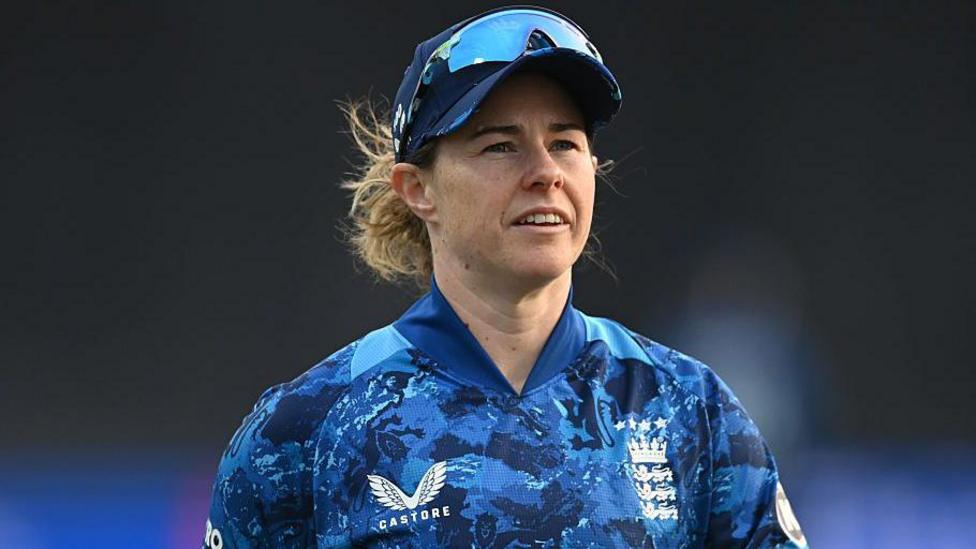
Beaumont Walks Away: England Cricket Loses a Pillar
Tammy Beaumont's retirement reveals a deeper truth about the fire elite athletes need to survive international cricket's relentless grind.
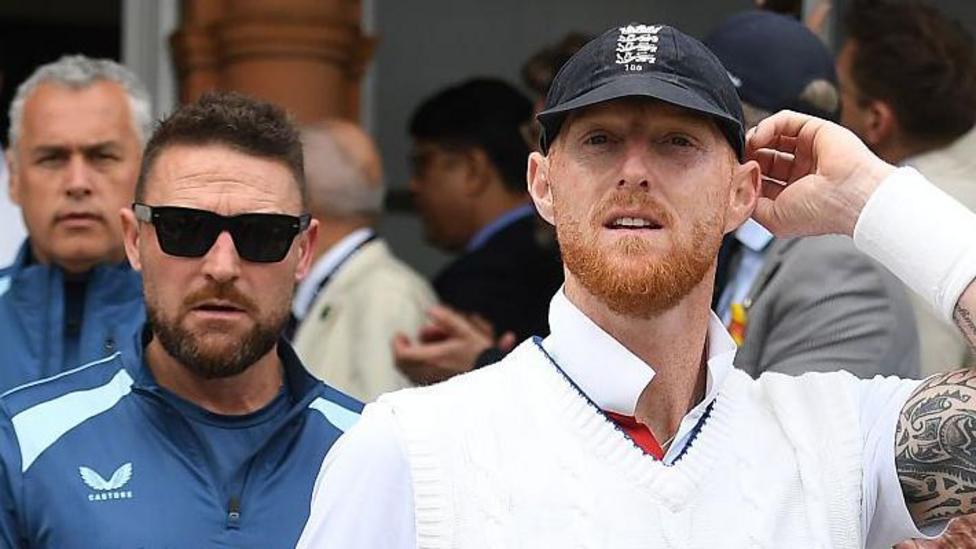
England Cricket's Identity Crisis: Questions That Demand Answers
After a catastrophic fortnight, English cricket faces existential questions about its direction, culture, and future.

Scheffler's Historic 79-Tournament Cut Streak Ends at Scottish Open
World number one Scottie Scheffler missed a cut for the first time since 2022, bogeying his final hole at the Scottish Open.