Tillman's Bloody Sock Game Cements His Place in USMNT Lore
Malik Tillman played through a torn boot and a bleeding foot to deliver a signature World Cup moment for the US.
A Boot Torn, a Legacy Forged
There are performances that define a tournament, and then there are performances that become mythology before the final whistle even blows. Malik Tillman's display in the United States' 2-0 victory over Bosnia and Herzegovina in the Round of 32 belongs firmly in the second category. The 23-year-old midfielder didn't just contribute to a historic win. He did it with a ripped boot, a bloody sock, and the kind of stubborn refusal to leave the pitch that will be replayed on US soccer highlight reels for decades.
While the rest of the stadium held its breath over whether Folarin Balogun would see red during a tense second half, Tillman had a more visceral problem. An opponent's stomp had shredded the upper of his right boot, leaving him bleeding through his sock and grimacing through every touch. He played on anyway. In a sport increasingly defined by precautionary substitutions and load management, there was something almost anachronistic about Tillman grinding through the pain. This wasn't a group stage dead rubber. This was knockout football at a home World Cup, and the stakes were existential.
"I didn't want to come off. You don't get these moments twice."
The Road That Built Him
To understand why Tillman's bloody sock resonates so deeply, you have to understand the road he took to get here. This is not a player who walked into Mauricio Pochettino's World Cup squad on reputation. Tillman had to earn every single roster spot through a grueling qualification cycle and an even more demanding camp process. Pochettino, as ruthlessly meritocratic as ever, made it clear from the start that no one was guaranteed a place. Tillman responded not with complaints, but with performances.
His trajectory mirrors the broader arc of this USMNT generation. Players like Christian Pulisic, Weston McKennie, and Timothy Weah have carried the flag for years, but the depth behind them has often been questioned. Tillman represents the next layer of that depth, a technically gifted midfielder who can operate between the lines, carry the ball under pressure, and unlock defenses with a single pass or a dead-ball delivery. His inclusion wasn't a luxury. It was a tactical necessity for a coach who demands versatility in the final third.
What Pochettino Sees in Him
Pochettino's system has always prized midfielders who can do more than one thing. At Tottenham, it was Christian Eriksen and Dele Alli. At Paris Saint-Germain, it was Marco Verratti threading needles from deep. With the US, Tillman has emerged as the connective tissue between a defense that absorbs pressure and an attack that thrives in transition.
His role against Bosnia was a case study in that utility. Tillman wasn't asked to be the headline act. He was asked to be the metronome, the player who keeps the shape ticking while others burst forward. His involvement in the build-up phases was constant, drifting into pockets of space between Bosnia's midfield and defensive lines, forcing opponents to make uncomfortable decisions about whether to follow him or hold their shape.
The Bottom Line: Tillman is no longer a depth option. He is a tactical fulcrum, and Pochettino's system visibly functions differently without him.
The Bloody Sock as Symbol
Sports love their visceral images. Curt Schilling's bloody sock in the 2004 ALCS became a defining symbol of the Boston Red Sox's curse-breaking run. Willis Reed limping onto the court in the 1970 NBA Finals is etched into basketball history. Tillman's torn boot and bloodied sock may not carry quite the same weight yet, but in the context of American soccer, this is the kind of moment that crystallizes a player's identity for a casual public that only tunes in every four years.
The US has always had a complicated relationship with individual heroism. The national team ethos has traditionally been built on collective effort, on the idea that no single player is bigger than the squad. That's admirable, but it also means that moments of individual brilliance and individual grit can get lost in the wash. Tillman's refusal to come off, his willingness to put his body through discomfort in a knockout game, cuts through that noise. It tells a story that even non-soccer fans can understand: this guy wanted it more.
And in the context of a home World Cup, where the US is carrying the weight of expectation that comes with being a host nation trying to make a deep run, those images matter. They build a narrative. They give casual viewers a character to root for. They make the tournament feel like it belongs to someone.
Bosnia Dispatched, but Questions Remain
The 2-0 scoreline suggests a comfortable evening, but the reality was more complicated. Bosnia and Herzegovina were organized, physical, and willing to make the US uncomfortable in the middle third. The first half was a chess match, with the US struggling to find the kind of vertical passing lanes that Pochettino's system demands. It was Tillman's movement, pulling Bosnia's midfield shape out of alignment, that gradually created the cracks the US eventually exploited.
Balogun's near-red card added a layer of chaos that the US didn't need. Had he been sent off, the entire complexion of the knockout bracket changes. Instead, the US survived that scare and closed the game out with the kind of defensive maturity that has become a hallmark of Pochettino's tenure. The back line held firm. The midfield shielded. And Tillman, boot shredded and sock soaked, kept cycling through his defensive responsibilities as if nothing had happened.
The Verdict on the Performance
This was not the US at their most electrifying. It was the US at their most professional. In knockout tournaments, that distinction matters enormously. The teams that go deep are rarely the ones that produce the most highlights in the Round of 32. They're the ones that manage games, handle adversity, and find a way through when the football isn't flowing. The US did all three against Bosnia, and Tillman was central to each.
What Comes Next
The US now advances to the Round of 16, where the quality of opposition takes a significant step up. The margins shrink. The space that Tillman found between Bosnia's lines will be harder to come by against the kind of disciplined, athletic midfields that the deeper rounds of a World Cup tend to produce.
But there's a reason to believe Tillman is built for exactly that stage. His ability to operate in tight spaces, to receive the ball on the half-turn under pressure, to deliver set pieces with precision, these are the skills that matter most when the pitches feel smaller and the stakes feel larger. The free-kick delivery that has become a growing weapon in his arsenal adds another dimension, one that Pochettino will lean on heavily in the rounds ahead.
The bigger question is whether the US can sustain this level of intensity through a potential quarterfinal and beyond. The squad depth is real, but the emotional toll of knockout football in a home tournament is something no rotation policy can fully mitigate. Players like Tillman, who are willing to bleed through their socks rather than accept a substitution, are the ones who carry teams through those moments.
The Bottom Line: Malik Tillman arrived at this World Cup needing to justify his place. He's leaving each game having redefined what this US team can be. The bloody sock is the image, but the substance underneath it is what should terrify whoever draws the US next.
Editorial Integrity
This is an original SportPulse article written by our editorial team. All content is independently researched, written, and reviewed by our writers and editors before publication. We do not publish copied, aggregated, or syndicated content.
SportPulse is committed to original sports journalism. Read our editorial policy or contact us with any questions.
More Like This
All football
The Tactical Arms Race Reshaping European Football in 2026
From hybrid pressing to inverted full-backs, the tactical evolution defining this season's elite continental clashes.

Parkinson Lines Up Four Premier League Friendlies to Toughen Wrexham for Championship War
Phil Parkinson is scheduling four Premier League preseason tests to harden Wrexham for a brutal Championship promotion fight in 2026-27.
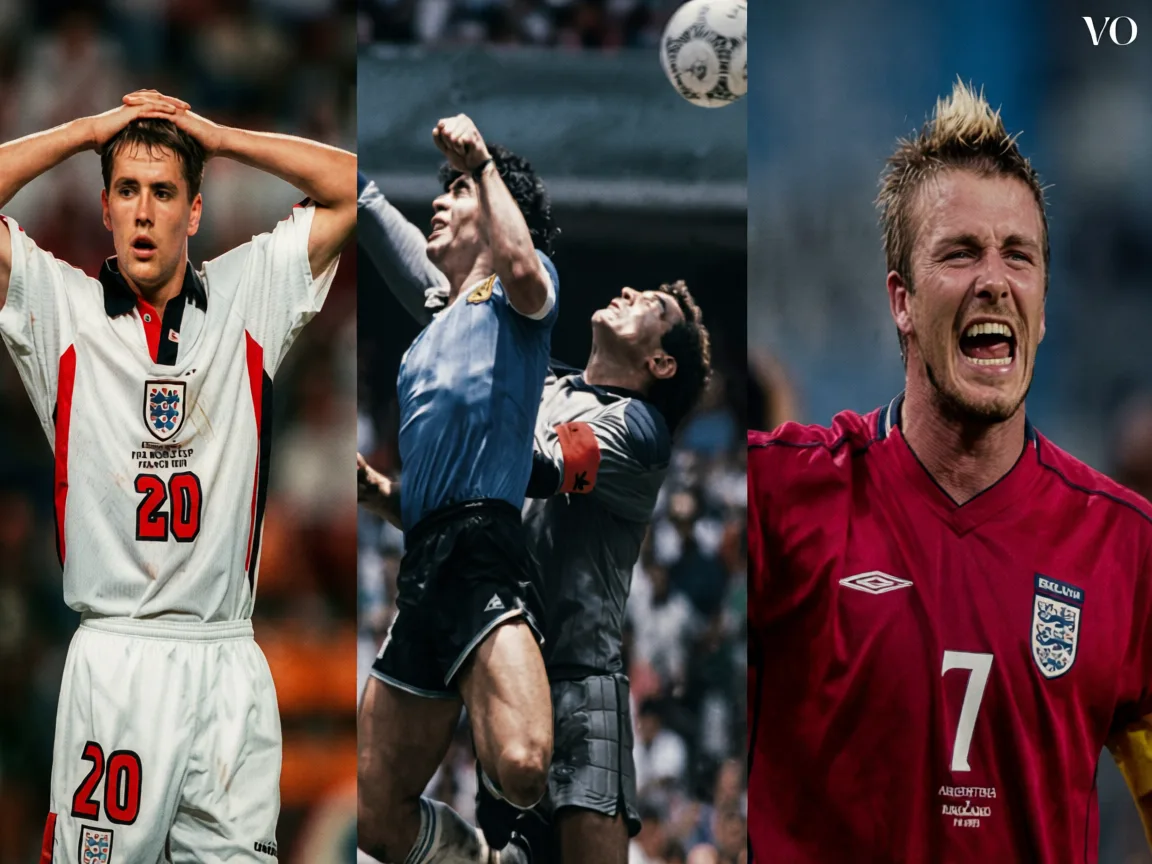
Blood, Hand of God and Beckham: England vs Argentina's World Cup War
Three World Cup clashes spanning four decades of pure, unfiltered enmity between two footballing superpowers.