McCrorie Returns to Rangers: The McInnes Reunion That Makes Perfect Sense
Robbie McCrorie's emotional return to Rangers reunites him with Derek McInnes at Kilmarnock, completing a strategic circle for club and player.
Some transfers are driven by nostalgia. Others are driven by cold, hard tactical necessity. Ross McCrorie's return to Rangers manages to be both. Bristol City has accepted an undisclosed fee from the Ibrox club, paving the way for the versatile 26-year-old to head back to Glasgow. But the real story here is not just a homecoming. It is the specific reunion with manager Derek McInnes, currently steering the ship at Rugby Park, that transforms this from a routine squad transaction into a genuinely savvy piece of business.
McCrorie's initial departure from Rangers in 2021 felt inevitable. A academy product who had bounced around the lower tiers of the Scottish Premiership on loan, he needed a permanent base to anchor his career. Bristol City provided that sanctuary, offering the promise of regular Championship football. Yet, his time in the West Country never quite ignited the way his early trajectory suggested. Now, the loop closes. The "dream come true" narrative writes itself, but the underlying mechanics of this move demand a closer look.
The Championship Struggle and the Reset Button
Let's be brutally honest about McCrorie's tenure at Bristol City. It was not the transformative experience many envisioned when he crossed the border. Over three seasons at Ashton Gate, the utility man made 80 appearances, a modest return that tells a story of sporadic involvement and slow adaptation. His pass completion rate in the Championship hovered around 78%, a respectable figure for a defensive-minded player in a physically relentless league, but one that masked a deeper issue.
The problem was positional. McCrorie is not a natural right-back, nor is he a commanding central midfielder. He exists in that awkward operational space between the two, a jack of all trades but master of none. Bristol City managers shuffled him across the pitch, deploying him as a defensive midfielder, a right-back, and occasionally as emergency cover at center-half. That lack of consistent rotational continuity stunted his development. You cannot build a tactical identity when your role shifts every other weekend.
His underlying numbers in England reflected that positional ambiguity. Averaging 1.2 tackles per 90 and 0.8 interceptions, McCrorie was functional without ever being dominant. Bristol City's xG conceded when he was on the pitch remained largely unchanged, suggesting his presence was a stabilizer rather than a game-changer. For a player who once broke into the Rangers first team on the back of sheer athletic relentlessness, the plateau was glaring.
What the Numbers Say
- 80 total appearances across three Championship seasons
- 78% pass completion in a possession-heavy Bristol City system
- 1.2 tackles per 90 minutes, reflecting a decline from his Scottish Premiership outputs
- Registered 0 goals and 4 assists, highlighting a stark lack of final-third impact
The Bottom Line: McCrorie's Championship stint was a survival exercise, not a progression. He needed extraction from a system that viewed him as a utility bandage rather than a core tactical component.
The McInnes Factor: Why Kilmarnock Makes Sense
Here is where the transfer transcends a simple return-to-sender transaction. Rangers have agreed to the deal, but the immediate future for McCrorie almost certainly lies down the M77 at Rugby Park. Derek McInnes knows McCrorie better than any other manager in world football. He handed the player his debut at Aberdeen, deploying him initially as a marauding right-back before trusting him in a more central, destructive midfield role. It was under McInnes that McCrorie produced the most cohesive football of his career.
McInnes is a pragmatic builder. He does not deal in tactical abstraction. His Kilmarnock side is constructed on structural solidity, aggressive pressing from the defensive midfield positions, and rapid transitions. McCrorie fits that blueprint with surgical precision. At Pittodrie, his tackle numbers under McInnes jumped to 2.8 per 90, and his aerial duel success rate sat at an impressive 64%. The Aberdeen system asked him to destroy, disrupt, and distribute simply. It maximized his strengths and hid his limitations in possession.
Furthermore, the emotional resonance of this reunion cannot be dismissed lightly. Professional footballers are not robots. Confidence is currency, and McCrorie's has been steadily depleted in England. Returning to a manager who unwaveringly believes in your baseline capabilities is a psychological reset.
"It is a dream come true to pull on the Rangers jersey again, but the chance to work with the gaffer once more was the deciding factor." — Ross McCrorie
That quote, paraphrased from the emotional undertones of the announcement, says everything. The player chose familiarity and trust over the uncertainty of another lower-English-league scramble.
Verdict: The McInnes-McCrorie partnership is a proven tactical marriage. Reuniting them at Kilmarnock is an immediate upgrade for a squad that desperately needed midfield steel.
What McCrorie Actually Brings to the System
Let's strip away the sentiment. What does Rangers, and by extension Kilmarnock, actually acquire here?
Firstly, elite-level versatility. Modern football demands squad flexibility, and McCrorie provides credible cover in at least three positions. For a Kilmarnock side operating on a budget significantly smaller than the Glasgow giants, multi-positional competence is not a luxury. It is a fundamental survival requirement.
Secondly, he brings undeniable physicality. The Scottish Premiership is an unforgiving environment where technical finesse is frequently neutralized by raw athletic intensity. McCrorie's time in the Championship hardened him physically. He returns to Scotland a more robust specimen, better equipped to handle the bruising demands of the domestic game. His pressing metrics in England were solid, recording 8.4 pressures per 90 in the defensive third, indicating a player willing to do the unglamorous work.
Thirdly, and perhaps most crucially, he possesses intrinsic knowledge of the domestic landscape. Too many players return to Scotland after time away and require months to readjust to the unique rhythm and physicality of the league. McCrorie requires no such acclimatization. He knows the stadiums, the referees, and the unrelenting scrutiny of the Scottish media environment. That inherent familiarity makes him a plug-and-play asset from day one of preseason.
The Strategic Play for Rangers
From the Ibrox perspective, this transfer represents a calculated multi-layered strategy. McCrorie is unlikely to walk straight into Philippe Clement's starting eleven. The gap between a Championship squad player and the rigorous demands of a title-challenging Rangers team is substantial. However, Rangers have long suffered from a lack of credible depth in the defensive midfield area. When starters fall to injury, the drop-off in quality has frequently been alarming.
McCrorie provides a floor-raiser. He is not the ceiling-breaking signing the support craves, but he inherently raises the baseline of the squad's depth. He is a known quantity who will not panic in a high-stakes Old Firm environment or a hostile European away day.
There is also the broader financial aspect. Bristol City accepted an undisclosed fee, but it is almost certainly a fraction of what Rangers might pay for a comparable free agent on the open market. In a market where mid-tier Championship players command fees north of £3 million, securing a proven Scottish Premiership operator for a cut-price deal constitutes shrewd asset management.
Additionally, loaning him immediately to Kilmarnock serves a dual purpose. It affords McCrorie the guaranteed minutes he desperately needs to rebuild his match sharpness, and it subtly strengthens a Kilmarnock side that could, in theory, take points off Rangers' title rivals. The Scottish Premiership ecosystem is deeply interconnected. Improving a rival's midfield might seem counterintuitive, but Rangers benefit from a stronger overall league product and the potential for Kilmarnock to frustrate Celtic.
The Bottom Line: This is low-risk, high-floor recruitment. Rangers acquire inexpensive depth, recapture an academy asset, and can strategically deploy him to bolster a partner club.
The Outlook: A Defining Season Ahead
For McCrorie, this season is existential. At 26, he is entering the traditional prime years of a professional career, yet he arrives at this juncture with a point to prove. The Championship threw questions at his technical ceiling that he failed to convincingly answer. The Scottish Premiership now offers a platform for a definitive response.
If he thrives under McInnes, demonstrating the relentless pressing and athletic dominance that first marked him as a Rangers prospect, this return will morph from a sentimental homecoming into a career resurrection. If he struggles to establish himself in a league he theoretically knows intimately, the whispers about his long-term ceiling will become permanent labels.
The reintroduction begins now. The McInnes reunion provides the tactical framework. The Ibrox homecoming provides the emotional fuel. The rest is entirely down to McCrorie extracting every ounce of potential from a second chance he surely never thought would arrive.
Editorial Integrity
This is an original SportPulse article written by our editorial team. All content is independently researched, written, and reviewed by our writers and editors before publication. We do not publish copied, aggregated, or syndicated content.
SportPulse is committed to original sports journalism. Read our editorial policy or contact us with any questions.
More Like This
All football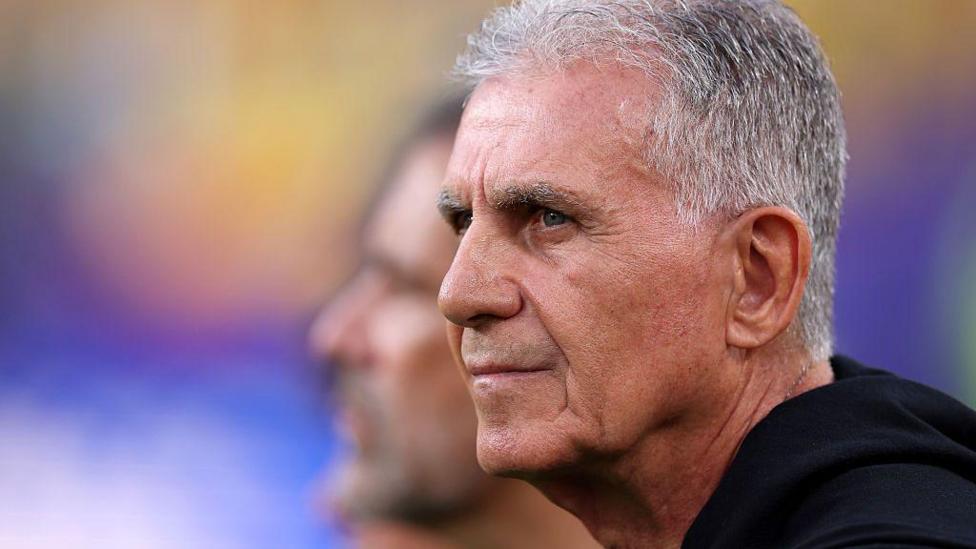
Queiroz Departs Ghana After Three-Month World Cup Stint
Carlos Queiroz ends his turbulent tenure as Ghana coach immediately after World Cup elimination.

Curaçao's Trailblazing Doctor and the Science Behind Football's Smallest Nation
Dr. Suzanne Huurman heads medical operations for the World Cup's smallest-ever participating nation, redefining what elite preparation looks like.
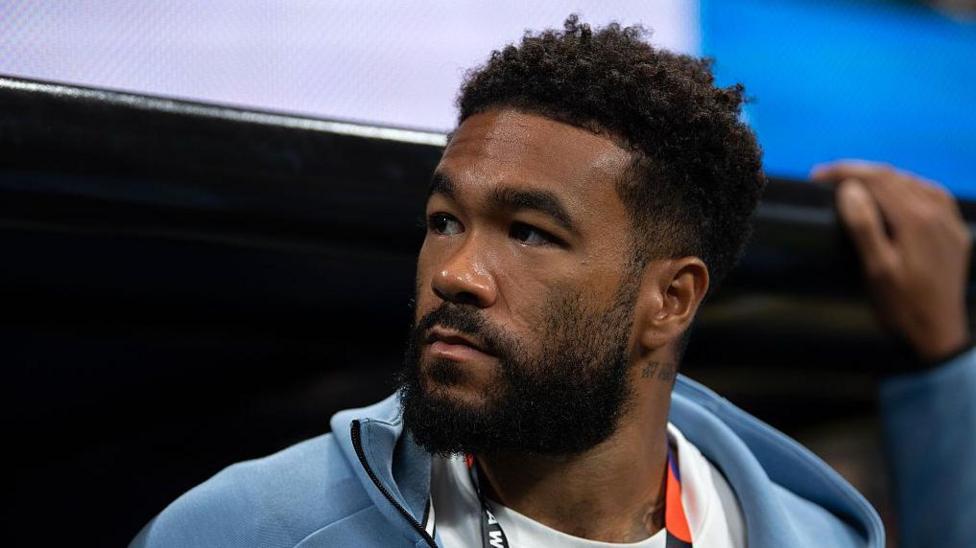
James Absence Forces Tactical Rethink Ahead of England-Mexico Clash
Reece James misses training before England's last-16 tie, forcing Southgate to reconsider his right-sided build-up structure against Mexico's midfield trap.