Hobbled Out of the Arena: Is This Truly the End for McGregor?
McGregor trademark strut into UFC 329 ended with him limping out of T-Mobile Arena, fuelling retirement talk again.
The image was almost too poetic to believe. Conor McGregor, the most financially consequential fighter in the history of mixed martial arts, performing his trademark bouncy strut around the octagon at UFC 329. Then, minutes later, he was hobbling out of the T-Mobile Arena in Las Vegas, his body betraying the showman one more time. He came to put on a performance. He left putting on a different kind of spectacle entirely. The gap between the entrance and the exit has rarely felt so vast, or so bleak. This was not a man who lost a fight. This was a man whose body appears to be staging a mutiny against his ambition. In the cold light of the Nevada desert, the question is not whether McGregor can beat Max Holloway. The question is whether his structural integrity can withstand the rigours of a training camp, let alone a five-round main event. The signals are pointing in one direction, and it is not one that anyone who has followed his remarkable career wants to accept. ### The Anatomy of a Trainer The numbers, in this context, are not about strikes landed or significant strikes absorbed. They are about the sheer volume of trauma a single human frame can absorb before the scaffolding gives way. McGregor is 36 years old. He has not won a fight since a first-round TKO of Donald Cerrone in January 2020, a victory that itself feels like it belongs to a不同的 era of the sport. In the time since that spectacular night in Las Vegas, he has fought twice, losing both. The first was the shocking second-round knockout loss to Dustin Poirier at UFC 257 on Fight Island, a defeat that ended with his leg snapped in grotesque fashion. The second was a second-round submission loss to Poirier at UFC 264 where he again broke his tibia. That injury alone required a titanium rod inserted into his left leg, a surgical intervention that should have marked the end of any reasonable athletic career. The hubris, or the courage, to continue is a subject for the psychologists. The reality for the analysts is simpler: McGregor has fought approximately 72 seconds of competitive MMA since July 2021. He has undergone major surgery. He has spent years in recovery. And now, on the precipice of a return against one of the most durable and high-volume strikers in the history of the featherweight and lightweight divisions, his body has once again failed him. To frame this as a setback is to misunderstand the biomechanics of elite combat sports. > "The body keeps the score. At some point, the ledger demands payment." This is not a slump. This is a pattern. When a fighter Farm-to-table-to-retirement pipeline starts to look this clear, the conversation needs to shift from his next opponent to his quality of life at fifty. ## Holloway Realism Check If we are honest, the matchmaking for a hypothetical prime McGregor versus the current Max Holloway was always a nightmare. It is the single worst stylistic challenge for a counter-puncher with declining mobility. The current version of Holloway is a machine. His record-setting 445 significant strikes landed against Calvin Kattar in 2021 remains one of the most astonishing displays of output in UFC history. He does not stop. He walks through fire. He punishes the body. When McGregor was at his zenith, his left hand was a heat-seeking missile that ended fights before the volume of his opponent could become a factor. The 13-second knockout of Jose Aldo is the most famous example of this, and it will be etched on his tombstone. But even that version of McGregor was susceptible to pressure. Nate Diaz, a fighter with infinite stamina but limited explosion and rudimentary boxing by elite MMA standards, pushed McGregor to the brink in both of their fights. Holloway is a version of Diaz with better defensive boxing, superior kicks, and a championship-level gas tank. For McGregor to beat Holloway, he needs to be able to move. He needs to stay off the fence. He needs to create angles. The ability to bounce on the balls of his feet, to enter range and exit unscathed, is the fundamental requirement of his style. Without it, he is a stationary target for a fighter who breaks stationary targets for fun. ### What the Numbers Say - 0 wins since January 2020 - 48 months since last victory - 2 leg surgeries since 2021 - 40+ fights across amateur and professional career The durability question is not new in MMA, but it has reached a critical mass with McGregor. The UFC, for its part, has a well-documented history of protecting stars past their expiration date. The spectacle is the product. But even the most cynical promoter must look at a fighter who cannot stay healthy and question the risk-reward calculus. The UFC 329 scenario, even if it was merely a pre-fight promotional appearance gone wrong, writes a narrative the UFC does not want to write. It is the story of a legend who cannot answer the bell. ## The Legacy Conversation Let us dispense with the hesitation that clouded the MMA community's reaction to this moment. Sentimentality is a useful feeling for fans, but a dangerous one for the people making decisions about fighter safety. Conor McGregor does not need to fight again. He does not need the money. His net worth is estimated at $50 million to $100 million, including big external investments like his stake in Proper No. Twelve Irish Whiskey, which sold for a reported $600 million in 2021, and his Pink企业发展 shares in the UFC itself reported to be worth around $200 million. He has two young children. He has a legacy that, while complicated by out-of-cage controversies, includes the achievement of simultaneously holding the featherweight and lightweight titles, a feat accomplished by only one other fighter in UFC history. He changed the economics of the sport. He made fighters rich. His influence on athlete pay and the leverage of the individual in a promoter-dominant ecosystem is his most lasting achievement, more so than any knockout. But the sport has a way of reclaiming the narrative. It does not care about your business acumen. It does not care about your net worth. It cares about whether the man in front of you can hurt you, and whether you can absorb that punishment. McGregor is a fighter who has always relied on speed and reflex. reflexes do not improve with age and time away. Speed does not return after years of rehab. The "Iron Chin" myth is the most dangerous one in combat sports, and McGregor, for all his brilliance, was never the most durable fighter even at his peak. The alchemy of his success was not in taking shots, but in never taking them. ### The Normalisation of Denial The reaction from segments of the fan base is predictable. They point to the first-round TKO of Cerrone as evidence that the chin is still there. They point to thefact that his loss to Poirier was a fluke injury. They argue that with a full camp, McGregor can recapture the magic. This is the normalisation of denial. It is a coping mechanism for the end of an era. > "The most dangerous thing in combat sports is not a punch. It is hope." The cold, clinical truth is that the version of McGregor who fought Khabib Nurmagomedov in 2018 was already a diminished version of the fighter who starched Aldo in 2015. And the version who fought Poirier in 2021 was a shadow of even that. The trajectory is not one of decline. It is one of cliff edge. Each return has been less successful than the last. Each injury has been more severe than the previous one. The storyline writes itself, but no one wants to read it. ## What Happens Now The UFC will make a decision. If McGregor cannot fight Holloway at UFC 329 or whenever the bout is rescheduled, they will move on. They always do. Holloway has options. A rematch with Alexander Volkanovski for the featherweight title remains a massive fight. A move up to lightweight to challenge for that title is a viable career path. He is in the prime of his career. He does not need McGregor, though the payday would be career-altering. For McGregor, the path is less clear. Another surgery. Another year of rehab. Another comeback at 37 or 38, against a top-five contender who has only gotten sharper. It is a grim calculus. The T-Mobile Arena has seen its fair share of dramatic moments. It was the site of the Aldo knockout, the stage for the Mayweather bout, the backdrop for the تakedown of Eddie Alvarez. But the image of McGregor limping out of the building is one that will linger. It is the image of a man whose legend has outlived his body. Verdict: The end is not near. It is here. The question is whether anyone around McGregor has the courage to say it out loud.
Editorial Integrity
This is an original SportPulse article written by our editorial team. All content is independently researched, written, and reviewed by our writers and editors before publication. We do not publish copied, aggregated, or syndicated content.
SportPulse is committed to original sports journalism. Read our editorial policy or contact us with any questions.
More Like This
All long-reads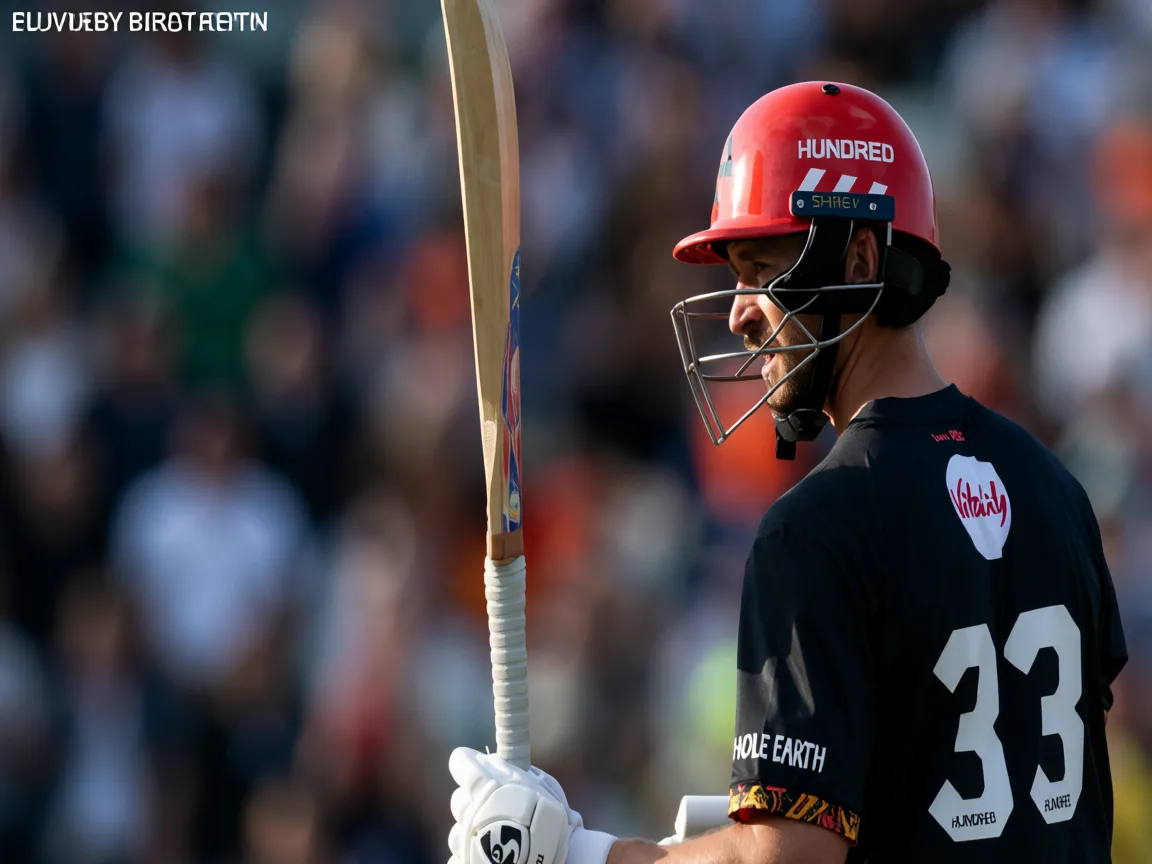
Clarke's Blistering 68 Ignites Birmingham Phoenix's Hundred Campaign
Joe Clarke attacked every Trent Rockets bowler at Edgbaston, powering Phoenix to a statement opening win in The Hundred.

The Sneeze That Silenced a Nation: Cuba's War on Independent Press
Abraham Jiménez Enoa built Cuba's first independent magazine. The state responded with isolation, surveillance, and interrogation.
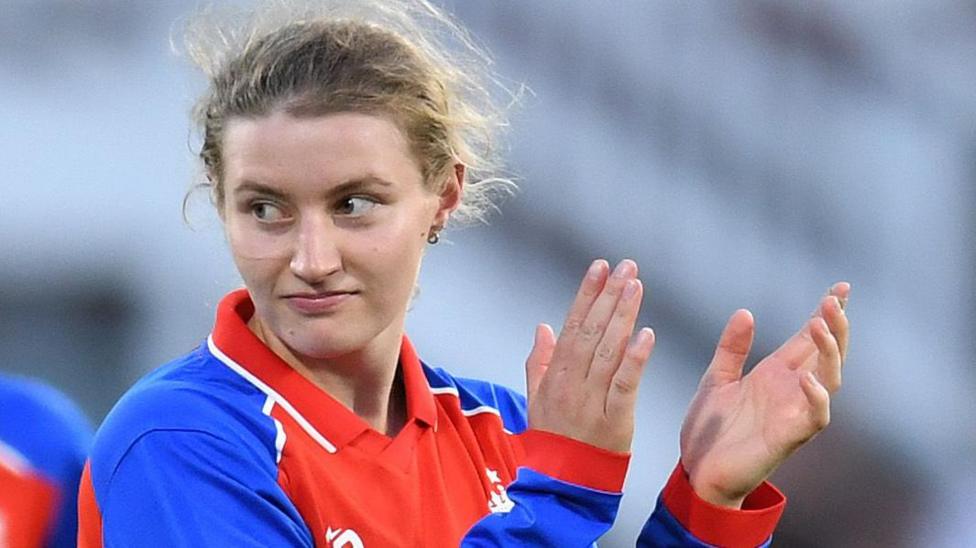
From Lord's Heartbreak to Leading England: Charlie Dean's Stunning Redemption Arc
Once defined by a crushing dismissal at Lord's, Charlie Dean now captains England into a World Cup semi-final.