McLaren Lead Silverstone Upgrade War as Midfield Scramble Intensifies
Eleven teams converge on Silverstone with major aero packages, but McLaren's floor overhaul steals the technical spotlight.
High-Speed Demands Meet Upgrade Season
Silverstone's blend of relentless high-speed corners and changeable English summer weather makes it the ultimate proving ground for aerodynamic upgrades. The circuit demands a high-downforce configuration even though it features two genuine flat-out sections where drag reduction matters. Maggotts-Becketts-Chapel alone subjects cars to sustained lateral loading exceeding 5G for over 4 seconds continuously. That complex punishes aerodynamic instability ruthlessly. Any twitch mid-corner costs tenths that cannot be recovered on the subsequent Hangar Straight.
Teams have timed their development cycles to coincide with the British Grand Prix for good reason. The post-Spanish Grand Prix period traditionally marks the shift from early-season concept refinement to iterative refinement of confirmed philosophies. With the summer shutdown looming in August, Silverstone represents one of the last opportunities to introduce substantial aero packages before wind tunnel hours are frozen.
For the championship battle, the technical war at Silverstone could reshape the competitive order. The field spread has compressed to under 0.8 seconds between pole and the back rows in recent qualifying sessions. A single upgrade cycle can swing performance by two to three tenths, which at current margins is the difference between Q3 and Q1.
McLaren's Floor Overhaul Steals the Headlines
The headline story from the upgrade tracker is McLaren bringing the most extensive development package of the weekend. Their Woking-based operation has deployed a heavily revised floor assembly, featuring reprofiled diffuser tunnels, updated edge wings, and a reshaped floor fence configuration. This represents a consolidation of the philosophy that transformed their 2023 season rather than a revolutionary departure.
The diffuser modifications target rear-end stability through the high-speed corners that define Silverstone's character. By expanding the diffuser volume and adjusting the throat geometry, McLaren aim to increase downforce generation without a corresponding drag penalty. The edge wing revisions work in concert, managing the airflow that seals the diffuser's low-pressure region and prevents the aerodynamic stall that plagued their early-season form on high fuel loads.
Why the Floor Matters More Than the Wing
Floor performance accounts for roughly 60 to 65% of a modern Formula 1 car's total downforce output under the current ground-effect regulations. Visible elements like front wings and beam wings generate the remainder. Consequently, a floor upgrade delivers a disproportionately larger performance gain than an equivalent investment in upper-body aero components. McLaren's strategic focus on the underbody reflects a cost-cap reality where finite CFD and wind tunnel allocation must be directed where the returns are greatest.
The floor is where the gains live. Everything you see above the plank is secondary to what happens underneath it. Every designer in this paddock knows the mathematics.
McLaren's engineers will be scrutinising tyre temperatures through the high-speed sequences. The revised floor should improve airflow consistency to the rear diffuser, which in turn stabilises rear tyre pressures and delays the thermal degradation that has occasionally undermined their race pace relative to Red Bull.
Ferrari and Red Bull: Targeted Refinements Rather Than Revolution
Ferrari arrive at Silverstone with a more subdued upgrade package focused on the front wing and brake duct airflow conditioning. Their season has been characterised by finding performance, then losing it to the kind of inconsistencies that point to correlation gaps between their Maranello wind tunnel and trackside reality. A small front wing flap adjustment and revised brake duct inlet geometry suggest the Scuderia are in troubleshooting mode rather than pushing for a step change.
Red Bull's approach is characteristically disciplined. They bring a diffuser tweak and minor beam wing adjustment to Silverstone, the kind of incremental polish that has defined their development philosophy since 2022. The Milton Keynes squad rarely chase headline-grabbing packages mid-season. Instead, they refine the details within an already proven concept. Their weakness however is that the current car is nearer the end of its development curve than its key rivals.
Strategy Breakdown: The Pit Wall Chess Match
Silverstone strategy is dictated by the offset between tyre degradation and track position. The Pirelli C1, C2, and C3 compounds return for the British Grand Prix, with the hardest available compound in the allocation designed to handle the high-energy loads through Copse and Stowe. However, Silverstone's abrasive new asphalt surface, laid during the circuit's most recent resurfacing programme, has historically degraded tyres faster than thermal models predict.
The One-Stop Temptation
A one-stop strategy is theoretically optimal at Silverstone if degradation stays within Pirelli's projected windows. Race simulations suggest a medium-to-hard or hard-to-medium single stop around lap 18 to 24 yields the fastest theoretical race time. However, the practical reality involves Safety Car probabilities exceeding 35% based on historical Silverstone data. A SC period between laps 12 and 30 forces the pit wall into a defensive stop, and any car caught on old rubber when the field bunches up loses track position that is extraordinarily difficult to recover.
The risk-reward calculus favours an early-stopping two-stop if track temperatures climb above 30 degrees Celsius. Under those conditions, the medium compound's degradation curve steepens dramatically after 18 laps, and the performance offset between fresh and worn tyres can exceed 0.7 seconds per lap in the final stint. Mercedes demonstrated this vulnerability at Silverstone in 2023 when their one-stop strategy collapsed in the final ten laps.
The Midfield Scrap: Each Upgrade Tells a Story
The compressed midfield makes every development package potentially race-altering. Aston Martin bring a modest rear wing endplate revision aimed at reducing drag on the Wellington Straight run to Brooklands. Williams, whose low-drag philosophy has historically suited Silverstone, continue to chase a balance that works on circuits demanding higher downforce. Their updates focus on front corner management to improve front-end predictability without abandoning their straight-line speed advantage.
The current championship order reflects these incremental gains and losses with brutal honesty.
- Max Verstappen, Red Bull Racing — points leader, margin defined by consistency rather than raw pace advantage
- Lando Norris, McLaren — closest challenger, the gap measurable in race execution rather than car performance deficit
- Charles Leclerc, Ferrari — within striking distance on pace but unrewarded by strategic and mechanical variables
- Carlos Sainz, Ferrari — consistent but lacking the qualifying edge to convert on Sundays
- Oscar Piastri, McLaren — the dark horse whose race pace frequently overshadows his qualifying position
What Silverstone Reveals About the Title Fight
The British Grand Prix functions as a referendum on every team's development trajectory. McLaren's floor upgrade signals a team operating with confidence and correlation. Ferrari's smaller package reveals an organisation still chasing certainties. Red Bull's conservatism is either supreme confidence in their existing platform or the first hint that their development ceiling is approaching.
The points standings will shift based on who interprets Saturday's qualifying and Sunday's conditions correctly. A three to five degree track temperature change between Saturday and Sunday can render a setup obsolete. The team that wins Silverstone will be the one whose upgrade package delivers performance that is not just fast but predictable across the operating window. Raw pace wins qualifying. Comprehension wins races. The stopwatch never cares about intentions, only execution.
For McLaren, this weekend is about proving their upgrade correlation holds under the most demanding aero test of the season. For Red Bull, it is about demonstrating that incrementalism still beats revolution. For the rest, it is about surviving a midfield where the cost of standing still is falling backwards at a rate of 0.1 seconds per race weekend. Silverstone will provide answers.
Editorial Integrity
This is an original SportPulse article written by our editorial team. All content is independently researched, written, and reviewed by our writers and editors before publication. We do not publish copied, aggregated, or syndicated content.
SportPulse is committed to original sports journalism. Read our editorial policy or contact us with any questions.
More Like This
All f1
Silverstone Showdown: Five Flashpoints That Define the British Grand Prix
Silverstone's high-speed corners, unpredictable weather, and McLaren vs. Red Bull tension make the British GP a strategic chess match.
Slater's Silverstone F3 Pole: Anatomy of a Qualifying Masterclass
Freddie Slater's maiden F3 pole at Silverstone reveals chassis and tire energy dynamics separating the elite from the rest.
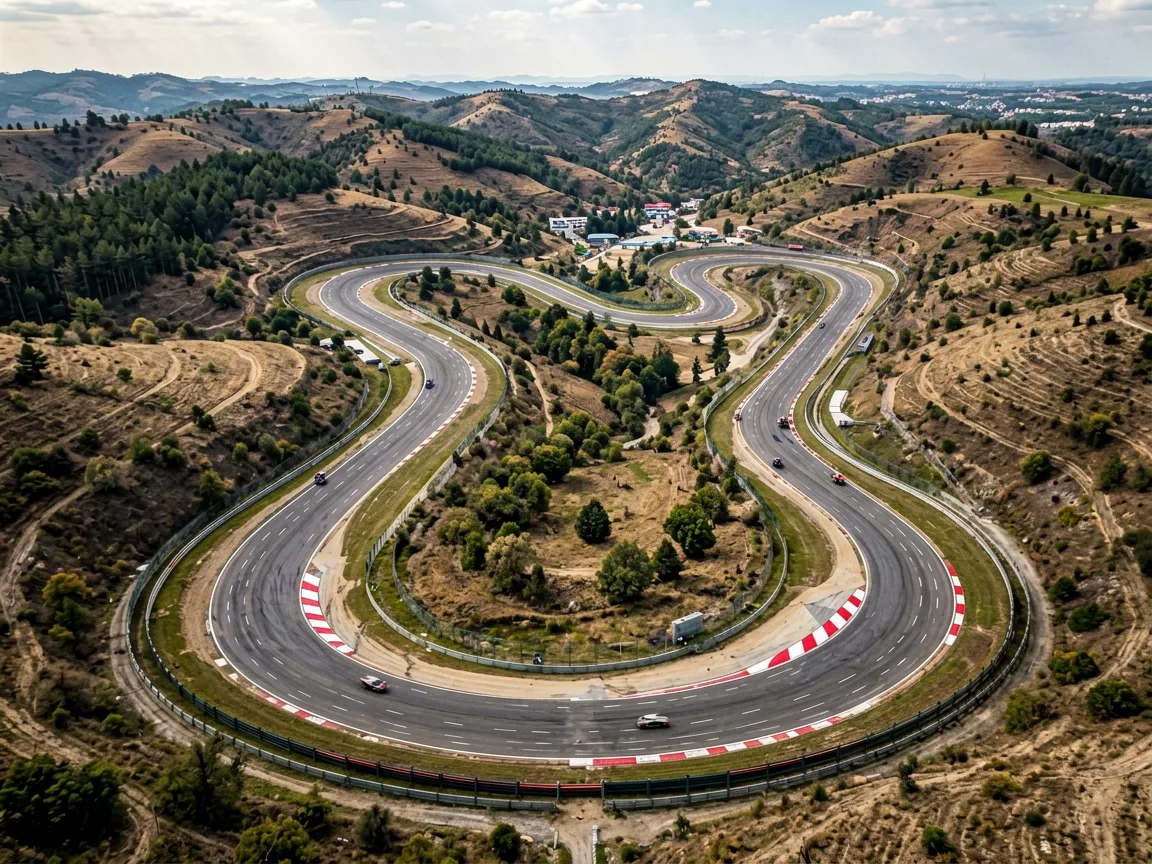
Hungaroring: Why F1's Tightest Purpose-Built Track Punishes Every Setup Compromise
Budapest's 4.381 km circuit demands peak downforce, punishes overheating rear tyres, and narrows the overtaking window to a single braking zone.