Messi's Final World Cup Might Eclipse Maradona
A second World Cup crown would numerically and philosophically settle the Maradona debate in Messi's favour.
When Lionel Messi finally ascended the Lusail podium in December 2022, the tactical narrative surrounding Argentina felt entirely resolved. Lionel Scaloni had engineered a 4-3-3 that seamlessly transitioned into a 4-2-3-1 in possession, constructing a structural scaffold designed solely to maximize his captain's dwindling but transcendent spatial awareness. It was billed as the perfect denouement. Yet as the horizon shifts toward another potential campaign, a far more complex philosophical question emerges. If this is indeed Messi's final World Cup, could winning it twice finally eclipse Diego Maradona?
The very framing of the debate demands a shift in how we consume football mythology. Maradona's legend is inextricably tied to operating within chaos. His 4-3-3 at the 1986 World Cup was less a structured tactical system and more a localized man-marking evasion policy. The Argentinian setup of that era offered broad tactical brushstrokes, allowing Maradona to excavate space in the transitions through sheer individual alchemy. His narrative is operatic, defined by addiction, scandal, and a raw, visceral confrontation with his own mortality.
Messi's career, by stark contrast, has often been dismissed by the romantic school as clinically flawless. A kid was good at football, and then was consistently good at it for two decades, hoovering up titles with a metronomic inevitability. The narrative always seemed a little flat when placed alongside Maradona's operatic extremes. He wasn't nearly drowning in a cesspit, shooting at journalists with an airgun, or using a fake penis to evade drugs testers. In the European continental view, Messi was the ultimate system player. At Barcelona, the 4-3-3 was a rigid dogma. At Paris Saint-Germain, the 3-4-1-2沦为 an exercise in individual luxury, a shape that accommodated egos rather than optimized pressing.
The 2022 World Cup, however, introduced a crucial dramatic variable. Qatar offered the degree of narrative intrigue his catalog of club silverware lacked. Messi was no longer just executing within a framework. He was actively dictating it, overcoming his natural reserve to become the undisputed emotional and tactical anchor of a side that had spiritually drifted for years.
The Evolution of the Argentine Scaffold
Scaloni's masterstroke was not his implementation of the 4-3-3 or his mid-tournament shift to a 4-4-2 out of possession, but his psychological reintegration of Messi into the collective adrenal system. The template was forged in the crucible of the 2021 Copa América in Brazil. There, Messi began delivering pre-match team talks, assuming the role of emotional provocateur rather than silent executor.
Prior to that tournament, Argentina's tactical shape often suffered from a paradoxical rigidity. The squad would funnel the ball toward Messi, but without the synchronized gegenpressing triggers needed to win the ball back once attacks stalled. Scaloni solved this by installing Enzo Fernández and Rodrigo De Paul as relentless vertical pressers, creating a localized 5-2-3 in the final third that allowed Messi to conserve his energies for the final twenty meters.
When Messi snapped at Wout Weghorst in that infamous post-match interview with the phrase "¿Que mira, bobo?", it was celebrated as the quiet man finally rending his shell. But it was also a tactical manifesto. This was a player whose physical fragility seemed a constant reminder of his own sporting mortality, yet who levied absolute emotional control over the space around him. The knockout stage of that tournament felt like a structural解剖 of every opponent's defensive mid-block.
Tactical Shift
The defining moment of the 2022 campaign, beyond the penalties and the theatricals, was Scaloni's switch to a 4-4-2 without possession against the Netherlands. It was a shift born not of proactive philosophy, but of reactive survival. By deploying a flat mid-block, Argentina sacrificed their usual ecological dominance in the half-spaces. Instead, they channeled Dutch possession wide before triggering aggressive traps.
For Messi, this was a profound tactical accommodation. In a 4-3-3, his role as a false nine or a right-sided interior demands constant gravitational pull, dragging centre-backs into the midfield mire. In the 4-4-2, he operated alongside Julián Álvarez as a split striker, conserving his sprints for the decisive vertical moment. He was no longer expected to press the opposition backline. The system bent to his physical reality.
This adaptive elasticity is what separates the latter-day Messi from the Maradona archetype. Maradona was a force of nature that defied structure. Messi, in his twilight, has become an architect who dictates the structure's very dimensions.
- 2 major international trophies won consecutively, erasing years of final defeats
- 7 Ballon d'Or awards emphasizing a statistical supremacy Maradona never sustained
- 0 major tournaments won between 2014 and 2021, amplifying the Qatar narrative payoff
- A career recorded almost exclusively in the digital age, leaving no room for mythologized gaps
Numbers Versus Mythos
To eclipse Maradona in the collective Argentine consciousness requires a mathematical invasion of the spiritual realm. Maradona's 5 goals and 5 assists in 1986 are not remembered as data points. They are recalled as scenes of defiance. The "Goal of the Century" was a structural collapse of the English mid-block, an improvisational raid that turned a rigid tactical shape into a scenic route of humiliation.
Messi's 7 goals and 3 assists in Qatar carry a different tactical weight. They are the dividends of a meticulously planned rest-defence, the product of a team that understood precisely how to propagate space for their creators. His output was not a defiance of the system. It was the ultimate realization of it.
"Club success evidently wasn't enough. Messi was driven. He had overcome his natural reserve to become the true leader of the team."
The philosophical gulf between the two icons rests on how we value the aesthetic of suffering. Maradona's operatic lows validate a human vulnerability that feels authentic. But a second World Cup title, achieved at 39 years of age, would present an unanswerable counter-argument. It would demand an acknowledgment that sustained tactical adaptation and professional longevity are virtues every bit as heroic as chaotic genius.
A second World Cup also fundamentally rewrites the numerical ledger. Even the most ardent Maradonista cannot construct a logical framework where 2 World Cup titles and a Copa América are subordinate to a single summer in Mexico. The romantic will always argue for the texture of the struggle. But the academy, favoring repeatability, systemic control, and longitudinal impact, would have its definitive champion.
The 2026 Horizon
If Messi does indeed commit to the 2026 World Cup, the tactical calculus will shift dramatically once again. Over a year of additional age means his capacity for even the selective gegenpressing triggers of Qatar will be severely diminished. Scaloni, or any successor, will likely need to deploy a 4-2-3-1 that effectively operates as a 4-4-1-1 without the ball, with Messi given an unconditional press exemption.
The key will be whether Argentina's defensive spine, anchored by the likes of Cristian Romero, can sustain the territorial deficit. Messi will be required to generate maximum value from minimal touches in the half-spaces, acting as a pure progression accelerator rather than a sustained possession hub.
For Argentina, the next tactical test arrives in the upcoming Copa América. Scaloni must reconfigure his mid-block to accommodate a further physical decline, ensuring the offensive transition remains sharp even as Messi's explosive carry volume drops. The challenge is no longer just winning. It is designing a tactical net that preserves the structural integrity of the team while allowing a fading genius one final, glorious stroll through the spaces he redefined.
Eclipsing Maradona requires dusting off the romantic narrative and replacing it with undeniable, stark, and overwhelming arithmetic. A second World Cup does exactly that.
Editorial Integrity
This is an original SportPulse article written by our editorial team. All content is independently researched, written, and reviewed by our writers and editors before publication. We do not publish copied, aggregated, or syndicated content.
SportPulse is committed to original sports journalism. Read our editorial policy or contact us with any questions.
More Like This
All long-reads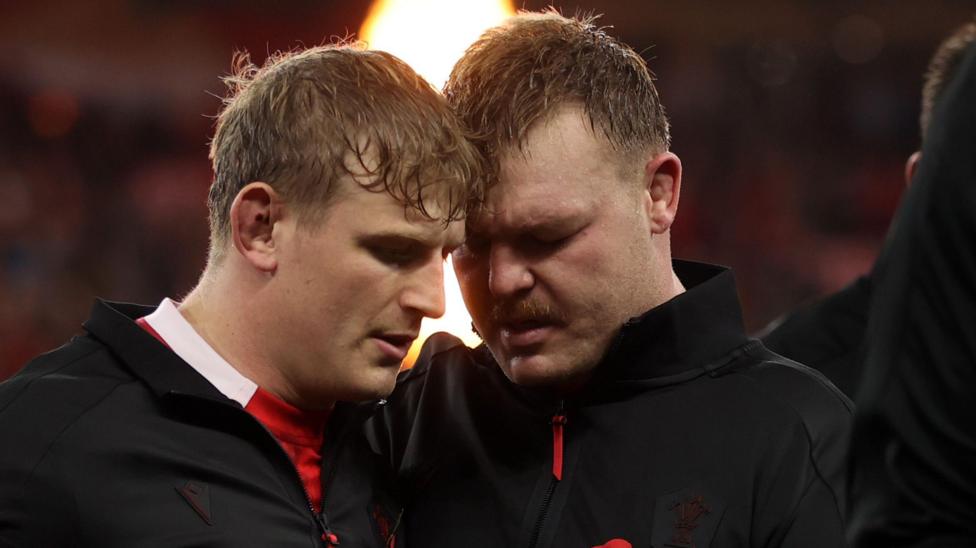
Morgan Endorses Lake's Wales Captaincy as Red Dragons Seek Stability
Jac Morgan throws full support behind Dewi Lake's retained Wales captaincy, signalling unity in a squad hungry for revival.
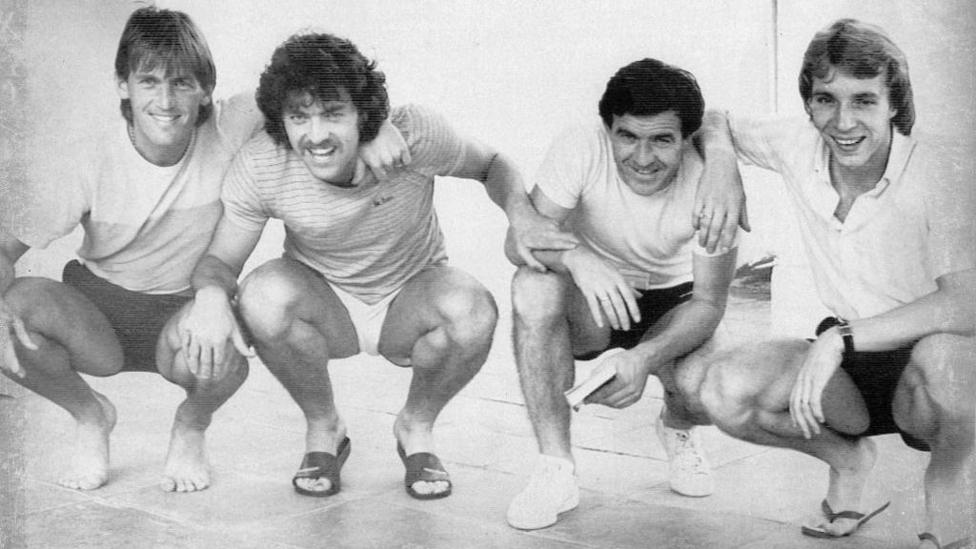
The Dagger, The Samba, and the Cartoon: Scotland's 1982 Agony
Scotland's 1982 World Cup blended David Narey's infamous toe-poke, Jock Stein's quiet fury, and an unforgiving group stage exit that haunts a generation.
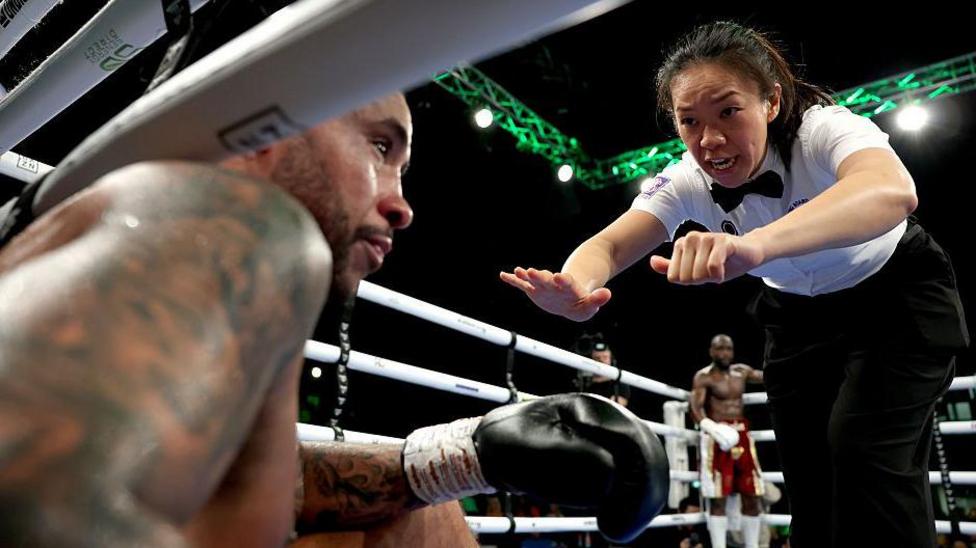
Breaking the Count: Amy Pu Shatters Boxing's Glass Ceiling
Amy Pu became the first woman to referee a professional boxing fight in British history, confronting prejudice at every turn.