The Dagger, The Samba, and the Cartoon: Scotland's 1982 Agony
Scotland's 1982 World Cup blended David Narey's infamous toe-poke, Jock Stein's quiet fury, and an unforgiving group stage exit that haunts a generation.
David Narey raised his foot and changed Scottish football history forever. The toe-poke from 25 yards beat Gilmar at his near post and gave Scotland a shock lead against Brazil in the 1982 World Cup. It was a moment of pure sporting audacity that quickly morphed into a cultural wound, forever reframed by the staggering beauty of the Brazilian response that followed.
Joe Jordan, Gordon Strachan, and John Wark have finally opened up about that surreal summer in Spain. Their recollections paint a picture of a squad caught between tactical realism and romantic illusion. The tournament remains one of the most fascinating and ultimately heartbreaking chapters in Scottish football lore.
The Goal That Haunted a Nation
Narey's strike in the 18th minute at the Ramón Sánchez Pizjuán should have been a career-defining highlight. Instead, it became an infamous footnote. Jimmy Hill, providing co-commentary for British television, famously dismissed the moment as a "toe-poke," a label that clung to Narey like a parasite for decades. The Scottish support never fully forgave Hill for diminishing the moment, but the damage to the narrative was done.
The reality of the strike was far more technical than the broadcast allowed. Narey caught the ball perfectly, sending a low, skidding drive through a crowded penalty area. It was a calculated strike, not a fluke. Yet in the retelling, the romance of the underdog scoring against the greatest team on earth was systematically stripped away.
Inside the Scotland dressing room at halftime, the atmosphere was a volatile mix of adrenaline and dread. Jock Stein sat in the corner, his face carved from granite, quietly demanding tactical discipline. Players recall the silence being louder than any team talk. They knew the storm was coming. They had poked the greatest footballing beast of the 20th century, and the second half was going to be a ruthless reckoning.
The Samba Retaliation
Brazil did not just equalize. They delivered a masterclass in brutal, mesmerizing football. The final 4-1 scoreline flattered Scotland only because the football geography demanded mercy. Zico orchestrated the midfield with a level of geometric precision that made the Scottish defense look like training cones. Éder scored a goal that defied physics, curling a volley from the left channel that crashed in off the far post. Sócrates glided through the center, utterly unmarkable.
Scotland had been dismantled by artists. The transition from leading the tournament favorites to trailing by three goals happened in a blur of yellow shirts and impossible trajectories. Wark vividly recalls the sheer speed of the Brazilian rotations, noting how every time a Scottish midfielder jumped to press, two more opponents materialized in the vacated space.
"You look up and you're touching thin air. That's what it felt like. They were playing a different sport." — John Wark
For Strachan, the match became an education in the cruel hierarchy of world football. The gap between European grit and South American artistry had never felt so devastatingly vast. Scotland had the spirit, but Brazil possessed an entirely different sporting genome. The physical toll was absolute. By the 80th minute, the Scottish outfield players were operating on empty, chasing ghosts across the Seville turf.
The Cartoon Character and the Coach
John Wark's recollections bring an unexpected, almost surreal dimension to the campaign. He describes striding onto pitches in Spain feeling like a cartoon character, an exaggerated version of a footballer pumped up by the sheer scale of the event. It was a heady cocktail of adrenaline and delusion that carried the squad through the opening phases before reality injected its cold serum.
The duality of the 1982 squad was stark. They were hardened professionals from the English top flight, men like Jordan who bled for every yard of grass. Yet under the Iberian sun, they sometimes played like actors in their own minds, convinced that willpower alone could conquer Spanish heat and tactical genius.
Jock Stein was the anchor attempting to tether these wild aspirations to the hard earth. The legendary manager carried the weight of the nation on his broad shoulders, constantly calculating the mathematical permutations required for group stage survival. Stein's furrowed brow on the touchline remains the defining image of the tournament for Tartan Army veterans.
The format of the 1982 World Cup was an unforgiving beast. A 12-team second group stage meant that margin for error was microscopic. Stein knew this intimately. He had built his career on pragmatic defensive structures, yet here he was, managing a squad desperate to express themselves against the most expressive team on the planet. The tension between the manager's head and the players' hearts was palpable.
The Soviet Exit
The Brazil defeat left Scotland's fate mathematically possible but psychologically broken. New Zealand offered a brief respite, a 2-0 victory that restored a modicum of pride. But the crucial clash against the Soviet Union in Málaga exposed a squad running on fumes. Strachan and Jordan both point to that match as the real breaking point.
The 2-2 draw against the Soviets was a brutal, attritional affair. Scotland pushed desperately for a winner that would secure progression, leaving gaping holes at the back. The late equalizer they conceded was a tragic echo of defensive frailties that had haunted the squad all tournament. Stein stood motionless in the technical area as the final whistle sounded. The dream was dead again.
Jordan remembers the visceral silence in the dressing room afterward. No screaming, no thrown boots, just the hollow sound of tape being ripped off ankles and the sporadic hiss of a sports rub being applied. It was the sound of a three-year qualifying campaign collapsing into dust. The veterans knew it was their last shot at World Cup glory, and the realization hung in the humid air like lead.
"We gave everything to that Soviet game. The legs were totally gone, but the belief never left. When you walk off knowing it's over, the silence is the worst part." — Joe Jordan
What It Means
The 1982 World Cup remains Scotland's most agonizing near-mense of a golden generation. They arrived in Spain believing a deep run was not just possible, but probable. They departed with a goal difference of minus three and a narrative of what-ifs that has echoed through the decades. The tournament established a grim pattern for Scottish football on the global stage: capable of moments of brilliance, but structurally incapable of sustaining a challenge over three brutal group fixtures.
Narey's goal against Brazil should have been a monument. Instead, it serves as a reminder of the fleeting, fragile nature of international tournament football. You can strike the most beautiful blow imaginable, but the game demands you survive the retaliation. Scotland landed a punch on the beautiful game's most fearsome heavyweight, and paid the ultimate price for their audacity.
The recollections from Jordan, Strachan, and Wark cement the 1982 campaign as a pivotal trauma that shaped the nation's footballing identity for a generation. The memories of the cartoon characters who walked off the pitch as mere mortals continue to resonate deeply. It was the moment Scotland learned that romance alone cannot survive the furnace of a World Cup.
Editorial Integrity
This is an original SportPulse article written by our editorial team. All content is independently researched, written, and reviewed by our writers and editors before publication. We do not publish copied, aggregated, or syndicated content.
SportPulse is committed to original sports journalism. Read our editorial policy or contact us with any questions.
More Like This
All long-reads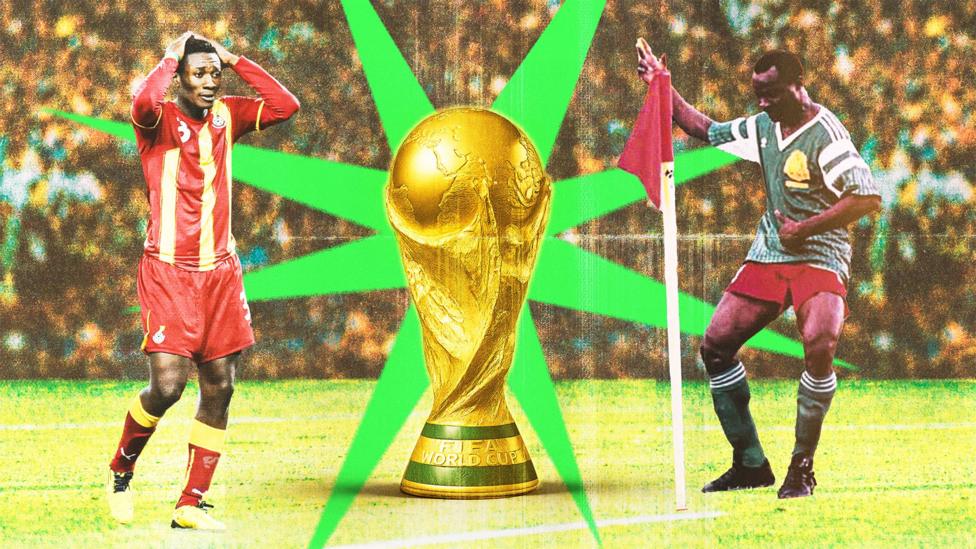
Africa's World Cup Ceiling: How Close Is the Continent to Lifting the Trophy?
Morocco rewrote history in Qatar, but what structural and tactical shifts must converge for Africa to finally win a World Cup?

Women's T20 World Cup 2024: Every Contender, Every Threat, Every Storyline
Alex Hartley's team-by-team guide sets the stage for a tournament where Australia's dominance faces its sternest challenge yet.

Swimming Through the Storm: Archie Goodburn's Medal Quest Beyond Brain Cancer
Scottish swimmer Archie Goodburn defies inoperable brain tumours to chase Commonwealth glory on home waters at Glasgow 2026.