Déjà Vu at the Azteca: Mexico and South Africa Rewrite World Cup History
For the first time ever, a World Cup opening fixture repeats — and it's Mexico vs South Africa once again.
A Fixture That History Demanded
When FIFA's match schedule for the 2026 World Cup was finalized, one line jumped off the page: Mexico vs South Africa as the opening fixture at the Estadio Azteca in Mexico City. The same two nations that kicked off the 2010 World Cup in Johannesburg will now do it again, 16 years later, on the grandest stage in football.
This is not a coincidence of marketing or convenience. It is, as far as historical records indicate, the first time in World Cup history that an opening match has featured the exact same two teams as a previous tournament's curtain-raiser. That alone makes Thursday's kickoff a genuinely unique moment in the sport's long and obsessive relationship with its own archives.
How 2010 Set the Template
The original meeting remains etched in the memory of anyone who watched it. On June 11, 2010, Soccer City in Johannesburg erupted when Siphiwe Tshabalala unleashed a thunderous left-footed strike to put hosts South Africa ahead in the 55th minute. The stadium shook. The tournament had its defining early image.
Mexico, though, refused to wilt. Veteran defender Rafael Márquez pounced on a loose ball in the box and stabbed home an equaliser in the 79th minute, silencing the home crowd and ensuring both nations left the opening day with a point. The match ended 1-1, and the tournament rolled on without a home win to ignite the party.
For South Africa, it was both a high-water mark and a warning. Bafana Bafana would fail to win another group game and became the first host nation to exit a World Cup at the group stage. Mexico, meanwhile, progressed to the Round of 16 before falling to Argentina.
Mexico's Extraordinary Opening-Match Pedigree
What makes this repeat fixture even more compelling is Mexico's deep, almost gravitational pull toward World Cup opening matches. The El Tri have featured in the tournament's very first game on multiple occasions across the decades, and the record is not always flattering.
Consider the data:
- 1950: Brazil 4-0 Mexico (Ademir 2, Jair, Baltazar)
- 1954: Brazil 5-0 Mexico (Baltazar, Didi, Pinga 2, Julinho)
- 1962: Brazil 2-0 Mexico (Zagallo, Pelé)
Three World Cup openers against Brazil across a 12-year stretch, and Mexico shipped a combined 11 goals while scoring zero. The fixture was, frankly, a punishment. Pelé, Zagallo, Didi, Ademir, Jair — the Seleção rolled out generational talent in each instance and dismantled Mexico with ruthless efficiency.
The 1950 match at the Maracanã was part of the famous tournament that ended with Uruguay's shock victory over Brazil in the de facto final. Mexico were cast as sacrificial lambs in a group-stage format, and they fulfilled that role without complaint. By 1954 in Switzerland, the gap had only widened: 5-0 remains one of the most lopsided opening fixtures in World Cup history.
The 1962 edition in Chile saw a young Pelé score in a 2-0 Brazilian win, though Zagallo's contribution was equally decisive. Mexico, for all their regional dominance in CONCACAF, were simply not equipped to compete with South America's finest on the biggest stage.
From Victims to Opening-Match Regulars
The shift began gradually. Mexico stopped being paired against tournament heavyweights in opening fixtures and instead found themselves cast in more neutral, ceremonial roles. The 2010 pairing with South Africa was symbolic rather than punitive — two nations representing different continents, meeting under the glow of an African-host World Cup.
Now, in 2026, the dynamic has flipped entirely. Mexico are not just participants. They are co-hosts, playing the opener on their own soil, at the Azteca, a stadium that has already hosted two World Cup finals (1970, 1986). The table has turned. Where Mexico once arrived as underdogs at someone else's party, they now command the opening ceremony.
The Azteca itself deserves a moment of reverence. At an altitude of 2,180 metres, it has witnessed Pelé lifting the Jules Rimet Trophy, Diego Maradona's Hand of God and Goal of the Century in a single quarter-final, and capacity crowds that have routinely exceeded 100,000. No venue in football carries this specific weight of history.
What South Africa Brings to the Repeat
South Africa's presence in the opener is, on paper, harder to explain competitively. Bafana Bafana have struggled in recent qualifying cycles and are not considered a threat to progress deep into the tournament. But FIFA's decision is almost certainly ceremonial, honouring the 2010 connection and giving the match a narrative thread that transcends the 90 minutes.
For South African football, the symbolism is significant. The nation has not appeared at a World Cup since that 2010 group-stage exit. A return to the opening fixture provides a stage for a new generation of players to step out of the shadow of Tshabalala, Márquez, and the Soccer City memories.
The question is whether this South African squad can compete. Their recent form has been inconsistent, and the gulf in squad depth between them and Mexico's Liga MX and European-based talent is substantial. Mexico's roster for 2026 is expected to feature players from top-five European leagues in key positions, a level of representation that was unthinkable even a decade ago.
The Trivia Behind the Trivia
One detail that rarely gets discussed: Mexico's opening-match history is almost entirely defined by one opponent — Brazil. The 1950, 1954, and 1962 openers were all Brazil-Mexico, making it the most repeated opening fixture in World Cup history until the Mexico-South Africa pairing emerged.
Does the 2026 repeat change the calculus? If we count opening fixtures as the very first match of each tournament, then Mexico-Brazil has appeared three times and Mexico-South Africa will now appear twice. Mexico features in five of the most commonly repeated openers. No other nation comes close to that level of opening-day involvement.
That is a statistical quirk worth savouring. It speaks to Mexico's unique position in world football: not a global powerhouse, but a nation with deep roots in the tournament's infrastructure, hosting capability, and scheduling traditions.
The Bigger Picture for 2026
The 2026 World Cup is already unprecedented in scale. It will be the first edition to feature 48 teams, hosted across three nations (United States, Mexico, Canada), with 16 host cities and a total of 104 matches. The expanded format means more group games, more knockout rounds, and more opportunities for upsets and emerging narratives.
Placing Mexico in the opener is a statement of intent. FIFA wants the Azteca's atmosphere to set the tone, and Mexico's passionate fanbase will deliver. The stadium's capacity of approximately 87,000 will be tested, and the noise at altitude adds a physical dimension that South Africa's players will need to manage carefully.
For Mexico, the opener is both a privilege and a pressure. The last time they hosted a World Cup, in 1986, they reached the quarter-finals before losing to West Germany on penalties. Expectations will be enormous. Anything less than advancing deep into the knockout rounds will be viewed as a failure on home soil.
What It Means
The Mexico-South Africa opener is more than a scheduling quirk. It is a collision between football's obsessive memory and its restless ambition. Mexico carry the weight of five opening-day appearances and a history that stretches from Maracanã humiliation to Azteca glory. South Africa arrive as a symbol of a tournament that changed a continent, returning to a stage they last graced with Tshabalala's thunderbolt.
Thursday's match will not determine the 2026 World Cup winner. But it will write a new chapter in one of the tournament's most improbable statistical stories — two nations, bound together by the fixture list, meeting again at the place where legends have been made and broken for over half a century.
Editorial Integrity
This is an original SportPulse article written by our editorial team. All content is independently researched, written, and reviewed by our writers and editors before publication. We do not publish copied, aggregated, or syndicated content.
SportPulse is committed to original sports journalism. Read our editorial policy or contact us with any questions.
More Like This
All football
Jimenez Swap: Bournemouth Defender Heads to Fiorentina on Loan
Bournemouth's Alex Jimenez joins Fiorentina on a season-long loan, swapping the Premier League grind for Serie A reinvention.

Scottish Premiership Summer 2026: The Transfer Landscape Taking Shape
The Scottish Premiership transfer window is open and the stakes have never been higher for clubs chasing European glory.
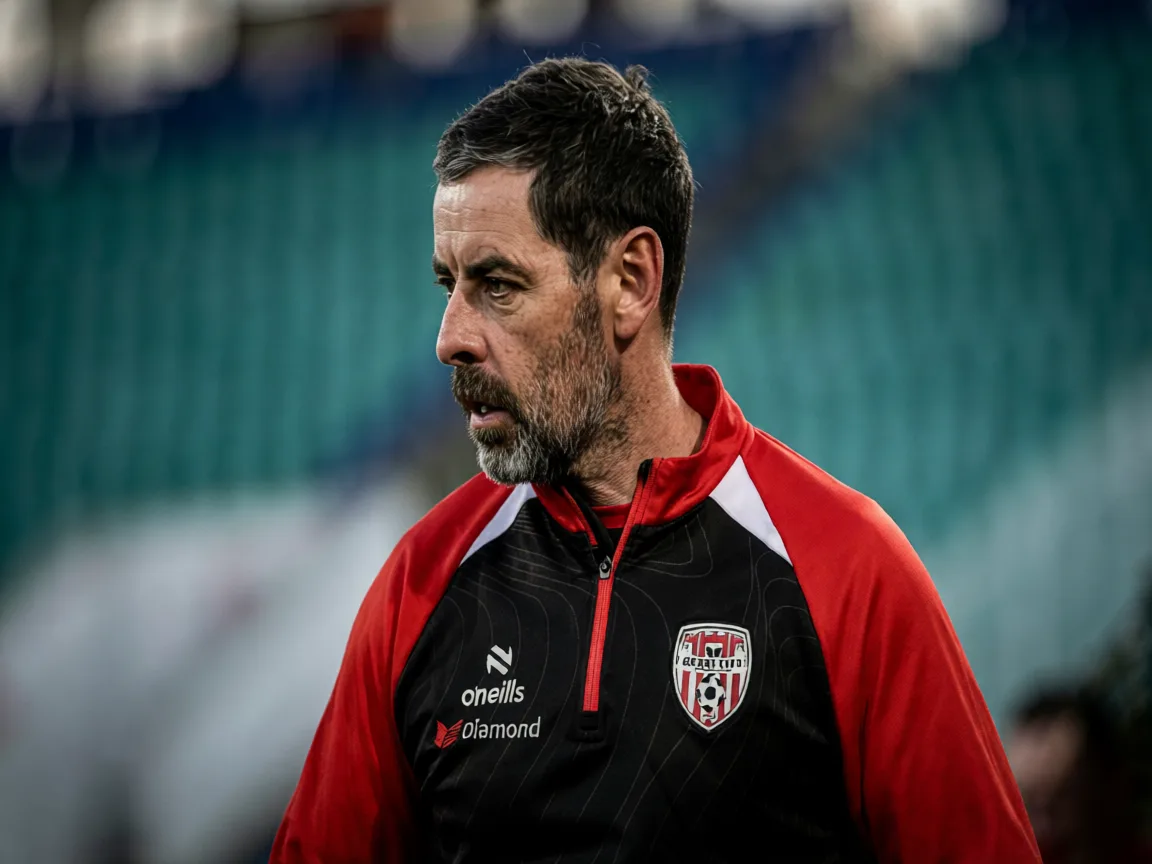
Derry City's European Ambition Undone by Defensive Frailty in Sofia
Tiernan Lynch's tactical structure showed promise but three soft goals leave Derry's Europa League hopes delicately balanced.