Tragedy Strikes as Mexico World Cup Celebrations Turn Deadly
Over a million fans celebrated Mexico's World Cup advancement in Mexico City, but chaos left two dead from asphyxiation.
A 19-year-old woman gasped for air in a sea of green. Somewhere nearby, a 44-year-old man collapsed. Neither would make it home. Neither would a third victim, whose death was initially reported by local media before being officially confirmed.
Mexico had just punched its ticket to the next round of the World Cup. The stakes were monumental. The release was euphoric. But in the suffocating crush of over a million people packed into the heart of Mexico City, euphoria curdled into catastrophe.
At least three people are dead following massive street celebrations in the capital, according to the local government. The city's health ministry confirmed the victims died of asphyxiation, compressed by the sheer weight of human bodies surging through fenced corridors and packed plazas.
This was supposed to be a night of joy. Instead, it became a grim reminder of what happens when passion outpaces infrastructure.
The Anatomy of a Crush
The Monument to the Revolution and the Angel of Independence have long served as the beating heart of Mexican football fandom. When El Tri advances, these landmarks transform into epicenters of controlled chaos. But controlled chaos is a fragile concept, one that shatters the moment crowd density crosses a critical threshold.
"When you have over a million people converging on a centralized space with limited exit routes, the physics of crowd safety break down entirely. It only takes one stumble, one sudden surge, for a celebration to become a death trap." — Crowd safety expert assessment on high-density urban gatherings
Asphyxiation deaths in crowd crushes occur differently than most people imagine. There is no trampling in the traditional sense. Instead, victims are compressed so tightly that their lungs cannot expand. The pressure from surrounding bodies becomes so immense that breathing is mechanically impossible. People die standing up, often without ever falling to the ground.
The victims, a 19-year-old woman, a 44-year-old man, and a third individual, likely had no warning. In a crowd of that density, movement becomes impossible. You cannot raise your arms. You cannot turn around. You are locked in place by the force of thousands of bodies pushing forward.
First responders faced an impossible task. Ambulances and medical teams could not penetrate the human walls surrounding the victims. By the time help arrived, it was already too late.
A Pattern of Peril
This is not the first time Mexican football celebrations have turned dangerous. It is, however, one of the deadliest in recent memory.
Historically, major El Tri victories have triggered mass gatherings that stretch the city's emergency infrastructure to its breaking point. The pattern is grimly consistent. Qualification matches, knockout round advancements, and deep tournament runs all funnel fans toward the same iconic landmarks.
- 2014 World Cup: Dozens treated for intoxication and minor injuries during round-of-16 celebrations
- 2018 World Cup: Multiple stampede injuries reported as fans surged through narrow street corridors
- 2022 World Cup: Overcrowding led to several emergency extractions near the Angel of Independence
Each iteration of the cycle has prompted promises of better crowd control. Mobile barriers, designated entry and exit zones, restricted capacity zones. The proposals are always comprehensive on paper. In execution, they crumble under the sheer scale of spontaneous public assembly.
The uncomfortable truth is this: a million people do not arrive in organized shifts. They come in waves, unannounced and unstoppable.
Where Passion Meets Infrastructure
Mexico City is a sprawling metropolis of over 9 million residents, built on ancient lakebeds and designed around wide boulevards and monumental plazas. Its geography offers grand spaces for public gathering, but its infrastructure is poorly suited for the rapid, dense concentration of World Cup celebration.
Unlike stadium environments, where entry and exit are managed through turnstiles and monitored sections, street celebrations operate without capacity limits. There are no ticket scanners. No maximum occupancy warnings. No controlled flow of human traffic.
When Mexico scored, when the final whistle confirmed advancement, the surge was instinctive. Strangers grabbed strangers. Thousands jumped in unison. The seismic monitors at the National Autonomous University of Mexico likely registered the moment, as they have with past goals. But the human ground beneath that celebration was far less stable.
City officials deployed police and civil protection units, but resources were instantly overwhelmed. A million people cannot be corralled. They can only be survived.
The Numbers Behind the Night
- 1,000,000+ fans estimated in central Mexico City
- 3 confirmed deaths by asphyxiation
- Ages of confirmed victims: 19, 44, and a third victim
The Fog of Chaos
In the immediate aftermath of the tragedy, communication fragments. Victims are transported to multiple hospitals. Family members search desperately. Social media amplifies unverified claims before officials can process the scene. Initially, local media outlets reported a third death overnight, spreading rapidly across social platforms before authorities could verify the claim. The city government has since confirmed the third fatality as the toll continues to unfold.
This information gap is characteristic of crowd disasters. The lack of initial confirmation did not mean the report was false. It meant the chaos was still being catalogued.
When the Party Ends
Mexico advances to the next round. The squad will prepare for a knockout fixture that could push the program deeper into the tournament than it has gone in decades. The football story continues.
But for three families, the tournament is over. A teenager who should have been dancing in the streets is gone. A man in his mid-40s, likely wrapped in the flag he loved, never drew another breath. A third victim, caught in the same unforgiving crush, shares the same tragic fate.
"These were not victims of violence. They were victims of joy, compressed into a space that could not hold the weight of a nation's hope."
The Mexican Football Federation and local authorities will face difficult questions in the coming days. Why were crowd control measures insufficient? Could designated fan zones with hard capacity limits have prevented the crush? Were medical resources positioned close enough to the densest points of assembly?
The answers will matter, because Mexico will likely keep advancing. And when they do, the streets will fill again.
What Comes Next
The immediate aftermath demands two things: accountability and adaptation.
City officials must conduct a full review of crowd management protocols. If the Angel of Independence and Monument to the Revolution cannot safely accommodate the numbers they attract, then the model must change. Satellite viewing zones with strict capacity limits. Distributed celebration points across multiple boroughs rather than a single central hub. Real-time crowd density monitoring with emergency cutoff protocols.
The World Cup will not slow down for grief. Mexico's next fixture approaches, and with it comes another wave of pressure. The players on the pitch have no control over what happens in the stands, on the streets, in the plazas where passion turns lethal. But the institutions governing those spaces do.
Football celebrations are supposed to be about connection. Strangers hugging strangers. Generations sharing a moment of pure, uncomplicated happiness. When those moments end in asphyxiation, something fundamental has broken.
Three people are dead because they wanted to celebrate their country. That reality demands more than a statement of condolence. It demands a system that can hold a nation's joy without crushing the life out of it.
Updated: 2026-07-01 — Death toll updated from two to three after authorities confirmed a third fatality.
Editorial Integrity
This is an original SportPulse article written by our editorial team. All content is independently researched, written, and reviewed by our writers and editors before publication. We do not publish copied, aggregated, or syndicated content.
SportPulse is committed to original sports journalism. Read our editorial policy or contact us with any questions.
More Like This
All football
World Cup 2026 Predictor: Simulating the Grand Finale Before Kickoff
With the expanded 48-team format rewriting tournament mathematics, the final two matches of World Cup 2026 could shatter every projection we hold sacred.

Diomande Eyes PSG Over Liverpool as Transfer Tug-of-War Intensifies
PSG move to hijack Liverpool's pursuit of RB Leipzig winger Yan Diomande as the Ivorian signals his preference for Paris.
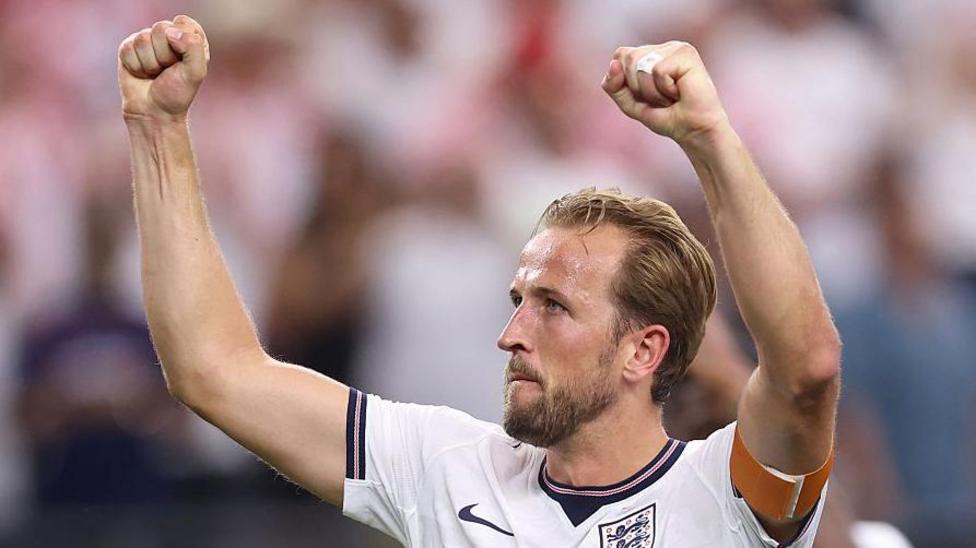
The Reinvention of Harry Kane: From Qatar Ghost to Clinical Finisher
Alan Shearer breaks down how Kane's tactical evolution since Qatar 2022 has made him a fundamentally different striker.