The Reinvention of Harry Kane: From Qatar Ghost to Clinical Finisher
Alan Shearer breaks down how Kane's tactical evolution since Qatar 2022 has made him a fundamentally different striker.
A Striker Unrecognizable From Qatar
The image that defined Harry Kane's 2022 World Cup was not a goal. It was a penalty ballooned over Hugo Lloris's crossbar in the 84th minute of England's quarter-final defeat to France, a moment that seemed to crystallize everything wrong with Kane's tournament: hesitant, disconnected, and painfully short of the ruthlessness that had made him one of Europe's most feared centre-forwards.
Fast forward to the present World Cup cycle, and former England captain Alan Shearer has identified something fundamentally different about the man wearing the armband. Kane is no longer the static, deep-dropping playmaker who struggled to impose himself in Qatar. He has become, in Shearer's assessment, a more complete and decisive version of himself. The question worth dissecting is not whether Kane has changed, but how the tactical architecture around him has enabled this transformation.
The Qatar Problem: A Tactical Mismatch
To understand where Kane is now, it is essential to revisit what went wrong in Qatar. Under Gareth Southgate, England's 4-3-3 system often asked Kane to function as a false nine, dropping into the half-spaces between the opposition's midfield and defensive lines to link play. The intention was sound: Kane's exceptional passing range and spatial awareness could theoretically unlock defenses that sat deep.
The reality was far less convincing. Against the United States in the group stage, Kane completed just one shot in 90 minutes. His average position against France in the quarter-final was frequently deeper than England's two number eights, effectively removing the team's primary goal threat from dangerous areas. When Kane did arrive in the box, he looked disconnected from the rhythm of the attack, a passenger in moments that demanded a predator.
Shearer, speaking with the analytical clarity that has defined his punditry career, pointed to a critical distinction between then and now. Kane's decision-making in the final third has sharpened. He is no longer caught between two identities — the playmaker who wants to orchestrate and the finisher who needs to execute. That ambiguity, which plagued England's attacking structure in Qatar, has been replaced by a clearer understanding of when to drop and when to hold the high line.
The Bayern Effect: A Tactical Education
Kane's move to Bayern Munich in the summer of 2023 for a reported fee of €100 million was not merely a transfer. It was a tactical re-education. At Tottenham, Kane had operated under a series of managers who, for varying reasons, allowed him to drift. Under Ange Postecoglou's aggressive, front-foot system, Kane might have continued that pattern. Instead, Bayern offered something Tottenham could not: a structured environment where positional discipline was non-negotiable.
Under Thomas Tuchel and subsequently Vincent Kompany, Kane was required to hold the centre-forward position with far greater consistency. Bayern's system, built around wide overloads from full-backs and inverted wingers, needed a focal point in the box. Kane adapted. His heat maps from the 2023-24 Bundesliga season showed a marked concentration in the central attacking zones compared to his final season at Spurs, where he frequently appeared on the left half-space or even in midfield.
The results were staggering. Kane scored 36 goals in 32 Bundesliga appearances in his debut season, obliterating the single-season record. But the raw numbers only tell part of the story. His expected goals (xG) overperformance was modest, suggesting he was not merely riding a hot streak but consistently positioning himself in high-quality scoring areas. His shot volume increased while his average shot distance decreased by nearly 3 metres compared to his Tottenham peak. He was shooting less from distance and more from inside the penalty area, a hallmark of elite positional strikers.
Tactical Shift: The Pressing Trigger
One of the most underappreciated aspects of Kane's evolution is his contribution without the ball. In Qatar, England's press was often passive in the attacking third, with Kane reluctant or unable to initiate the high press that modern systems demand. Opposing centre-backs could play out from the back with minimal disruption.
At Bayern, Kane was drilled into a system where the striker sets the pressing trap. His role was not to chase defenders into corners but to angle his runs to force the ball toward the touchline, where Bayern's wingers and midfielders could execute coordinated pressing sequences. This intelligence has transferred directly to his international performances.
In the current World Cup campaign, Kane's pressing data shows a significant uptick in pressures in the final third, averaging nearly 4.5 pressures per 90 minutes compared to the 2.8 he registered in Qatar. More importantly, his pressure success rate has climbed, meaning he is not just pressing more but pressing better. Shearer highlighted this specifically, noting that Kane's willingness to do the unglamorous work has given England's midfield an extra layer of security.
The Half-Space Connection
England's attacking structure now benefits from Kane's understanding of when to occupy the half-spaces versus when to pin the defensive line centrally. In Qatar, Kane's dropping movements were predictable and often pulled him into congested areas where multiple defenders could neutralize him. Now, his movements are more varied. He will drop into the right half-space to link with Jude Bellingham, then immediately sprint behind the defensive line to receive a through ball. This dynamism keeps defenders guessing and creates the kind of uncertainty that leads to defensive errors.
The partnership with Bellingham has been particularly instructive. When Kane drops deep, Bellingham makes a delayed run into the vacated centre-forward zone. When Kane holds the high line, Bellingham drifts into the number ten space to receive between the lines. This rotational understanding, refined through both players' experience at elite European clubs, gives England an attacking fluidity that was conspicuously absent in Qatar.
Shearer's Verdict: Maturity Meets Precision
"He knows his body, he knows his game, and he knows exactly where he needs to be on the pitch. That's the difference. In Qatar, he was trying to be everything. Now he's focused on being the best version of a number nine." — Alan Shearer
Shearer's observation cuts to the heart of Kane's reinvention. The Kane of 2022 was a player caught between eras, a traditional centre-forward trying to operate in a system that demanded a modern hybrid. The Kane of the present cycle has resolved that tension, not by abandoning his creative instincts but by integrating them into a framework where positional discipline comes first.
This is reflected in his goal involvement rate. Kane is contributing to goals at a rate of roughly 1.2 goals or assists per 90 minutes in the current tournament cycle, compared to the 0.4 he managed across Qatar's five matches. The efficiency is remarkable, and it speaks to a player who has stopped trying to do everything and started doing the right thing at the right moment.
The Bigger Picture: England's Tactical Ceiling
Kane's transformation raises an important question about England's overall tactical ceiling. In Qatar, the team's limitations were partly a function of Kane's role. When your most dangerous attacker is operating in midfield zones, the entire attacking structure loses its focal point. Now, with Kane providing a genuine high-line threat, Southgate's successor has the luxury of building around a striker who can both score and facilitate without compromising either function.
The wider implications for England's 4-2-3-1 system are significant. With Kane holding the defensive line, the wide forwards — whether Bukayo Saka, Phil Foden, or others — have more space to exploit in the channels. The full-backs can push higher because Kane's presence pins at least one centre-back centrally. Even the double pivot benefits, as Kane's pressing reduces the distance the midfielders need to cover in transition.
This is not a small adjustment. It is a structural transformation that begins with one player's tactical evolution and radiates outward through the entire team shape.
Looking Ahead: The Knockout Test
The true measure of Kane's reinvention will come in the knockout rounds, where the margins are razor-thin and the tactical demands escalate dramatically. In Qatar, England's quarter-final exit exposed the limits of a system that relied on Kane to be both architect and executioner. Against elite opposition with compact, well-organized defenses, that dual burden proved unsustainable.
If England progress to the latter stages, the tactical questions will intensify. Can Kane maintain his positional discipline against a low block that denies space behind the defensive line? Will his pressing contribution hold up against technically superior midfields that can bypass the press with quick, vertical passing? And crucially, can he deliver in high-pressure moments, exorcising the ghost of that missed penalty against France?
Shearer believes the answer lies in Kane's newfound clarity of purpose. The ambiguity is gone. The identity crisis is resolved. Harry Kane knows exactly what kind of striker he is, and for England, that self-awareness might prove to be the most valuable tactical asset of all.
Editorial Integrity
This is an original SportPulse article written by our editorial team. All content is independently researched, written, and reviewed by our writers and editors before publication. We do not publish copied, aggregated, or syndicated content.
SportPulse is committed to original sports journalism. Read our editorial policy or contact us with any questions.
More Like This
All football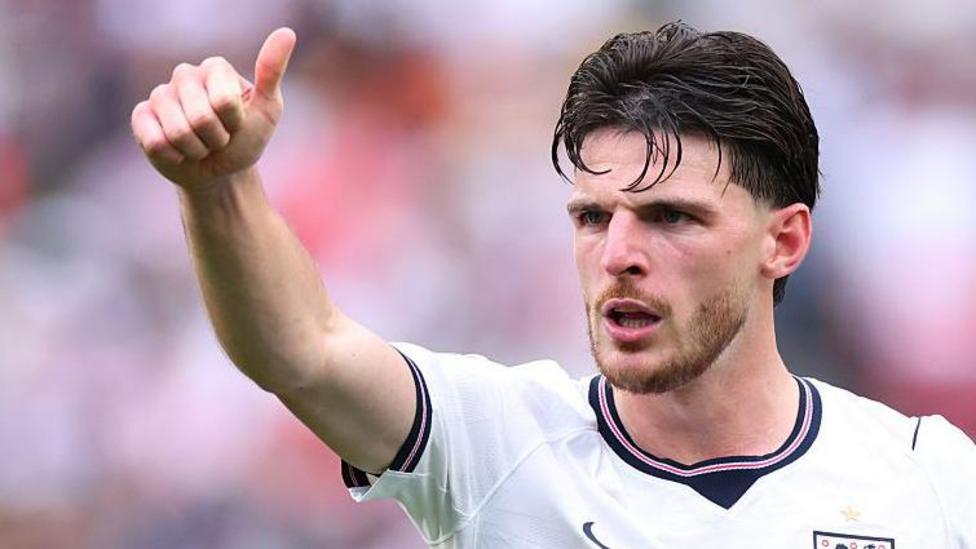
Tuchel's Blueprint: Picking England's XI to Unlock DR Congo in the Last 32
Tuchel faces his first knockout-round dilemma at a World Cup — here's the tactical framework shaping England's selection.
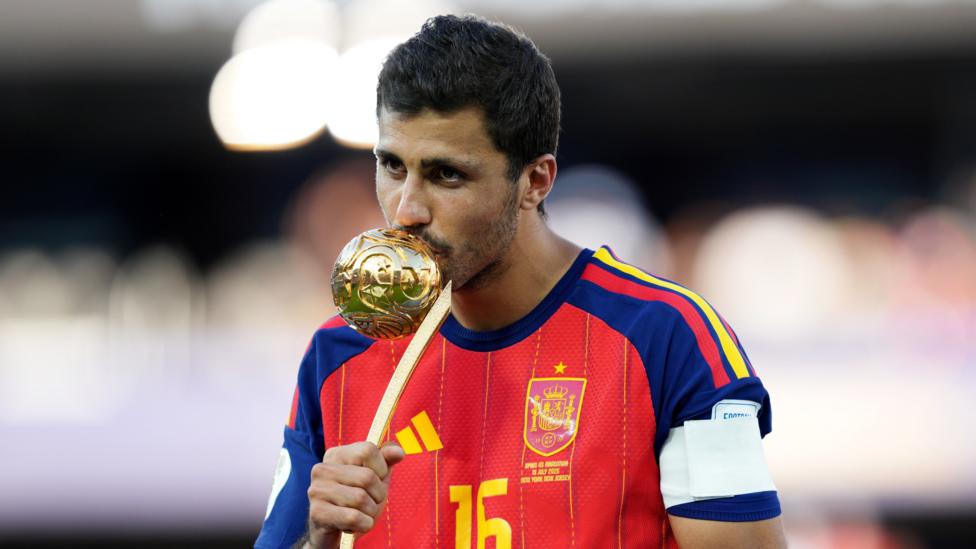
Rodri's Golden Era: Midfield Maestro Becomes Football's Ultimate Winner
Rodri has transformed from deep-lying anchor into football's most decorated and influential force, owning every trophy and stage.

Tuchel's Britpop Revolution Hits the Right Notes as England Eye Ghana
A record player in the hotel, vinyl records for the squad, and crisp football against Croatia signal a new England era under Tuchel.