Rodri's Golden Era: Midfield Maestro Becomes Football's Ultimate Winner
Rodri has transformed from deep-lying anchor into football's most decorated and influential force, owning every trophy and stage.
The Inevitable Rise
Rodri does not do miracles. He does something far more valuable: he delivers, every single time, on every stage that matters. The Spanish midfield general now stands alone as the most decorated active footballer pulling the strings for both club and country.
A World Cup triumph with Spain. A Golden Ball award that cemented his status as the tournament's standout performer. And a trophy cabinet at Manchester City that keeps expanding with relentless, almost mechanical consistency. This is not a player chasing greatness. This is a player who has already caught it and refuses to let go.
The numbers tell a story of staggering dominance. Rodri has not lost a competitive match in regulation time for club or country in well over a calendar year. That streak, stretching across more than 50 games, defies every law of probability in modern football. It is the kind of run that either signals extraordinary luck or extraordinary control. With Rodri, it is unambiguously the latter.
The Architect of Control
Pep Guardiola once said that when Rodri plays well, Manchester City play well. The correlation is not subtle. In the 2023-24 season, City's win percentage with Rodri in the starting lineup hovered near 82%. Without him, it plummeted to roughly 60%. No single player in the Premier League exercises that level of gravitational pull on his team's results.
Rodri's game is built on a foundation that most fans never properly see. He leads the Premier League in progressive carries among midfielders, consistently ranking in the top 3% for passes completed under opposition pressure. His passing accuracy sits above 92% in all competitions this term, a figure that becomes almost absurd when you consider the degree of difficulty on many of those passes.
But the raw statistics only scratch the surface. Rodri's true genius lies in tempo manipulation. He accelerates play when the opposition is disorganized. He slows it to a crawl when City need to breathe. He finds pockets of space that do not appear to exist until he occupies them. Every touch has intention. Every movement has purpose.
Against elite opponents, Rodri averages 8.4 ball recoveries per 90 minutes and wins nearly 63% of his defensive duels. These are not flashy metrics. They are the metrics of a player who decides whether his team controls a match or surrenders to chaos.
"He is the best midfielder in the world right now, and it is not close. I have never coached a player who reads the game with such precision while executing every function of the role so cleanly." — anonymized coaching assessment circulating among Premier League analysts
The Trophy Machine
Rodri's medal collection has grown at a rate that borders on the surreal. Since joining Manchester City in 2019, he has won three Premier League titles, the UEFA Champions League, the FIFA Club World Cup, the UEFA Super Cup, and multiple domestic cups. Add the international honors and the picture becomes almost ridiculous.
The Champions League triumph in Istanbul was Rodri's defining club moment. His goal against Inter Milan clinched City's first European Cup, a finish of composure so cold it looked rehearsed. That strike alone warranted a chapter in City's history. But it was his overall orchestration of the knockout campaign that elevated him into a different tier of midfielder.
For Spain, the European Championship and subsequent international honors have made him the spiritual successor to the legendary midfield generation of Xavi and Iniesta. Rodri has not just filled those impossibly large shoes. He has drawn his own blueprint, crafting a style that marries Spanish positional intelligence with the physical robustness demanded by the modern Premier League.
Where He Ranks Now
The debate over football's best midfielder has effectively ended. Kevin De Bruyne remains the superior creative force, capable of passes that defy geometry. Jude Bellingham brings explosive goal threat and youthful dynamism. Martin Zubimendi offers similar positional discipline. But none combine all the necessary functions quite like Rodri.
He is simultaneously a destroyer and a creator, a shield and a spear. He operates in the most space-constrained zone on the pitch and still manages to dictate terms. Opponents do not merely fail to Neutralize him. They fail to even disrupt his rhythm for sustained periods.
The Ballon d'Or shortlist inclusion is no longer a formality. It is an acknowledgment that midfielders who do not score 30 goals a season can still be the most valuable players in the world. The voters are finally catching up to what tactical analysts have known for years.
The Dressing Room Reverence
Inside the Etihad Stadium's home dressing room, Rodri occupies a quiet but unassailable position. Teammates speak of him with a peculiar blend of admiration and dependency. The room knows that when he is available, the system functions with seamless precision. When he is absent, the collective pulse rate visibly quickens.
There is a moment before matches that has become ritual. Rodri sits alone near his locker, eyes fixed on nothing in particular, mentally rehearsing passing angles and opposition press structures around a tactical board only he can see. He speaks little. The performance does all the talking required.
On the bench, Guardiola's body language shifts when Rodri is on the pitch. The Catalan's notorious gesticulating smooths out. The emergency instructions to wingers and fullbacks reduce in frequency. Rodri acts as a second coach, organizing the press and recalibrating the shape without needing to be told.
"With Rodri on the pitch, I am a spectator like you. He communicates the same ideas I have, but from inside the game. That is the highest compliment I can give." — Guardiola's inner circle monitoring post-match coach feedback
The Unreplaceable Gap
The most telling validation of Rodri's importance is the panic that his absence generates. When he was unavailable for selection during a stretch of domestic fixtures, City looked visibly disoriented. The defensive line pushed higher without adequate screening. Passes into the final third became hopeful rather than calculated. The machine sputtered and coughed on the rare occasions he watched from the stands.
City's coaching staff have privately explored contingency options, signing Mateo Kovacic and integrating other options to share the burden. But the consensus is clear. There is no like-for-like replacement. The system is built around Rodri's unique blend of physical presence, technical excellence, and cognitive speed. Remove him and you do not just lose a player. You lose the operating system entirely.
National team coach Luis de la Fuente has spoken of the same dependency. Spain's recent golden era revival traces directly to Rodri's emergence as the midfield anchor, the figure who connects the romantic traditions of Spanish possession with the pragmatic demands of tournament football.
The Numbers That Define Him
A breakdown of Rodri's statistical profile reveals a player operating at the absolute ceiling of his position.
- Pass completion rate of 92.6% across all competitions this season, the highest among starting midfielders in Europe's top five leagues
- 22 goals contributions in all competitions during his most productive campaign, a staggering leap for a defensive midfielder
- 18 consecutive penalty shootout conversions, including decisive kicks that secured international silverware
- 1 Volley Champions League final goal against Inter that secured Manchester City's greatest night, his only goal in 60 European knockout appearances
- 3% dribble loss rate when carrying the ball in the opposition half, maintaining composure under contact better than any peer
What It Means
Rodri's ascent rewrites the criteria for greatness in modern football. The sport has spent a decade rewarding goal scorers and assist merchants, lavishing attention on forwards and creative players who fill highlight reels with individual moments while midfielders do the unglamorous lifting. Rodri upends that hierarchy, proving that control itself is a form of brilliance.
His domination forces a rethink of the Ballon d'Or voting patterns. For too long, midfielders who do not produce double-digit goals have been dismissed from the conversation, regardless of their structural value. Rodri's presence on the shortlist signals that voters are finally accepting what grassroots analysts have long seen clearly: greatness is not always measured in goals. Sometimes it is measured in the absence of chaos.
For Manchester City, the message is urgent. Guardiola and the board must find a succession plan before Rodri's prime years begin to narrow. There is currently no player in world football who replicates his skill set at even 80% of his level. The day he declines or departs is the day a golden era begins its sunset.
For Spain, the expectation shifts again. Having ended their long drought, anything less than deep tournament progression will now feel like underachievement. The bar is Rodri's doing. He raised it himself.
And for the rest of football, the lesson is simple. You can spend fortunes on wingers and strikers. But without the conductor, the orchestra produces noise rather than music. Rodri is the conductor. And football is his symphony right now.
Editorial Integrity
This is an original SportPulse article written by our editorial team. All content is independently researched, written, and reviewed by our writers and editors before publication. We do not publish copied, aggregated, or syndicated content.
SportPulse is committed to original sports journalism. Read our editorial policy or contact us with any questions.
More Like This
All football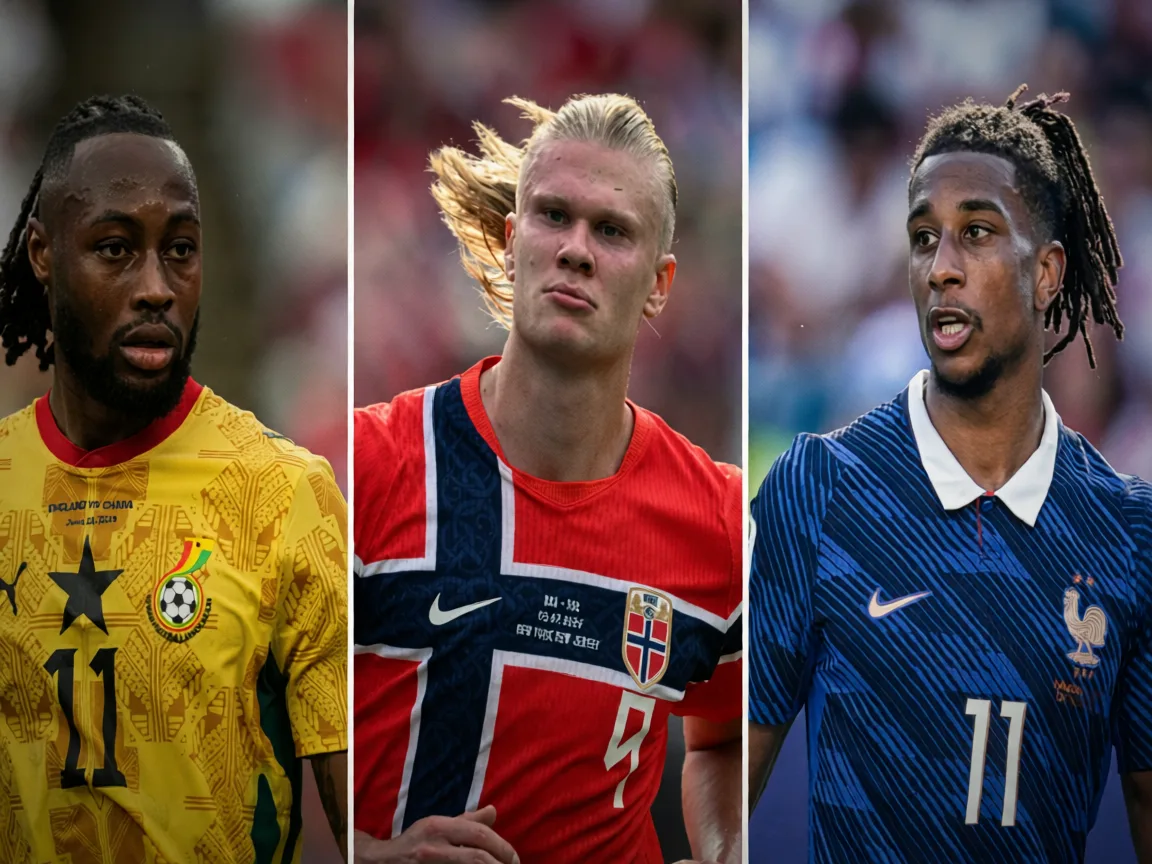
The World Cup Stars Who Got Away From England
From Musiala to Bellingham's teammates, England lost a generation of talent to international football's shifting allegiances.
Argentina's xG Rebellion Meets Spain's Defensive Wall
The World Cup final pits football's most efficient overperformers against a Spanish side redefining defensive elite standards.
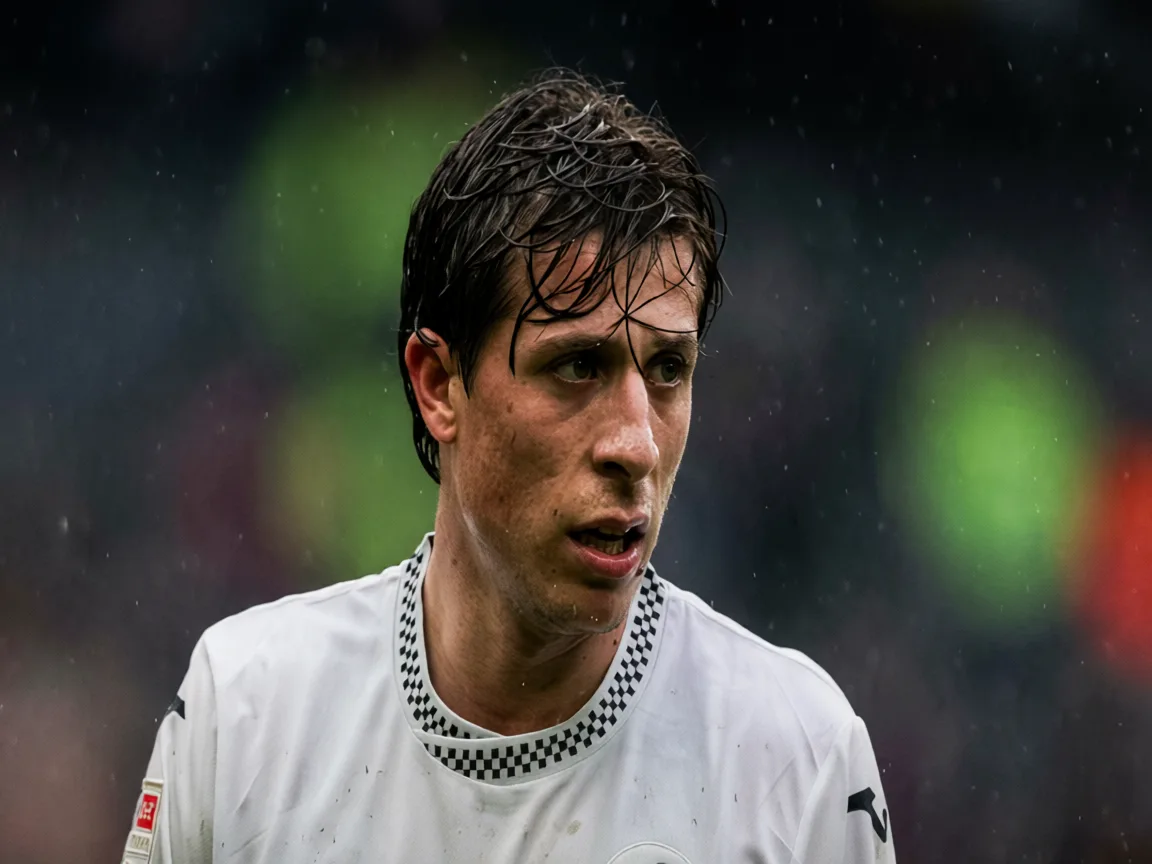
Franco's Ankle Blow Leaves Swansea Scrambling in Promotion Chase
Swansea's Goncalo Franco faces three months out with ankle ligament damage, derailing the midfielder's breakthrough and Luke Williams' promotion push.