Modric and Ronaldo: The Last Dance of Football's Parallel Immortals
Two legends debuted on the same night in 2006. Twenty years on, the 2026 World Cup may stage their final chapter.
One Night, Two Debuts, Twenty Years of Brilliance
1 March 2006. If that date doesn't immediately register, it should. That single evening in international football produced two debutants who would go on to redefine longevity at the highest level. Luka Modric pulled on the Croatia shirt for the first time in a 3-2 win over Argentina, a match notable for another reason entirely: it was the night Lionel Messi scored his first international goal for the Albiceleste. Thousands of miles away, Cristiano Ronaldo was terrorizing Saudi Arabia in a 3-0 Portugal victory, netting twice as if to announce that the next two decades of his career would be an exercise in relentless accumulation.
Twenty years later, both men have crossed the 200-cap threshold for their respective nations, a feat so rare in international football that the club's membership can be counted on two hands across the sport's entire history. And now, as fate or fixture lists would have it, Croatia and Portugal are set to meet at the 2026 FIFA World Cup in what may be the last time these two titans of the game share a pitch.
The question isn't whether this matchup matters. It's whether we're properly appreciating what we're about to witness.
Parallel Paths, Divergent Legacies
The careers of Modric and Ronaldo have been uncannily parallel while remaining stylistically and narratively opposite. Ronaldo has been the supernova, the player who demanded the spotlight wherever he went: Manchester United, Real Madrid, Juventus, and now navigating the twilight years with a gravitational pull that transcends any single league. Modric has been the quiet architect, the metronome who orchestrated Croatia's impossible run to the 2018 World Cup final and won the Ballon d'Or in a year when most pundits had already penciled in Ronaldo or Messi.
Yet for all their differences, their international careers share an eerie symmetry. Both debuted on the same night. Both have carried their nations through cycles of hope and heartbreak. Both reached 200 international appearances in an era where fixture congestion and club football's gravitational pull make such numbers almost implausible for players competing at elite European clubs.
Consider the physical toll. Ronaldo, born in February 1985, will be 41 years old when the 2026 World Cup kicks off. Modric, born in September 1985, will be 40. These are not players padding their stats in friendlies against minnows. Both have remained central figures for their countries through Euro 2024 qualifying and into the World Cup cycle, their managers unable to find adequate replacements because, frankly, adequate replacements don't exist at their level.
The 200 Club Context
To understand what the 200-cap milestone means, consider this: fewer than 20 male players in the history of international football have reached it. The list reads like a roll call of obsession and national duty. Ahmed Hassan of Egypt, Sergio Ramos of Spain, Gianluigi Buffon of Italy. Players who either lacked the club-level distraction of Champions League campaigns every season or were so irreplaceable that their federations built entire tactical systems around their continued involvement.
Modric and Ronaldo belong to neither category cleanly. Both have played at the absolute apex of club football for nearly two decades while simultaneously answering every international call. That's not longevity. That's a refusal to accept mortality.
What Croatia vs. Portugal Means at the 2026 World Cup
The geopolitical and competitive context of this fixture is worth unpacking. Croatia and Portugal have developed a quiet but compelling rivalry over the past two decades, meeting in crucial knockout matches and group-stage deciders that have often gone down to the wire. Their 2016 Euro Round of 16 clash remains seared into the memory of both fan bases: a tense, tactical affair that Portugal edged, with Ricardo Quaresma's extra-time winner sending Ronaldo's side through on their way to the title.
For Croatia, this World Cup represents potentially the last tournament where Modric serves as the creative engine. The midfield maestro has been the heartbeat of the national team since that 2006 debut, and the drop-off when he's absent has been stark in recent years. Croatia's talent pipeline, while respectable, hasn't produced a player capable of replicating his ability to dictate tempo, break pressing lines, and deliver in decisive moments.
For Portugal, the Ronaldo question has loomed over every tournament since Euro 2020. Manager after manager has had to navigate the tension between honoring the greatest Portuguese player in history and building a team capable of winning at the highest level. The emergence of younger attacking talents has made the squad deeper, but no one commands the psychological authority that Ronaldo brings to a World Cup knockout match.
The Tactical Dimension
Croatia's approach under their current setup relies heavily on midfield control and patient build-up, qualities that Modric personifies. Expect them to try to dominate possession in the middle third, using Modric's passing range to isolate Portugal's fullbacks and create overloads on the flanks. Their defensive structure has been solid in recent qualifying campaigns, conceding at a rate that suggests organizational discipline even as individual quality fluctuates.
Portugal, meanwhile, have evolved into a more direct, transition-heavy side in recent years. Their counter-attacking threat remains elite, with pace in wide areas and Ronaldo's penalty-box presence providing a focal point that most nations would envy. The challenge for their coaching staff will be managing the space Modric operates in; allow him time on the ball, and he'll dissect even the most compact defensive blocks.
The Bottom Line: This is a matchup between a team built around midfield control and a team built around explosive transitions. Something has to give, and the winner will likely be determined by which system imposes itself in the first 20 minutes.
The Emotional Weight of a Final Meeting
There's a bittersweet quality to this fixture that goes beyond tactics and tournament brackets. Modric and Ronaldo have been contemporaries for so long that imagining international football without them feels like reading the final chapters of a book you never wanted to end.
Ronaldo's international record speaks for itself. He holds the all-time record for international goals, a number so staggering that it may never be surpassed. His five Ballon d'Or wins, his five Champions League titles, his European Championship triumph in 2016, and his Nations League victory have cemented him as one of the two or three greatest to ever play the game. His legacy is secure, written in ink that no amount of late-career criticism can erase.
Modric's case is different but no less compelling. He dragged a nation of four million people to a World Cup final. He won the Ballon d'Or in 2018, breaking the Messi-Ronaldo duopoly with a season of such sustained brilliance that even the most partisan voters couldn't ignore it. His Champions League success with Real Madrid, where he was the midfield fulcrum for multiple title runs, speaks to a player who made everyone around him better without ever needing to be the one finishing the move.
When these two meet at the 2026 World Cup, they won't just be competing for a result. They'll be acknowledging, in the way only athletes can, that their shared era is ending.
Looking Ahead: What This Match Changes
For the tournament itself, this group-stage or knockout encounter carries enormous implications. A Croatia victory would signal that Modric's final act might be the most audacious yet: leading his country deep into a World Cup on North American soil. A Portugal win would reinforce the narrative that Ronaldo's competitive fire remains undimmed, even at 41.
For neutral fans, this is appointment viewing. Two of the greatest midfielders and forwards of the 21st century, both members of the exclusive 200-cap club, sharing a World Cup pitch for what history suggests may be the final time.
1 March 2006 gave us two debuts on the same night. The 2026 World Cup may give us their farewell. Don't blink.
Editorial Integrity
This is an original SportPulse article written by our editorial team. All content is independently researched, written, and reviewed by our writers and editors before publication. We do not publish copied, aggregated, or syndicated content.
SportPulse is committed to original sports journalism. Read our editorial policy or contact us with any questions.
More Like This
All football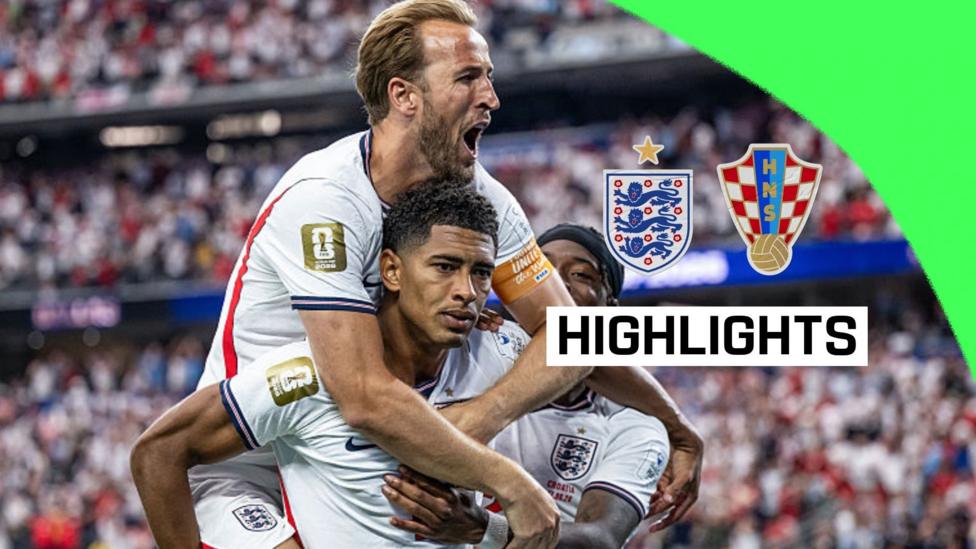
England Lay Down Marker With Stunning 4-2 Win Over Croatia in Dallas
England's blistering 4-2 victory over Croatia signals serious World Cup intent and banishes past tournament demons.
Mbappe's Captaincy Reshapes France Into a Ruthless Winning Machine
Kylian Mbappé's embrace of the France captaincy has eliminated complacency, driving Les Bleus to a third consecutive World Cup semi-final.
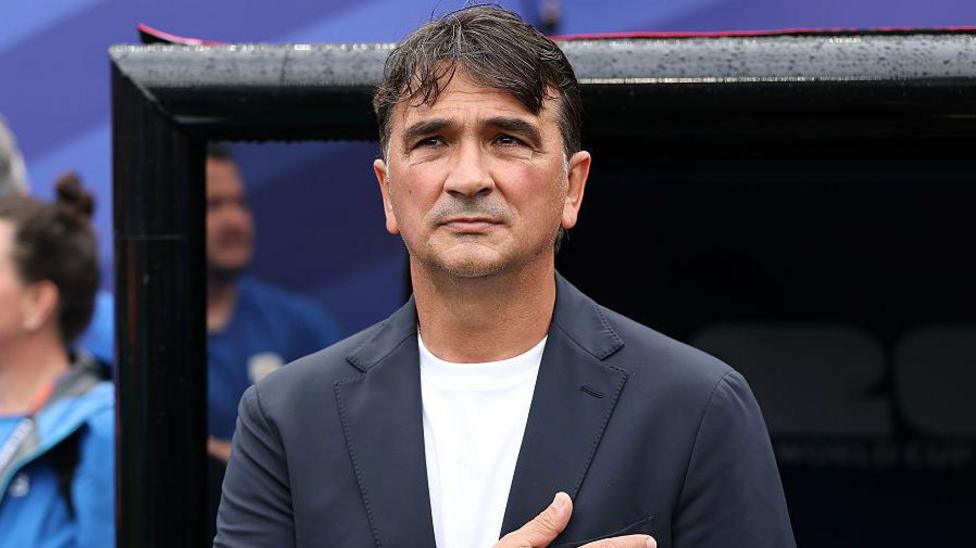
Dalic Departs: The End of Croatia's Golden Chapter
Zlatko Dalic steps down after nine transformative years, closing the book on Croatia's greatest footballing era.