Monaco: The Circuit That Breaks Every F1 Engineering Playbook
Monaco's serpentine streets demand a radical engineering reset — and reward teams who master low-speed chaos over raw pace.
Why Monaco Rewrites the Technical Rulebook
Every Formula 1 circuit on the calendar rewards a certain aerodynamic philosophy, a particular suspension geometry, a specific power unit deployment strategy. Monaco punishes all of them simultaneously. The 3.337-kilometer ribbon of asphalt that threads through Monte Carlo's harbor, tunnels, and hotel lobbies is the shortest track in the championship, yet it demands the longest technical preparation of any race weekend. This is the one venue where lap time lives and dies in low-speed mechanical grip rather than straight-line velocity or high-downforce cornering loads.
The fundamental contradiction of Monaco is architectural before it is automotive. The circuit was designed in 1929 for road cars navigating a seaside principality, not for ground-effect monsters generating over 1,000 kilograms of downforce at 300 km/h. Every barrier sits inches from the racing line. Every apex is partially blind. Every millisecond gained in qualifying translates directly to track position on Sunday, because overtaking here is statistically close to impossible without mechanical failure or driver error from the car ahead.
The Aerodynamic Paradox
Modern F1 cars are optimized for medium-to-high-speed cornering, where ground-effect underfloor tunnels generate the majority of their downforce. Monaco flips this equation. The circuit's 19 turns average out to roughly 140 km/h cornering speed, with several chicanes and hairpins dropping below 50 km/h. At those velocities, the underfloor produces a fraction of its peak load.
This forces teams to run maximum front and rear wing angles, essentially turning their cars into drag-heavy barn doors. The rear wing alone gets cranked to its steepest incidence settings of the entire season. But here's the engineering catch: adding wing angle increases downforce in a linear relationship, while drag increases roughly with the square of the velocity penalty. At Monaco's average speed of just 160 km/h, the drag penalty barely registers. Teams can stack aerodynamic elements without paying the straight-line speed tax they'd suffer at Monza or Jeddah.
Mercedes historically exploited this by running their largest rear wing configuration, sometimes even bolting on bespoke endplates with additional vortex generators to energize flow over the diffuser at low ride heights. Red Bull, meanwhile, has leveraged their superior tunnel efficiency to generate downforce mechanically rather than through brute wing angle, which frees up straight-line speed through the tunnel section where cars approach 290 km/h.
"Monaco is the one race where you can throw away your simulation correlation data from every other circuit. The car balance shifts completely in the low-speed regime. You're tuning the driver's confidence, not the lap time simulator." — Pat Fry, former Alpine Technical Director
Engineering Insight: Suspension Geometry Is Everything
Here's where Monaco separates elite chassis departments from the merely competent. The circuit features three significant elevation changes, including the climb from Sainte Devote up through Beau Rivage and the plunge into the famous tunnel. The barriers punish any suspension bottoming with immediate terminal damage to the floor or front wing.
Teams typically run the highest ride heights of the season at Monaco, sometimes adding 5-8mm of ground clearance compared to a standard low-downforce configuration. This sounds counterintuitive for a track that wants maximum downforce, but the reasoning is purely survival-based. The compression through the Nouvelle Chicane at the tunnel exit, where cars brake from roughly 280 km/h to 80 km/h in under 80 meters, loads the front suspension violently. If the car bottoms out at that moment, the driver loses steering authority exactly when precision matters most.
Spring rates get softened considerably to absorb the aggressive curbing and bumps that Monaco's aging, sun-baked surface presents. Where a team might run 350 N/mm front springs at a purpose-built circuit, Monaco settings can drop below 250 N/mm to maintain tire contact patch integrity through the Rascasse hairpin and the swimming pool complex. The trade-off is body roll, which teams counteract with stiffer anti-roll bars and, critically, ride-height-sensitive heave springs that resist pitch under braking without punishing the car over bumps.
Mechanical Grip: Tires Under Siege
Pirelli brings its softest compound selection to Monaco: typically the C3, C4, and C5 allocations. On paper, this should provide the aggressive grip levels the circuit demands. In practice, Monaco's low-energy corners mean tire surface temperatures struggle to reach optimal operating windows. The compounds that sing at Silverstone's high-speed sweeps go cold and twitchy through the harbor-front kinks.
Teams combat this with aggressive camber settings, sometimes exceeding 3.5 degrees of front negative camber to generate heat through the loaded tire shoulder. Toe angles also shift, with more front toe-out to sharpen turn-in response through Monaco's succession of direction changes. The rear gets careful toe-in adjustment to stabilize the car through the Tabac and Piscine sections, where sudden weight transfer over bumps can snap the rear loose.
Tire warm-up becomes a strategic weapon. Cars that can fire their tires quickly in qualifying gain tenths that translate to grid positions, which translate to race results. Some teams have experimented with out-lap weaving strategies that would look absurd at any other venue but are essential here.
The Power Unit Question
Monaco's fuel consumption is among the lowest of the season because the average speed is so modest. This frees engineers to run richer fuel mixtures for longer periods, extracting peak combustion efficiency rather than managing fuel flow conservation. ICE modes stay aggressive through most of the race, something teams cannot afford at fuel-sensitive circuits like Singapore or Bahrain.
The hybrid deployment strategy shifts dramatically. Energy recovery under braking is plentiful because Monaco features so many braking events, but the MGU-K harvests most effectively at higher speeds. Engineers must calibrate deployment maps to maximize acceleration out of the slow corners, where the electric motor's instant torque provides a meaningful lap time advantage. The hairpin at Grand Hotel is the slowest corner on the calendar at roughly 48 km/h, and getting the power down cleanly on exit determines whether a driver gains or loses two tenths versus their direct rival.
Who Historically Benefits?
The historical data reveals a clear pattern. Monaco rewards driver talent over machinery more than any other circuit on the calendar. The barriers eliminate the margin for error that allows faster cars to recover from setup compromises. Ayrton Senna won Monaco six times not because McLaren always had the fastest car, but because his ability to find grip on the edge of adhesion translated directly into lap time at a circuit where the edge was always visible.
In the modern era, Max Verstappen has demonstrated that raw confidence in a car's rear end under braking dominates Monaco performance. His Red Bull typically arrives with a platform that the driver can rotate on the nose into tight corners, relying on a stable rear through the technical sections. Charles Leclerc, driving for Ferrari and racing on his actual home streets, brings the intangible benefit of intimate circuit knowledge, though Monaco has historically been unkind to the Monegasque through no fault of his own.
Mercedes has struggled more at Monaco in recent ground-effect seasons because their car philosophy prioritizes floor-loaded downforce at higher ride heights. Raising the car for Monaco's bumps compromises the underfloor's seal, bleeding the very downforce the team relies upon. This creates a feedback loop where the team runs more rear wing, which helps in low speed but fails to compensate for the lost ground-effect load.
What the Data Reveals About Grid Position
Monaco qualifying is the most consequential session of the entire Formula 1 season. The statistics are stark:
- Pole position has converted to race victory at roughly 65% rate historically at Monaco, far exceeding any other circuit
- The average overtaking attempts per race at Monaco sits at approximately 5-8, compared to 40+ at circuits like Spielberg or Austin
- Safety car interventions occur in roughly 70% of Monaco Grands Prix, compressing strategies and rewarding teams that can exploit pit stop windows during neutralized periods
- The last ten winners at Monaco started from the top three grid positions in every instance except rain-affected races
These numbers make qualifying a do-or-die session. Engineers optimize the car for a single qualifying lap rather than race pace, accepting compromises in degradation management that would be suicidal at any other venue.
Looking Ahead: The Monaco Challenge
As teams prepare their Monaco packages, the engineering focus converges on three priorities. First, mechanical grip optimization through suspension and tire configuration. Second, low-speed aero correlation, ensuring that CFD and wind tunnel data for the car in its maximum-downforce trim actually matches on-track behavior. Third, driver confidence, which sounds intangible but translates directly to braking point commitment and corner-entry speed.
The teams that arrive at Monaco with a well-balanced car in qualifying trim will control the weekend. Race pace matters less here than at almost any other venue. The engineering challenge is about building a car that a driver trusts absolutely on the limit over a single lap, on a circuit where the limit and the wall are separated by centimeters.
Monaco remains Formula 1's greatest engineering contradiction: a track that demands peak performance from a package designed for everything Monaco is not. The teams that solve that paradox don't just win a race. They prove that their engineering department understands the sport at its deepest mechanical level.
Editorial Integrity
This is an original SportPulse article written by our editorial team. All content is independently researched, written, and reviewed by our writers and editors before publication. We do not publish copied, aggregated, or syndicated content.
SportPulse is committed to original sports journalism. Read our editorial policy or contact us with any questions.
More Like This
All f1
Fornaroli gets second FP1 call as McLaren stack Hungary upgrades
McLaren hand Leonardo Fornaroli another practice outing in Budapest while bringing a batch of new parts for the MCL40.

Spielberg's Trap: Why the Austrian GP Punishes the Unprepared
The Red Bull Ring's deceptive simplicity hides a strategic minefield that will define the 2026 Austrian Grand Prix.
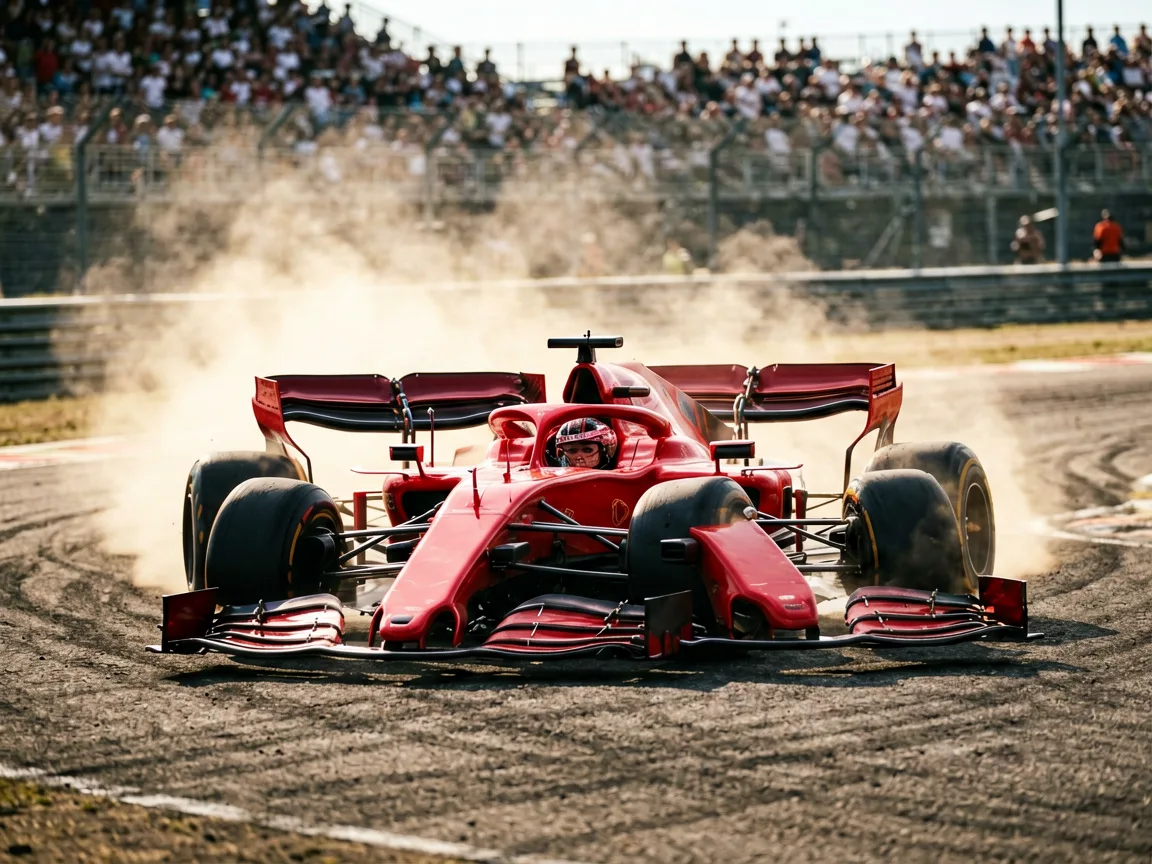
Ferrari and Leclerc Ignite Madring: First F1 Laps Make History
Charles Leclerc and Ferrari shatter the silence at Madring, laying down the first F1 rubber on an all-new circuit.