Muchova Breaks Gauff's Heart in Wimbledon Tie-Break Classic
Karolina Muchova saved match point to topple Coco Gauff in an epic Wimbledon decider, reaching her first final at the All England Club.
The Ultimate Stress Test
Karolina Muchova just authored the kind of Wimbledon semifinal that defies clinical tactical summary. The Czech recovered from a match point down in the deciding-set tie-break to stun Coco Gauff and reach the final at the All England Club. This was not a contest settled by elegant winners. It was a battle of attrition, survival, and psychological endurance.
The numbers will tell you it went three sets. They will not tell you how close Gauff came. They will not convey the suffocating tension of a final-set tie-break where one error ends your fortnight. Match point down in that crucible, Muchova held her nerve. Gauff, operating on the biggest stage in the sport, found a way to lose from a position of ultimate control.
Gauff's Tactical Wall
Gauff arrived at this semifinal as the opponent most expected to handle the pressure better. The American has built her entire career on elite court coverage and an innate ability to extend points until her opponent cracks. For two hours on Centre Court, that blueprint functioned as designed. Gauff's defensive scrambling forced Muchova into uncomfortable pacing, pushing her behind the baseline repeatedly.
But there is a persistent tactical ceiling to Gauff's current game on grass. Her second serve remains a measurable vulnerability. While her court speed is unquestionable, grass courts reward the first-strike attacker. They punish the retriever who waits for an opening against a willing net rusher. Gauff tried to dictate with her forehand, but her aggression lacked the precision required to hit through a player of Muchova's touch.
The Bottom Line: Gauff played the percentages and still came up short, exposing the tactical limits of pure retrieval against elite grass-court artistry.
Muchova's Chess Match
Muchova is a different breed of tennis player. She does not overpower you. She dissects you. Her unhurried backhand, the disguised slices, and the sudden accelerations make her one of the most watchable talents on the WTA Tour. Her career has been stalled by physical ailments. When healthy, her tactical intelligence is right up there with the best.
Her path to this Wimbledon final has been built on nuance. On a surface that rewards variety, Muchova is a master chess player. She changes the rhythm of rallies with drop shots that players do not expect. She approaches the net with intent, shortening points to protect her fitness. Against Gauff, that variation was not just a luxury. It was a necessity.
<blockquote>We do not wait for the perfect moment. We build the shape that creates the moment.</blockquote>
Gauff wanted a baseline dogfight. Muchova refused to accommodate her. By constantly altering spin, trajectory, and depth, she dragged the American out of her comfort zone. Even when trailing in the deciding tie-break, Muchova stuck to her varied script. Most players panic under match-point pressure. They swing harder. Muchova actually slowed down. It was the defining choice of the afternoon.
The Deciding Tie-Break
This is where the match transcended standard analysis. A tie-break distills tennis into its purest psychological form. There is no margin for a dip in focus. Every point carries an outsized mathematical weight. The pressure distorts ball tosses and turns routine forehands into tentative pushes.
- Serve survival: Both players knew holding serve in the tie-break was paramount under the first-to-ten format.
- Aggression management: The player who took the ball earliest generally won the point.
- Smart positioning: Whoever controlled the center of the court dictated the geometry of the rally.
Muchova found herself staring at defeat. One point from a semifinal exit. One point from watching someone else play for the Venus Rosewater Dish. Her response was absolute clinical composture. She hit the shot that was required, not the shot she desired. It is a critical distinction. Under pressure, instinct screams at you to hit a clean winner. Muchova played a high-percentage ball that forced Gauff into making the match's final mistake.
The Numbers Say
- 1 match point saved in the deciding tie-break
- 0 unforced errors from Muchova in the final three points of the contest
- 3 sets played in a classic that tested every physical and mental limit
The Czech did not suddenly become a powerhouse. She simply trusted her textbook technique when the stadium noise peaked. That is the essence of clutch performance. It is not about raising your level. It is about refusing to lower it.
Verdict: Muchova's tactical fluidity and unshakeable composure under maximum duress earned her a spot in the final.
What This Means for Gauff
This loss will sting deeply for Gauff. There is no gentle way to frame a defeat when you hold a match point in a Wimbledon semifinal. The American has the tools to win Grand Slams, but she is still translating her hard-court brilliance to the grass. Her movement remains elite. Yet her offensive weapons are still not sharp enough to consistently hit through grass-court tacticians.
She will leave London with questions. How can she shorten points more effectively on grass? How can she add disguise to her second serve? These are problems her coaching team will have to solve before the US Open hard-court swing.
The Bottom Line: Gauff has the talent, but she is still searching for the tactical aggression needed to win on grass.
A Wimbledon Final Awaits
For Muchova, the final represents a career resurrection. She has the game to win a Grand Slam. She has always had the hands and the vision. Now she has the platform.
Her opponent in the final will face a player who has already conquered her nerves. Muchova survived a match point against one of the most resilient competitors on the tour. She is playing with house money. Every point from here forward is a bonus earned through the crucible of that deciding tie-break.
The moment you survive match point, the pressure shifts entirely to your opponent.
Wimbledon has its finalist. She arrived through the fire.
Update:
新文章提供了第三盘抢七的视频观看链接,属于对已有赛事报道的补充媒体内容。
Update:
新增Muchova赛后感受:首次在中心球场打球感到难以置信,比赛如过山车般跌宕起伏。
Editorial Integrity
This is an original SportPulse article written by our editorial team. All content is independently researched, written, and reviewed by our writers and editors before publication. We do not publish copied, aggregated, or syndicated content.
SportPulse is committed to original sports journalism. Read our editorial policy or contact us with any questions.
More Like This
All tennis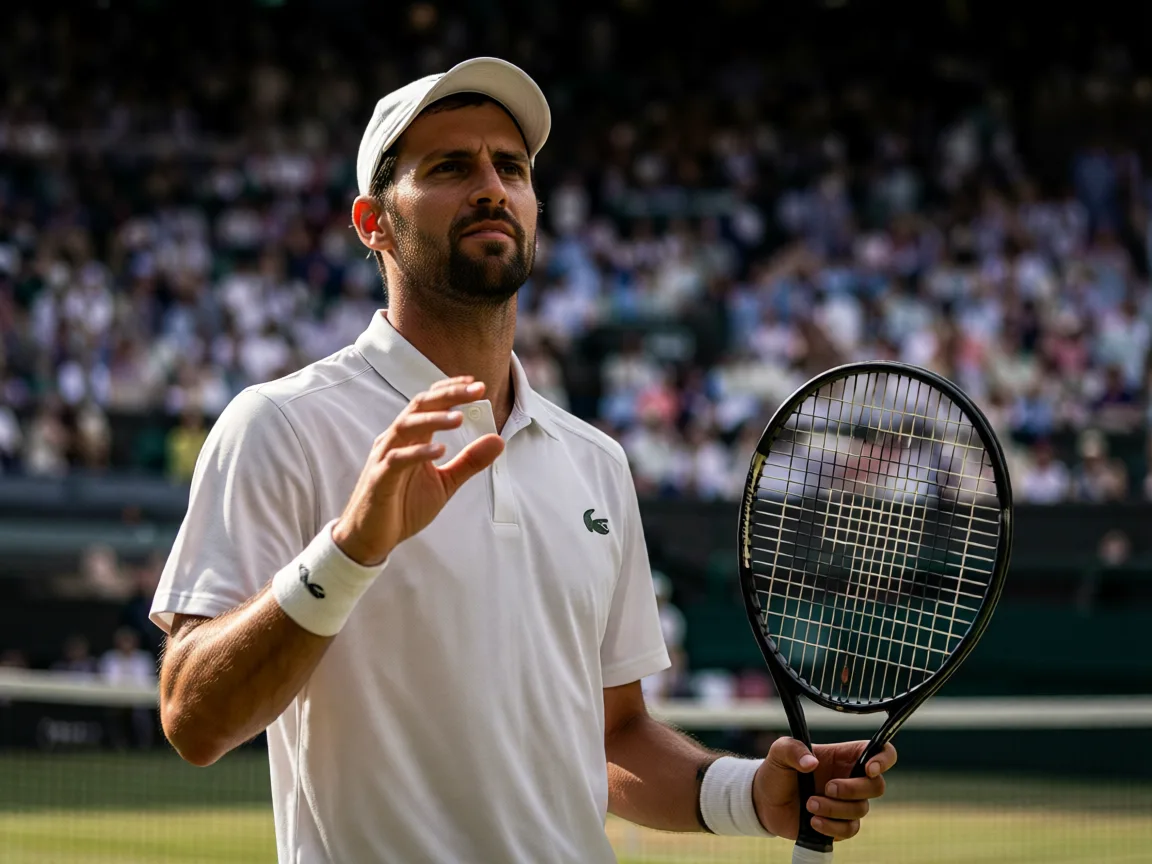
Djokovic Vows One More Wimbledon Despite Sinner Semi-Final Defeat
Beaten in straight sets by Jannik Sinner, Novak Djokovic insists his Wimbledon story is not finished yet.
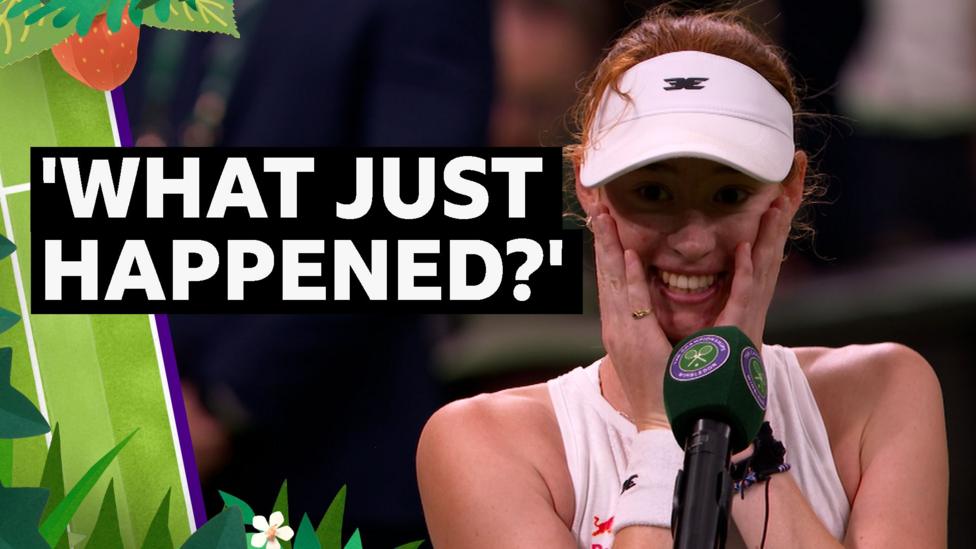
Dream Come True: 20-Year-Old Joint Stuns Serena on Centre Court
Maya Joint, 20, fulfilled a childhood fantasy by defeating the legendary Serena Williams on Wimbledon's Centre Court.
Guess the Tennis Star: Why Puzzle Culture Is Taking Over Fandom
Interactive tennis trivia games are booming, and they reveal something deeper about how fans connect with the sport.