Champion's Playbook: Norris Passes Title-Race Wisdom to Rice and Arsenal
F1 world champion Lando Norris draws on his own championship experience to counsel Arsenal midfielder Declan Rice during a pivotal title race.
F1 Academy's Return: Alisha Palmowski's Perspective
Before diving into the cross-sport exchange between elite competitors, it's impossible to ignore the momentum building in another corner of the motorsport world. F1 Academy is back, and the return has injected fresh excitement into the paddock. Rising star Alisha Palmowski recently spoke about the series' comeback, emphasising the vital importance of the platform for young female drivers aiming to carve a path to the top echelons of motorsport. Palmowski highlighted how the renewed energy around the academy provides crucial track time, visibility, and development opportunities that were previously scarce, ensuring the next generation has a clearer rung on the ladder.
When Worlds Collide
There is something deliciously unexpected about a man who spends his Sundays threading a carbon-fibre machine through barriers at 330 km/h offering counsel to a footballer navigating the anxiety of a Premier League title run. Yet here we are. Lando Norris, fresh from clinching the Formula 1 World Championship, has publicly offered his advice to Arsenal midfielder Declan Rice as the Gunners chase down what would be a first league crown since 2004.
The crossover is more natural than it first appears. Both men operate in environments where margins are microscopic, pressure is suffocating, and a single misjudgement can unravel months of preparation. Norris knows this better than most. His path to the world title was not a coronation by default; it was a grinding, season-long war of attrition against established machinery and relentless competitors. That journey, he suggests, taught him lessons that translate far beyond the cockpit.
The Weight of Expectation
Norris's championship run was defined by a critical psychological shift. For years, he was the nearly-man of Formula 1: blisteringly quick, endlessly talented, but unable to convert individual brilliance into a sustained title challenge. When McLaren finally delivered a car capable of fighting at the front, the expectations did not arrive gently. They crashed through the door.
Rice finds himself in a strikingly parallel position. Arsenal have been in the title conversation for three consecutive seasons, finishing second to Manchester City in 2022-23 and 2023-24. The narrative has shifted from romantic underdog to frustrated contender. Every dropped point is now dissected with forensic intensity. Every stumble is framed as evidence of a deeper psychological flaw. That kind of external noise, Norris would argue, is precisely what a title contender must learn to mute.
The F1 champion's advice to Rice centres on a deceptively simple principle: honesty within the team. In a sport where radio communications are broadcast to millions and every strategic call is second-guessed in real time, Norris learned that the only defensible position is radical transparency between driver and pit wall. Delusion is the enemy. Wishful thinking about tyre degradation or fuel loads gets you nowhere. You stare at the data, you tell your engineers exactly what the car is doing, and you build your race from there.
Strategy Breakdown: The Parallels Between Pit Wall and Dugout
Consider how a Formula 1 team approaches a race weekend. The strategy group convenes days before the event, modelling tyre deg profiles, weather probabilities, and undercut windows. They walk into qualifying with a primary plan and at least two contingency variants. When the lights go out, they adapt in real time, reacting to safety cars, rival strategy shifts, and changing track conditions.
A football title race demands the same layered approach. Arsenal's run-in is a series of individual races, each with its own tactical puzzle. Arteta and his staff must model fatigue accumulation across a squad stretched by Champions League commitments. They must identify which fixtures are tyre-management exercises (controlling tempo, protecting leads, conserving energy) and which demand full attack mode.
Norris's championship taught him that the temptation to overdrive is the greatest threat to a title contender. When you feel the championship slipping away, the instinct is to push harder, brake later, attack every corner with maximum aggression. That impulse is catastrophic. In F1, it destroys tyres and invites errors. In football, it leads to defensive disorganization, rash challenges, and the kind of frantic energy that opponents like Manchester City feed upon.
The smarter play, always, is controlled aggression. Push when the window opens. Manage when it doesn't. Trust the preparation.
Honesty as a Competitive Weapon
The specific phrasing Norris used is telling: "Be honest with each other." This is not generic motivational rhetoric. It is a tactical instruction born from the crucible of a championship fight.
In Formula 1, a driver who tells his team the rear tyres are holding up when they are clearly graining is signing his own death warrant. The strategy collapses. The pit-stop windows shift. The entire race unravels from a single moment of ego-driven dishonesty.
Norris is telling Rice that the Arsenal dressing room must function the same way. If the midfield is feeling fatigued at 60 minutes, say so. If a player is carrying a knock that nobody on the coaching staff has spotted, flag it. If the tactical shape is not working against a low block, communicate that before the hour mark, not after the final whistle.
This is particularly relevant for Arsenal's current predicament. The Gunners have developed a reputation for faltering in the decisive months of the season. Whether that narrative is fair or not, it exists, and it creates an internal pressure that can distort honest assessment. Players might hide minor injuries to stay on the pitch. Staff might persist with a failing system because changing it would feel like an admission of error. The championship-winning mindset, Norris argues, eliminates that instinct entirely.
The McLaren Blueprint
Norris's own championship arc offers a masterclass in what Arsenal should be studying. McLaren's 2025 campaign was not built on a single dominant weekend. It was constructed through relentless consistency, strategic discipline, and an almost mechanical refusal to panic when results dipped.
There were weekends where the car was not the fastest package. Norris qualified outside the top three. He lost ground to rivals. The media wrote him off in real time. But the McLaren operation never abandoned their process. They trusted the data, executed their strategy with precision, and waited for the points to accumulate.
Arsenal's version of this looks like winning ugly at Burnley, grinding out a 1-0 against a deep-sitting defence, absorbing pressure away at a hostile ground and leaving with a point. These are the races that win championships. Not the glamorous five-nil dismantlings. The tedious, unglamorous, strategically sound performances that add three points to the board while your rivals drop two.
What This Means for the Title Race
The Premier League title race heading into the business end of the season remains finely poised. Arsenal know they cannot afford the kind of late-season collapse that has haunted them in recent campaigns. Manchester City's machine, even when slightly diminished, never stops accumulating points. Liverpool remain a credible threat with their own relentless consistency.
Rice, as Arsenal's midfield fulcrum, is the player most likely to determine whether the Gunners can sustain their challenge across the final stretch. His physical output, tactical intelligence, and leadership qualities make him the heartbeat of Arteta's side. Norris's advice is not abstract philosophy. It is a specific instruction: trust the people around you, communicate without ego, and refuse to let external noise distort internal assessment.
The championship points table does not care about narratives. It does not reward the team with the best story or the most dramatic comebacks. It rewards the team that accumulates the most points across 38 games. Norris understands this from a world where the championship is decided across 24 races, each separated by fractions of seconds.
The Bigger Picture
What makes this cross-sport exchange genuinely interesting is not the surface-level advice. It is the reminder that elite competition, regardless of the arena, demands the same psychological architecture. The skills that carried Norris to a world championship composure under pressure, strategic clarity, radical honesty within a team are precisely the skills that separate perennial contenders from actual champions.
Arsenal have the squad. They have the manager. They arguably have the most complete midfield in the league. What they do not yet have is the scar tissue of a title won, the institutional memory of what it feels like to hold the trophy at the end of a gruelling campaign.
Norris had to earn that memory for himself, and he is now offering it freely to Rice and his teammates. Whether Arsenal can absorb it, internalise it, and convert it into the decisive moments that will define their season remains the defining question of this Premier League campaign.
The clock is ticking. The points table is unforgiving. And somewhere in Woking, a newly crowned world champion is watching, knowing exactly how it feels to stand on the edge of that abyss and choose to push through.
David Kim is a senior editor at SportPulse covering Formula 1 and cross-sport narratives.
Updated: 2026-06-26 — Added Alisha Palmowski's interview on F1 Academy's return to the article
Editorial Integrity
This is an original SportPulse article written by our editorial team. All content is independently researched, written, and reviewed by our writers and editors before publication. We do not publish copied, aggregated, or syndicated content.
SportPulse is committed to original sports journalism. Read our editorial policy or contact us with any questions.
More Like This
All f1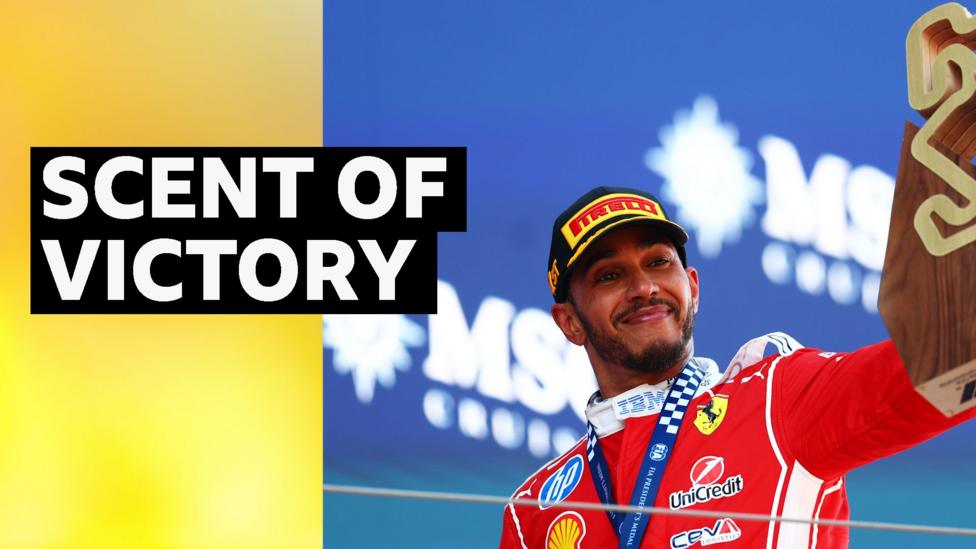
Hamilton Delivers the Win Ferrari Desperately Needed — And a Whole Lot More
Lewis Hamilton's Spanish GP victory didn't just add points. It injected belief into a Ferrari squad starving for it.
Spa Returns: The 2026 Belgian GP Weekend Guide
Formula 1 heads to Spa-Francorchamps for Round 10 of the 2026 season. Here is what unfolds.
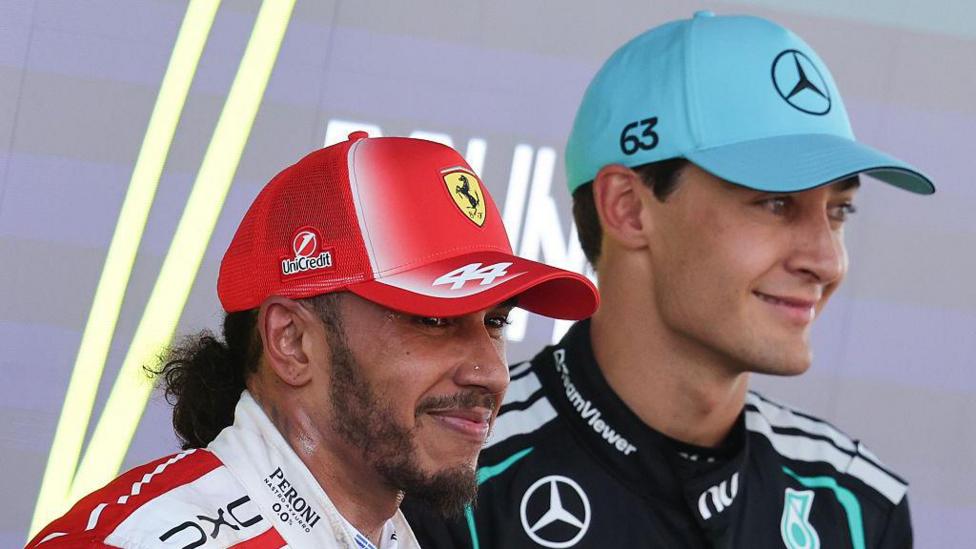
Russell Eyes Hamilton and Ferrari as Championship Dark Horse in 2025
Mercedes driver George Russell names Lewis Hamilton's Ferrari switch as the biggest title threat heading into the new season.