Norway's Golden Generation Finally Delivers as Brazil Reunion Looms
Solbakken's Norway have surpassed the 1998 heroes just in time for a World Cup reunion with Brazil that stops a nation in its tracks.
A Nation Stopped in Its Tracks
For a country of just 5.6 million people, Norway's sporting resume reads like fiction. Their winter Olympians consume medals at a freakish pace. The women's handball team operates as a dynasty. The Ingebrigtsen brothers have rewritten middle-distance running. Two PGA Tour winners emerged this season alone. And then there is Magnus Carlsen, the greatest chess player who has ever lived.
Yet none of those achievements, however cherished, can unify the country the way football does. And no single football match has ever frozen Norway in time quite like the 2-1 victory over Brazil in the final group game of the 1998 World Cup.
That afternoon in Marseille, Norway produced a result that transcended sport. It became a cultural anchor, a reference point so powerful that the commentary accompanying it is woven into the national consciousness as tightly as anything uttered by Norwegian poets or politicians in the last half-century.
The Day a Commentator Lost His Mind
The voice of Arne Scheie is, for Norwegians of a certain generation, the soundtrack of that 1998 triumph. Scheie was already a national treasure, a broadcaster revered for his level-headedness and factual rigor under pressure. He was the man you trusted to narrate the biggest moments without hyperbole.
That composure shattered in the most glorious way imaginable. When Norway won a late penalty with the score locked at 1-1, Scheie simply lost the run of himself. As Kjetil Rekdal stepped up to take the spot kick, Scheie referred to him as “Kjetil Reknett, of Werder Bremen.”
Reknett is not a surname in Norwegian. It is not a surname in any known language. Rekdal did not play for Werder Bremen. He was a Hertha Berlin midfielder. None of that mattered. The moment was so overwhelming that the most composed commentator in the country invented a person who did not exist to narrate the most important kick in Norwegian football history.
That level of collective delirium tells you everything about what football means to this small, sport-mad nation.
From Flo and Solskjaer to Haaland and Odegaard
For decades, Norwegian football existed in the shadow of that 1998 squad. The generation featuring Ole Gunnar Solskjaer, Tore Andre Flo, Ronny Johnsen, and Henning Berg reached back-to-back World Cups and even escaped their group in France. They were giants of the Norwegian game, icons whose achievements felt unreachable for the teams that followed.
What followed was a drought so painful it redefined the nation's relationship with football. Despite producing elite individual talents and watching players thrive in Europe's top leagues, Norway failed to qualify for a single major tournament between 2000 and 2024. That is an absence spanning more than two decades, an eternity for a country where the game pulses through the culture.
The current generation is different. Erling Haaland and Martin Odegaard represent the fulfillment of a promise long deferred. Under the management of Stale Solbakken, Norway have not merely returned to the global stage. They have, by the measure of tournament qualification, surpassed the golden generation that came before them.
Solbakken's Tactical Reckoning
Solbakken deserves enormous credit for this transformation. When he took over the national team, the pressure was suffocating. The expectation was that any coach with Haaland and Odegaard at his disposal should simply declare the rest a formality. The reality, as Norway's painful qualifying campaigns had shown, was far more complex.
The tactical challenge of integrating a pure goalscorer like Haaland with a creative conductor like Odegaard is not as simple as putting names on a team sheet. Solbakken built a midfield structure that protects the back line while maximizing Odegaard's vision in transition. The defensive shape allows Norway to absorb pressure and spring forward with the kind of devastating verticality that turns Haaland from a striker into a weapon.
The results speak for themselves. Norway now possess a identity, a system, and a belief that the 1998 team carried as its defining characteristic. That psychological edge, the conviction that you belong at this level regardless of the crest on your opponent's shirt, is what separated the heroes of Marseille from tournament also-rans.
The Changing Room Before Kickoff
Picture the scene in the hours before Norway walk out to face Brazil in 2026. The changing room is not a serene place. Music pounds from a portable speaker wedged into a corner, but it is barely audible above the noise of players stamping boots and pacing in tight circles.
Solbakken stands by the tactical board, marker in hand, his face set in that familiar expression of controlled intensity. He does not shout. He waits until the room settles, until the fidgeting stops, and then he taps the board twice. He does not point to where Brazil's weaknesses are. He points to where Norway's strengths are, tracing the lines that connect defenders to midfielders to Odegaard to Haaland.
Haaland sits with his head down, headphones on, eyes fixed on the floor. He is not visualizing goals. He is visualizing the runs he has to make when the game is 0-0 and the ball will not come. That is the discipline of a striker who has matured into something more dangerous than a finisher. He has become a structural instrument.
Odegaard is the opposite. The captain stands, shifting his weight, bouncing on his toes. He talks quietly to Alexander Sorloth about positioning, about where the half-spaces will open. There is an energy radiating from him, the kind that cannot be contained and does not need to be. He knows what is coming.
When the players rise and move toward the tunnel, someone slams a hand against the wall. It is a sharp, percussive crack that echoes through the corridor. Nobody flinches. This is not nerves. This is release.
What Brazil 2026 Means for Norway
The symbolism of this fixture is almost too perfect. Brazil, the team Norway beat in 1998, returns as the opponent at a moment when Solbakken's squad has finally proven it belongs among the tournament elite. The narrative writes itself: a new generation measured against the ghost of the old one.
Brazil will not be the same team they were in Marseille. They will be faster, more technical, and tactically more sophisticated. But Norway is not the same team either. The 1998 side was built on grit, organization, and the blunt force of Flo's physicality. The 2026 version combines defensive steel with lethal attacking precision.
"We respect Brazil. We respect their history. But this Norway team has its own story to write, and we are not here to be a footnote in someone else's."
That sentiment, echoed across the Norwegian camp, is what separates this team from every Norway side of the past 25 years. The 1998 heroes were lovable overachievers who punched above their weight. This group carries itself as a legitimate force, a team that expects to win against elite opposition.
What It Means
Norway's reunion with Brazil is not an occasion defined by nostalgia. It is a referendum on how far the current generation has actually come. Beating Brazil in a World Cup group stage would announce Norway as something more than a feel-good story. It would confirm this squad as the nation's greatest ever.
For Solbakken, it validates a project that was questioned at every difficult turn. For Haaland and Odegaard, it is the stage their talents have demanded since they first wore the national shirt. For a country that stopped breathing in 1998 and waited 28 years for a moment worthy of the same gasp, the timing could not be more perfect.
Editorial Integrity
This is an original SportPulse article written by our editorial team. All content is independently researched, written, and reviewed by our writers and editors before publication. We do not publish copied, aggregated, or syndicated content.
SportPulse is committed to original sports journalism. Read our editorial policy or contact us with any questions.
More Like This
All football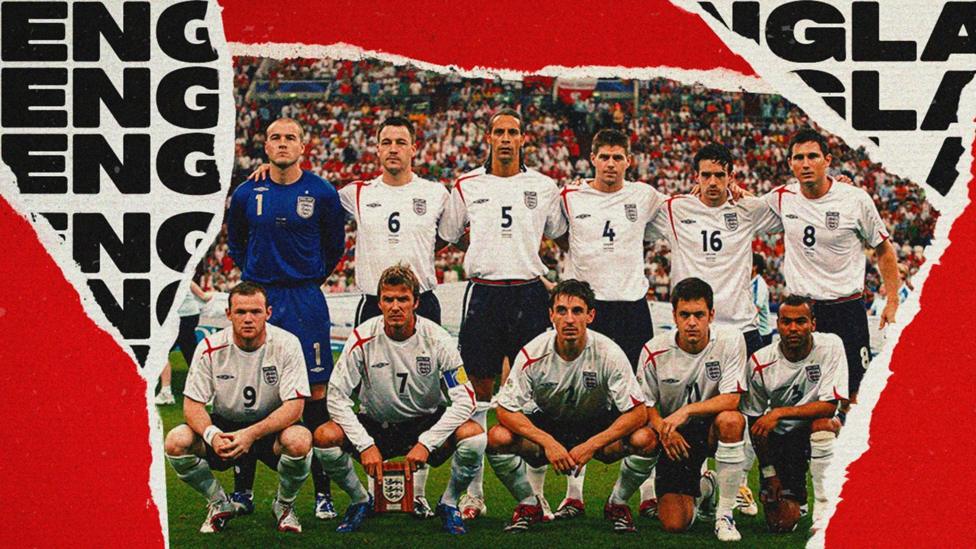
When the Golden Generation Went Flat: England's 2006 World Cup Bust
England's 2006 World Cup campaign turned a golden generation into a cautionary tale of ego, tactics, and unfulfilled hype.
Penalty Meltdowns, Fixture Chaos, and Mighty Scares: World Cup 2026 Turns Savage
Australia's shootout disaster and Cape Verde's shocker against Argentina prove the World Cup 2026 knockout stage offers no safe harbors.
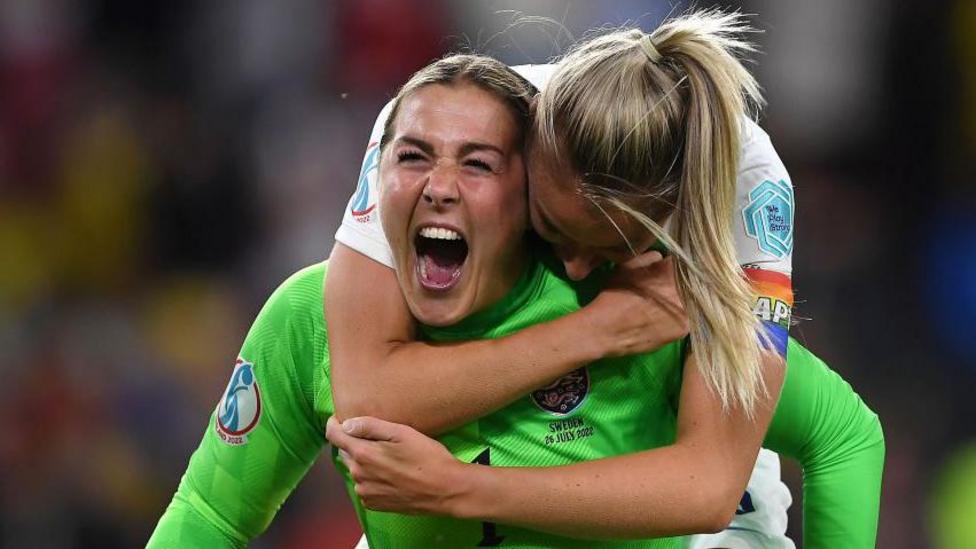
Mary Earps and the Weight of an Unwanted Spotlight
Mary Earps admits uncertainty about returning to the spotlight at London City Lionesses, a vulnerability few elite athletes dare voice.