Inside Motorsport Valley: Why Oxfordshire Is F1's Beating Engineering Heart
Oxfordshire's dense cluster of F1 teams and suppliers makes it the sport's undisputed innovation epicenter ahead of the British Grand Prix.
The Silicon Valley of Speed
Turn off the M40 motorway somewhere between Oxford and Banbury, drive past the rolling Cotswold farmland and the honey-stone villages that tourists fly across the Atlantic to photograph, and you'll stumble into something the rest of the world barely knows exists. Behind unassuming facades and down country lanes sit wind tunnels capable of simulating 300 km/h airflow, autoclaves curing carbon fiber monocoques, and supercomputers running computational fluid dynamics (CFD) simulations that would make NASA engineers nod in recognition.
Welcome to Oxfordshire, the engine room of Motorsport Valley and arguably the single most important square footage in global motorsport. As Silverstone prepares to host the British Grand Prix this weekend, the spotlight falls not just on the track but on the extraordinary industrial cluster that has grown in the counties surrounding it, a concentration of engineering talent unmatched anywhere on earth.
The Concentrated Powerhouse
The numbers behind Oxfordshire's motorsport dominance are staggering. The county hosts Williams Racing at Grove, Alpine F1 at Enstone, and Haas F1 Team in Banbury. Beyond those three chassis constructors, hundreds of specialist suppliers operate within a short drive, firms that manufacture everything from hydraulic actuators to telemetry modules to precision-machined titanium fasteners that hold a front wing assembly together at 200 mph.
This isn't accidental geography. Motorsport Valley, a loose arc stretching from Oxfordshire through Northamptonshire and into Buckinghamshire, emerged over decades as teams chased proximity to the RAE Bedford wind tunnels, the University of Oxford's engineering faculty, and, critically, each other. The cluster became self-reinforcing: engineers moved between teams, suppliers located nearby to minimize logistics lead times, and a knowledge spillover effect accelerated innovation across the entire grid.
The Motorsport Industry Association (MIA) estimates that the broader Motorsport Valley region accounts for over 4,500 motorsport companies employing upwards of 40,000 people, generating combined revenues that dwarf the GDP of some small nations. Oxfordshire sits at the epicenter of that ecosystem.
Engineering Insight: The Supply Chain Web
To understand why Oxfordshire matters, consider the supply chain architecture of a modern F1 car. A current-generation chassis involves approximately 14,000 individual components. No single team manufactures everything in-house. Instead, a web of Tier 1, Tier 2, and Tier 3 suppliers feeds parts into the final assembly lines.
Take carbon fiber layup. The pre-preg carbon sheets used in F1 monocoques must be stored at -18°C, cut with CNC-controlled ply-cutting machines, laid into molds by hand with tolerances measured in fractions of a millimeter, and then cured in autoclaves at temperatures exceeding 135°C and pressures of 6-7 bar. Several Oxfordshire firms specialize in exactly this process, offering rapid turnaround that allows teams to iterate on aerodynamic surfaces between race weekends.
This geographic proximity translates directly into competitive advantage. When the Williams aero department identifies a potential downforce gain from a revised bargeboard geometry, the CAD data can be transmitted to a local supplier, a prototype can be manufactured and delivered within 48 hours, and the part can be tested in the team's wind tunnel or fitted for a Friday free practice session at the next Grand Prix. That cycle would take weeks if the supplier were overseas.
"The concentration of talent here is something you cannot replicate by simply building a factory somewhere else. The ecosystem has memory. It has institutional knowledge that lives in the people, not the buildings." — Pat Symonds, former F1 technical director
The Enstone Legacy
Alpine's facility at Enstone deserves particular attention. The site has housed an F1 operation since 1992, cycling through identities as Benetton, Renault, Lotus, and now Alpine. During that time, it produced cars that won four Constructors' Championships and three Drivers' Championships under Michael Schumacher and Fernando Alonso.
What makes Enstone significant isn't just its trophy cabinet. The facility has served as a talent incubator. Engineers who cut their teeth on the Benetton B195's innovative pull-rod rear suspension went on to shape technical departments across the grid. That DNA is woven into Oxfordshire's motorsport culture.
The current Alpine operation runs a 60% scale wind tunnel on-site, supplemented by the team's driver-in-loop simulator that processes real-time vehicle dynamics models with over 300 degrees of freedom. These assets sit within a campus that has expanded steadily, with the most recent investment focused on expanded additive manufacturing capabilities, layer-by-layer 3D printing of metal and polymer components that dramatically shorten prototyping timelines.
Grove and the Williams Renaissance
At Williams Racing in Grove, a different kind of transformation is underway. After years of competitive decline that saw the once-dominant team languish at the back of the grid, the Dorilton Capital acquisition in 2020 triggered a sustained capital investment program. The Grove campus, originally purpose-built by Sir Frank Williams in 1966 and expanded multiple times since, has received upgrades to its composites facility, machine shop, and design office.
Williams' technical department under Pat Fry has focused on rebuilding the team's aerodynamic development pipeline. The goal is ambitious: close the correlation gap between wind tunnel data, CFD predictions, and on-track performance. In F1, poor tunnel-to-track correlation is a silent killer. A car that looks brilliant in simulation can behave unpredictably in real airflow conditions, particularly in turbulent wake conditions behind other cars.
The investment is showing signs of payoff. Williams' recent upgrade packages have demonstrated improved aero efficiency, the ratio of downforce to drag, a metric that determines how fast a car can corner relative to how much straightline speed it sacrifices. At circuits like Silverstone, where high-speed cornering through complexes like Maggots-Becketts-Chapel demands peak aerodynamic performance, that efficiency translates directly into lap time.
Haas and the American Outsider Model
Haas F1, based in Banbury, represents a fascinating counterpoint to the traditional Oxfordshire model. As the only American-owned team on the grid, Haas operates with a leaner structure than its neighbors, leveraging Ferrari's technical partnership for powertrain components and gearbox internals while focusing its own engineering resources on chassis design, aerodynamics, and race operations.
The Banbury facility houses the team's design office, manufacturing capability, and operations center, but Haas outsources more component production than most rivals. This model was controversial when the team entered F1 in 2016, with critics questioning whether a constructor that buys so many parts externally truly qualifies as a genuine F1 team. The FIA's regulations have since evolved to better define the boundaries of permissible collaboration between teams and their technical partners.
What Haas has proven is that Oxfordshire's supplier ecosystem enables a lean operational model that would be impossible in isolation. The team's ability to source hydraulic systems, composite sub-assemblies, and kinematic components from local suppliers at short notice gives it a flexibility that offsets its smaller headcount.
Beyond the Teams: The Invisible Infrastructure
The true depth of Oxfordshire's motorsport ecosystem extends far beyond the three chassis constructors. Xtrac, based nearby, designs and manufactures gearboxes and transmissions used across multiple racing categories. Pi Research and Cosworth Electronics produce data acquisition systems and engine control units that capture and process the 1,500+ data channels transmitted from a modern F1 car in real time.
Then there are the simulation and computational specialists. Firms running HPC (High Performance Computing) clusters for aerodynamic simulation sit within miles of the teams they serve, their engineers embedded in a culture where a 1% improvement in drag coefficient is celebrated as a breakthrough.
This invisible infrastructure is Oxfordshire's true competitive moat. You can build a factory anywhere. You cannot easily replicate a community of several thousand specialist motorsport engineers who have spent careers solving the specific class of problems that F1 presents.
Looking Ahead: Silverstone and the Technical Test
This weekend's British Grand Prix at Silverstone will stress-test the aerodynamic packages that Oxfordshire's factories have been producing. The circuit's layout is one of the most aero-demanding on the calendar. Copse, Maggotts, Becketts, and Stowe are corners where a car's peak downforce, balance stability, and mechanical grip are pushed to their limits.
The long, sweeping corners at Silverstone also expose tyre degradation patterns that correlate directly with aerodynamic load distribution. Teams running higher front downforce levels may preserve front-left tyre temperatures more effectively through the high-energy corners of sector one, but at the cost of increased drag on the Hangar Straight. It is a classic engineering trade-off, and the teams that solve it most efficiently will likely stand on the podium.
For Oxfordshire's engineering community, Silverstone is effectively a home game. The track sits just across the county border in Northamptonshire, but the distance from Enstone, Grove, and Banbury is measured in single-digit miles. Engineers will drive to the circuit, run their operations from the paddock, and return to their desks on Monday to begin the next development cycle.
The Quiet Giant
Oxfordshire doesn't market itself as a motorsport capital. There are no billboards on the A34 proclaiming the county's engineering supremacy, no tourist trails winding past wind tunnel intake ducts. The region's contribution to Formula 1 is deliberate, technical, and largely invisible to anyone outside the sport.
But for those inside the paddock, the connection is unmistakable. Every grid slot at Silverstone this weekend will be filled by a car touched by Oxfordshire hands, whether directly manufactured there or built from components sourced from its dense supplier network. Motorsport Valley isn't a brand. It is a geographic fact, a place where the density of engineering talent, institutional knowledge, and industrial capability creates a self-sustaining innovation ecosystem that no rival region has managed to replicate.
As F1 enters a period of intense cost cap regulation and aerodynamic development restrictions under the current technical regulations, the teams and suppliers who can extract maximum performance from limited resources will thrive. Oxfordshire's cluster, with its rapid prototyping capabilities, deep specialist knowledge, and collaborative culture, is engineered precisely for that challenge.
Editorial Integrity
This is an original SportPulse article written by our editorial team. All content is independently researched, written, and reviewed by our writers and editors before publication. We do not publish copied, aggregated, or syndicated content.
SportPulse is committed to original sports journalism. Read our editorial policy or contact us with any questions.
More Like This
All f1
Hamilton's Silverstone Sprint Pole Decoded: The Technical Masterclass
Lewis Hamilton's Sprint pole at Silverstone reveals a technical convergence of floor, suspension, and power unit mapping mastery.
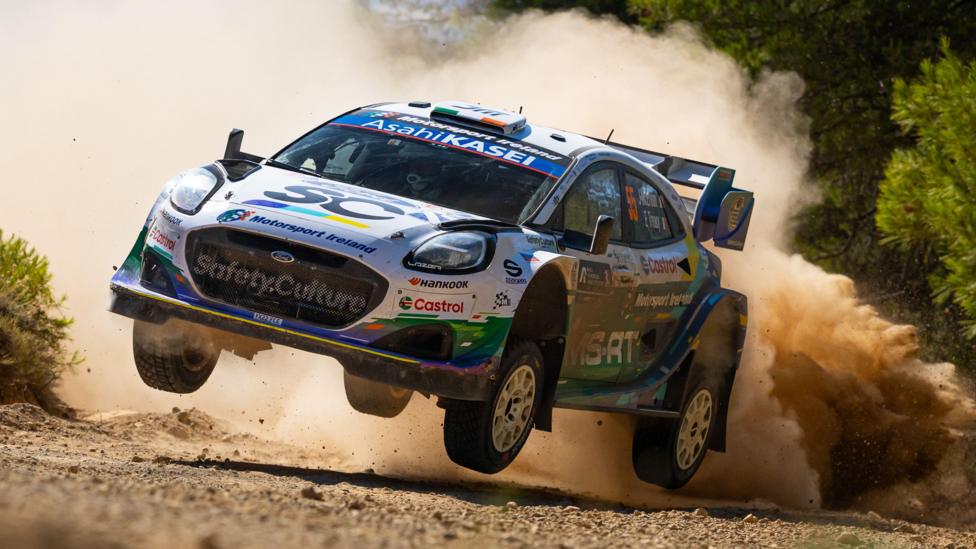
McErlean's Fourth-Place Breakthrough Signals a New Force in WRC
Irish driver Josh McErlean delivers a career-best WRC fourth in Greece as Ogier reigns supreme once more.
Ferrari's Hidden Weapon: How New Rear Rims Are Taming Their Tyre Woes
Ferrari's Barcelona upgrade quietly revolutionised their thermal management through redesigned rear wheel rims.