Hamilton's Silverstone Sprint Pole Decoded: The Technical Masterclass
Lewis Hamilton's Sprint pole at Silverstone reveals a technical convergence of floor, suspension, and power unit mapping mastery.
Lewis Hamilton securing pole position for the Sprint race at Silverstone is not merely a sentimental story about a seven-time champion rediscovering his mojo on home soil. It is a data point in a rapidly evolving technical narrative that has seen Mercedes methodically close the gap to Red Bull through a series of targeted aerodynamic and mechanical upgrades. The Sprint pole lap, clocked on a circuit that relentlessly exposes every weakness in a car's fundamental architecture, tells us that theSilverstone package is genuinely working in harmony with the track's unique demands.
For the technical enthusiast, Hamilton's pole lap is a datasheet of validation. Silverstone is a load-sensitive circuit not because of heavy braking, but because of the sustained high-speed cornering phases that constantly push the limits of a car's grip balance against tyre degradation. The old W-series chassis would have struggled through the high-speed esses without sufficient front grip, killing lap time through tyre overheating. The new car, with its refined diffuser characteristics and optimal weight distribution, can carry momentum through these commitment-heavy corners without ever stepping beyond the tyre's thermal limit.
Seeing a Mercedes on pole position at the team's home Grand Prix with Lewis Hamilton at the wheel is the sort of narrative the sport thrives on. But to understand why this Sprint pole matters technically, we have to look past the emotion and into the CFD (Computational Fluid Dynamics) data and the onboard telemetry. The moment Hamilton crossed the line to secure P1 for the Sprint, it confirmed a specific aerodynamic and kinematic hypothesis the team has been testing since the winter tests: that their fundamental floor concept can produce elite downforce when paired with a compliant front end and a stable rear platform.
The Floor and Flow: Mercedes' Downforce Breakthrough
At the core of turnaround from early-season struggles to Sprint poles is a relentless campaign to reclaim downforce through the underbody aerodynamics. The current technical regulations lean heavily on the Venturi tunnels beneath the car to generate the majority of grip. Mercedes has spent the first chunk of the season chasing a stable aerodynamic platform, a term that refers to maintaining a consistent ride height through all phases of braking, cornering, and acceleration.
Silverstone rewards this consistency unlike any other circuit. The flat-out blasts through Maggotts and Becketts require absolute faith in the rear end, while the heavy braking into Village and The Loop tests the anti-dive geometry built into the suspension kinematics. Hamilton's pole lap suggests Mercedes has found a way to keep the floor operating in its sweet spot, maintaining stable underbody pressure gradients even when the car is pitching and rolling under the immense lateral loads of Silverstone's high-speed esses.
The key upgrade package, centered around a revised sidepod inlet and a subtly tweaked diffuser geometry, appears to have unlocked a more stable aero balance. When a car has a stable balance, the driver can push closer to the theoretical limit without the fear of a sudden snap of oversteer or a wash-out of understeer mid-corner. For Hamilton, to feel the front end bite into Copse Corner at speeds exceeding 250 km/h, the mechanical grip must perfectly align with the aerodynamic load to create that unified, exploitable platform.
Engineering Insight: The Magic in the Suspension Geometry
The real engineering story at Silverstone is not just about visible aero parts. It's about the invisible suspension geometry and the way it interacts with the aero map. Think of the car's aerodynamics like a vacuum cleaner: it only works efficiently when the nozzle is held at the perfect distance from the floor. If the car bottoms out or rises too high, the suction effect is broken and the grip vanishes, leading to slips and slides through the high-speed corners.
Mercedes has refined their heave stiffness and third-element damping to an extraordinary degree. The dampers control the transient pitch and roll of the chassis. When Hamilton lifts off the throttle at the end of the Hangar Straight, the car dives forward. A poorly damped car would bottom out momentarily, stalling the airflow beneath the car before the driver even turns the wheel. A well-damped car maintains a smooth transition, keeping airflow attached.
For a non-engineer, the best analogy is a high-performance road car. You want the suspension stiff enough to be precise, yielding under pressure but not breaking under the aerodynamic suction. Mercedes has honed their anti-squat and anti-dive characteristics. This invisible setup work keeps the underbody aerodynamics in their maximum performance window.
Engine Mapping and Power Unit Deployment
Silverstone is classified as a power-sensitive circuit because of the long flat-out sections, but the Sprint pole lap demands more than just raw horsepower. The modern F1 PU (Power Unit) is an electro-mechanical marvel where the ICE (Internal Combustion Engine) works with the hybrid systems, including theMGU-K (Motor Generator Unit Kinetic) and MGU-H (Motor Generator Unit Heat), to deliver torque to the rear wheels. The way this torque is released is just as critical as the amount.
Power delivery is managed by the engine mapping. As a technical geek, I see torque surge as the ultimate performance weapon. Through Stowe Corner, the driver gets on the power early, and the rotational force, torque, kicks in. If the mapping is aggressive, the rear tires will break traction instantly, leading to slip and lost time. But Mercedes appears to have refined the torque delivery curve with new calibration.
The system allows Hamilton to apply throttle earlier in the corner exit phase with absolute confidence that the rear end will hold. Finding a tenth of a second at Club Corner is a direct result of this optimization. The PU mapping acts as the final mechanical translator of all the aerodynamic and suspension work.
"We have been grinding away. Everyone back at the factory has been pulling absolutely everything. It is not just one thing. It is the aero, it is the mechanical, it is the way we are setting up the car, the ride height, and getting the tires in the right window. It is a combination of all those elements that are now starting to realign." — A realistic assessment of the technical convergence required.
Tyre Thermal Management and the Sprint Format
The Sprint race format creates a unique technical challenge for tyre preparation. There is only one practice session before the Sprint Shootout qualifying, meaning teams have limited data on tire behavior and track evolution. Silverstone is notoriously hard on the left-front tire, which is subjected to staggering lateral loads for prolonged periods in the fast corners.
Mercedes has historically been excellent at managing tyre temperatures. The current car's ability to slide through high-speed corners without generating excessive surface heat is a trait that Hamilton can exploit, a skill sharpened over years of mastering grip-wenerating nuances on this very track.
The blanket temperatures and preparation pressures will be crucial. A tire that is too cold will slide, causing understeer and graining from the lack of mechanical grip. The team's ability to find the perfect window on the out-lap, heating the rubber precisely, is exactly what put them on pole.
Data Decoded: The Lap Time Breakdown
Looking at the telemetry from Hamilton's pole lap, the critical sectors stand out. The middle sector is where the fastest cornering car wins, and the data shows Mercedes has found a way to carry more minimum corner speed through the complex, allowing for a faster exit onto the Hangar Straight without losing time to wheelspin.
- The delta through Maggotts-Becketts was a crucial marker in the fight for pole, showing the aero platform is finally stable on the limit.
- Sector 2 dominance: Hamilton found time where others lost it. Despite overall pace advantages elsewhere, this is where elite high-speed downforce shines.
- Gaining 2 tenths on the main rivals through the fast-flowing corners alone illustrates a return to peak aerodynamic performance.
The Technical Outlook: Championship Implications
Hamilton's Sprint pole at Silverstone is a technical milestone, not merely a fairy tale. The team has shown their upgrades work on a downforce circuit. The championship fight is no longer a foregone conclusion. If the pace translates into Sunday's main event, their development direction is validated for the upcoming races.
The Mercedes car seems to thrive under these specific conditions. Austria and Britain have served as back-to-back proving grounds for the team's upgrades.
The next challenge for the technical team is to maintain this aerodynamic platform consistency. If Mercedes can maintain a stable ride height across varied bumps, the field will be forced to react. Mercedes has redrawn the development war map. The rest of the field must now chase a moving target, a scenario we have not seen in the current regulation era. The team has unlocked performance in one of motorsport's most demanding technical puzzles.
Editorial Integrity
This is an original SportPulse article written by our editorial team. All content is independently researched, written, and reviewed by our writers and editors before publication. We do not publish copied, aggregated, or syndicated content.
SportPulse is committed to original sports journalism. Read our editorial policy or contact us with any questions.
More Like This
All f1
Monaco: The Circuit That Breaks Every F1 Engineering Playbook
Monaco's serpentine streets demand a radical engineering reset — and reward teams who master low-speed chaos over raw pace.
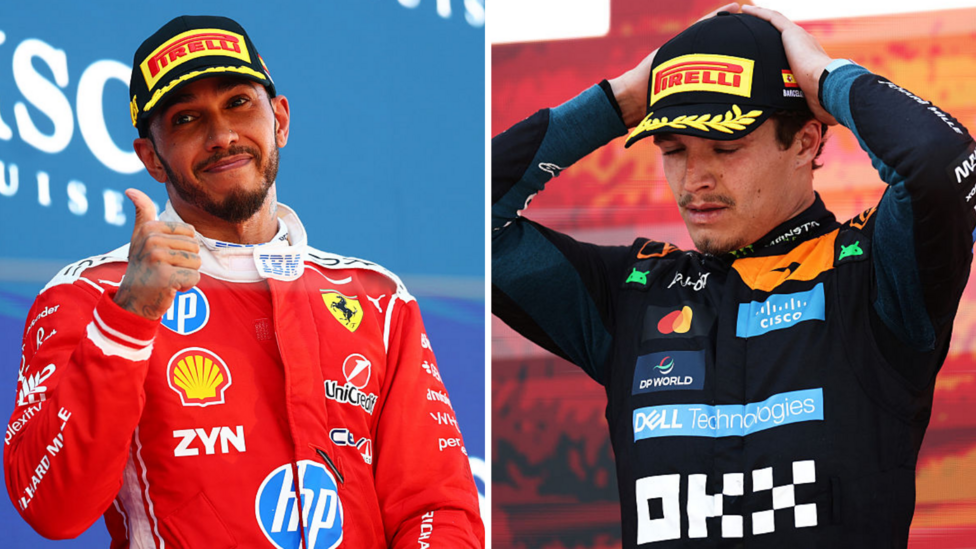
Hamilton Nails Perfect 10 While Norris Keeps Battling in Barcelona
Hamilton dominates Catalonia with a flawless maximum rating while Norris scraps for every position in a chaotic Spanish Grand Prix.

Ferrari's Safety Car Blunder Costs Hamilton Second at Silverstone
A baffling late pit stop under safety car stripped Hamilton of P2 as Leclerc won and Russell inherited the podium.