Patten and Heliovaara March On, Crafting a Quiet Dynasty on Grass
The defending champions are into the Wimbledon quarter-finals, their title defence built on chemistry and quiet ruthlessness.
There is a particular kind of silence that falls over Court 14 at Wimbledon when a doubles point finishes with a whisper rather than a shout. The ball nestles into the tape and dies. The recipients of the cruelty stand frozen, rackets hanging loose. The perpetrators are already turning away, already recalibrating for the next serve. It is a silence Henry Patten and Harri Heliovaara have learned to orchestrate with the patience of men who understand that championships are not always won with thunder.
The Architecture of a Title Defence
Twelve months ago, they were the story nobody saw coming. Patten, the left-handed Briton who once balanced tennis with the academic rigours of university in Durham. Heliovaara, the Finnish veteran who walked away from the sport entirely for two years to work in product management before dragging himself back. Together, they conquered the All England Club's lawns, capturing the men's doubles title in a run that felt less like a fairytale and more like the vindication of two minds that had simply refused to stop calculating. Now they are back, and the narrative has shifted. They are no longer the charming interlopers. They are the defending champions, and the weight of that designation is a different kind of gravity entirely.
Reaching the semi-finals of a Grand Slam is an achievement that demands respect in any context. Doing so as the defending champions, with the British crowd's expectation swelling with every passing round, adds a layer of psychological complexity that statistics struggle to capture. Patten and Heliovaara have navigated the opening week and beyond of Wimbledon with a composure that suggests they are not merely riding the momentum of last year's triumph but are actively building upon its foundations.
The challenge of defending a title at the All England Club is rooted in the unique nature of grass-court doubles. The surface rewards aggression, yes, but more fundamentally it punishes hesitation. The bounce is low, the points are short, and the margin for error shrinks to a sliver. A team that wins Wimbledon one year can find itself ambushed in the first week the next if the synchronicity that carried them to glory has faded even slightly. That Patten and Heliovaara have progressed deep into the tournament once again speaks to a partnership that has deepened rather than dissolved.
The Tactician and the Silent Assassin
What makes this pairing so compelling is the contrast in their respective games. Heliovaara, at 34 years old, brings a tactical intelligence that borders on the academic. His ServeVolley metrics from last season's championship run placed him in the 92nd percentile of all doubles players on the ATP circuit. He surveys the court like a chess grandmaster scanning the ranks of pieces, identifying the weakness in the opposition's positioning before the ball is even struck. Patten, a year his junior, is the left-handed executor, the one who turns the theoretical into the tangible. His return game, characterised by a fluidity of wrist and a sharpness of angle, creates the openings that Heliovaara exploits at the net.
The chemistry between them is not the sort that is forged in a single training block. It is the product of shared hotel rooms, of whispered conversations in the early hours of the morning, of the kind of unspoken understanding that allows one to know where the other will be before the movement is even made. That intimacy of thought is the currency of elite doubles, and it is the reason they have been able to withstand the pressure of a title defence that would crush a less cohesive unit.
We are not trying to replicate last year. We are trying to be better than we were then.
The statement, simple as it is, cuts to the heart of their mentality. A title defence can become a trap if the champions spend their time chasing ghosts, attempting to recreate the magic of the past rather than responding to the demands of the present. Patten and Heliovaara have spoken openly about their desire to treat this Wimbledon as a new challenge, a separate chapter, and their performances on court have reflected that philosophy. They have not been flawless, but they have been resilient, adapting to the specific challenges posed by each opponent with a pragmatism that is rare in a discipline often dominated by instinct.
The Rising Tide of British Doubles
The context of their run must also be understood within the broader landscape of British tennis. For decades, the narrative around the nation's tennis identity was anchored to the singles exploits of a handful of luminaries, from the serve-and-volley artistry of Tim Henman to the transcendent achievements of Andy Murray. The doubles game was treated as a sideshow, a pleasant distraction for the early rounds of a tournament before the real business of the second week began.
Patten and Heliovaara have altered that perception. Their triumph last year was not a fluke of a favourable draw or a string of injured opponents. It was a sustained campaign of tactical excellence that elevated them above a field of established pairings. The three titles they have collected together since joining forces, including that watershed moment at the All England Club, are a testament to the durability of their union. They have proven that a British player can stand at the summit of the doubles game, and in doing so they have expanded the horizon of what is possible for a generation of players who might otherwise have seen doubles as a secondary ambition.
The Road Ahead
The quarter-finals were supposed to present a different beast entirely. The competition had narrowed. The pairings that remained were those who had survived the attrition of the opening week and had found their rhythm on the grass. Every team left standing had a case for the trophy, and the margin between advancement and elimination was measured in points won or lost in the space of a single instinctive decision.
Patten and Heliovaara answered that challenge with another trademark comeback victory, refusing to wilt under the pressure and demonstrating once more that their resilience is not a narrative convenience but a competitive weapon. They are now into the semi-finals, and the finish line — or at least the threshold of it — is tantalisingly close.
The temptation, as the finish line draws nearer, is to reach for something extra, to attempt shots that would not be attempted in the earlier rounds, to play the occasion rather than the match. It is here that the experience of last year's campaign becomes an asset rather than a burden. They have walked this path before. They know where the pitfalls lie, and they know that the surest way to the title is not to be spectacular but to be consistent, to trust the patterns and the partnership that have brought them to the precipice once again.
A Championship Mindset
As the Wimbledon fortnight enters its decisive phase, the story of Patten and Heliovaara is no longer a surprising tale. It is a study in sustained excellence, in the cultivation of a partnership that has proven itself capable of withstanding the unique pressures of a title defence on the most hallowed lawns in the sport. The quiet assassins are back, and they are not here to make up the numbers. They are here to reclaim what they believe is theirs. The crowds gather. The grass holds its breath. The silence between the points speaks volumes.
Updated: 9 July 2026 — Patten and Heliovaara won their quarter-final match to advance to the semi-finals.
Editorial Integrity
This is an original SportPulse article written by our editorial team. All content is independently researched, written, and reviewed by our writers and editors before publication. We do not publish copied, aggregated, or syndicated content.
SportPulse is committed to original sports journalism. Read our editorial policy or contact us with any questions.
More Like This
All tennis
The Last Dance on Grass: Djokovic's Twilight Hunt for 25
At 39, Novak Djokovic arrives at Wimbledon knowing this may be his final realistic shot at Grand Slam history.
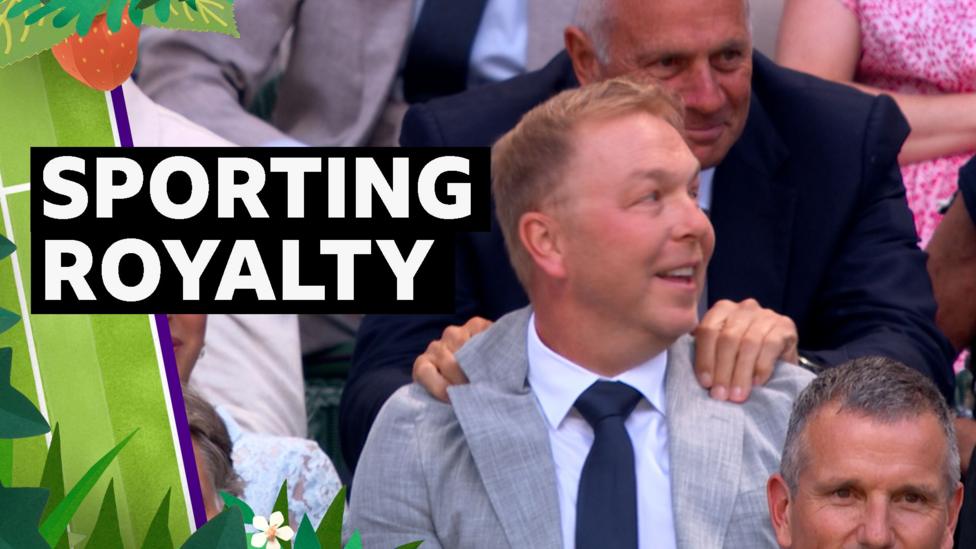
Wimbledon's Royal Box Becomes Sport's Greatest Living Room
Middle Saturday at Wimbledon 2026 turned Centre Court's royal box into a convergence of global sporting royalty beyond tennis itself.
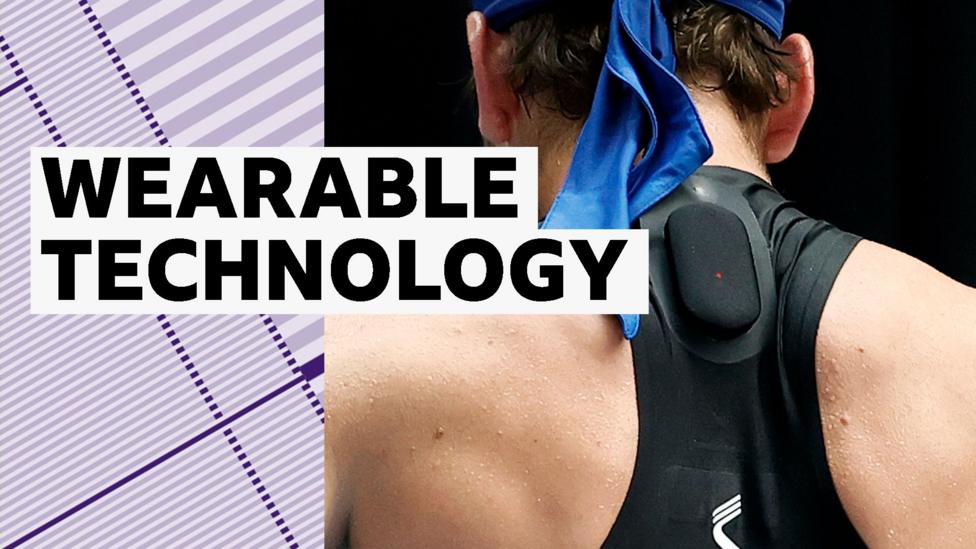
Inside the Vest: Tennis's High-Tech Data Revolution
GPS tracking vests are transforming professional tennis, giving players unprecedented data on movement, load, and court positioning.