Pirelli's F1 Tenure Secured: The Tyre War That Isn't
Pirelli's contract extension until 2028 cements their role as the sole arbiter of F1's strategic chessboard.
The Verdict is In: Continuity Over Competition
The Formula 1 paddock received a significant, if somewhat expected, piece of off-track news today. Italian manufacturer Pirelli has officially confirmed its contract as the sport's sole tyre supplier has been extended by another year, securing its position through the 2028 season. This move solidifies a partnership that began in 2011, a tenure marked by intense scrutiny, evolving technical demands, and the constant, intricate dance between rubber and asphalt that defines modern Grand Prix racing. The decision speaks volumes about F1's current priorities: stability, cost control, and a reliance on a known variable in an era of massive technical overhaul.
This isn't merely a rubber stamp on a piece of paper. It's a strategic lifeline for teams deep in the development of their 2026 power unit and chassis packages under radically new regulations. The knowledge that the foundational component—the tyre—will remain a constant allows engineers to allocate resources and simulations with a clearer focus. For Pirelli, it's a vote of confidence after years of navigating the nearly impossible brief: to produce deliberately degrading tyres that promote strategy without compromising safety.
A Decade Under the Microscope: The Pirelli Era
Since wresting the supply contract from Bridgestone, Pirelli's journey has been anything but smooth. Tasked by the FIA and FOM to create tyres that encourage pit stops and strategic variety, they've often found themselves as the sport's scapegoat. From the infamous 2013 British Grand Prix blowouts to ongoing debates about thermal degradation windows, their product is the most analyzed variable on the grid. Yet, their technical evolution has been profound. The shift from aggressive, high-degradation compounds to a more conservative, but still performance-critical, range reflects lessons learned and feedback integrated from a decade of data.
The role of the tyre supplier in F1 extends far beyond simply shipping rubber to circuits. Pirelli's engineers work hand-in-hand with teams, providing detailed data on predicted wear rates, crossover points between compounds, and the sensitivity of each compound to temperature and surface roughness. This information is the bedrock upon which every race strategy is built. A miscalculation in understanding the C3 versus the C4 compound's behavior in the ambient conditions of a Singapore night race versus the scorching asphalt of Bahrain can be the difference between a podium and a points finish.
Strategy Breakdown: The Pit Wall's Calculus
Every strategic decision on a Sunday afternoon is a direct conversation with Pirelli's pre-race predictions. Consider the classic one-stop versus two-stop dilemma. It hinges on the calculated tyre degradation delta—the lap time lost per lap on a worn set versus the time cost of a pit stop, typically around 22 seconds. Teams plug Pirelli's wear models into their simulations, often running thousands of scenarios overnight. The choice to start on the Soft compound versus the Medium isn't just about initial grip; it's a bet on the formation lap temperatures, the potential for a Safety Car, and the traffic expected after a pit stop.
This contract extension ensures that this intricate strategic layer of F1 remains unchanged. There will be no supplier transition period, no unknown new tyre characteristics for teams to decode amidst the already monumental 2026 rule changes. The teams know the language Pirelli speaks. The real battle becomes who can translate that data into the most effective real-time decisions, influenced by the ever-present variable of driver feedback over the team radio. "Box, box, opposite to Hamilton" is a call built upon a mountain of Pirelli-supplied telemetry.
The Ripple Effect: From Maranello to Milton Keynes
For the ten teams, this announcement is a green light to double down on their current development trajectories. Car design is profoundly influenced by tyre characteristics. The quest for aerodynamic efficiency is intrinsically linked to how the car manages the airflow to keep the tyres in their optimal operating window. Suspension kinematics are tuned to control the load on each tyre through corners, a setup puzzle that changes with every compound choice. Knowing the supplier is locked in allows teams like Red Bull, Mercedes, and Ferrari to refine their simulation tools with even greater confidence.
It also impacts the sporting and political landscape. The prospect of a tyre war—with multiple manufacturers competing—has been a recurring topic of debate. Proponents argue it would drive innovation and add a new competitive dimension. However, the counter-argument, which has ultimately prevailed, centers on cost containment and performance convergence. A tyre war would likely create a massive performance gap between the haves and have-nots, further stratifying the grid. Pirelli's extended contract effectively closes that debate for this regulatory cycle, prioritizing the spectacle of on-track competition over manufacturer rivalry in the tyre department.
Looking Down the Road: Innovation and Sustainability
The extension isn't a mandate for stagnation. Pirelli is under continuous pressure to innovate, particularly in the realms of sustainability and performance. The sport's Net Zero by 2030 commitment directly implicates the tyre supply chain. We can expect accelerated development in sustainable materials, with the goal of increasing the percentage of bio-based and recycled content in the tyres without compromising the critical performance metrics that teams demand. Furthermore, the evolution towards 18-inch wheels, now the standard, will continue to see refinements in construction and compound to manage the different thermal and mechanical loads.
The future also holds the integration of more advanced sensor technology within the tyres. Real-time data on pressure, temperature, and even tread wear could provide teams and fans with a new layer of strategic insight. Pirelli's continued presence provides a stable platform for trialing such technologies. The question isn't whether they'll change, but how they'll evolve within the fixed framework of their monopoly.
The Championship Equation: A Constant Variable
Ultimately, this decision filters down to the most important competition: the World Championship. When the title fight is decided by a handful of points, as it was in 2021, every fraction of a second matters. The consistency of the tyre supply is a silent guardian of competitive fairness. Every team operates on a level playing field with the same four compounds (and intermediate and wet tyres) available each weekend. The differentiation comes from how they use them.
Pirelli's extension until 2028 ensures that this fundamental aspect of the sport's DNA remains intact through its next major transformation. It guarantees that the intricate, high-stakes game of tyre management will continue to be a decisive factor in who stands on the top step of the podium and who lifts the championship trophy. The rubber, for now, is here to stay. And in Formula 1, that's a strategic certainty worth more than its weight in gold.
Editorial Integrity
This is an original SportPulse article written by our editorial team. All content is independently researched, written, and reviewed by our writers and editors before publication. We do not publish copied, aggregated, or syndicated content.
SportPulse is committed to original sports journalism. Read our editorial policy or contact us with any questions.
More Like This
All f1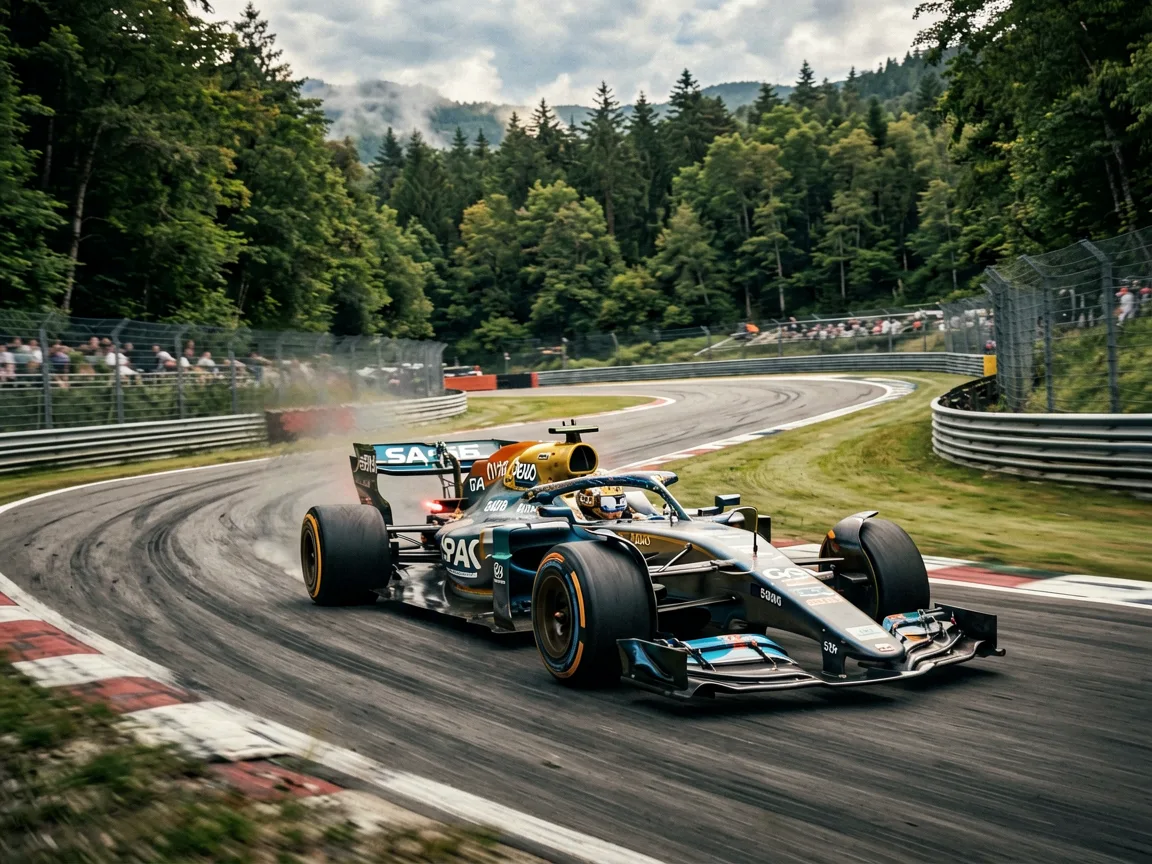
Crawford Returns to FP1 Duties at Spa Amid Aston Martin Development Push
Aston Martin deploys Jak Crawford for another FP1 session at Spa, evaluating the young American amid the team's critical mid-season technical recalibration.

The Calm Before Spielberg: How F1's Mid-Season Reset Reshapes Austria
A rare breather between races gives F1's grid a chance to regroup before the Red Bull Ring gauntlet.

Champion's Playbook: Norris Passes Title-Race Wisdom to Rice and Arsenal
F1 world champion Lando Norris draws on his own championship experience to counsel Arsenal midfielder Declan Rice during a pivotal title race.