Pirelli Locked In Through 2028: Why F1's Tyre Future Is More Complex Than It Looks
Pirelli's contract extension signals F1's commitment to sole-supplier stability, but the 2026 regulations will test their engineering limits.
One More Year, But a Whole New Challenge
Formula 1 has officially extended Pirelli's contract as the championship's sole tyre supplier through 2028, adding another year to what has become the longest uninterrupted manufacturer partnership in modern Grand Prix racing. The Italian rubber giant, which first took over the role from Bridgestone in 2011, now has a clear runway through one of the most technically transformative eras the sport has ever faced.
The extension itself is not a surprise. Pirelli's existing deal ran through 2027, and the additional year aligns neatly with the sport's broader regulatory calendar. But the significance goes far deeper than contract paperwork. This is a commitment to technical continuity at the exact moment F1 is ripping up almost everything else in its technical rulebook.
A Sole Supplier in an Era of Radical Change
The 2026 regulations represent the most sweeping overhaul of F1 car design since the turbo-hybrid era began in 2014. New power unit architectures featuring a 50/50 split between internal combustion and electrical energy, active aerodynamics systems, and dramatically reduced overall downforce will fundamentally alter how cars interact with the tyre contact patch.
Here is the engineering problem that makes Pirelli's extension so consequential: every compound, every construction, every belt package and carcass architecture Pirelli develops must be validated against cars that do not yet exist in their final form. Teams are running CFD simulations and wind tunnel models of their 2026 concepts right now, but the actual mechanical and aerodynamic loads those cars will place on four contact patches roughly the size of a postcard each remain a moving target.
Think of it like designing shoes for a runner who is simultaneously changing their stride length, foot strike pattern, and body weight. Pirelli cannot simply iterate on the 2024 specification and call it done. The 2026 tyre may need to handle cars that generate significantly less aerodynamic downforce in high-speed corners while producing substantially more torque from the electric power unit at low speeds. That creates a completely different thermal and mechanical degradation profile.
Engineering Insight: The Contact Patch Problem
Every Formula 1 tyre operates within a narrow performance window defined by three interdependent variables: vertical load, slip angle, and surface temperature. When a car running at 300 km/h enters a high-speed sweeper, the aerodynamic load pushing the tyre into the tarmac can exceed 1,000 kg per corner. The 2026 regulations, which introduce moveable aerodynamic surfaces to reduce drag on straights, will deliberately lower peak downforce in fast corners.
This sounds like it makes the tyre engineer's job easier. Less load means less stress, right? Wrong. Lower downforce in high-speed sections means the tyre must manage a wider range of operating conditions within a single lap. The transition from high-load, high-temperature cornering to low-load braking zones becomes more abrupt, and the compound must remain consistent across that entire envelope. Pirelli's polymer chemistry team will need to develop elastomer blends that resist thermal shock while maintaining grip across a broader temperature window than current compounds face.
Meanwhile, the increased electrical deployment at lower speeds means rear tyres will experience sharper torque spikes on corner exit, particularly at traction-limited circuits like Monaco or Singapore. The sidewall construction, which controls how the tyre deforms under acceleration, will need to absorb these loads without generating excessive hysteresis heating that would push the compound outside its optimal operating range.
The Sustainability Mandate
Pirelli's extension also carries an explicit sustainability dimension. The company has been steadily increasing the proportion of recycled and bio-sourced materials in its F1 tyres, with the stated goal of reaching a fully sustainable tyre by the end of the decade. Current F1 tyres already incorporate materials like rice husk silica and FSC-certified natural rubber, but the percentage remains modest.
The extension through 2028 gives Pirelli a defined timeline to scale these innovations without the distraction of a supplier tender process. It also allows the FIA to set clear sustainability benchmarks within the contract framework. Expect the 2026 tyre to contain a significantly higher proportion of sustainable materials than the current generation, which Pirelli will then filter down to its consumer product lines.
This is not charity work. It is a technology pipeline where the extreme demands of Formula 1 force material science breakthroughs that would take years to develop in conventional R&D. The championship serves as a proving ground at the ragged edge of performance, and Pirelli extracts genuine commercial value from every compound evolution tested on track.
Why No Tyre War
Every few years, the debate resurfaces: should F1 return to a tyre war with multiple competing manufacturers? The Pirelli extension through 2028 effectively answers that question for the foreseeable future, and the reasoning is largely technical and financial.
During the Michelin vs. Bridgestone era that ended in 2006, tyre development was a runaway cost center. Manufacturers poured hundreds of millions into R&D to gain fractions of a second, and the competitive dynamic created perverse incentives. Tyres were developed to suit specific car characteristics rather than providing a consistent platform for all teams. Safety incidents, most notably the 2005 United States Grand Prix at Indianapolis, demonstrated the risks when tyre supply became a competitive rather than collaborative exercise.
The cost cap era has made a tyre war even less viable. Teams operating under a $135 million annual budget cannot absorb the indirect costs of adapting to rapidly evolving competing tyre philosophies. A sole supplier provides predictability, which allows chassis and aerodynamic teams to optimize their designs around a known performance envelope.
There is a counterargument, of course. Critics point out that a monopoly supplier has reduced incentive to produce the best possible product, and Pirelli has faced consistent criticism for tyres that degrade too aggressively, produce excessive thermal sensitivity, or fail to provide exciting racing in certain conditions. The 2023 sprint race format changes and the push for more strategic variance in race weekends have placed additional pressure on Pirelli to deliver compounds that enable multi-stop strategies without the artificial cliff-edge degradation that drivers and fans alike have found frustrating.
What This Means for Teams
For the engineering departments at all ten teams, the extension provides something invaluable: certainty. Tyre characteristics feed into virtually every design decision, from suspension geometry to brake cooling duct sizing to fuel load calculations. Knowing that Pirelli will remain the supplier through 2028 allows teams to plan their 2026 car concepts around a trusted set of tyre performance assumptions.
The 2025 season will serve as a critical data collection exercise. Pirelli is expected to introduce a revised construction for the 2025 specification that previews elements of the 2026 design philosophy. Teams that invest heavily in tyre modelling infrastructure now, building more accurate virtual tyre models for their simulators and CFD platforms, will gain a structural advantage when the new regulations arrive.
The pre-season testing allocation also matters here. With limited track time before each season, every lap on fresh rubber is precious. Pirelli's ability to plan its compound range well in advance, knowing the regulatory landscape is stable, translates directly into better-prepared testing programmes for every team on the grid.
Looking Ahead: Australia 2026 and Beyond
The first race under the new regulations will present Pirelli with an extraordinary challenge. Albert Park's combination of low-grip asphalt, medium-speed corners, and heavy braking zones will test the new compounds against an entirely unfamiliar load profile. Unlike the iterative year-on-year development that characterises most seasons, the 2026 tyre will be a clean-sheet design responding to cars that have fundamentally different power delivery and aerodynamic behaviour.
Pirelli's motorsport division, led from their Milan headquarters with dedicated testing facilities at circuits across Europe, will need to validate the new constructions across the full calendar spectrum: the high-energy demands of Silverstone, the surface temperature extremes of Bahrain, the stop-start brutality of Monaco, and everything in between.
The extension through 2028 is not merely a commercial arrangement. It is a technical commitment to shepherd the sport through its most ambitious regulatory transformation while maintaining the safety, performance, and sustainability standards that modern Formula 1 demands. For a company whose entire motorsport reputation rests on four black circles of vulcanised rubber, the next three years represent the ultimate engineering test.
Editorial Integrity
This is an original SportPulse article written by our editorial team. All content is independently researched, written, and reviewed by our writers and editors before publication. We do not publish copied, aggregated, or syndicated content.
SportPulse is committed to original sports journalism. Read our editorial policy or contact us with any questions.
More Like This
All f1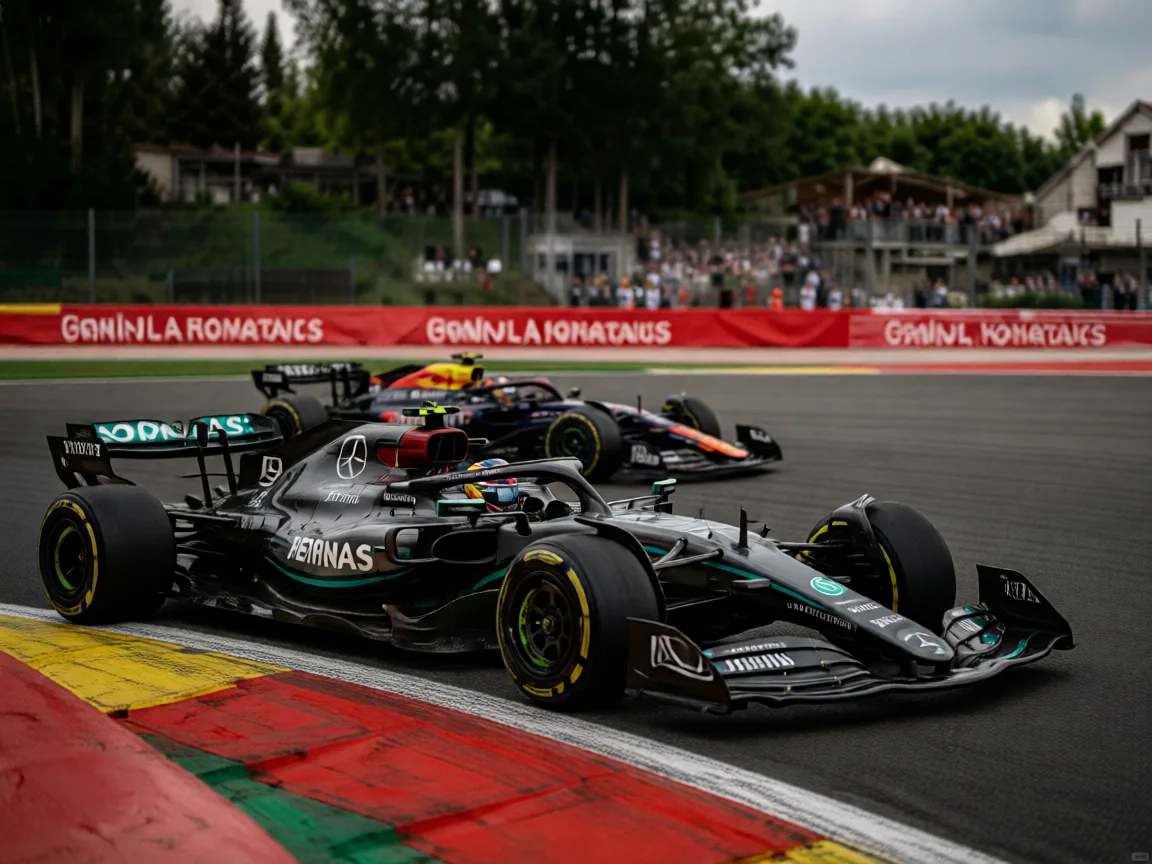
Spa Carnage: Russell Out as Hamilton Clash Triggers Early Safety Car
Lap 1 chaos at Spa-Francorchamps ends Russell's race after contact with Hamilton, summoning the Safety Car and reshuffling the Grand Prix.

Haas's Upgrade Backfires: Komatsu Admits 'We Weren't Good Enough'
Haas started hot with Bearman's points haul, but their upgrade package has triggered a brutal slide into midfield mediocrity.
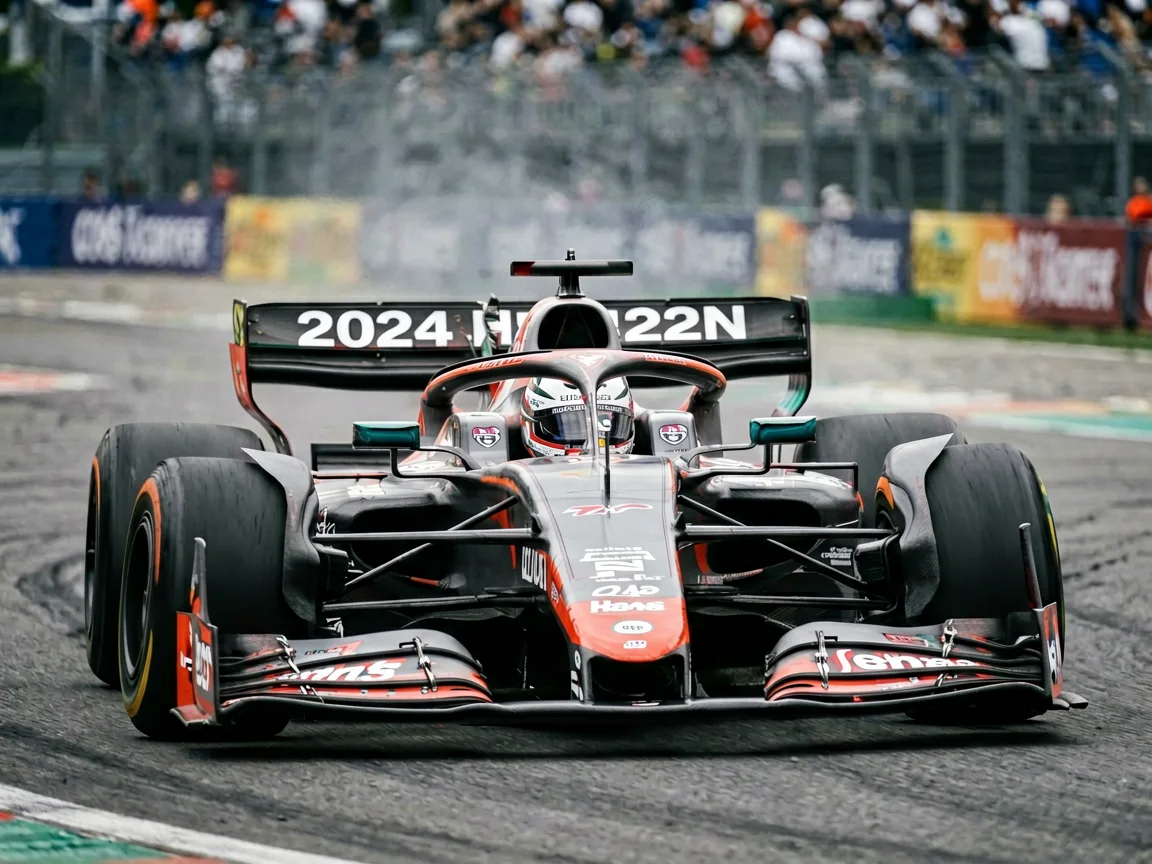
Hulkenberg cracks Q3 in Hungary but the gap to midfield rivals still bites
Haas finds qualifying pace at the Hungaroring, yet Hulkenberg's concern about a bigger deficit to rivals undercuts the progress.