Japan's Knockout Curse Demands a Coach Who Refuses to Play Safe
After five straight World Cup knockout defeats, the Samurai Blue need Ange Postecoglou's fearlessness to shatter their glass ceiling.
The Ninety-Sixth-Minute Wound That Keeps Reopening
There is a particular cruelty to losing in added time of extra time. Not in the cruel randomness of a penalty shootout, nor in the slow suffocation of a dominant opponent grinding you down. The 96th-minute winner that ended Japan's World Cup campaign against Brazil was something worse: a gut-punch delivered at the precise moment when belief had crystallized into genuine expectation.
Japan had done what they so often do at major tournaments. They organized. They pressed intelligently. They created moments of genuine quality against a side that, on paper, possessed far superior individual talent. And then, as has happened in five consecutive World Cup knockout matches, they found a way to lose.
The tears were raw and immediate. Players collapsed on the pitch at the final whistle, some staring blankly at the sky, others burying their faces in their shirts. This was not a team humiliated. It was a team heartbroken, and that distinction matters enormously when assessing where Japan go from here.
Five Knockouts, Five Losses: The Pattern No One Can Ignore
The statistical weight of Japan's knockout-stage record is staggering in its consistency. Since reaching the last 16 for the first time in 2002 as co-hosts, the Samurai Blue have now lost five straight knockout matches at the World Cup. Each defeat carries its own narrative, its own particular brand of anguish, but the throughline is unmistakable.
Against Paraguay in 2010, it took a penalty shootout. In 2018, Belgium's last-gasp counter-attack turned a 2-0 lead into a 3-2 defeat in one of the tournament's most dramatic matches. In 2022, Croatia prevailed again on penalties. Each time, Japan arrived with legitimate hope and departed with the same nagging question: why can this team not take the final step?
The answer is not technical. Japan's player development pipeline, built painstakingly since the J-League's founding in 1993, has produced generations of technically gifted footballers plying their trade across Europe's top leagues. Wataru Endo at Liverpool, Takefusa Kubo at Real Sociedad, Kaoru Mitoma at Brighton. The talent pipeline is flowing.
Nor is the answer tactical in a narrow sense. Japanese football has long been synonymous with disciplined shape, intelligent positional play, and a collective understanding of space that frequently unsettles more celebrated opponents. The 2-1 victories over Germany and Spain in Qatar proved that Japan can execute sophisticated game plans against elite opposition.
The Psychological Barrier Is the Real Opponent
What Japan lack is not skill or structure. It is the mentality required to win knockout football at the highest level. The great teams, as the pundit on British television noted in the immediate aftermath of the Brazil defeat, "find a way to win." That pundit was Ange Postecoglou, and his words carried a weight that transcended mere commentary.
Knockout tournament football is a unique psychological environment. It rewards a specific kind of aggression, a willingness to seize control of moments rather than react to them. The best international sides do not simply play well and hope the result follows. They impose themselves on the decisive moments. They take risks when the safer option beckons. They have an internal conviction that the game will bend to their will.
Japan, for all their quality, have consistently approached knockout matches with the caution of a team that fears losing more than it desires winning. The body language in those final minutes against Brazil told the story: a team defending a draw rather than hunting a winner, a team managing the clock rather than attacking the moment.
This is not a criticism of the players themselves. It is a systemic issue, rooted in coaching philosophy and institutional culture. And it is precisely why the Japan Football Federation should move heaven and earth to appoint Ange Postecoglou.
Tactical Shift: What Postecoglou Actually Brings
Postecoglou's coaching philosophy is built on a single, non-negotiable premise: you control football matches by attacking them. At Celtic, he transformed a side that had grown cautious and reactive into one that overwhelmed Scottish football with relentless positional pressing and vertical passing. His 4-3-3 system demanded that every player, regardless of position, understood their role in building from the back and creating overloads in wide areas.
At Tottenham, the principles were identical, applied against significantly stronger opposition. His Spurs side pressed high, committed numbers forward, and played with an intensity that left no room for passive defending. The Europa League triumph in his first season was not a fluke achieved through pragmatic cup football. It was the logical outcome of a team that believed in a system and executed it with conviction.
The second season's struggles at Spurs, with relegation fears mounting, revealed the limitations of that approach when the squad depth and defensive personnel were insufficient. But the contrast is instructive. Spurs under Postecoglou's successor have reverted to the cautious, risk-averse football that the Australian spent his entire tenure trying to eradicate.
For Japan, Postecoglou's attacking convictions would represent a philosophical revolution. The Samurai Blue have traditionally operated in a 4-2-3-1 or 3-4-2-1 shape that prioritizes defensive compactness and quick transitions. These are legitimate tactical choices, but they have consistently failed to produce the attacking authority needed to win knockout matches at the World Cup.
A Postecoglou-coached Japan would press higher. They would commit to building through the thirds rather than bypassing midfield with direct balls. Most importantly, they would approach knockout matches with the mentality that the game is there to be won, not merely survived.
The Contract Negotiations Japan Cannot Afford to Lose
Postecoglou's availability this summer makes this appointment uniquely feasible. After leaving Tottenham, the Australian is unattached, experienced at the international level with Australia, and publicly expressed his emotional connection to Japan's World Cup journey. His commentary was not the detached analysis of a neutral observer. It was the insight of someone who understands, deeply, what Japanese football aspires to be.
The federation in Tokyo must act decisively. Postecoglou will attract interest from club sides across Europe, and his stock, despite the Spurs sacking, remains high among those who understand coaching rather than simply reading results tables. A long-term contract taking him through the 2030 World Cup cycle would give him the runway to embed his philosophy, develop the next generation of Japanese players within his system, and fundamentally shift the national team's approach to tournament football.
"The great teams find a way to win and that's where Japan need to get to." — Ange Postecoglou
The financial commitment required is significant but not prohibitive. Japan's football infrastructure is among the most developed in Asia. The J-League provides a steady stream of technically proficient players. The overseas contingent continues to grow. What is missing is the connective tissue, the philosophical framework that transforms a collection of good players into a side that can win when winning matters most.
What Changes Under Postecoglou
The most immediate transformation would be psychological. Postecoglou's teams play without fear. They attack without apology. They press without hesitation. For a Japan side that has repeatedly retreated into its shell at the decisive moments of World Cup knockout matches, this shift in mentality could be transformative.
Tactically, expect a move toward a more aggressive 4-3-3 that maximizes Japan's strengths in wide areas. Players like Mitoma and Kubo, who thrive in one-on-one situations and can deliver from half-spaces, would flourish in a system designed to isolate defenders and create overloads. The pressing triggers would be higher, the defensive line would push up, and the team would spend more time in the opposition's third.
There would be growing pains. Postecoglou's system demands technical precision under pressure, and not every player in the current Japan pool would be suited to it. But the core philosophy, that attacking intent is the foundation of tournament success rather than its enemy, is exactly what the Samurai Blue need to hear.
The Window Is Now
Japan's football project is at an inflection point. The talent is present. The infrastructure is world-class. The tactical foundation has been laid by decades of investment in coaching and player development. What has been missing is the final ingredient: the belief that this team belongs among football's elite, not as a plucky underdog that can cause an upset, but as a genuine contender that expects to win.
Postecoglou cannot guarantee a World Cup quarter-final. No coach can. But he can guarantee that Japan will approach the next tournament with a philosophy designed to win, not merely to compete. After five knockout defeats and decades of heartbreaking near-misses, that shift in approach is not just desirable. It is essential.
The next competitive fixtures for Japan in the 2030 qualifying cycle will set the tone for whatever comes next. If the federation moves quickly, those matches could mark the beginning of a genuinely new era. If they hesitate, they risk losing Postecoglou to a club job and watching another World Cup cycle drift by with the same questions and the same tears.
Japan have been knocking on the door long enough. It is time to hire the coach who will kick it down.
Editorial Integrity
This is an original SportPulse article written by our editorial team. All content is independently researched, written, and reviewed by our writers and editors before publication. We do not publish copied, aggregated, or syndicated content.
SportPulse is committed to original sports journalism. Read our editorial policy or contact us with any questions.
More Like This
All football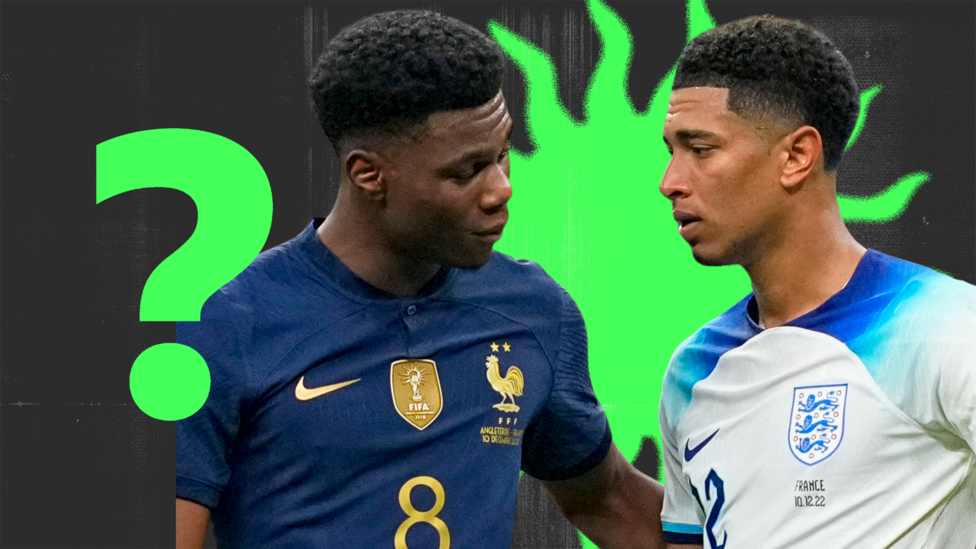
Every Team England Have Faced in World Cup Knockouts — And What Each Reveals
From 1966 glory to penalty heartbreak, England's knockout opponents tell the full story of footballing agony and ambition.
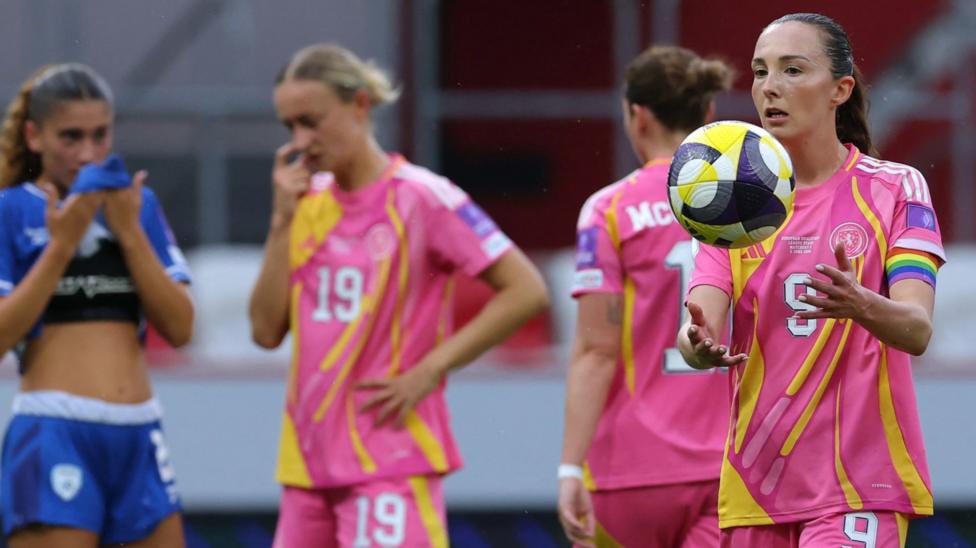
Weir Four Seals Scotland Top Spot in World Cup Qualifying
Caroline Weir hit four past Israel to seal Scotland's group summit, but the Real Madrid star insists this is a collective dream.

Dan Neil Embraces Heavy Expectation at Rangers
Dan Neil's move from Sunderland to Rangers demands he translate League One mettle into the seismic pressure of Ibrox.