Eleven Managers, Under One Year Each: Premier League Job Security Hits Floor
The 2026-27 Premier League season opens with record-low managerial tenure and turnover not seen outside wartime or inauguration.
Nine of the 20 Premier League clubs will start 2026-27 with a different manager from the one who finished the previous campaign. Add in Roberto De Zerbi and Michael Carrick, confirmed in March and May respectively, and 11 clubs begin the season with a head coach who has spent less than 12 months in the dugout. The median tenure of Premier League managers at the start of each season has reached its lowest point since the competition's inception.
1888 and 1946: The Only Precedents
Opta's data places this level of turnover in rarefied company. Only two previous top-flight seasons began with as many managers making their debuts for their respective clubs: 1888-89, the inaugural Football League campaign, and 1946-47, the first season after the Second World War.
Both outliers arrived under extraordinary circumstances. The 1888 season built the competitive architecture from nothing. Every manager was necessarily new. The 1946 season resumed a league that had been suspended for seven years, with clubs reconstituting themselves after wartime disruption. Normal competitive continuity did not apply in either instance.
The current summer carries no comparable external trigger. No war interrupted the calendar. No league was being formed from scratch. Nine clubs simply chose to change managers, or had change forced upon them, in a single offseason under ordinary operating conditions. Turnover at this volume has not occurred during a standard cycle in 139 years of English league football.
De Zerbi, Carrick, and the Compression Effect
Two of the 11 short-tenure managers were appointed before the summer window opened. Roberto De Zerbi was confirmed in March, Michael Carrick in May. Both arrived mid-cycle with the stated intention of stabilizing situations that previous managers could not.
De Zerbi's appointment fits a broader Premier League trend toward coaches with defined tactical identities rather than adaptable operators. His possession and progressive-passing principles have followed him from Sassuolo to Shakhtar Donetsk to Brighton, and now into a new environment. The bet is that the system transplants faster than the adaptation period costs.
Carrick's case operates on different logic. His managerial CV is built on a relatively small sample of senior work, anchored in an interim spell at Manchester United and subsequent Championship development. The appointment reflects a willingness to prioritize coaching potential and institutional fit over a proven top-flight track record.
Each appointment shortens the median tenure simply by being recent. 11 managers under one year is not a statistical accident. It is a combination of mid-season dismissals, end-of-cycle departures, and two proactive early hires compressed into a single summer.
Why Security Has Collapsed
Several intersecting pressures have pushed the Premier League toward shorter managerial horizons.
Financial acceleration tops the list. Television revenue, parachute payments, and the commercial premium attached to top-flight status have widened the gap between staying up and going down. A single relegation can cost a club upwards of £100 million in lost broadcast income. That financial cliff compresses the patience window for underperformance well past what sporting logic would traditionally allow.
Owner expectations have grown harder to manage. The Premier League now contains majority investors from North America, the Middle East, and Asia alongside traditional British ownership models. Different backers carry different definitions of acceptable timelines, but a common thread emerges: results must arrive within the first transfer cycle or the cycle resets with a new manager.
Tactical homogenization contributes in a subtler way. The league now contains a narrower spread of playing styles than at any point in the past two decades. When most managers press, build from the back, and invert full-backs, the tactical premium shifts from innovation to execution speed. A coach who cannot implement within months appears dispensable because the next candidate is presumed to run a similar system.
Sporting director structures have also changed the leverage point. Decisions once made by a single owner interviewing a manager are now mediated through technical departments with their own stylistic preferences and long-term squad plans. A manager who deviates from the recruitment blueprint can be replaced without abandoning the underlying strategy, because the strategy sits with the club, not the dugout.
Reading the Median
The median is a more revealing metric than the raw count of new arrivals. A single outlier tenure can distort the mean, but the median reflects the midpoint of the entire distribution. When that midpoint drops below one year, it signifies that more than half the league's managers have not completed a full season at their current club.
In practical terms, this means the majority of Premier League dressing rooms are absorbing new tactical instructions, new training ground routines, and new man-management approaches simultaneously. The Premier League has effectively become a competition where institutional continuity is the rarity, not the norm.
For clubs operating with sporting director models, this may be manageable. The recruitment structure, data analytics department, and playing philosophy theoretically persist through managerial changes. For clubs without that infrastructure, each new appointment risks resetting squad-building logic and tactical identity from zero.
The 2026-27 season begins with the least experienced, least settled, and least secure managerial cohort the Premier League has ever fielded. Until the cost of firing outpaces the cost of patience, the median will keep falling.
Editorial Integrity
This is an original SportPulse article written by our editorial team. All content is independently researched, written, and reviewed by our writers and editors before publication. We do not publish copied, aggregated, or syndicated content.
SportPulse is committed to original sports journalism. Read our editorial policy or contact us with any questions.
More Like This
All football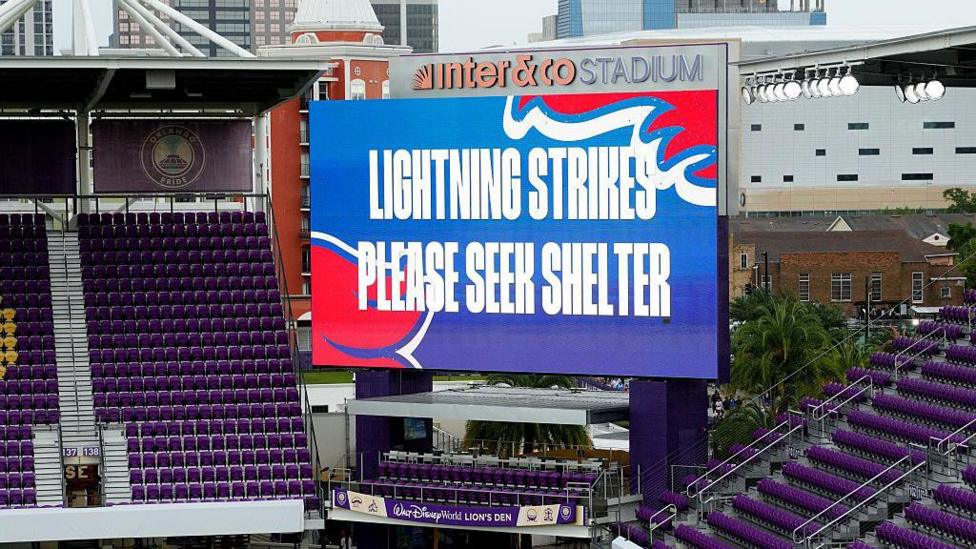
Lightning Strike: England Delay Exposes World Cup Weather Crisis
England's storm-delayed clash with Costa Rica reveals the escalating climate threat looming over global tournament football.

Record Police Reports at Matches Puts Clubs on Notice Over Security Costs
Police incidents at English football matches hit record highs last season, renewing calls for clubs to shoulder more policing costs.

Rooney's Hudson Row Exposes Punditry's Accountability Problem
A forfeit on the Hudson reveals deeper truths aboutpredictions, punditry, and whether Tuchel deserves England's patience.