The Art of Guessing a Footballer Without Seeing the Name
Premier League player identification games separate the casual watcher from the obsessive. Here is how to solve them fast.
Casual Supporters Bomb Out by Clue Three
Football rewards obsessives. The player-identification quiz strips away easy signals and forces you to work from raw data points: no shirt number, no club badge, no face. The typical format gives six clues, each more specific than the last, and most casual supporters fail by clue three.
The sequence almost always narrows the same way:
- Career path: League and rough era, no club named
- Position tweak: Specific role within a broad positional group
- Individual milestone: A cap tally, a scoring record, or a continental honour
- Club constellation: Two or three clubs listed by order of seniority
- Physical marker: Height range, nationality, or a memorable physical trait
- The giveaway: A single-season stat line precise enough to identify one player
Reach clue six and you have already failed the format. Efficient solvers aim for a name by clue two or three.
Pattern Recognition Beats Match-Day Recall
Speed here depends less on what you watched last weekend and more on maintaining an internal database. A solver who remembers that a Brazilian left-back played in Serie A before moving to Ligue 1 is in remarkably narrow company. That recall comes from structured memory, not highlights.
The best performers ask categorical questions first. Active or retired? Scorer or creator? Journeyman or one-club anomaly? Answer those three and the candidate pool shrinks from roughly 4,500 Premier League-era professionals to single digits.
Positional Vagueness as the First Trap
Quiz compilers exploit positional ambiguity. Clue one rarely says "striker" when the honest description is "second striker, occasional right-sided forward, deployed as a false nine in a 4-3-3." That verbosity sounds like a joke until it eliminates half a squad.
A classic trap: a creative midfielder whose career included a long plateau at a mid-table side before a surprising move to a Champions League club after age 28. Several names fit. Only one fits the cap total.
International Caps Break the Quiz Open
The shortcut that cracks most puzzles is international caps. The pool of players with exactly 47 caps for a specific European nation is tiny. Cross-reference that with a career path through two leagues and the solver is usually down to one name before the explicit clubs appear.
This is where the trivia obsessive beats the committed spectator. A fan who watched every match for a decade cannot necessarily recall cap totals. A reader who once spent an evening skimming international-appearance lists can.
Three Filters Before You Start
Before attempting any Premier League identity puzzle, apply these:
- Senior debut year: Narrows the era immediately
- League geography: If the career path references two transfer windows in the same direction, the player moved for money, not medals
- Positional sincerity: Treat any position description as a club-specific deployment, not a career-long role
Solving in two attempts is not luck. It is preparation. The format is designed to make you feel close to the answer long before you actually are. Treat the first clue as a cage and the second as a narrowing corridor. By the third, the solver should be reaching for a specific name, not a general type.
The game rewards the filing-cabinet mind, not the highlight-reel watcher. If your instinct is to argue about the player once you know his identity, you are already too late.
Editorial Integrity
This is an original SportPulse article written by our editorial team. All content is independently researched, written, and reviewed by our writers and editors before publication. We do not publish copied, aggregated, or syndicated content.
SportPulse is committed to original sports journalism. Read our editorial policy or contact us with any questions.
More Like This
All football
England's Noisy Arrival: Tactical Discipline Amidst Hostile Heat
Hostile chants in Mexico City mask England's urgent need for tactical precision against a spirited Mexican side.

Croatia's Tactical Poise Breaks Ghana in World Cup Crucible
Nikola Vlasic's late header underscores Croatia's calculated tactical adjustment to secure knockout progression.
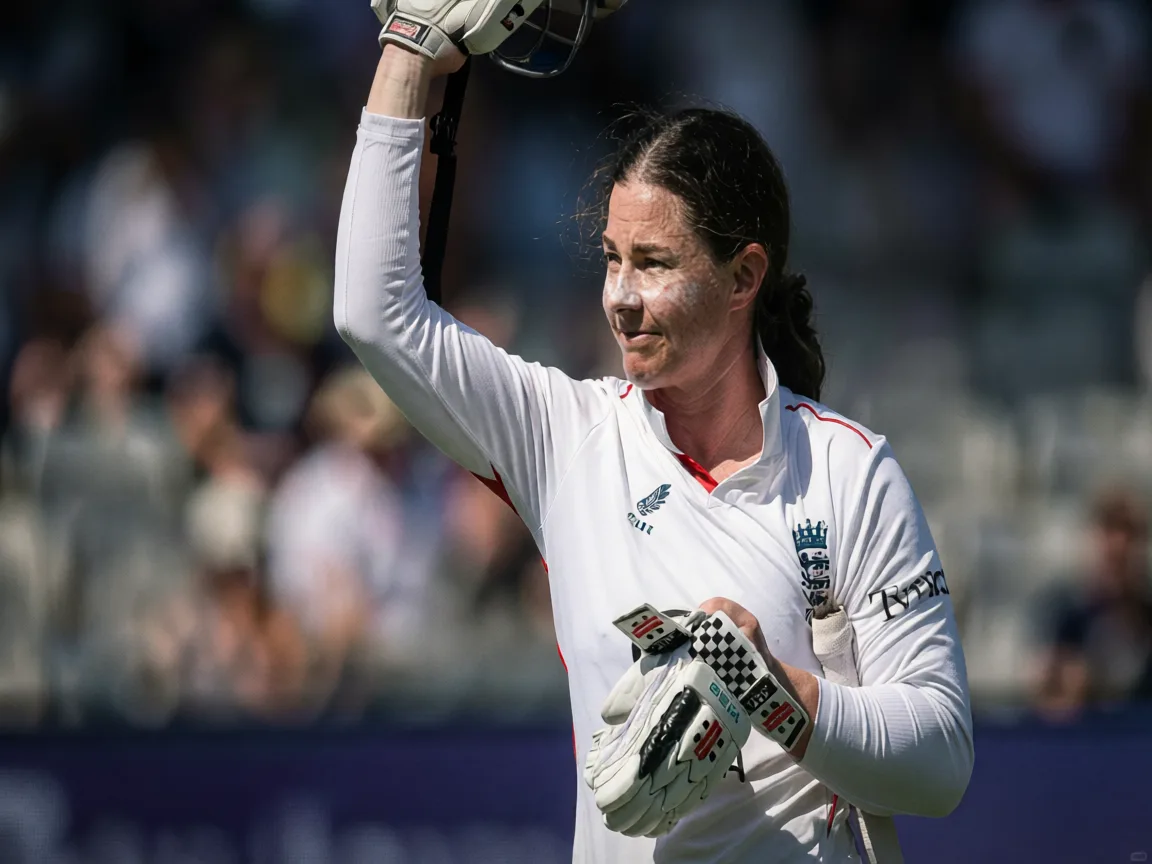
Beaumont's England Career Ends in Cruelest Fashion at Lord's
Tammy Beaumont bowled first ball by Kranti Gaud in her final international innings as England chase 457 to win at Lord's.