Prendergast Earns Starting Berth as Ireland Shape Up for Sydney Test
A red-hot finish to Leinster's campaign forces Andy Farrell's hand ahead of the Nations Championship opener in Australia.
The Kid Forged His Own Door
Andy Farrell did not hand Sam Prendergast a gift. The 21-year-old fly-half battered the door down with a string of performances for Leinster that left the Ireland head coach with no credible alternative. Prendergast's inclusion in the starting XV for Saturday's Nations Championship opener against Australia in Sydney is not a punt on potential. It is a reward for form so convincing that ignoring it would have been the bigger gamble.
The timing matters. Ireland head to the southern hemisphere under pressure to prove that their 2023 Grand Slam and a credible World Cup run were not the ceiling but the foundation. Every selection decision in Sydney carries the weight of that narrative, and Farrell has chosen to trust the hottest hand in Irish rugby rather than default to seniority.
How Prendergast Forced the Conversation
The Leinster academy product did not simply play well at the end of the season; he played like a man who understood the assignment. In the final stretch of Leinster's United Rugby Championship and European campaigns, Prendergast delivered the kind of composed, high-tempo performances that coaches file under "can't ignore." His ability to flat-line the defensive drift, hit short runners at pace, and find touch under pressure turned him from a promising understudy into a genuine first-choice contender.
What separates Prendergast from previous young Irish tens is his decision-making under duress. Where others default to the safe kick or the predictable pass, he consistently selects the option that stretches the defence. That instinct cannot be coached at test level; it either exists at provincial level or it does not. Prendergast has shown repeatedly that it does.
The Numbers Behind the Call
The raw output from Prendergast's late-season surge paints a clear picture:
- Consistently topped Leinster's metres-gained charts from the ten channel across the final block of fixtures
- Maintained a goal-kicking accuracy above 85% in pressure moments during the URC run-in
- Delivered multiple try-assists through flat, delayed passes that exploited drifting defensive lines
- Averaged fewer than two handling errors per match across his most recent starts
Those are not the numbers of a project player. They are the numbers of a fly-half ready to own the jersey.
Verdict: Prendergast did not stumble into this selection. He earned it with output that made the decision straightforward for Farrell's coaching staff.
Osborne's Wing Switch: Versatility as a Weapon
The other headline from the team announcement is Jamie Osborne's shift to the wing. A natural centre who has operated primarily in the midfield for Leinster, Osborne's redeployment to the back three speaks to two things: Ireland's depth concerns in the back three and Farrell's trust in Osborne's aerial ability and defensive nous.
Sydney in July presents a specific tactical challenge. Australia under Joe Schmidt have shown a willingness to kick contestably and back their athletes in the air. Having a centre-calibre defender like Osborne stationed on the wing gives Ireland an extra layer of security under the high ball without sacrificing attacking threat. He reads the flight of the ball well, he is physical in contact, and crucially, he offers a second playmaking option from wide positions that pure wing specialists typically do not.
The switch also hints at a broader Farrell philosophy: select athletes, not positions. Ireland's best teams under his tenure have been defined by players who can operate across multiple roles, and Osborne's deployment is the latest example of that principle in action.
What It Means for the Backline Balance
With Prendergast at ten and Osborne on the wing, Ireland's backline takes on a different shape than the one that dominated the Six Nations. The midfield pairing will need to compensate for the creative distribution Osborne usually provides from the thirteen channel, while the back three gains a player who can step in as a second receiver when the ball moves wide.
Against Australia's aggressive line speed, that extra handling option could be the difference between getting caught behind the gain line and finding the space beyond it.
The Bottom Line: Osborne's versatility is not a compromise. It is a deliberate tactical adjustment designed to neutralise Australia's kicking game while adding an unexpected attacking dimension from wide areas.
The Sydney Factor
Playing Australia in Sydney is never a gentle reintroduction to test rugby. The Wallabies may have endured turbulent years, but Joe Schmidt's influence has begun to reshape their identity. They are more structured, more patient in possession, and significantly harder to break down than the disjointed outfit that limped through the 2023 World Cup.
For a young fly-half making arguably his most significant start in green, the cauldron of a Sydney test match is a baptism of fire. The crowd, the travel, the physicality of Australian forward packs on home soil: all of it conspires to test composure. Prendergast will need to replicate the calm authority he showed for Leinster in knockout rugby, because the margins at this level shrink to almost nothing.
Ireland's recent record in Australia is respectable but not dominant. They have shown they can compete with the Wallabies on the road, but converting competitive performances into victories requires the kind of clinical finishing that starts at fly-half. Every phase, every decision, every kick will be magnified under the Sydney lights.
The Selection Statement
Beyond the individual stories, Farrell's team sheet sends a broader message about the direction of this Ireland squad. This is not a conservative selection designed to ease into a tour. It is an aggressive, forward-looking lineup that prioritises form and tactical fit over reputation.
Prendergast's inclusion signals that no jersey is safe and that provincial performance is the primary currency. Osborne's switch demonstrates that positional rigidity has no place in Farrell's Ireland. Together, they paint a picture of a coaching group that is thinking about how to win in Sydney, not how to protect legacy.
What's Next
Saturday's opener sets the tone for the entire Nations Championship campaign. A strong performance from Prendergast could cement his place for the remaining fixtures and accelerate the succession plan at ten. A difficult outing would raise questions about whether the leap from provincial to test level came too soon.
Either way, the selection is made. Farrell has backed the form horse, repurposed a centre for the wing, and told Australia that Ireland are not here to experiment. They are here to win.
The ball is in Prendergast's hands now. Based on how he has played for the last two months, that is exactly where Ireland want it.
Editorial Integrity
This is an original SportPulse article written by our editorial team. All content is independently researched, written, and reviewed by our writers and editors before publication. We do not publish copied, aggregated, or syndicated content.
SportPulse is committed to original sports journalism. Read our editorial policy or contact us with any questions.
More Like This
All long-reads
Sheinbaum's 80% Approval and the Political Sport of Mexican Power
Claudia Sheinbaum's record-breaking popularity mirrors a tactical masterclass in political statecraft.
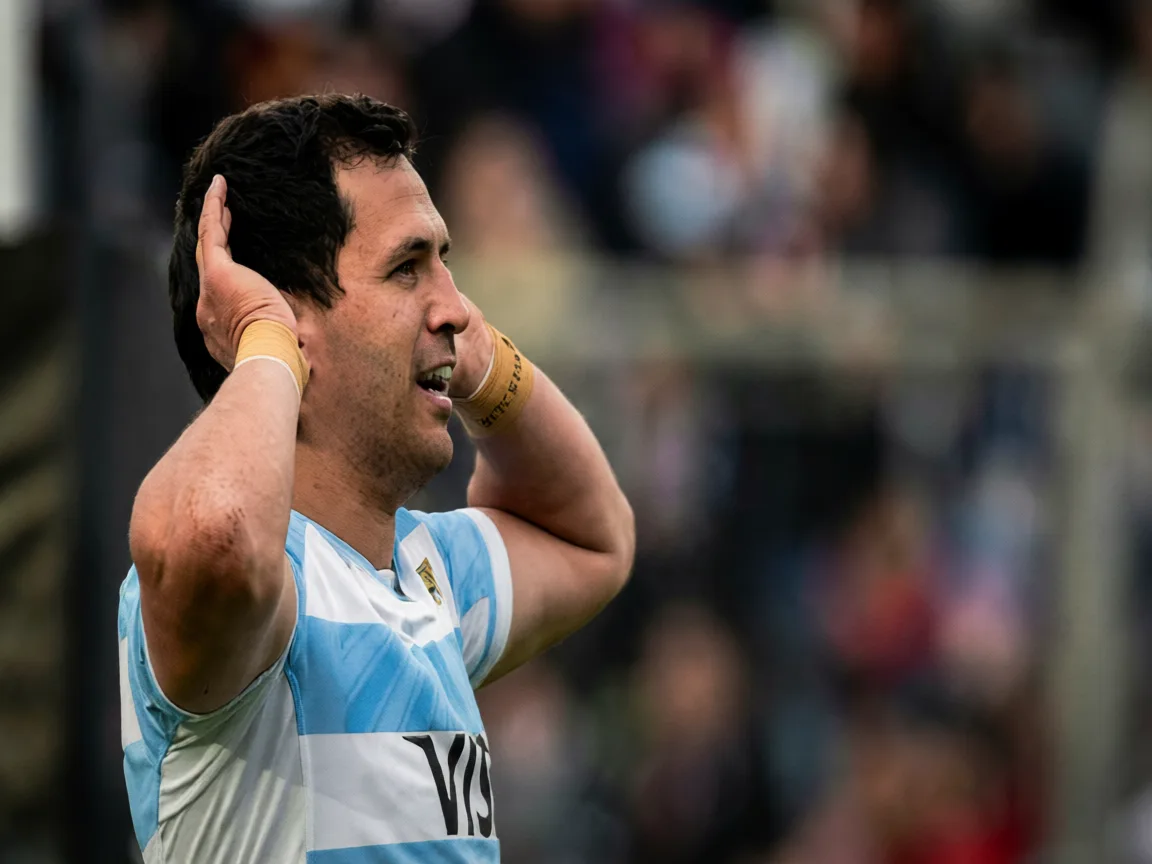
How Rugby Is Booming in Football-Mad Argentina Under Contepomi
Felipe Contepomi says rugby is booming in football-obsessed Argentina, a remarkable rise built on Jaguares grit and Pumas pride.

From Ferguson's Sidekick to Iraq's World Cup Dream: Inside Meulensteen's Wild Ride
René Meulensteen details Iraq's extraordinary path to the World Cup and the lessons he carried from Old Trafford.