How Motherwell's Cruel Cut Forged Portugal's Martinez
Roberto Martinez credits a painful Motherwell redundancy for his managerial philosophy, revealing how Scottish football shaped his elite career.
Roberto Martinez presently presides over the most talent-rich squad on the planet. As head coach of Portugal, he orchestrates attacks featuring Bernardo Silva, Bruno Fernandes, and Rafael Leao, while clinging to the luxury of deploying 95-cap striker Cristiano Ronaldo as a tactical luxury or emotional anchor. It is a job defined by entitlement and astronomical expectation. Yet the architect of this Iberian superpower claims his defining professional epiphany arrived not on the manicured pitches of La Liga or the Premier League, but through the brutalist reality of Scottish football and the humiliation of a P45.
Martinez recently delivered a striking confession: "redundancy made me as a manager." The venue for this harsh education was Motherwell. Fir Park. A ground where the wind howls across the North Sea and the football is forged in grit rather than guile. To understand the current Portugal boss, you must first understand the painful death of his playing career in Lanarkshire.
The Fir Park Reality Check
Martinez arrived at Motherwell in July 2001, a cultured midfielder carrying the baggage of a frustrating spell at Wigan Athletic. He expected to be the creative fulcrum of a team. Instead, he encountered the relentless, physical churn of the Scottish Premier League. The Scottish game of the early 2000s did not tolerate the languid. It punished contemplation and demanded immediate physical dominance.
During the 2001-02 season, Martinez managed just 18 league appearances, scoring a solitary goal. The statistical output was damning, but the underlying metrics told a story of systemic incompatibility. His pass completion rate was solid, yet his involvement in defensive phases was catastrophically low. Motherwell, perennially fighting against the financial gravity of Scottish football, required functional durability. Martinez offered aesthetic pockets of space that ultimately surrendered possession in dangerous transitions.
The end was coldly administrative. When Motherwell entered administration in April 2002, the club needed to slash the wage bill. Martinez was identified as expendable. He was not a casualty of financial doom alone; he was a tactical misfit. The club terminated his contract in the summer of 2002, leaving him unemployed and questioning his entire trajectory in the game.
The Statistical Void
- 18 total league appearances across his single SPL season
- 1 goal scored in all competitions for Motherwell
- Zero major injuries recorded; his omission was purely selection and financial
- £0 transfer fee recouped upon his release
"Redundancy made me as a manager. It taught me you cannot survive on technical ability alone. You have to understand the ecosystem you exist within."
The Epiphany on the Dole
Most discarded footballers spiral into obscurity, taking up punditry or retreating into the comfort of nostalgic testimonial matches. Martinez channeled his Fir Park eviction into a forensic obsession with structural survival. The Motherwell redundancy forced a cognitive pivot. He stopped viewing football from the entitled prism of a playmaker and began analyzing it through the ruthless lens of an administrator.
When he eventually transitioned into management, taking the reins at Swansea City in 2007, the fingerprints of Scottish football were already visible. His Swansea side played possession-dominant football, but it was a possession built on steroidal protection. Martinez demanded that the ball be kept not merely for aesthetic gratification, but to mercilessly shield a defense that could not withstand sustained physical bombardment. It was a direct tactical countermeasure to the trauma of Motherwell, where keeping the ball had felt like an act of defiance rather than a strategic imperative.
The Bottom Line: The liberation of being deemed surplus at Fir Park gave Martinez permission to kill the player inside him and birth the pragmatist. He learned that ideology without structural anchorage is just organized vulnerability.
From Scottish Scrap to Global Apex
Tracing the tactical lineage from Motherwell to the Portuguese national team requires connecting dots separated by two decades and vast chasms in resources. Yet the underlying philosophy remains strikingly consistent. At Wigan Athletic, he kept a financially stricken club in the Premier League for three consecutive seasons by manipulating the margins. His pass completion rate of over 82% at Wigan was not just a stylistic choice; it was a survival mechanism. Keep the ball, and the opponent cannot generate the chaotic transitions that killed his Motherwell career.
At Everton, the budget expanded, but the vulnerability remained. His final season at Goodison Park exposed the flaws inherent in his ideology when stripped of the desperation that Motherwell had instilled. Without the fear of redundancy, his defensive structure at Everton became worryingly porous, conceding an alarming 1.62 goals per game in his final campaign.
Belgium restored the edge. Taking over a squad boasting the number one FIFA world ranking came with its own unique pressure. Martinez succeeded because he treated the golden generation with the same administrative pragmatism he had learned in Scotland. He did not try to overcoach Kevin De Bruyne or Romelu Lukaku. He built a structural framework that allowed their elite technical ability to function without suffocating the team's defensive integrity. Belgium lost just 2 competitive matches in regular time during his 79-game tenure.
Nowhere is the Motherwell duality more apparent than his current iteration with Portugal. He inherited a squad with an embarrassment of technical riches, yet his defining results have often been built on a foundation of controlled containment. At Euro 2024, Portugal recorded a 0.67 expected goals (xG) against per match in the group stage, showcasing a deeply pragmatic defensive shell that would have baffled those who only remember the romanticized Martinez of Wigan.
The Verdict on Redundancy
Martinez's career arc presents a fascinating paradox. He is perceived widely as a cavalier idealist, a manager hopelessly intoxicated by the beautiful game. That reputation is earned; his teams do play with a structural commitment to possession that borders on the religious. But it is a religion born of trauma.
The Motherwell experience did not teach him to love the ball. It taught him to fear losing it. Being made redundant by a club fighting for its life demonstrated the devastating cost of structural fragility. Every tactical setup since has been an elaborate, sometimes obsessive, mechanism to prevent that specific type of exposure.
Portugal enters the upcoming international cycle as a genuine contender for global supremacy. They possess arguably the most complete attacking roster in international football. But their bid for ultimate glory will not be defined by the brilliance of Silva or the enduring will of Ronaldo. It will be defined by the caution instilled in their manager over two decades ago by the biting winds and brutal balance sheets of North Lanarkshire.
- Motherwell (2001-02): The crucible. Taught the cost of structural incompatibility and began the obsession with possession as a protective shield.
- Swansea & Wigan (2007-2013): The laboratory. Tested the thesis that controlled ball retention can overcome vast financial and physical deficits.
- Belgium & Portugal (2016-Present): The application. Merging elite technical talent with the deeply ingrained defensive caution of a survivor.
Verdict: Roberto Martinez manages like a man who knows exactly how it feels to be told he is no longer needed. That paranoia, forged in the unforgiving environment of Fir Park, is the unlikely engine driving Portugal's golden era.
Editorial Integrity
This is an original SportPulse article written by our editorial team. All content is independently researched, written, and reviewed by our writers and editors before publication. We do not publish copied, aggregated, or syndicated content.
SportPulse is committed to original sports journalism. Read our editorial policy or contact us with any questions.
More Like This
All football
The Unforgiving Pitch: Football Mourns Kenzo Kies and Its Own Frailty
A young life tragically cut short forces French football to confront the pressures and perils beyond the tactical board.
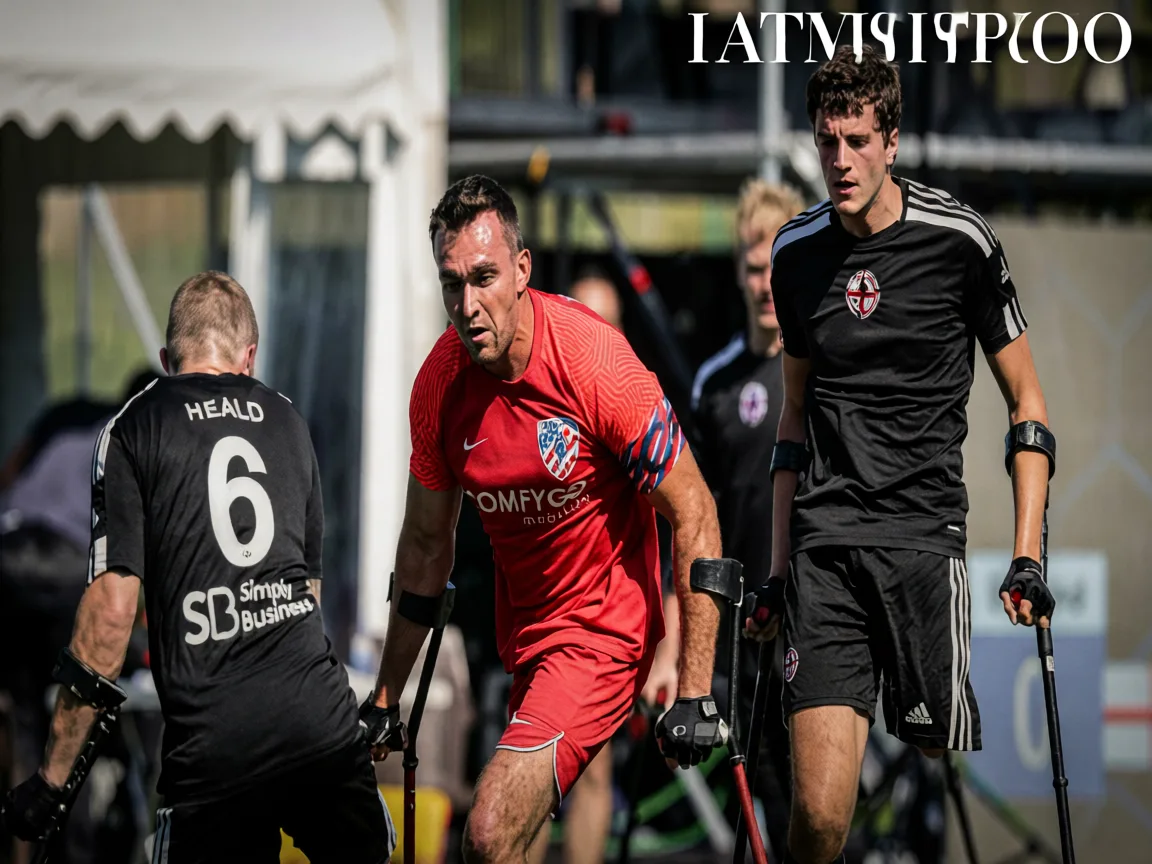
England's amputee team faces 2026 World Cup exile over funding void
Former coach Scott Rogers calls it 'criminal' that England men's amputee football team could miss the 2026 World Cup without funding reform.

IOC Refuses to Investigate Infantino, Rules Complaint Outside Its Jurisdiction
The IOC has declined to act on a complaint against FIFA president Gianni Infantino, citing it falls outside the committee's scope.