Sainz Demands Answers: Williams' Austria Disaster Exposes Deeper Rot
Carlos Sainz's Austrian GP retirement summed up a nightmare Williams season, and the Spaniard is running out of patience.
Lights Out, Patience Gone
The Red Bull Ring has a habit of exposing weaknesses. The short lap, the unforgiving kerbs, the altitude that punishes every marginal horsepower deficit. On Sunday, it was Carlos Sainz's turn to learn that lesson the hard way.
Forced to retire from the Austrian Grand Prix, the Spaniard didn't mince words afterward. Williams's performance was "still not good enough," Sainz declared, a verdict that carries extra weight when it comes from a driver who joined the team with genuine belief in their long-term project.
This wasn't a weekend of bad luck dressed up as crisis. This was a weekend that laid bare the scale of the mountain Williams still has to climb.
A Weekend to Forget at the Red Bull Ring
The Austrian Grand Prix weekend was meant to be a benchmark. The Red Bull Ring is one of the shortest circuits on the calendar at just 4.318 km, meaning traffic management and clean air are premium commodities. For a team like Williams, operating at the sharp end of Q1 eliminations, that brevity should theoretically help. Less lap time to lose.
Instead, it magnified everything.
The Williams FW47 has struggled all season with the fundamental balance between straight-line efficiency and downforce. The car that once embodied the phrase "slippery through the air" now finds itself caught between two worlds. Not fast enough on the straights to replicate the old Williams DNA, not planted enough in the corners to fight the midfield.
Sainz's retirement was the final insult. Mechanical gremlins and reliability issues are supposed to be a midfield team's greatest enemy. You cannot score points from the garage.
The Reliability Question
Reliability failures hit differently when you're not fighting for podiums. A Red Bull or McLaren can afford the occasional DNF because the points haul on good weekends dwarfs the loss. Williams cannot. Every single-finish opportunity matters when you're scraping for points in a midfield battle that separates P7 through P10 by fractions of seconds.
Sainz knows this. He spent four years at Ferrari understanding exactly what it means to extract maximum value from every lap, every weekend. The margin for error was thin at Maranello. At Grove, it's practically nonexistent.
The Sainz Gamble: What Was Promised vs. What's Delivered
When Carlos Sainz signed for Williams ahead of the 2025 season, the narrative was compelling. A proven race winner, a four-time Grand Prix victor, choosing the storied British outfit as his post-Ferrari landing spot. Team principal James Vowles sold a vision: a team on the rise, powered by Mercedes engines, investing in infrastructure, building toward something.
The reality has been sobering.
Williams entered 2025 hoping the FW47 would represent a meaningful step forward from the FW46, which itself was an improvement over the woeful 2023 car. The trajectory was supposed to be upward. Instead, the team has found itself locked in a frustrating battle with Haas, Sauber, and Alpine for the scraps of the points-paying positions.
Sainz's best finish this season has been a hard-fought points score at a chaotic race, the kind of result that requires attrition ahead of you rather than genuine pace beneath you. That's not what the Spaniard signed up for.
"I came here because I believed in the project. I still believe in the direction. But we need to be honest about where we are right now, and right now it's not good enough."
The quote speaks volumes. Sainz isn't burning bridges. He's not issuing ultimatums through the media. But the frustration is unmistakable. This is a driver who won races in 2024, who stood on the podium multiple times, who watched his Ferrari seat given to Lewis Hamilton and chose Williams as his future. Every weekend that ends in the garage rather than the points is a weekend that tests that faith.
Technical Deep Dive: Why the FW47 Stalls at Power Circuits
The Red Bull Ring should suit Williams on paper. It's a power circuit with three significant straights and a total of only 10 corners. Historically, Williams cars have thrived in low-downforce, straight-line-speed configurations.
The 2025 car is a different beast.
The FW47's aerodynamic philosophy has shifted under Vowles's direction toward a more balanced approach, attempting to generate meaningful downforce without sacrificing too much straight-line performance. The problem? You can't half-commit to an aerodynamic concept. The car sits in no man's land.
At the Red Bull Ring, this manifested clearly:
- Not enough straight-line speed to overtake or defend effectively on the three DRS zones
- Insufficient mechanical grip in the slow-speed corners, particularly the tight Turn 3 complex and the Turn 4 hairpin
- Rear instability under braking that punished tire degradation over longer stints
- Power unit cooling demands at altitude, which may have contributed to the mechanical failure that ended Sainz's race
The Mercedes power unit is generally competitive, but packaging it efficiently within the FW47's chassis remains a work in progress. At circuits where thermal management is critical, Williams pays a tax that the front-running Mercedes-powered teams do not.
The McLaren Comparison
It's worth noting what McLaren has achieved with the same engine supplier. While Williams languishes at the back of the midfield, McLaren fights for race wins and championships. The gap isn't power unit performance. It's everything around it. Chassis design, suspension geometry, aero efficiency, operational execution. The engine is the one piece Williams can claim parity on. Everything else is where the deficit lives.
Race Verdict
MVP: Carlos Sainz
Despite the retirement, Sainz continues to be the heartbeat of this Williams operation. He's the one pushing the team forward, demanding better, refusing to accept mediocrity. His telemetry data drives the development direction. His feedback sharpens the engineers' understanding. Williams's best asset right now is the man in the cockpit.
Biggest Disappointment: The FW47 Itself
The car. Full stop. A retirement from a Grand Prix is inexcusable for a team that cannot afford to leave points on the table. The mechanical failure that sidelined Sainz at the Red Bull Ring is emblematic of a broader reliability picture that has cost Williams multiple scoring opportunities this season. You cannot build momentum when your machinery keeps breaking.
What Vowles Must Do Now
James Vowles has never hidden from the reality of the Williams rebuild. He inherited a team that had been systematically underfunded for years, operating with outdated infrastructure and a skeletal workforce. The investment has come. The staff numbers have grown. The factory upgrades are underway.
But patience has a shelf life.
Sainz's contract runs through 2026, meaning Williams has a finite window to convince their star driver that the trajectory is real. If the FW48, the 2026 car built to the new regulations, doesn't represent a quantum leap, Vowles could find himself rebuilding with a lesser lineup.
The new power unit regulations arriving in 2026 offer a reset opportunity. Mercedes is expected to nail the new formula, which should theoretically benefit Williams. But engine parity only gets you so far. The chassis, the aero, the operations, the strategy calls on a Sunday. Those are the areas where Williams must close the gap.
Championship Picture
The constructors' standings tell the brutal truth. Williams sits deep in the lower half of the table, trading places with Sauber and Alpine in a battle no team wants to be fighting. Every point is a war. Every DNF is a catastrophe.
For Sainz individually, the drivers' championship is irrelevant in any meaningful sense. He's not fighting for a title. He's fighting for proof of concept. He's fighting to show the paddock that his decision to join Williams wasn't a mistake, that there's a light at the end of this particular tunnel.
The summer break cannot come soon enough for this team. Two more races before the shutdown. Two more chances to salvage something, anything, from a first half of the season that has been defined by disappointment.
Looking Ahead
The next few circuits on the calendar will offer a mixed bag. Some should theoretically suit the FW47 better than the Red Bull Ring did. But Sainz's frustration suggests the problems are deeper than track characteristics. The baseline isn't good enough. Until that changes, circuit-specific optimism is just window dressing.
Williams needs to give their star driver a reason to keep believing. The Austrian Grand Prix didn't provide one. The question now is whether the races that follow can.
"I'll keep pushing. That's who I am. But we need the car to meet us halfway."
The clock is ticking at Grove.
Editorial Integrity
This is an original SportPulse article written by our editorial team. All content is independently researched, written, and reviewed by our writers and editors before publication. We do not publish copied, aggregated, or syndicated content.
SportPulse is committed to original sports journalism. Read our editorial policy or contact us with any questions.
More Like This
All f1
The Million-Dollar Fan Journey and Kimi Antonelli's Rapid Rise
Attending every F1 race demands a six-figure budget, while Kimi Antonelli accelerates toward championship glory.
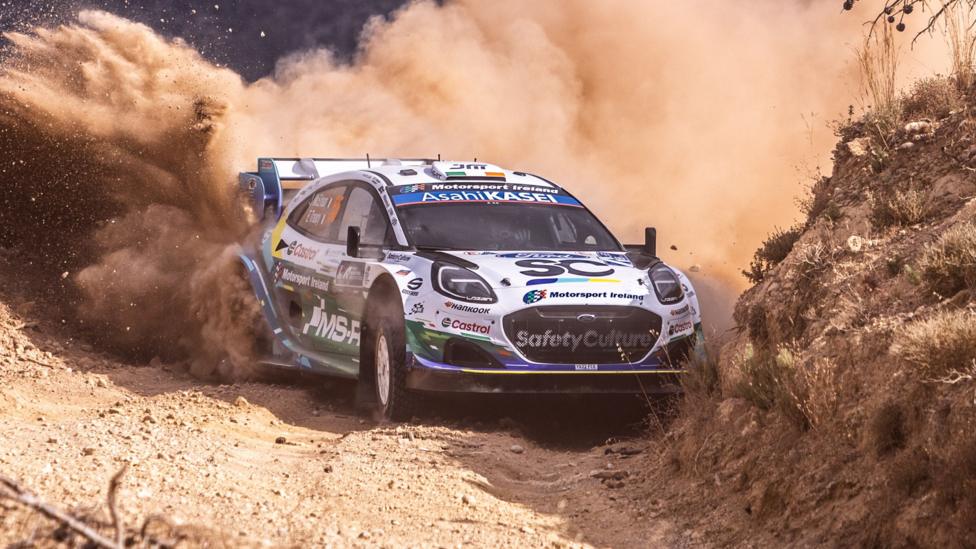
McErlean Hunts Podium in Greece as Armstrongs Rally Ends
Josh McErlean sits fourth after Friday's Acropolis stages, firmly in the podium fight, while Jon Armstrong suffers a devastating retirement.

Silverstone Sprint Steward Verdict: The Technical Reality Behind Lawson's Investigation
Stewards cleared Liam Lawson after the Silverstone Sprint, but the technical nuances of the investigation reveal deeper regulatory complexities.