Sandbagging in F1: The Art of Hiding Speed Before the Lights Go Out
Every team does it. Nobody admits it. Here's how sandbagging shapes the entire F1 season before a wheel is turned in anger.
Lights Out on a Mirage
The timing screens flash green. A car crosses the line two tenths clear of the field. Engineers in the garage exchange a glance. The driver radios in, calm and measured. And then... nothing. The next run, the car is mysteriously half a second slower. Setup changes? Traffic? Or something far more deliberate?
Welcome to one of Formula 1's oldest and most strategic games: sandbagging.
It's the practice of deliberately concealing a car's true performance pace. Every team does it. Nobody publicly admits it. And it has shaped seasons, rivalries, and even championship outcomes long before a single Grand Prix point is on the line.
What Exactly Is Sandbagging?
Strip away the paddock euphemisms, and sandbagging is simple. A team runs its car below its maximum capability during sessions where rivals, media, and cameras are watching. The goal? To prevent competitors from gauging true pace, triggering copycat development directions, or motivating regulatory crackdowns.
Sandbagging isn't about being slow. It's about choosing when to be fast.
The term itself comes from the literal image of loading sandbags into a vehicle to weigh it down, masking its real power. In F1, the sandbags come in many forms:
- Higher fuel loads running underneath the bodywork, adding weight and dragging lap times upward
- Detuned engine modes, dialing back power unit output by tens of horsepower
- Suboptimal tire compounds or strategies, deliberately running harder rubber or skipping performance runs
- Engineered lift-and-coast laps, where drivers back off before corners to inflate sector times
- Withholding qualifying-spec upgrades, keeping new parts on the shelf until they absolutely must be deployed
The beauty and the frustration of sandbagging is that it's almost impossible to prove definitively. Teams always have a plausible excuse. Fuel load unknowns, engine modes undisclosed, tire degradation variables. The fog of pre-season testing and free practice is the perfect cover.
Why Do Teams Sandbag?
The motivations are layered, and they extend far beyond simple gamesmanship.
Concealing Development Direction
F1 is an arms race. Teams pour hundreds of millions into aerodynamic development, suspension geometry, and power unit efficiency. If a rival spots that a competitor has found significant pace, their engineers immediately begin reverse-engineering the concept. Every visible lap is a data point for the opposition.
By sandbagging, a team protects its intellectual property. If you never show your hand, the other nine teams can't copy it.
Regulatory Self-Preservation
There's a darker motivation too. If a team is too obviously dominant, it risks prompting rule changes. The FIA and FOM have historically adjusted regulations to close performance gaps, whether through technical directives, mid-season rule clarifications, or wholesale regulation overhauls.
The classic example sits in recent memory. Mercedes dominated the turbo-hybrid era from 2014 to 2020, winning seven consecutive Constructors' Championships. During that run, whispers of sandbagging in testing were constant. Mercedes boss Toto Wolff repeatedly deflected, insisting the team was focused on its own program. But the suspicion lingered: why would a team show its full hand when half-pace was enough to top the timesheets?
"We don't look at what others are doing. We look at our data. If the car is quick, we'll find out on Saturday. That's the only time it matters." — Common refrain from teams during testing, a masterclass in saying nothing.
Psychological Warfare
Sandbagging also plays a mental game. If a midfield team shows blinding pace in testing, expectations soar. Pressure mounts. When the first qualifying session arrives and the car slots into P8, the narrative shifts from hope to disappointment.
Conversely, a frontrunner that hides its speed can arrive at Round 1 as a surprise package. Rivals who spent weeks preparing for a different competitive order suddenly face a reality they didn't plan for. That shock can be destabilizing.
The History: When Sandbagging Shaped Seasons
F1's history is littered with teams accused of holding back in pre-season, only to unleash devastating pace when it counted.
Brawn GP, 2009
Perhaps the most famous case. Brawn GP arrived at testing with a radical double-diffuser concept, but the team's testing pace was hard to read. Budget constraints limited running. When the season began in Melbourne, Jenson Button qualified on pole and won by a staggering margin. The field was blindsided. The double-diffuser loophole that Brawn, Toyota, and Williams exploited dominated the early-season narrative, and rivals spent months scrambling to catch up.
Was it sandbagging or simply limited testing mileage? The debate persists. But the effect was the same: Brawn caught the entire grid flat-footed.
Red Bull's Late-Season Surges, 2010-2013
During the Sebastian Vettel era, Red Bull developed aggressively through the season. Their early-race pace was often respectable but unspectacular. Then, as the European leg began, the upgrades arrived and the car became untouchable. Vettel's record-breaking nine consecutive wins to close out 2013 wasn't sandbagging per se, but it was a masterclass in temporal deployment of performance.
Mercedes, 2014-2020
The W05 through W11 machines dominated the turbo-hybrid era with a power unit advantage that at its peak was estimated at 50-80 horsepower over customer teams. Pre-season testing repeatedly showed Mercedes running in the midfield of timing sheets, only for qualifying to reveal a car in a different postcode from the competition.
The 2019 pre-season was particularly notorious. Ferrari appeared fastest across six days of testing in Barcelona. Pundits predicted a genuine title fight. Then Melbourne qualifying arrived, and Mercedes locked out the front row by half a second. The Tifosi were crushed. Ferrari had either overplayed their hand in testing or Mercedes had buried theirs. Most likely, it was both.
Red Bull, 2022
The dawn of the ground-effect era saw Red Bull and Adrian Newey produce the RB18, a car that looked competitive but not dominant in Bahrain testing. Then Max Verstappen arrived at the first race and won by five seconds. The gap grew as the season progressed, culminating in 17 wins from 22 races. Red Bull had clearly held back during testing.
How Do Teams Detect Sandbagging?
Rival teams don't just glance at lap times. They deploy sophisticated GPS data analysis to study how cars perform in each corner. By overlaying speed traces, engineers can estimate whether a car is running maximum power, how much fuel it might be carrying, and whether the driver is pushing through high-speed sectors.
Key indicators that a team might be sandbagging include:
- Inconsistent sector times: fast in some corners, slow in others without clear reason
- Slow straight-line speeds combined with strong cornering, suggesting a high-downforce setup running low engine power
- Uniform lap times across long runs, which can indicate a heavy fuel load masking pace
- Sudden performance jumps between sessions or days that don't correlate with visible upgrades
Even with all this data, it remains an educated guess. The beauty of F1's opacity is that certainty only arrives when qualifying begins.
The Modern Relevance: Cost Cap Era
The introduction of the cost cap in 2021, initially set at $145 million and subsequently tightened, has added a new dimension to sandbagging strategy. With limited resources, teams must choose when and where to deploy their development tokens. Bringing upgrades to pre-season testing that a rival can analyze and replicate is an expensive gamble.
Some teams now deliberately run older-spec parts in testing, saving their true package for the first race. It's sandbagging with a fiscal rationale.
The cost cap has also made it harder for frontrunners to simply outspend their way back to the front if a rival catches them napping. Every development dollar counts, which makes information concealment more valuable than ever.
The Counterargument: Is It Really Sandbagging?
Not everyone buys the sandbagging narrative. Many engineers and team principals argue that what looks like deliberate concealment is simply the nature of testing. Cars run different programs. Fuel loads vary. Engine modes change session to session. Track conditions evolve. A team running a race simulation will post slower lap times than one doing a qualifying-style performance run.
"People love to say we're sandbagging. We're not. We're doing our job. Testing exists for the team, not for the media's stopwatch." — A sentiment echoed by virtually every team principal at some point.
This is partly true. But the history of F1 demonstrates that strategic opacity is baked into the sport's DNA. Teams that show everything in testing gain nothing. Teams that show nothing, or show a distorted picture, gain leverage.
The Verdict: Sandbagging Is F1's Silent Arms Race
Sandbagging will never be eradicated. It's woven into the fabric of a sport where information asymmetry is a competitive weapon. Every lap a car turns in public is a gift to the opposition. Every lap concealed is a tiny advantage preserved.
The next time you watch pre-season testing and see a familiar name languishing in P14, don't panic. Don't celebrate either. The timing screens in February are a hall of mirrors.
The only laps that matter are the ones under the lights, under pressure, when the five red lights go out and the grid surges forward. Everything before that? It's just sand in the bags.
And every team in that paddock knows the weight of it.
Editorial Integrity
This is an original SportPulse article written by our editorial team. All content is independently researched, written, and reviewed by our writers and editors before publication. We do not publish copied, aggregated, or syndicated content.
SportPulse is committed to original sports journalism. Read our editorial policy or contact us with any questions.
More Like This
All f1
Three Ellas, One Mission: McLaren's All-Female Pipeline Hints at F1's Future
McLaren's development ranks feature three women named Ella — and their paths reveal how the sport's talent pipeline is finally shifting.
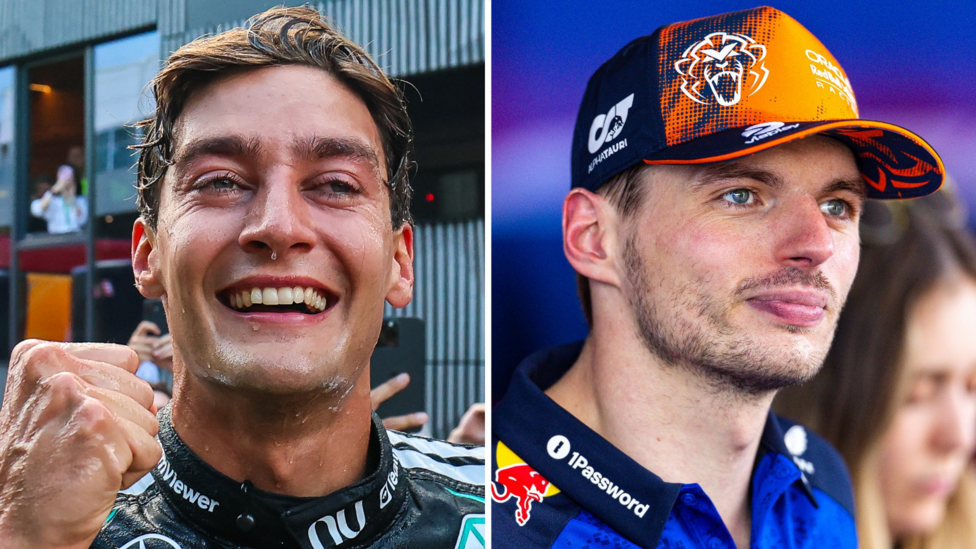
Russell Seizes the Moment as Verstappen Fights Back at Red Bull Ring
George Russell delivered a masterclass at the Austrian GP while Max Verstappen clawed back from chaos to salvage points.

Sainz Demands Answers: Williams' Austria Disaster Exposes Deeper Rot
Carlos Sainz's Austrian GP retirement summed up a nightmare Williams season, and the Spaniard is running out of patience.