Scaloni and Messi: The Brotherhood Chasing World Cup History
Two passes in Budapest started a bond that could make Argentina only the third nation to defend a World Cup title.
Great international dynasties are rarely built on tactical brilliance alone. More often, they are forged in the invisible spaces between a federation's walls, in the quiet moments where a manager earns the absolute trust of his generational talisman. For Argentina, the pursuit of becoming only the third nation in history to successfully defend a World Cup rests not on a whiteboard, but on a deeply personal bond that traces back to a chaotic afternoon in Budapest.
In 2005, a 17-year-old Lionel Messi made his ill-fated international debut against Hungary. He entered the pitch as a substitute and was harshly sent off just 45 seconds later for swinging an arm at defender Vilmos Vanczak. The moment could have defined a fractured beginning for a young prodigy adjusting to the demands of international football. Yet, in that fleeting, chaotic cameo, Messi received the ball just twice. Both passes came from Lionel Scaloni.
It was a statistical footnote in a meaningless friendly. But for Argentina, those two passes planted the seed for a partnership that would eventually resurrect a footballing nation choking on its own historical expectations.
The Architecture of Paternalism
Fast forward to the 2006 World Cup in Germany. Messi, aged 18 years and 357 days, became the youngest player ever to represent Argentina at the tournament. When he scored in the group stage against Serbia and Montenegro, the first figure to greet him in the tunnel, grabbing him from behind in a congratulatory embrace, was once again Scaloni.
The former West Ham full-back is only nine years Messi's senior. In the hyper-pressurized ecosystem of international football, that gap is narrow enough to foster mutual respect but wide enough to provide a crucial layer of veteran guidance. What has evolved over nearly two decades is an almost paternal relationship, one that has insulated Messi from the typical political turbulence of the Argentine Football Association (AFA).
Messi himself has spoken of Scaloni as one of the first members of the national squad to truly welcome him. That psychological safety net cannot be overstated. For years, Argentina cycled through managers who treated Messi either as a savior to be over-relied upon or a piece to be jammed into an incompatible tactical puzzle. Scaloni recognized early what others missed: Messi performs at his zenith when the emotional architecture of the squad is stabilised, when the burden of leadership is distributed rather than hoisted onto one set of shoulders.
The Statistical Transformation
To understand Scaloni's impact, one must look at the cold, hard data that tracks Argentina's evolution from perpetual underachievers to continental and global conquerors.
- Pre-Scaloni Era (2014-2018): Under Alejandro Sabella, Gerardo Martino, and Jorge Sampaoli, Argentina lost three consecutive major tournament finals. The tactical xG averaged around 1.45 per match in those finals, but the squad's defensive fragility and midfield disconnect were glaring.
- The Scaloni Shift: Since taking the reins in 2018, Scaloni has overseen a staggering run of 41 victories in 49 matches across major tournament play.
- Defensive Solidity: Argentina conceded just 5 goals across the entirety of their 2022 World Cup and 2021 Copa America knockout campaigns combined.
- Unbeaten Streak: Scaloni guided the team to a 36-match unbeaten run, a national record that placed them among the most dominant international sides in modern history.
Scaloni did not reinvent the wheel. He simply aligned it. By building a midfield trio capable of pressing relentlessly off the ball and progressing play directly to the forward line, he created a system where Messi could conserve energy and exercise maximum impact in the final third. The result was a 2022 World Cup triumph that validated nearly two decades of pursuit.
The Rare Currency of Stability
International football is notoriously volatile, but Scaloni has provided a rare sense of stability that the AFA has not seen since the days of Carlos Bilardo in the late 1980s. In an era where club football's financial gravity pulls players away from international duty both physically and mentally, Scaloni has cultivated an environment where representing La Albiceleste is treated as a sacred obligation, not a chore.
This is where the paternal dynamic pays its highest dividend. Scaloni does not merely coach Messi; he manages the ecosystem around him. By empowering figures like Rodrigo De Paul, Emiliano Martinez, and Cristian Romero as vocal leaders, Scaloni removed the suffocating pressure that previously saw Messi briefly retire from international duty in 2016. The team became a collective shield, functioning with an almost tribal defensive cohesion that opponents found impenetrable.
"We don't wait for the perfect moment. We build the shape that creates the moment."
This philosophy has defined Scaloni's approach. He has been tactical without being rigid, evolving his formations to suit the opposition while maintaining a core tactical identity. In the 2021 Copa America final against Brazil, Argentina secured victory with a disciplined 4-3-3 that starved the hosts of space. In the 2022 World Cup final against France, a back-three adjustment in the second half and extra time nearly cost them the trophy, yet the underlying adaptability ultimately prevailed in penalties.
The Bottom Line
Scaloni's tactical genius, while understated, is secondary to his man-management. By transforming a fractured, expectation-heavy dressing room into a unified front, he gave Messi the one thing no previous manager could fully deliver: peace of mind. The unheralded saviour from Pujato did not need to be a tactical pioneer. He just needed to be the brother who threw his arm around the kid from Budapest.
Chasing Immortality
Only two nations have ever successfully defended the World Cup: Italy (1934 and 1938) and Brazil (1958 and 1962). Argentina now sits on the precipice of that mountain. To repeat as world champions requires a convergence of tactical evolution, physical stamina, and mental fortitude that has eluded even the greatest footballing nations for over six decades.
The landscape will be different. The 2026 World Cup will be hosted across North America, featuring an expanded 48-team format. The physical demands of travel, climate, and an unpredictable knockout bracket will test depth like never before. Yet, the foundation Scaloni has built is designed to absorb such shocks. The integration of younger talents like Enzo Fernandez, Julian Alvarez, and Alexis Mac Allister ensures that the squad's peak years align perfectly with Messi's swansong.
The Verdict
History tells us that defending a World Cup is the hardest task in international football. But Scaloni is not chasing history through tactical revolution. He is doing it through the quiet, deliberate construction of a team that plays for each other. The two passes in Budapest were the prologue. The 2026 World Cup could be the final chapter in a story of brotherhood that changed Argentine football forever. History is waiting, and the unheralded manager who once defended Messi's flank at West Ham is the one leading them towards it.
Editorial Integrity
This is an original SportPulse article written by our editorial team. All content is independently researched, written, and reviewed by our writers and editors before publication. We do not publish copied, aggregated, or syndicated content.
SportPulse is committed to original sports journalism. Read our editorial policy or contact us with any questions.
More Like This
All football
Misa Rodríguez brings continental composure to Arsenal's WSL title push
Arsenal's free-transfer capture of Spain's No. 1 from Real Madrid is the headline piece in a five-signing summer rebuild.

England vs Norway: The Rating Dilemma Nobody Wants to Address
Player ratings reduce nuance to decimals, yet England vs Norway demands the autopsy only numbers can provide. Here's the real breakdown.
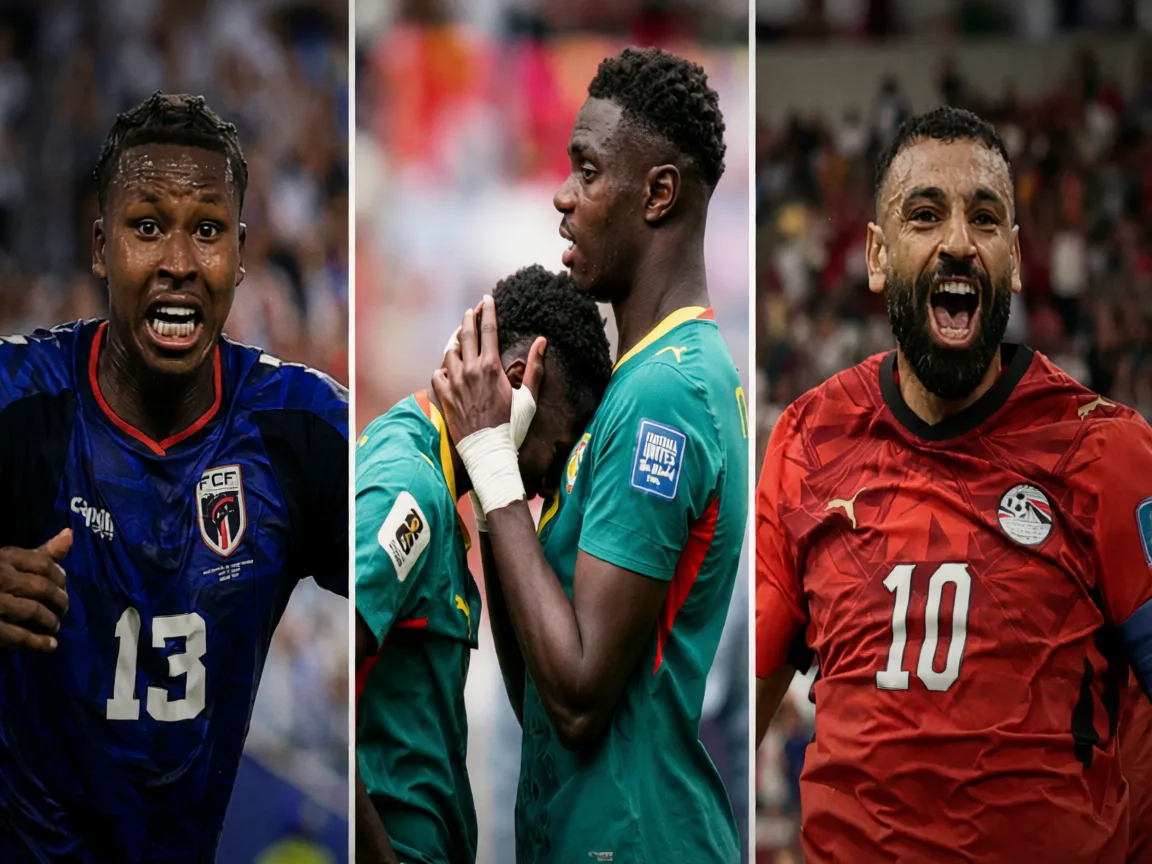
Africa's 2026 World Cup: Late Heartbreak and Blue Shark Magic
Nine African teams. Five eliminated by late goals. Cape Verde's fairytale run defined the continent's most painful tournament yet.