Scaloni's Tears: The Night Argentina's Golden Era Fractured
A World Cup final defeat broke Lionel Scaloni. His tears signaled something deeper than heartbreak.
The footage is barely ten seconds long.
Lionel Scaloni rises from his seat. His hands tremble. His eyes are already glassy, red-rimmed, fighting a battle they are losing. He tries to speak. He cannot.
He turns away from the cameras, buried his face in his hands, and walks out of the room.
No opening statement. No tactical justification. No defiance.
This was not a coach processing a defeat. This was a man reaching the end of something.
And for everyone watching, the question was immediate and chilling: was that the last time we see Lionel Scaloni as Argentina's manager?
The Defeat That Broke the Dam
Sunday's World Cup final against Spain was supposed to be different.
Argentina arrived with the weight of expectation, carrying the belief that Scaloni had built something capable of withstanding anything. They left with nothing.
Spain stood where Argentina wanted to stand. They lifted the trophy. They celebrated under confetti and fireworks. Argentina's players stood motionless, staring into the middle distance, trying to comprehend a void they never expected.
Scaloni's press conference was supposed to provide answers.
Instead, it provided something far more revealing.
The manager who had engineered Argentina's greatest modern triumph walked into the media room and immediately began to unravel. His voice cracked. His composure evaporated. The tears came not in a controlled, performative way, but in the raw, unfilterable way that signals genuine emotional collapse.
He did not finish the press conference.
What you witnessed in that room was not a coach mourning a loss. It was a man confronting the possibility that everything he built has reached its end.
The Architect Who Became the Soul
To understand why Scaloni's tears matter so much, you have to understand what he built.
Before him, Argentina were a collection of brilliant individuals haunted by the ghost of past failures. They were the team that lost four consecutive finals. The team that couldn't defend. The team Lionel Messi carried until his legs threatened to give out.
Scaloni changed the DNA.
He made Argentina defensive, pragmatic, ruthless. He turned a side defined by romanticism into one defined by results. He won the Copa América 2021, breaking the 28-year trophy drought. He won the World Cup 2022 in Qatar, delivering the one prize that had eluded an entire generation.
He did not just win trophies. He healed a wounded football nation.
The bond between Scaloni and his players was never performative. It was authentic, forged in the crucible of shared pain and shared redemption. When Messi spoke about Scaloni, it was with the reverence of a man who felt understood, protected, and liberated.
He gave us something we had lost. He gave us the conviction that we were not cursed. That we were not destined to fail.
That is what makes the tears so devastating.
They suggest the architect himself now doubts whether the foundation holds.
Behind the Collapse
The final against Spain exposed vulnerabilities that had been quietly mounting.
Argentina's midfield was overrun. The defensive structure that Scaloni had so meticulously constructed looked fragile against Spain's possession-based control. The tactical flexibility that had defined his tenure seemed to evaporate in the game's biggest moments.
But the problems ran deeper than one match.
In the months leading into this tournament, there were whispers about Scaloni's future. A cryptic statement in late 2023 about whether he would continue sent shockwaves through Argentine football. He stayed, but the uncertainty never fully dissipated.
The emotional toll of managing Argentina is unlike any job in world football. The expectation is not merely winning. It is winning with conviction. Winning with identity. Winning in a way that honors the ghosts of Maradona, Batistuta, Riquelme, and every icon who came before.
Coaching Argentina is not a job. It is a sentence. You serve it until it consumes you.
Scaloni bore that weight for six years. He carried it through a pandemic, through qualifying turbulence, through the ecstasy of Doha and now the agony of Sunday night.
The tears were not about Spain.
They were about the accumulation of everything.
What the Numbers Reveal
- 1 World Cup won (2022)
- 1 Copa América won (2021)
- 4 consecutive finals lost before Scaloni took charge
- 28 years without a major trophy before his arrival
- 0 major finals Argentina had won in regular time during the drought era
The contrast is staggering. Argentina went from the most cursed nation in international football to the most decorated of the modern era, and Scaloni was the common denominator.
But statistics only tell part of the story. They cannot quantify the emotional exhaustion.
They cannot measure what it costs a man to hold the dreams of 46 million people in his hands.
The Ripple Effect
If Scaloni walks, the consequences extend far beyond one man's departure.
Messi's international future becomes immediately uncertain. The two share a relationship built on trust and mutual understanding. A new manager means a new philosophy, a new dynamic, a new language. Messi turns 38 in 2025. Does he want to start over with someone who does not know him the way Scaloni does?
The younger generation, players like Enzo Fernández, Julian Álvarez, and Nicolás Tagliafico, were shaped by Scaloni's system. They thrived because he understood exactly how to deploy them. A transition risks disrupting that chemistry.
And then there is the psychological dimension.
Argentina's greatest strength under Scaloni was never tactical. It was psychological. He made them believe they were inevitable. If that belief shatters, rebuilding it could take a generation.
The Names Already Circling
If Scaloni departs, the Argentine Football Association faces a decision with consequences lasting a decade.
Mauricio Pochettino carries the profile and the Premier League pedigree, but his connection to Argentine football culture is thinner than fans would like. Diego Simeone embodies the intensity and the identity, but his commitment to Atletico Madrid has kept him out of international management for years. Pablo Aimar, part of Scaloni's staff, offers continuity but lacks headlining experience.
Each candidate brings enough baggage to make any appointment a gamble.
The truth is, there is no obvious successor. There is no coach waiting in the wings who combines Scaloni's tactical intelligence, emotional intelligence, and cultural authority.
That gap is the most damning indictment of what his departure would mean.
The Silence That Speaks Volumes
As of now, there has been no official statement. No clarification. No timeline for a decision.
The Argentine Football Association is in crisis mode, conducting emergency meetings behind closed doors. They are acutely aware of the magnitude of this moment.
Players have retreated into private grief. No public declarations of loyalty. No social media posts. Just silence.
That silence is deafening.
When a team goes quiet after a final, it tells you everything. The conversations are happening in private rooms, behind closed doors, away from cameras. They are not discussing tactics. They are discussing whether the family stays together.
What Comes Next
Argentina's calendar does not pause for grief.
World Cup qualifying resumes in months. The 2026 tournament in North America looms larger than ever, aexpanded format, heightened expectations, less margin for error.
Whoever sits in the managerial chair for those qualifiers faces a defining question: can you follow the maestro without becoming a parody?
History suggests that replacing a transformative figure is rarely clean. The ghosts of the past haunt every decision. Every loss becomes proof that the predecessor was irreplaceable. Every win feels hollow without the man who made winning possible again.
Scaloni knows this better than anyone.
Perhaps that is why he could not finish the press conference.
Perhaps he understood, in that moment, that no words could bridge the distance between what he had built and what he had just lost. That the dream which began in Doha had ended in the most painful way possible.
And that the tears streaming down his face were not just for a match, or a trophy, but for an era that may have just closed forever.
The cameras kept rolling for a few seconds after he left. An empty chair. A microphone still humming. A room full of journalists in stunned silence.
Argentina's future hangs in the silence of that empty room.
Editorial Integrity
This is an original SportPulse article written by our editorial team. All content is independently researched, written, and reviewed by our writers and editors before publication. We do not publish copied, aggregated, or syndicated content.
SportPulse is committed to original sports journalism. Read our editorial policy or contact us with any questions.
More Like This
All football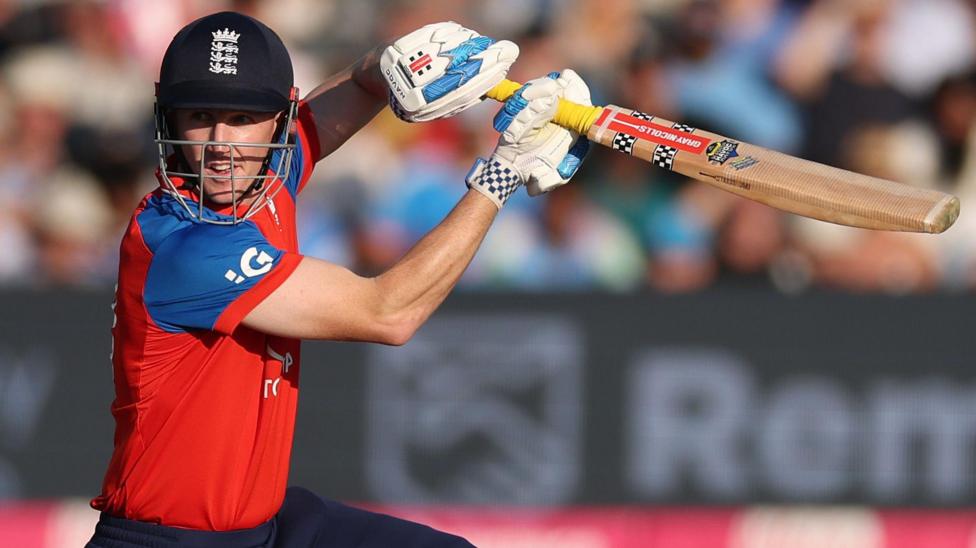
England Shatter T20 Curse as India Plummet to Historic Low
England claim their first-ever T20 series win over India while the visitors suffer a record fifth straight defeat.
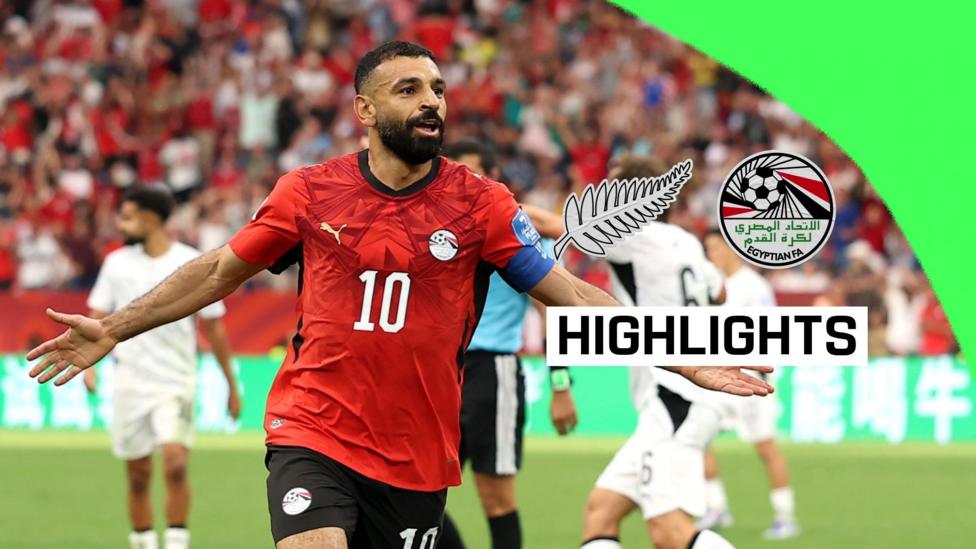
Salah Drives Egypt to Historic First World Cup Victory
Mohamed Salah inspired Egypt's first-ever World Cup win with a goal and an assist against New Zealand.

England vs Mexico: Player Ratings and the Verdict
England faced Mexico in a revealing international clash. Our player ratings break down who delivered and who faded.