Tactical Blueprint: Rating Scotland and Brazil's Performance
Breaking down player ratings through formations, pressing systems, and coaching philosophies in the international showdown.
The Framework for Assessment
When Scotland meet Brazil, it's more than a friendly; it's a clash of footballing ideologies. Player ratings, often dismissed as arbitrary, become a vital diagnostic tool when viewed through a tactical lens. This match offers a canvas to dissect how individual performances align with system demands, from Scotland's compact defensive blocks to Brazil's fluid attacking rotations.
The absence of live stats in the source material doesn't prevent a deep dive into what these ratings should encapsulate. They must measure more than goals or assists—key metrics include progressive passes, pressures applied, duel success rates, and spatial awareness. A defender's 7/10 might hinge on intercepting through balls rather than clearances, reflecting modern possession-based challenges.
Projected Tactical Setups and Formational Nuances
Scotland under Steve Clarke typically deploy a pragmatic 5-3-2 or 3-5-2 formation, prioritizing defensive solidity and quick transitions. The wing-backs are crucial, tasked with providing width in attack and tracking back to form a five-man defense. This system relies on midfield trios like Scott McTominay, John McGinn, and Billy Gilmour to win second balls and disrupt opposition rhythm.
Brazil, meanwhile, often operate in a 4-3-3 or 4-2-3-1, emphasizing technical superiority and positional interchange. The full-backs push high, creating overloads, while the midfield pivot, potentially featuring Bruno Guimarães, controls tempo. Their attacking trident cuts inside, demanding constant movement and space exploitation.
Ratings should account for how well players execute these roles. For Scotland, a wing-back's score might be boosted by successful crosses into the box, but a low rating could stem from defensive lapses against Brazil's overlapping runs.
Key Battles and Individual Rating Criteria
The midfield encounter will define the match. If Scotland's trio can maintain a high pressing intensity and limit Brazil's time on the ball, their ratings should reflect defensive contributions and transition speed. Conversely, Brazil's midfielders must be judged on their ability to play through pressure, with metrics like pass completion under duress and key passes taking precedence.
Defensively, Scotland's center-backs face a stern test against Brazil's mobile forwards. Their ratings might hinge on aerial duel wins and clearances from crosses, but also on forward passing accuracy to initiate counters. For Brazil's attackers, it's about dribble success, shot-creating actions, and off-the-ball movement to drag defenders out of shape.
Tactical Shift: The Midfield Squeeze
A potential turning point in such matches often lies in midfield adjustments. If Scotland press high initially, Brazil might exploit space behind with long balls. A tactical shift to a deeper block could improve Scotland's defensive rating metrics but reduce attacking output. Conversely, Brazil might switch to a more direct approach if their intricate passing is stifled.
This dynamic affects player ratings profoundly. A Brazilian midfielder who starts poorly might see a rating surge after a tactical tweak, highlighting the coach's in-game management. Similarly, Scotland's players could be rated based on their adaptability to changing game states.
"Ratings are snapshots of a player's adherence to the tactical plan. A low score isn't always about ability; sometimes, it's about fit." — General coaching philosophy.
The Coach's Influence and Philosophical Context
Steve Clarke's philosophy revolves around organization and minimizing errors. Player ratings should mirror this: defenders are prized for consistency, attackers for efficiency in limited chances. Brazil's coach, whether it's Dorival Júnior or another, values creativity and technical flair, so ratings should reward risk-taking and flair, even if not always successful.
Historical context adds depth. Scotland's last meeting with Brazil might have been a defensive masterclass, influencing current ratings expectations. Brazil's history of attacking football means even a quiet game from a star could yield a middling rating if they contributed to buildup play.
What the Numbers Should Reveal
Without specific stats, we can project key areas to monitor:
- Defensive actions per 90: For Scotland, a high number could indicate a resilient performance.
- Expected goals (xG) contribution: For Brazil's forwards, this measures positioning and chance quality.
- Progressive carries: Highlights who is driving attacks forward for both teams.
- Pressures in the final third: Shows defensive work from attackers, a modern necessity.
These metrics ensure ratings are grounded in tactical execution, not just headline moments.
Looking Ahead: Implications for Both Squads
Player ratings in this friendly will inform selection for upcoming qualifiers or tournaments. For Scotland, strong ratings against a top-tier team could solidify places in the starting XI for crucial matches. Brazil's ratings might influence how their attacking options are rotated in competitive fixtures.
Tactically, this match serves as a test for future game plans. If Scotland's 3-5-2 holds firm, it could be a blueprint against other technically gifted sides. For Brazil, breaking down deep defenses is a perennial challenge, and ratings will highlight areas for improvement in positional play.
In the end, these ratings are a microcosm of football's tactical evolution—where individual brilliance must serve collective systems, and every number tells a story of strategy, adaptation, and execution.
Editorial Integrity
This is an original SportPulse article written by our editorial team. All content is independently researched, written, and reviewed by our writers and editors before publication. We do not publish copied, aggregated, or syndicated content.
SportPulse is committed to original sports journalism. Read our editorial policy or contact us with any questions.
More Like This
All football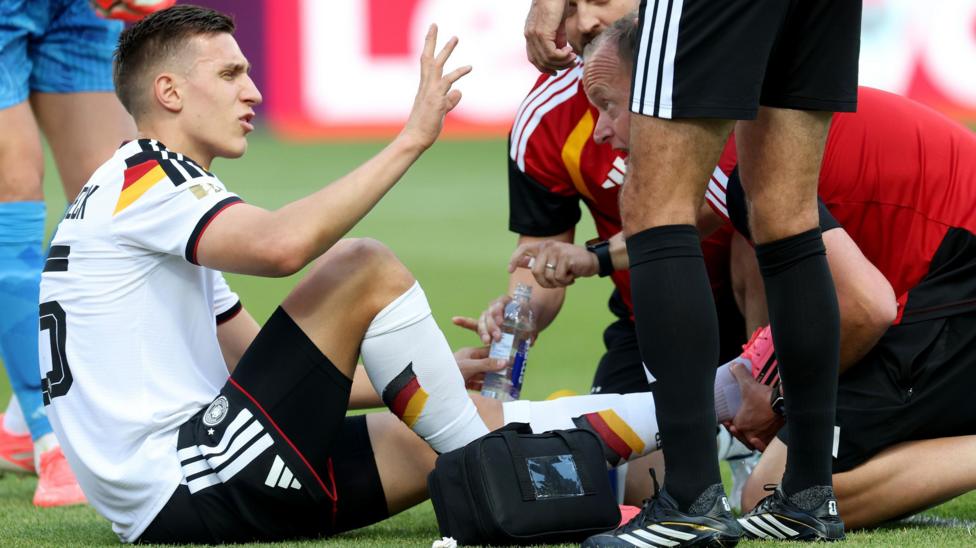
Schlotterbeck Blow: Germany's World Cup Defense Loses Its Left-Foot Anchor
Nico Schlotterbeck's ankle injury fractures Germany's left-sided defensive symmetry at the World Cup, forcing urgent tactical recalibrations.

Maddy Cusack Inquest Exposes the Human Cost of a Broken Culture in Women's Football
Testimony at the Cusack inquest reveals allegations of body-shaming and bullying that the women's game must confront head-on.

Vyner Eager to Witness Wrexham's Stateside Following Firsthand
Wrexham defender Zak Vyner is set to experience the club's booming American fanbase up close.