After Clarke: Why Rebuilding Scotland May Be Harder Than Building Them
Steve Clarke transformed Scotland's identity. Whoever follows inherits expectations without the patience that made the revival possible.
The Inheritance Nobody Envy
There is a cruel paradox embedded in every national team succession: the better the outgoing manager did the job, the harder it is for whoever walks through the door next. Scotland are about to learn this lesson the hard way.
When Steve Clarke arrived in 2019, he inherited a squad that had failed to qualify for a major tournament since the 1998 World Cup in France. Twenty-three years of hurt, of playoff collapses, of watching smaller nations with fewer resources punch above their weight while Scotland floundered. Clarke didn't just qualify Scotland for back-to-back European Championships. He rebuilt the entire emotional infrastructure around the national team. He made Hampden Park a place opponents genuinely dreaded again.
Now, with Clarke's tenure at its end, the Scottish FA faces a question that goes far beyond a shortlist of names: how do you sustain something that was always partly built on the charisma, tactical identity, and sheer force of personality of one man?
What Clarke Actually Built
To understand the scale of the problem facing Clarke's successor, you first need to understand exactly what Clarke constructed. This wasn't a case of inheriting a golden generation and riding the wave. Scotland's squad during Clarke's peak years was a patchwork of Premier League journeymen, Scottish Premiership stalwarts, and a handful of players operating at mid-table clubs across Europe. The talent pool was modest. The system was everything.
Clarke's 3-5-2 formation became Scotland's identity. It was compact, disciplined, and built on a principle that sounds simple but is fiendishly difficult to execute at international level: deny space in central areas, force opponents wide, and transition with purpose. Scotland's defensive structure during Euro 2024 qualifying was remarkable. They conceded just seven goals in eight qualifying matches, a record that placed them among the stingiest defences across the entire qualification cycle.
The midfield triangle of John McGinn, Scott McTominay, and Callum McGregor provided a blend of industry and technical quality that belied the squad's overall profile. McGinn, in particular, was transformed under Clarke. At Aston Villa, he was a box-to-box midfielder with an eye for goal. For Scotland, he became something more: a pressing trigger, a leader, the emotional heartbeat of the side. His 18 international goals under Clarke's management told only part of the story.
The System Made the Players
This is the critical detail. Clarke's system elevated players beyond their club-level output. Kieran Tierney, operating as a left centre-back in a back three, looked like one of the most complete defenders in European football in a Scotland shirt. Andy Robertson, sometimes inconsistent at club level in certain seasons, was relentlessly excellent for his country. The system protected its individuals while giving them just enough freedom to express themselves in the final third.
That kind of tactical alchemy is not easily transferred. It required months, even years, of drilling, of understanding the triggers, of building the spatial relationships between positions. A new manager will arrive with fresh ideas, and those ideas will inevitably conflict with the muscle memory Clarke spent half a decade embedding.
The Bottom Line: Clarke's success was system-dependent, not talent-dependent. That makes the transition exponentially more dangerous.
The Euro 2024 Hangover
Any honest assessment of Scotland's trajectory must also reckon with what happened in Germany. Euro 2024 was supposed to be the crowning achievement of Clarke's tenure, a chance to prove that Scotland had truly arrived on the major tournament stage. Instead, it was a sobering reminder of the gap between qualifying and competing.
Scotland exited at the group stage, failing to win a single match. They managed just one goal in three group games, scored by Scott McTominay in the opener against Germany before a 5-1 demolition that laid bare every structural weakness Clarke's system could mask over 90 minutes of qualifying football but could not survive against elite opposition.
The draw against Switzerland offered brief respite, but a limp defeat to Hungary confirmed elimination. The xG numbers told an even grimmer story. Across the three matches, Scotland generated an expected goals figure of roughly 1.8, a damning reflection of creative sterility. Against teams that could press Scotland's wing-backs and congest the central channels Clarke's system relied upon, there was no Plan B.
The Tactical Ceiling
This exposed something uncomfortable: Clarke's system had a ceiling. It was superb for navigating qualifying campaigns against teams of similar or slightly superior quality. It was inadequate when facing genuine tournament contenders who could nullify Scotland's strengths through superior technical quality and tactical flexibility.
The successor will need to address this without dismantling the defensive foundation that made Scotland competitive in the first place. That is a razor-thin margin of error.
Verdict: Euro 2024 revealed tactical limitations that Clarke could not solve. His successor must evolve the system without destroying it.
The Candidate Pool Problem
The practical challenge of finding Clarke's replacement is itself a significant obstacle. Scotland's managerial market is not overflowing with candidates who combine international pedigree, tactical sophistication, and the emotional intelligence required to manage a national team whose supporter base oscillates between euphoria and existential despair with alarming speed.
The Scottish FA's options broadly fall into three categories:
- An internal appointment from the existing coaching staff or a Scottish Premiership manager. This preserves continuity but risks a lack of fresh ideas and the perception of settling for safe.
- A proven international manager from abroad. This brings experience of tournament football but creates language, cultural, and identity barriers that Scotland's dressing room has never had to navigate.
- A high-profile domestic name who brings excitement and media attention but may lack the patience and tactical discipline that defined Clarke's tenure.
Each path carries distinct risks. The internal candidate may struggle to command the authority Clarke built through sheer results. The foreign appointment may clash with the fiercely parochial culture of Scottish football. The glamour name may find that managing Scotland, with its limited resources and sky-high emotional stakes, is nothing like managing a club with a transfer budget.
Historical Precedent Is Not Encouraging
National teams rarely handle transitions from transformative managers well. Look at the evidence:
- Ireland after Jack Charlton: Charlton built a culture, an identity, an era. Mick McCarthy inherited it, reached the 2002 World Cup, but the decline was already underway. Ireland have qualified for just two major tournaments in the 22 years since.
- Wales after Chris Coleman: Coleman took Wales to the Euro 2016 semi-finals, the greatest achievement in the nation's football history. Ryan Giggs, Rob Page, and now a new era have struggled to recapture that lightning-in-a-bottle moment.
- Greece after Otto Rehhagel: The Euro 2004 winners appointed a succession of managers who could never replicate the defensive discipline that shocked the footballing world. Greece have qualified for just three major tournaments since.
Scotland will hope to avoid these cautionary tales, but the structural parallels are difficult to ignore. Clarke's successor will be working with a squad whose peak years are narrowing. Robertson is 30, McGinn 29, Tierney's injury record makes his availability uncertain regardless of age. The next generation, including talents like Billy Gilmour and Aaron Hickey, offers promise but not yet the proven international pedigree of the players they must replace.
What Success Actually Looks Like
Here is the uncomfortable truth Scottish football must confront: Clarke's tenure may represent a high-water mark that is extremely difficult to replicate in the short to medium term. Back-to-back European Championship qualifications, for a nation of Scotland's size and footballing infrastructure, was an overperformance relative to the talent pool.
The successor's realistic targets should be:
- Maintaining Nations League competitiveness in the second tier and pushing for promotion
- Qualifying for the 2026 World Cup, where the expanded 48-team format gives Scotland a more realistic path than previous cycles
- Developing a tactical identity that builds on Clarke's defensive structure but adds the attacking flexibility Scotland desperately lacked in Germany
That third point is the most important and the most difficult. The next manager must be an evolution, not a revolution. Scotland cannot afford to go back to the drawing board, but they also cannot afford another tournament campaign where the tactical plan has a fixed ceiling.
The Bottom Line: Whoever takes this job must accept that matching Clarke's achievements will be nearly impossible. The real measure of success will be whether Scotland remain a competitive international side or slide back into the wilderness years that defined the two decades before Clarke arrived.
The Verdict
Steve Clarke did something remarkable with Scotland. He took a broken football culture and made it whole again, turning a generation of qualifying failures into a team that expected to be at major tournaments. That expectation is now the greatest gift and the greatest burden his successor will inherit.
The next Scotland manager will not have the luxury of low expectations or the patience of a support base that has tasted what is possible. They will be judged against Clarke's standard from day one, with a squad whose peak is passing and a tactical framework that showed its limits on the biggest stage.
Scottish football has spent decades yearning for sustained relevance. Clarke delivered it. Now comes the hardest part: keeping it.
Editorial Integrity
This is an original SportPulse article written by our editorial team. All content is independently researched, written, and reviewed by our writers and editors before publication. We do not publish copied, aggregated, or syndicated content.
SportPulse is committed to original sports journalism. Read our editorial policy or contact us with any questions.
More Like This
All football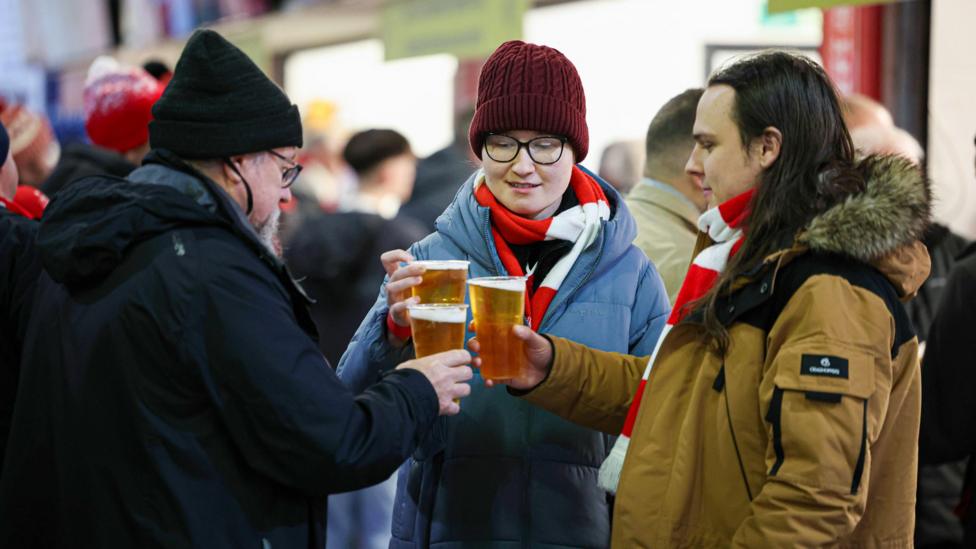
Aberdeen secure permanent alcohol licence for Pittodrie matchdays
Aberdeen FC win council approval for permanent alcohol sales at Pittodrie, a landmark shift in Scottish football's stadium drinking culture.
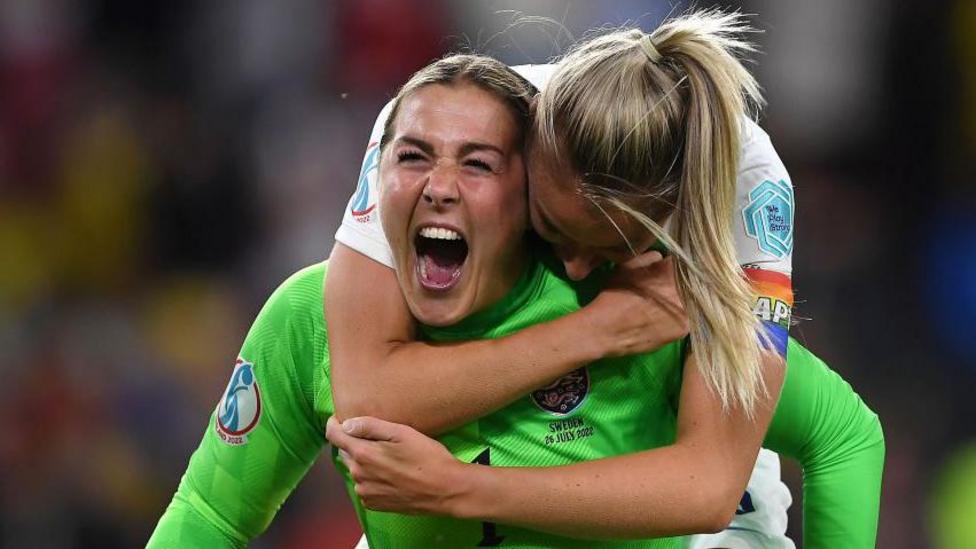
Earps Faces the Spotlight Again After London City Switch
Mary Earps admits uncertainty about returning to the spotlight after her surprising move to the London City Lionesses.
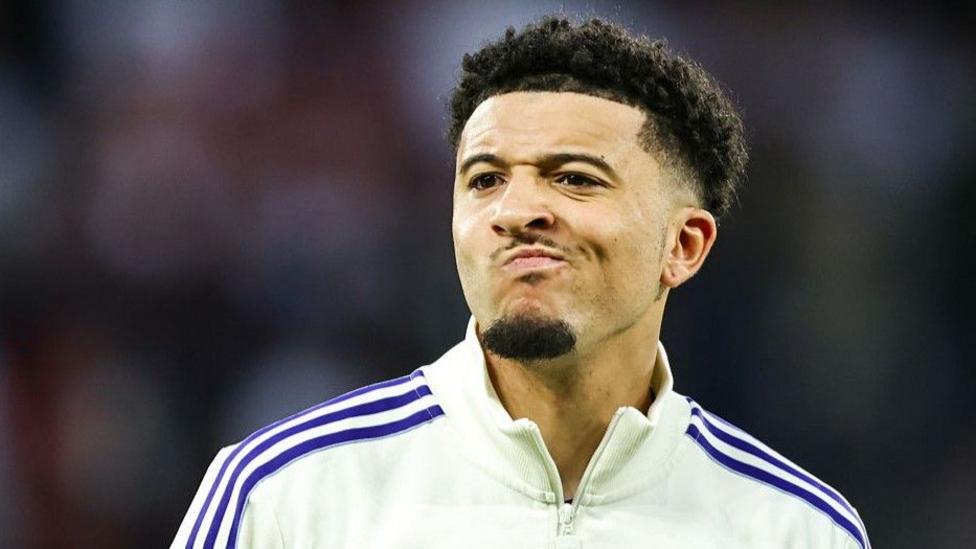
Sancho's £73M Man Utd Dream Ends in Bitter Exile and What-Ifs
Jadon Sancho exits Manchester United without a Premier League appearance in nearly three years — a cautionary transfer tale.