Eighteen Months on Trial: Sheridon Gumbs and the Second XI Grind
After 18 months on trial, Sheridon Gumbs earned a Leicestershire deal, exposing the unforgiving reality of second XI cricket.
Sheridon Gumbs describes the environment he just escaped in two words: "It's cut-throat." After 18 months on trial, he has signed with Leicestershire. Eighteen months of unpaid auditions and institutional uncertainty before a contract materialised.
The second XI is the structural foundation of the county system, a competitive layer where prospects prove readiness and discarded professionals attempt to resurrect careers. For every player on a full contract, dozens pass through on trial terms, occupying a grey zone between professional and amateur. They train alongside contracted players, play the same fixture schedule, and face the same scrutiny, but without the security that makes the work sustainable.
No Pay, No Guarantees
A trial in county cricket is a prolonged evaluation with no guaranteed outcome, no fixed timeline, and no compensation structure. Players must demonstrate technical proficiency, tactical awareness, and physical resilience across formats, often in matches that carry genuine competitive weight for the clubs involved.
Gumbs spent a year and a half in this state. The duration alone signals how narrow the margins are. A trialist must perform well enough to justify retention without appearing desperate. Show improvement without revealing weakness. The psychological toll of that balancing act, sustained over months, is the untold story of the pathway system.
The financial dimension is equally stark. Trialists typically receive minimal support, often covering their own costs while attempting to secure a role that pays a county-level wage. The investment is speculative, and the return is never certain. Clubs carry this model because it filters talent at minimal expense before committing resources.
Eighteen Months of Evidence
Leicestershire's decision to convert Gumbs's trial into a contract reflects a specific calculation. The club has invested heavily in youth development in recent seasons, rebuilding a squad axis around players who can grow into first-team roles rather than relying on the veteran recruitment market that characterised their leaner years.
Gumbs earned the deal through sustained performance, not a single breakout moment. That distinction matters in county cricket, where a player is evaluated across conditions, opponents, and formats over an extended period. A contract represents a club's judgment that a player's trajectory justifies a roster spot and the development resources attached to it.
For Gumbs, the signing ends a period of institutional limbo. He now enters a system where his performances are measured against first-class standards, and where the second XI becomes a staging ground for a senior call-up rather than an end in itself.
The Silent Attrition Behind Every Success
The pathway from age-group cricket to a professional contract is narrow, opaque, and heavily dependent on geography and timing. Players outside the main academy networks often arrive at county trials through volunteer-led club cricket, with minimal exposure to professional coaching standards until a club takes a speculative interest.
The trial system is the bridge between those worlds. It works when, as in Gumbs's case, it produces a contract. It fails silently when it does not. Players spend months in evaluation, are released without public acknowledgment, and move on to other counties, other trials, or out of the professional game entirely. The attrition rate is invisible because the data is not collected centrally and the players involved lack the platform to report it.
County budgets compound the problem. With most first-class counties operating on tight margins, the second XI absorbs players on informal terms because a fully contracted reserve squad is financially unworkable. The trial system is the compromise, and the players caught within it bear the cost.
From Retention to Selection
The Leicestershire deal provides three things that were absent during Gumbs's trial period: institutional security, access to structured coaching, and a measurable development pathway. He can now train with a defined goal, a place in the first-class squad, rather than performing for continued evaluation.
The club gains a player whose capabilities are already understood. Eighteen months of observation means Leicestershire's coaching staff have a data profile on Gumbs that exceeds what they hold on most incoming recruits. The risk of the contract is low because the information asymmetry that usually accompanies signings has been eliminated.
Gumbs's next challenge is the one that follows every trial-to-contract conversion. He must demonstrate that his second XI performances translate to the first-class environment, where standards are higher, margins are tighter, and patience from selectors is shorter. The cut-throat quality he identified does not disappear with a contract. It shifts, from justifying retention to justifying selection.
Editorial Integrity
This is an original SportPulse article written by our editorial team. All content is independently researched, written, and reviewed by our writers and editors before publication. We do not publish copied, aggregated, or syndicated content.
SportPulse is committed to original sports journalism. Read our editorial policy or contact us with any questions.
More Like This
All long-reads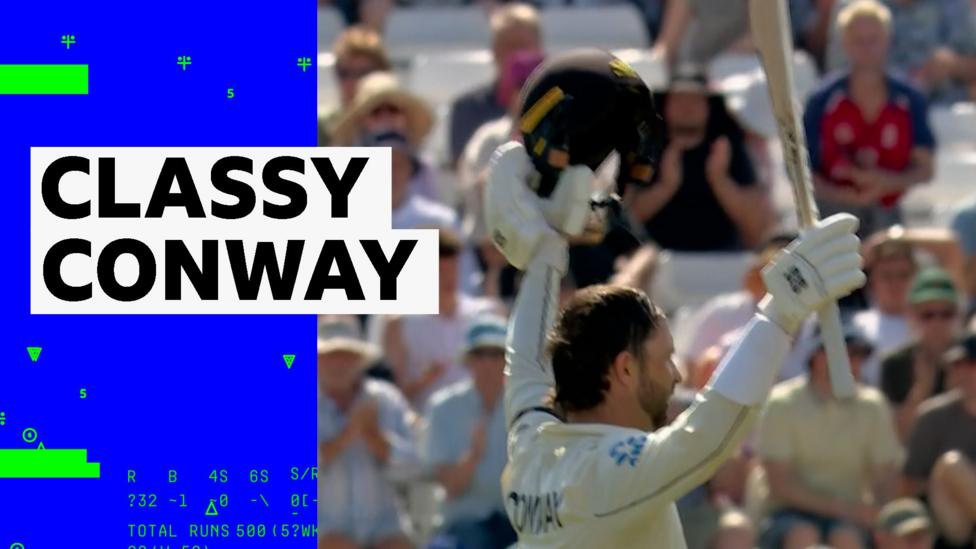
Conway's Centurion Conviction Silences Trent Bridge
Devon Conway's composed eighth Test century under pressure steadied New Zealand on day one of the decisive third Test at Trent Bridge.

Diamond in the Rough: Poirier's Raw Plea for Help After Arrest
Dustin Poirier admits he needs help after a public drunkenness arrest, exposing the human toll behind MMA's toughest fighter.

Three Weeks, One Collarbone, Zero Doubt: Tarling's Miraculous Tour Debut
Josh Tarling defied medical timelines to go from operating table to Tour de France start line in just 21 days.