Queen of the Grass: The Definitive Look at Serena Williams' Wimbledon Reign
Seven titles, countless moments of ferocious brilliance — Serena Williams didn't just win Wimbledon, she redefined it.
The Sound of Centre Court
The first thing you noticed was the silence before the storm. A packed Centre Court, 15,000 bodies pressed into their seats, holding collective breath as Serena Williams coiled behind the baseline. Then the serve. A blur of kinetic fury that routinely cracked 120 mph, kicking off the grass like a mortar round. And just like that, the silence shattered.
Serena Williams and Wimbledon. It is a pairing so deeply woven into the fabric of modern tennis that separating one from the other feels almost sacrilegious. Across two decades of dominance, Williams conquered the All England Club seven times in singles, claimed six doubles titles alongside her sister Venus, and left behind a trail of shattered records, broken opponents, and moments that transcended the sport entirely.
This is not a simple career retrospective. This is the story of how one woman from Compton, California, became the most powerful force the grass courts of SW19 have ever seen.
From Debut to Dynasty
Serena first set foot on the Wimbledon lawns in 1998 as a 16-year-old qualifier with a serve that already defied her age. She lost in the second round. Nobody outside the Williams camp could have predicted what was coming.
By the summer of 2002, Serena had announced herself to the world in the most emphatic fashion possible. She bulldozed through the draw without dropping a set and dismantled Venus in the final 7-6(4), 6-3 to claim her first Wimbledon crown. It was the beginning of a remarkable run that saw Serena win her first four finals at the All England Club across 2002, 2003, 2009, and 2010, establishing a dominance that would have made the sport's founding fathers weep with envy.
What separated Serena from every other champion who had walked those hallowed grounds was not just power, though she had it in devastating abundance. It was the marriage of that power with an almost supernatural ability to elevate under pressure. When the score tightened, when break points loomed, when the crowd noise swelled against her, Serena's level didn't dip. It soared.
Match Stats: Serena at Wimbledon (Singles)
- 7 singles titles (2002, 2003, 2009, 2010, 2012, 2015, 2016)
- 6 doubles titles with Venus Williams
- 98 singles match wins at Wimbledon against just 14 losses
- Win percentage of 87.5% on grass
- 23 Grand Slam singles titles overall, the most in the Open Era
- First serve win rate consistently above 74% during title runs
- Hit 102 aces during the 2015 Wimbledon tournament alone
- Completed the "Serena Slam" twice (all four majors in a row), including Wimbledon victories in both sequences
The Later Titles: Grit Over Glamour
If the early titles were about youthful dominance, the later ones told a richer, more complicated story. The 2012 triumph came after a year marred by a foot injury and a pulmonary embolism that left her hospitalised and terrified. When she returned to Wimbledon that summer, she was not the same athlete physically. But between the ears, she was more dangerous than ever.
She ground through tough matches against Zheng Jie and Petra Kvitova before dismantling Agnieszka Radwańska in the final 6-1, 5-7, 6-2. The second-set wobble, where Radwańska clawed back to level, was precisely the kind of moment that would have swallowed a lesser champion. Serena responded by winning 10 of the final 13 games.
The 2015 and 2016 victories were perhaps even more remarkable in context. By this stage, Serena was in her mid-thirties, chasing Margaret Court's all-time record of 24 Grand Slam singles titles. The weight of history was immense. Opponents were younger, faster, and fearless. Garbiñe Muguruza pushed her hard in the 2015 final before Serena prevailed 6-4, 6-4. Angelique Kerber stunned her in the 2016 final, but Serena reversed that result the following year in Australia to claim Slam number 23.
"I never lost the belief. Even when my body was failing me, even when I had every reason to stop, I knew there was more in me. Wimbledon always brought it out." — Serena Williams
The Serve That Changed Tennis
It is impossible to discuss Serena's Wimbledon legacy without dedicating space to her serve. Statistically and aesthetically, it remains the single greatest weapon in the history of women's tennis. On grass, where the ball skids low and fast, it was borderline unhittable.
Her service motion was a masterpiece of biomechanics: a explosive leg drive, a fluid shoulder rotation, and a wrist snap at contact that generated both blistering pace and wicked kick. Opponents frequently stood two to three feet behind the baseline on return, essentially conceding the point before it began.
During the 2015 tournament, Serena fired 102 aces across seven matches. To put that in perspective, most players on the WTA Tour might manage 15 to 20 aces across an entire Grand Slam. She was producing five times that number, and she was doing it on the surface least forgiving of technical errors.
The serve was also a psychological weapon of the highest order. Opponents knew it was coming. They studied the footage, consulted their coaches, adjusted their positioning. It made no difference. When Serena tossed the ball into the Wimbledon sky, the outcome felt preordained.
The Comeback That Defined Her Final Chapter
Serena's relationship with Wimbledon took on a different hue in her final years on tour. After giving birth to her daughter Olympia in September 2017, she returned to the All England Club in 2018 and reached the final just 10 months postpartum. She lost to Kerber in straight sets, but the run itself was a feat of athletic and mental endurance that few athletes in any sport have matched.
She reached the final again in 2019, this time falling to Simona Halep 6-2, 6-2 in what was a surprisingly one-sided affair. The narrative shifted. The question was no longer "Can Serena win another Wimbledon?" but "Can Serena win one more Slam, period?"
She came agonisingly close at the 2019 US Open final, losing to Bianca Andreescu, and made deep runs at subsequent majors. But the elusive 24th title never arrived. Her final Wimbledon appearance came in 2022, where she was knocked out in the first round by Harmony Tan. It was an unceremonious end, and yet the crowd's ovation as she walked off Centre Court spoke to something larger than any single result.
"Tennis has given me so much. And I've tried to give it everything I had. If that's the last time I walk on this court, I can hold my head high." — Serena Williams, 2022
The Legacy That Endures
Serena Williams won seven singles titles at Wimbledon, placing her joint second on the all-time list behind Martina Navratilova's nine. But raw numbers only scratch the surface.
She redefined what was physically possible in women's tennis. She carried the weight of representation for Black athletes in a sport that had historically excluded them. She competed at the highest level while navigating pregnancy, life-threatening health complications, and the relentless scrutiny that followed her every move. And through it all, she kept winning on the grass.
The All England Club has seen champions come and go since its founding in 1877. It has witnessed the artistry of Roger Federer, the resilience of Novak Djokovic, the grace of Steffi Graf. But Serena Williams occupies a singular space in its history. She did not simply play on Centre Court. She owned it.
What Her Absence Means for the Modern Game
Wimbledon without Serena is a different tournament. The power vacuum she left behind has created opportunities for a new generation, but none have yet demonstrated the ability to dominate the grass the way she did. Iga Świątek, the current world number one, has shown vulnerability on the surface. Elena Rybakina and Markéta Vondroušová have claimed recent titles, but neither has established the kind of sustained dynasty that Serena built.
The next woman who wins three consecutive Wimbledon titles will immediately draw comparisons to Serena. That is the standard she set. That is the benchmark that endures.
As the tournament prepares for its next chapter, the ghosts of Centre Court carry Serena's voice in every echo. The ferocious forehands. The primal screams. The fist pumps that rattled the Royal Box. Seven times she stood on that grass as champion, and each time, the sport was better for it.
Queen of the grass. There will never be another quite like her.
Editorial Integrity
This is an original SportPulse article written by our editorial team. All content is independently researched, written, and reviewed by our writers and editors before publication. We do not publish copied, aggregated, or syndicated content.
SportPulse is committed to original sports journalism. Read our editorial policy or contact us with any questions.
More Like This
All tennis
The Green Game: Wimbledon's Quiet Revolution Against Climate Change
Wimbledon's sustainability push for 2026 reveals how sport's oldest stage adapts to its most modern crisis.
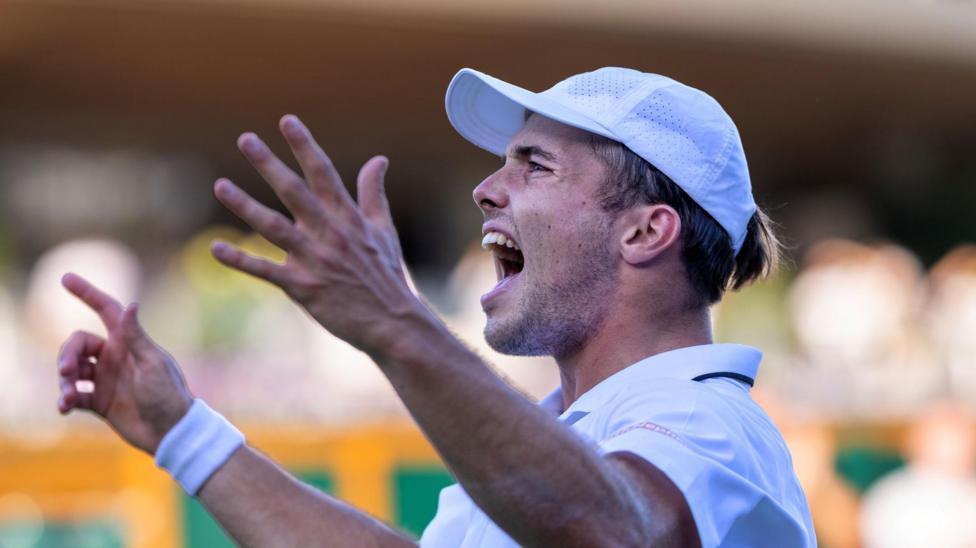
Arthur Fery's Centre Court Gamble: The Career That Led Here
From British college tennis obscurity to Wimbledon's Centre Court, Arthur Fery faces Grigor Dimitrov in the match of his life.
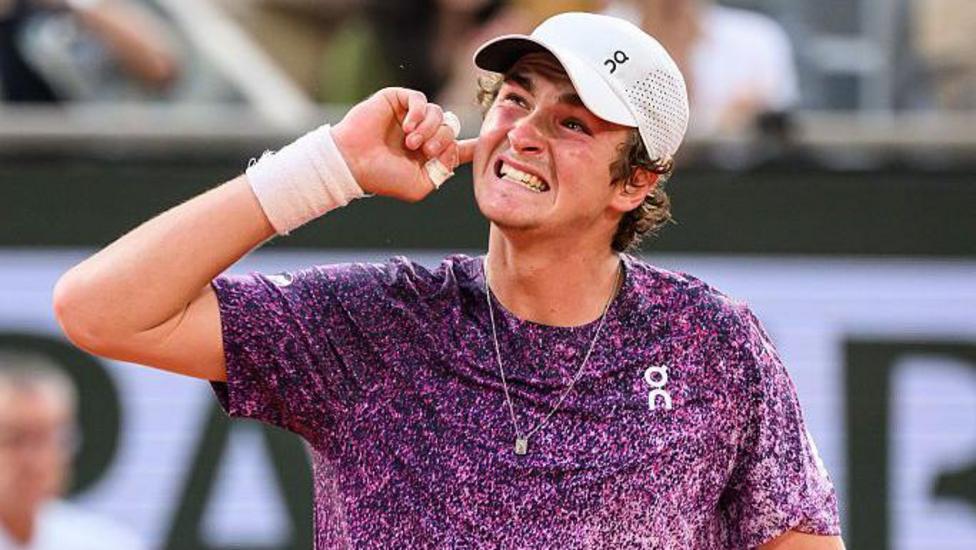
The Boy Who Toppled the King: Fonseca's Parisian Coronation
Joao Fonseca's five-set French Open triumph over Novak Djokovic isn't just a win; it's a brutal, beautiful changing of the guard.