Every Silverstone Corner Decoded: The Engineering Behind the Names
Silverstone's corner names carry centuries of history — and shape how engineers build cars for one of F1's most demanding circuits.
A Circuit Carved From History, Chiseled by Physics
Silverstone doesn't just host the British Grand Prix. It defines what an F1 car is supposed to do. The 2026 weekend arrives with a new generation of machines under drastically revised aerodynamic regulations — reduced active ground-effect surfaces, lower drag coefficients, and a mandated 20% reduction in downforce compared to the outgoing 2022-2025 package. Every corner on this 5.891 km layout now asks a fundamentally different question of the engineers.
And every corner carries a name rooted in the geography, history, and architecture of Northamptonshire. Understanding why these corners bear those names isn't a history lesson. It's a window into the landscape that shaped the circuit's geometry, which in turn dictates the ride heights, spring rates, and aerodynamic maps that teams will agonize over this weekend.
The National Pits Straight to Abbey: Where Top Speed Meets Medieval History
The lap begins on the National Pits Straight, cars accelerating past the old RAF Silverstone runways — the circuit was a bomber station during World War II. By the time they reach Abbey Curve, they're doing well over 320 km/h before braking into the fast left-hander.
Abbey takes its name from Luffield Abbey, a 12th-century Augustinian priory whose ruins lie just beyond the track boundary. The corner itself is a high-speed left taken at roughly 280 km/h in modern trim, which means the front wing's outwash generation is critical here. Under 2026 regs, with smaller endplates and restricted vortex generators, teams lose a measurable chunk of front-end bite in exactly this kind of long, loaded entry phase.
From Abbey, the track sweeps right through Farm Curve — a corner named plainly for the agricultural land it cuts through — and into Village, referencing the nearby Whittlebury settlement. Village is a medium-speed right-hander that loads the front-left tire at roughly 3.8G and demands a precise anti-dive geometry setup. Get the nose attitude wrong here and you lose the car through The Loop, the tight left-hander that follows.
Engineering Insight: The 2026 Front Wing Problem at Abbey
Under the outgoing regulations, teams ran front wings with aggressive multi-element flap configurations and endplate designs that channeled airflow outward around the front tires. This outwash effect generated massive front-end grip at high speed.
The 2026 rules simplify the front wing to just two elements and mandate endplates that are integrated into the wing profile rather than standing separately. The effect is predictable: front downforce drops by an estimated 15-20% at high-speed corners like Abbey. Teams compensate by running slightly more front wing angle, but that increases drag — a punishing trade-off on the Hangar Straight that follows.
Expect setup engineers to spend Thursday's filming day and Friday's practice sessions hunting for the sweet spot: enough front authority at Abbey to keep the car planted, without sacrificing the 7th-gear terminal speeds that define overtaking into Stowe.
Maggotts, Becketts, Chapel: The Complex That Separates Great Cars From Good Ones
If Silverstone has a soul, it lives in the Maggotts-Becketts-Chapel complex. This sequence of high-direction-change corners is where aerodynamic efficiency, suspension compliance, and driver commitment converge.
Maggotts Corner takes its name from Maggotts Moor, the open heathland that once bordered this section. It's a fast left taken at over 290 km/h, immediately followed by Becketts — named for a medieval chapel dedicated to Thomas Becket, the Archbishop of Canterbury murdered in 1170. Becketts is a right-hander that feeds into Chapel Curve, a left that opens onto the Hangar Straight.
The entire sequence takes roughly 4.2 seconds and subjects the car to lateral loads exceeding 5.5G through the direction changes. What makes it technically brutal is the asymmetric tire loading. The right-front tire gets punished through Maggotts, then the left-front takes over through Becketts, then back to the right-front at Chapel. Tire temperatures can spike by 8-10°C across the sequence.
"Maggotts-Becketts is where you feel whether the car is alive or dead. If the front end is there at the entry to Maggotts, you know you can carry speed through the whole complex. If it isn't, you're just a passenger for the next four seconds." — typical driver sentiment from recent British GP debriefs
The suspension geometry teams choose for Silverstone is heavily influenced by this sequence. Running stiffer anti-roll bars improves direction change but increases tire degradation. Softer bars preserve the tires but let the car roll too much through the transitions. Most teams settle on a compromise setup with stiff front bars and slightly softer rears, accepting some oversteer at Chapel exit in exchange for stability at Maggotts entry.
The Hangar Straight to Stowe: Where Power Units Earn Their Pay
The Hangar Straight — named for the WWII aircraft hangars that still line its perimeter — is 770 meters of full throttle. It's here that the 2026 power unit's electrical energy deployment strategy becomes decisive.
The new regulations maintain the 1.6-liter V6 turbo-hybrid architecture but increase the MGU-K output to 350 kW (up from 120 kW) while eliminating the MGU-H entirely. This means more electrical energy available for deployment but less energy recovery from the turbo. Teams that manage their battery state of charge efficiently through the high-speed Maggotts-Becketts section — where the ICE runs at partial throttle and recovery is minimal — arrive at the Hangar Straight with maximum energy available.
Stowe Corner at the end of the straight is a heavy braking zone — from roughly 330 km/h down to 85 km/h — and the biggest overtaking opportunity on the lap. It's named after Stowe School, the prestigious public school visible from the circuit. The braking distance here is approximately 105 meters, and brake temperatures can peak at over 1,000°C.
The heavy braking also feeds significant energy back through the regenerative braking system, replenishing the battery for the slower middle sector. It's a self-sustaining loop: fast straight, hard braking, energy recovery, deployment again.
Vale, Club, Brooklands, Luffield: The Technical Rear Complex
The back section of Silverstone is where lap time hides. Vale — named for the Vale of Aylesbury, the broad lowland visible to the south — is a sweeping left-hander that demands mid-corner balance. It feeds into Club Corner, which takes its name from the RAC (Royal Automobile Club), whose emblem and legacy are woven into British motorsport history.
Club is a medium-speed right that exits onto the Wellington Straight. The traction phase out of Club is where rear downforce pays dividends, and teams with stronger diffuser performance — even under the reduced 2026 floor regulations — gain measurable time here.
The final sequence through Brooklands (named after the famous Brooklands circuit in Surrey, Britain's first purpose-built race track), Luffield (another reference to the old abbey), and Woodcote (named after Woodcote Park in Surrey, the original home of the RAC Club) is a low-speed technical section that punishes traction and mechanical grip.
Luffield in particular is a double-apex right where cars decelerate to roughly 60 km/h — the slowest point on the circuit. This is where throttle maps and differential settings become critical. Too aggressive on the throttle and the rear snaps; too conservative and you lose two tenths on the exit that carries all the way to the finish line.
What the 2026 Regulations Change About This Track
Silverstone has always rewarded aerodynamic efficiency — high downforce with low drag. The 2026 regulations, with their mandated reduction in downforce and the introduction of active aerodynamic elements (adjustable front and rear wings with a low-drag mode), fundamentally alter the setup calculus.
For the first time, teams can run DRS-like adjustable modes through multiple straights rather than just the designated DRS zones. This means the car that's draggy through the corners but slippery on the straights has a viable strategy — something Silverstone has never seen.
The active ride height system, another 2026 addition, allows teams to adjust platform height in real time based on fuel load and tire degradation. At a circuit where ride height sensitivity is extreme — particularly through the bumpy Maggotts-Becketts complex — this technology could be worth three to four tenths over a stint.
Outlook: The Technical Battleground Ahead
The 2026 British Grand Prix isn't just another race. It's the first real test of how the new regulatory framework interacts with a high-speed, traditional circuit designed in an era of V10 engines and grooved tires.
Every corner name at Silverstone tells you something about the land it sits on — moors, abbeys, schools, military installations. But for the engineers on the pit wall, each name also encodes a specific technical demand: front-end authority at Abbey, direction change at Maggotts-Becketts, energy management on the Hangar Straight, traction at Luffield.
The team that decodes those demands fastest — that finds the optimal aerodynamic map, the cleanest energy deployment cycle, and the most compliant suspension platform for this specific sequence of corners — will stand on the top step on Sunday.
Silverstone has hosted Grand Prix racing since 1950. Its corners have seen every generation of car, every era of regulation. This weekend, they'll meet the most radical technical reset in a decade. The names haven't changed. The engineering questions have.
Editorial Integrity
This is an original SportPulse article written by our editorial team. All content is independently researched, written, and reviewed by our writers and editors before publication. We do not publish copied, aggregated, or syndicated content.
SportPulse is committed to original sports journalism. Read our editorial policy or contact us with any questions.
More Like This
All f1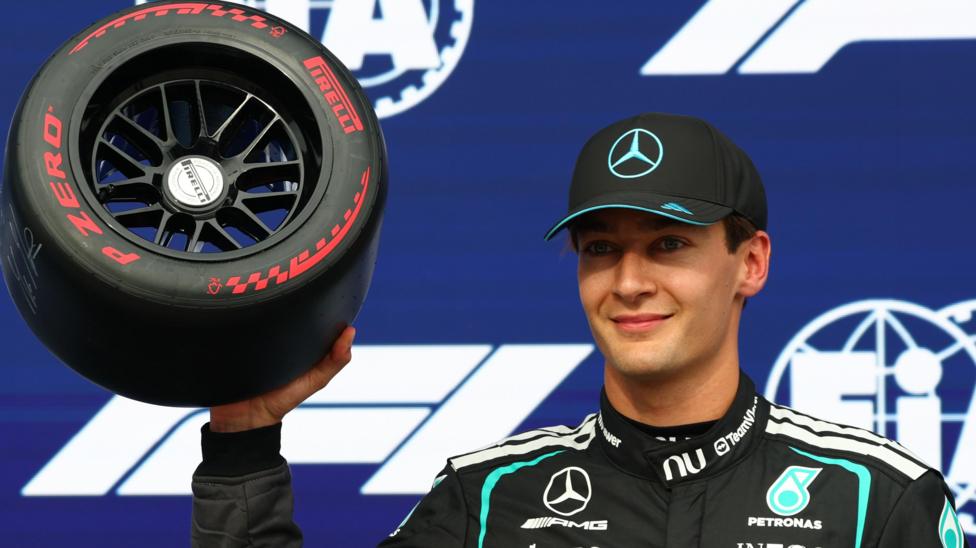
Pirelli's F1 Tenure Secured: The Tyre War That Isn't
Pirelli's contract extension until 2028 cements their role as the sole arbiter of F1's strategic chessboard.
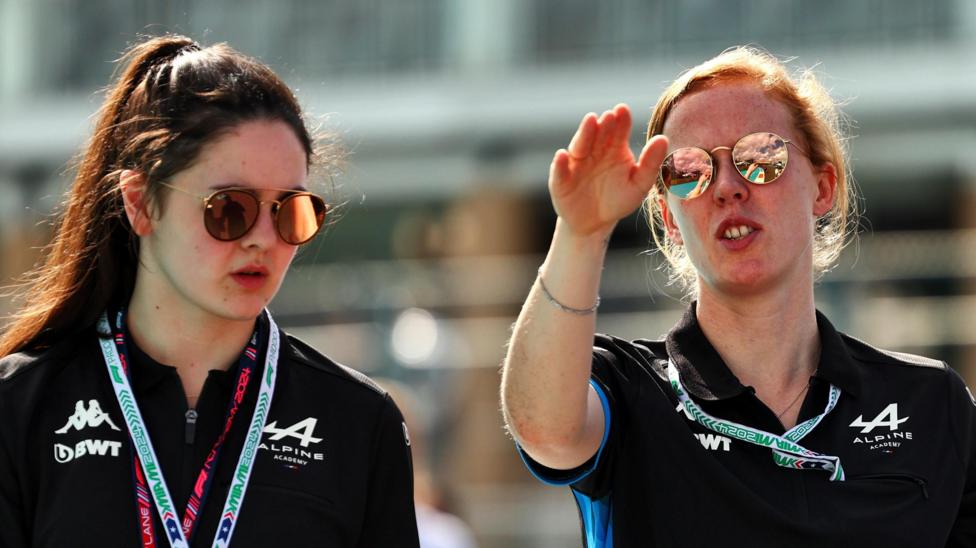
Powell and Pulling Make History as BBC's First All-Female F1 Commentary Team
Alice Powell and Abbi Pulling shatter broadcasting barriers at Barcelona, bringing racing credibility to the commentary booth.
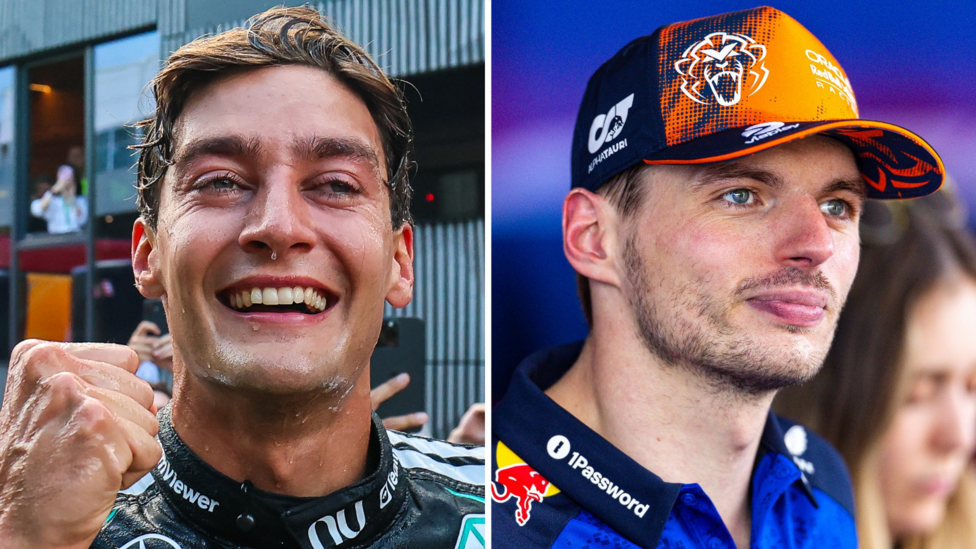
Russell Seizes the Moment as Verstappen Fights Back at Red Bull Ring
George Russell delivered a masterclass at the Austrian GP while Max Verstappen clawed back from chaos to salvage points.