Sinner Again Stands Between Djokovic and Wimbledon Immortality
Jannik Sinner has become the wall Novak Djokovic cannot breach, and Wimbledon history hangs in the balance once more.
The ball floated long, and Centre Court exhaled. Novak Djokovic stood at the baseline, racket in his left hand, staring at the spot where the point had ended as though the grass itself had betrayed him. Across the net, Jannik Sinner pumped his fist with the quiet, almost apologetic intensity of a man who knows he has just rearranged the architecture of modern tennis. That moment, frozen in the collective memory of anyone who watched the 2023 Wimbledon semi-final, was not merely a match. It was a coronation rehearsal.
Now they meet again. Same stage. Same stakes. Same suffocating weight of history pressing down on every groundstroke.
The tournament paths could hardly have looked more different. Djokovic has ground through his matches with the grim efficiency of a man defying not just his opponent but entropy itself. Sinner has swept through the draw with the terrifying fluency of someone who has realised, perhaps belatedly, that his ceiling does not exist. Two men arriving at the same destination from opposite directions, each carrying a different version of pressure.
The Hallway Between Eras
There is a particular type of silence that fills Centre Court before a semi-final of this magnitude. It is not the silence of anticipation but of acknowledgement. Everyone seated understands they are about to witness something that will be referenced for decades, and the crowd collectively holds its breath as though their exhalation might tip the outcome.
Djokovic has lived in this silence more than any player in history. He has walked through that corridor beneath the stands 48 times in Grand Slam semi-finals, a number so preposterous it feels like a misprint. He has won 24 Grand Slam titles. He has spent more weeks at world number one than any man or woman who has ever held a racket. The argument about the greatest tennis player of all time was settled years ago by anyone willing to look at numbers with honest eyes.
But Djokovic is not chasing greatness. He resumed that pursuit long ago. He is now chasing a colleague, and that is a different kind of pressure. Rafael Nadal won 14 French Open titles. Djokovic has won 7 Wimbledon titles, one behind Roger Federer mark 8. The convenience of matching a rival at their chosen venue appeals to him with the same pull and competitive fury that has animated his entire obsession.
Sinner, meanwhile, walks into this semi-final with no such calling. He has 1 Grand Slam title, the 2024 Australian Open, and the knowledge that beating Djokovic at Wimbledon would announce something no amount of ranking points can communicate.
What Sinner Learned From the Last Time
Their 2023 Wimbledon semi-final meeting was supposed to be a learning experience for the young Italian. Instead, it became a kind of thesis defence. Sinner won that match, and in doing so, he demonstrated something that the rest of the tour had suspected but could not quite prove: Djokovic is beatable on grass, by a player with the right combination of power, nerve and tactical discipline.
The key was not raw aggression. Plenty of players have tried to hit through Djokovic on grass and failed spectacularly. Sinner recognised that grass rewards controlled aggression. His flat groundstrokes skid through the court at a height and trajectory that neutralise Djokovic's defensive brilliance without over-committing. His first-serve percentage in that 2023 semi-final was a modest 68%, but the quality of placement on critical points allowed him to control the pattern of nearly every rally.
"I think the key was staying close on the scoreline, staying with him point by point, not giving him too many free points. When you play Novak, you have to earn it. But you also have to believe you can earn it." — Jannik Sinner, reflecting on the 2023 Wimbledon semi-final.
That belief is the element that separates contenders from pretenders. Sinner has it now, but he also has something more dangerous. He has the proof.
The Contrasting Fortnight
Djokovic's path to this semi-final has been a study in managed attrition. He has dropped sets, been pushed to tiebreaks, looked briefly vulnerable in matches that on paper should have been routine. His movement, still remarkable for a 37-year-old, has shown flashes of the lateral stutter that a knee surgery in June cannot entirely erase. He has compensated with the same weapons that have carried him for years: the best return of serve in the history of the sport, an ability to compress rallies into unforced errors from opponents who do not understand they are losing until the game is gone, and a competitive intelligence that functions like a chess grandmaster calculating twelve moves ahead while appearing entirely disinterested.
Sinner's path has been cleaner. He has won sets 6-2, 6-3, 6-4 with the regularity of a player who has moved beyond the need to prove himself in early rounds. His serve, improved every year, has functioned as a first-strike weapon that frees him to take risks on return. But the clean path carries its own risk. Sinner enters the semi-final having not been truly tested. The first moment Djokovic forces him into a prolonged, uncomfortable, deeply personal struggle, the question is whether he has maintained enough clarity and accumulated enough tension to handle it.
"To beat Jannik, I'm going to have to play my best tennis. I know that. I've been working towards this. These are the moments I still love about the sport, the challenge of facing the best." — Novak Djokovic, pre-semi-final.
A Rivalry Already Defined by Its Absence of Sentimentality
What makes this matchup compelling is not merely the generational dynamic. That narrative has been recycled since Pete Sampras faced a young Federer, since Federer faced a young Nadal, since Nadal faced a young Djokovic. Every era produces its hallway moment, its flicker of transition, and the temptation to frame every semi-final as another instance is strong.
But Djokovic and Sinner have already moved through it. They have been performing since the 2023 Wimbledon semi-final removed the doubt. Sinner won. Then he proceeded to establish himself as the closest thing the ATP has to a dominant world number one in the post-Big Three landscape. Their head-to-head carries the weight of outcomes already produced.
The 2024 Australian Open semi-final reinforced the narrative. Sinner won again, this time in five sets, this time after Djokovic had served for a set and pushed him into territory where lesser talents collapse. Sinner did not collapse. He played his best tennis in the fifth set, a feat few players have managed against Djokovic in a Grand Slam. He won that match the way champions win matches that define careers: by trusting his game when the evidence around him suggested trust was foolish.
Career by Numbers: Novak Djokovic
Djokovic is a player whose legacy cannot be summarised by numbers alone, though the numbers are so staggering they nearly accomplish the task by force. Consider the shape of his career through its most prominent data points.
- 24 Grand Slam singles titles, the all-time record across both men's and women's tennis
- 48 Grand Slam semi-final appearances, reflecting two decades of sustained deep runs
- 7 Wimbledon titles, one behind Roger Federer's record of 8
- Over 400 weeks ranked world number one, the most in tennis history
- 37 years old, and still reaching Grand Slam semi-finals after knee surgery in June 2024
- Head-to-head against Sinner: Djokovic leads, but each recent loss has carried significant weight
Career by Numbers: Jannik Sinner
Sinner's story is still being written, but the early chapters already suggest a player whose final form may be even more complete than his current capabilities indicate.
- 1 Grand Slam title (2024 Australian Open), a breakthrough that announced his arrival
- First Italian man to reach world number one in the history of the ATP rankings
- Won his first match against Djokovic at Wimbledon in 2023, becoming the first player under 22 to beat Djokovic on Centre Court in a Grand Slam.
- 22 years old, with a game that has improved every season since turning professional
- Hard-court win percentage above 80% in 2024, reflecting his dominance on his preferred surface
The Tennis: Where the Match Will Be Decided
Tactically, the semi-final will turn on three contests within the contest. The first is Sinner's serve against Djokovic's return. Sinner's serve is not a weapon in the classic sense. It does not produce aces in overwhelming numbers. Instead, it functions as the backbone of his point construction, and he has placed it with growing accuracy throughout the season. His first-serve win percentage in 2024 has hovered around 90%, a number that puts him alongside the most efficient servers in the game.
But Djokovic's return is the great neutraliser. He reads serve motion and toss with an accuracy that borders on the supernatural, and his ability to get returns into play on critical points reconfigures the geometry of every match he plays. If Sinner's serve can consistently produce first-serves that allow him to control the opening strike, he will be able to dictate patterns. If Djokovic can force him into second-serve rallies, the match shifts toward the baseline scrap where Djokovic remains the most complete player who has ever lived.
The second contest is physical. Sinner is younger, faster, and carrying fewer accumulated injuries. Djokovic's knee, operated on less than a month before the tournament began, is a variable that cannot be predicted. He has moved well enough, but only well enough. Grass lowers the physical demand by shortening points and reducing the number of direction changes required per rally. But a five-set match against a player of Sinner's quality imposes a different kind of strain, the kind that exposes every weakness the body has been concealing.
The third contest, and the deepest, is psychological. Djokovic has spent two decades demonstrating that his mental framework is the most resilient the sport has seen. He has won matches from positions that would have reduced other players to despair. He has lost matches he should have won and returned to win the ones that matter more. Sinner, by contrast, has shown composure beyond his years but has not yet been tested by the full weight of Djokovic's psychological arsenal. The Serb does not merely play tennis. He constructs narratives within matches, testing an opponent's resolve with subtle adjustments in pace and intent that probe for emotional weaknesses.
"It's never just tennis with Novak. He makes you think about things you don't want to think about. That's maybe his greatest weapon." — A former coach of a top-ten player, speaking anonymously.
The Broader Importance of the Match
This semi-final sits at the intersection of several narratives that define the current moment in men's tennis. The most obvious is the question of succession. Djokovic is the last representative of the Big Three still competing at the sport's summit. Federer retired in 2022. Nadal has played a limited schedule in 2024 and is approaching the end of his own career. The era that produced the greatest rivalry in tennis history will end with Djokovic being the last one standing.
Sinner, alongside Carlos Alcaraz, is one of the two players most likely to inherit the vacancy. Alcaraz has already won Wimbledon, along with three Grand Slams, and his game seems destined for dominance on grass. Sinner's path has been different. His rise has been slower, more incremental, and accomplished with less natural fanfare. But his results in 2024, the Australian Open title, the ascent to world number one, the consistency across surfaces, have established him as arguably the best hard-court player in the world.
The grass is still a question. Sinner's game, built on flat groundstrokes and aggressive court positioning, should理论上 suit grass. But his record at Wimbledon prior to 2023 was modest, and the question of whether he can win the tournament is still open. Beating Djokovic in the semi-final would not answer the question, but it would provide the strongest possible evidence that the answer is yes.
The Weight of History
Djokovic plays against history now. Every match is a recount, a reclamation, a defence of a position he has earned through two decades of excellence that even his most ardent critics cannot dismiss. The Wimbledon semi-final against Sinner is not just a match. It is another chapter in a long, ongoing argument between the greatest player who has ever lived and the generation that will eventually replace him.
Sinner plays against potential. Every match is a reaffirmation of his own ceiling, a chance to demonstrate that his abilities extend further than even his most enthusiastic supporters believe. Beating Djokovic once at Wimbledon was a signature moment. Beating him twice, in the same round, on the same court, with the same stakes, would be a serious statement.
Centre Court will fill. The silence will settle. Two players will walk out, and the argument will resume.
The weight of a final belongs to the winners of this match and to seeding. History does not tend to either of them. It observes, and it remembers.
Editorial Integrity
This is an original SportPulse article written by our editorial team. All content is independently researched, written, and reviewed by our writers and editors before publication. We do not publish copied, aggregated, or syndicated content.
SportPulse is committed to original sports journalism. Read our editorial policy or contact us with any questions.
More Like This
All tennis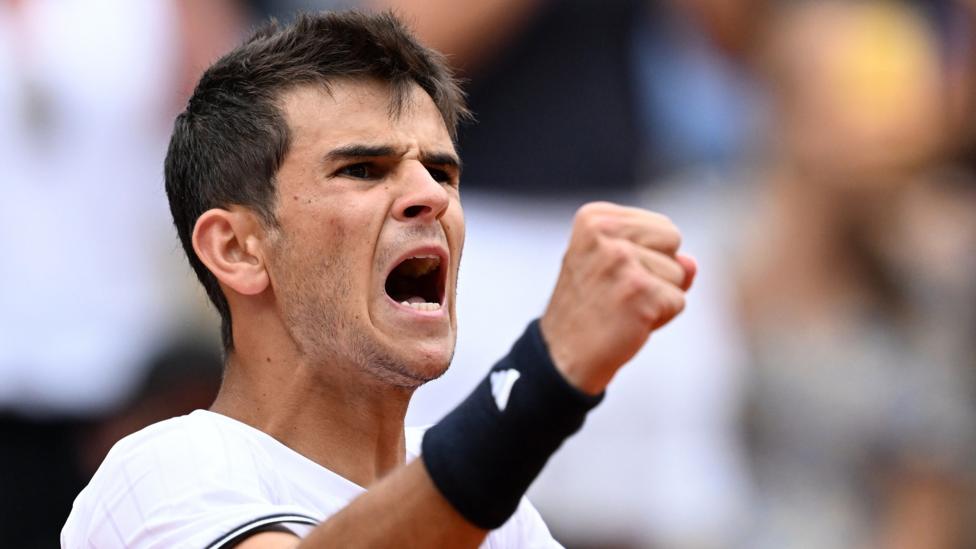
Spain's Next Rafa Targets Wimbledon Breakthrough
Teenage sensation Rafael Jodar prepares for his Wimbledon debut, carrying the weight of Spain's grass-court hopes in a breakthrough season.
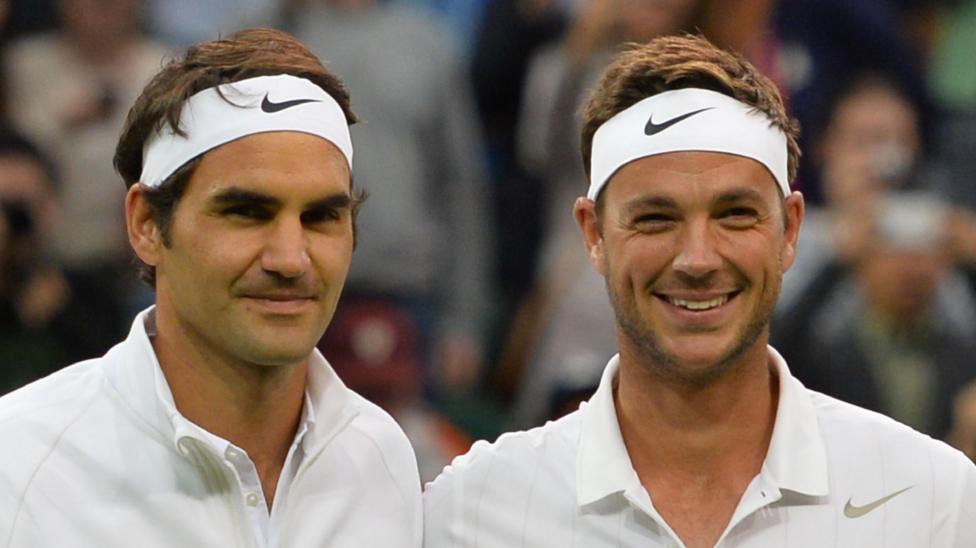
The Lob That Changed Everything: Marcus Willis Returns to Wimbledon on His Own Terms
Ten years after facing Federer on Centre Court, Marcus Willis is back at Wimbledon refusing to be a one-moment wonder.
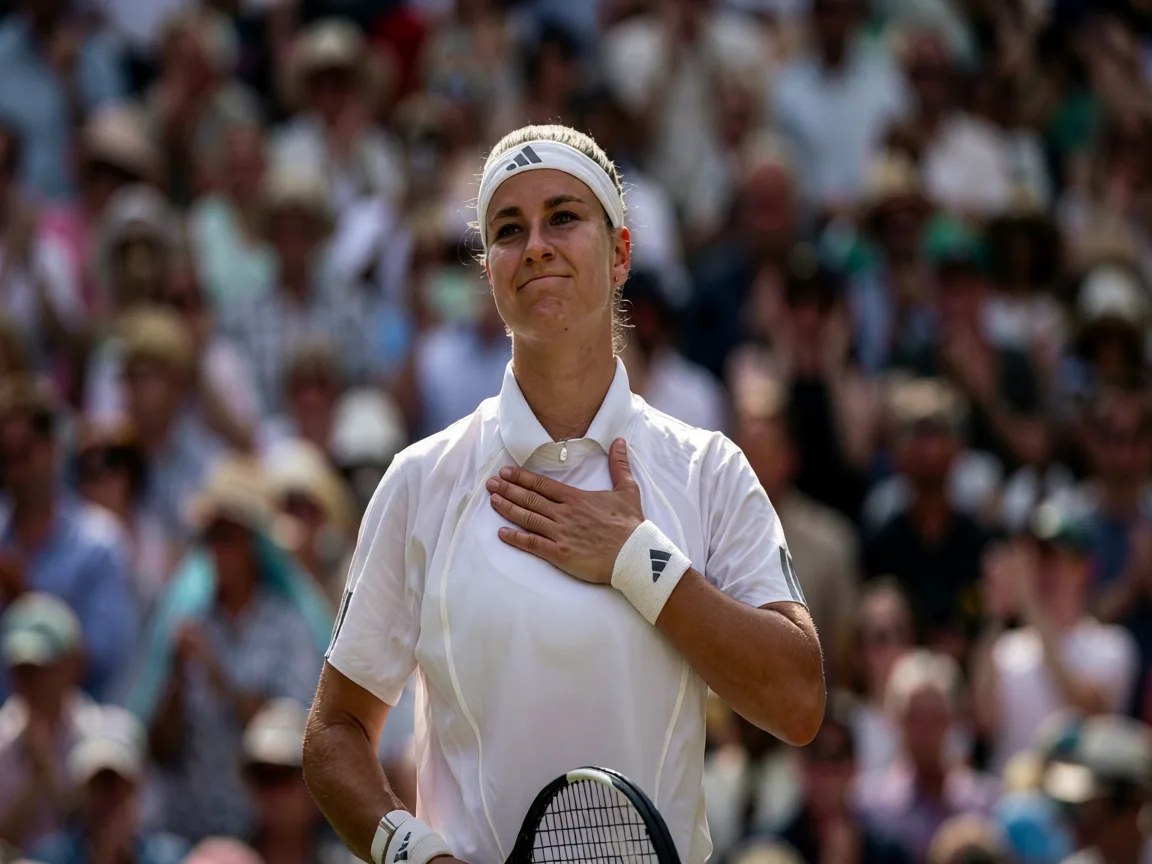
Muchova's Latest Setback: A Career Defined by Brilliance and Fragility
Karolina Muchova's post-Wimbledon surgery underscores a cruel pattern haunting one of tennis's most gifted talents.